
Como Criar Efeito de Bordado Branco com AI — Magic Eraser
Transforme fotos em efeitos de bordado branco sobre branco com AI. Crie estilos Hardanger, broderie anglaise, Mountmellick e Schwalm com texturas de openwork, ponto acetinado e cutwork.

Product Marketing
Revisado por Magic Eraser Editorial ·
Índice
- Compreendendo as famílias técnicas de bordado branco para correspondência de imagem de origem
- Mapeamento tonal da fotografia colorida para textura branco sobre branco
- Controlando detalhe do ponto, textura do tecido e realismo dimensional
- Aplicações criativas para fotografia transformada em bordado branco
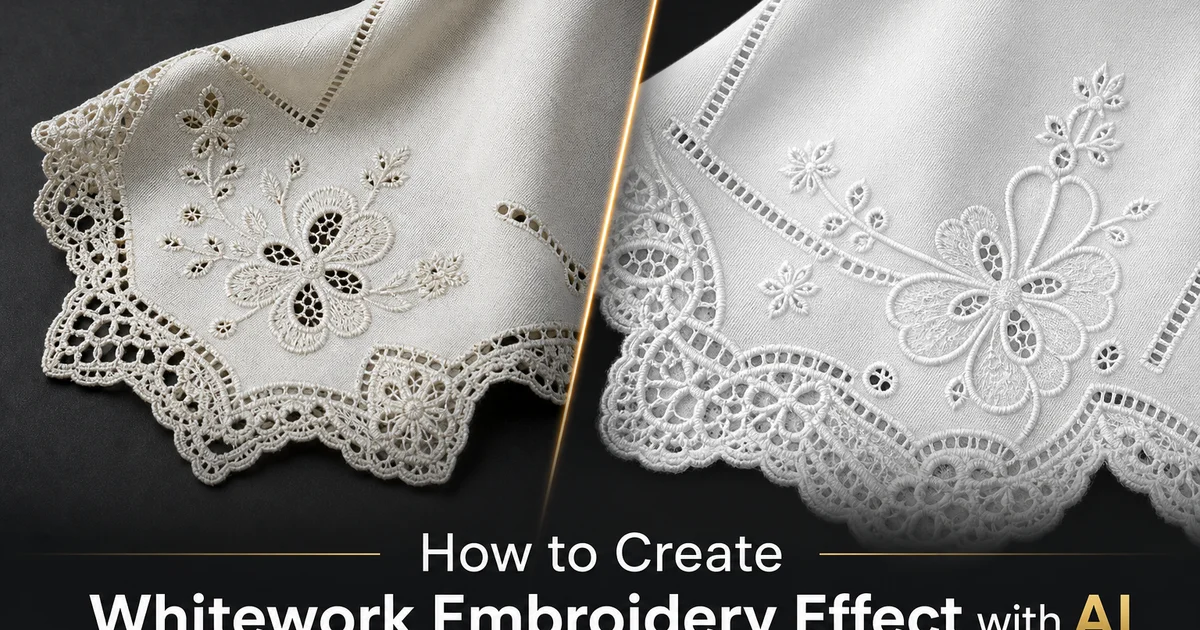
O bordado branco — a família de técnicas de agulha que usa linha branca em tecido branco para criar desenhos definidos inteiramente por textura e estrutura de ponto. A interação de áreas sólidas e abertas representa uma das tradições mais sofisticadas e sutis nas artes têxteis. Da precisão geométrica do Hardanger norueguês com seus kloster blocks e barras tecidas aos olhais orgânicos fluidos do broderie anglaise, dos nós tridimensionais ousados do Mountmellick irlandês aos delicados fundos de fios puxados do Schwalm alemão, o bordado branco alcança complexidade visual extraordinária dentro da paleta mais restrita possível: branco sobre branco. Essa restrição torna o bordado branco um assunto fascinante para transferência de estilo AI, porque o algoritmo precisa codificar toda a informação visual de uma fotografia colorida em variações de textura, densidade, opacidade e tridimensionalidade, em vez de depender da diferenciação de cores.
O apelo do bordado branco como efeito fotográfico digital reside precisamente nesta disciplina monocromática. Retirar a cor de uma fotografia e reinterpretá-la inteiramente através da linguagem da textura têxtil costurada cria uma transformação que parece mais fundamental do que uma simples sobreposição de filtro. A AI analisa os valores tonais da imagem de origem e os mapeia no vocabulário de elementos visuais do bordado branco: áreas escuras tornam-se ponto acetinado denso ou bordado acolchoado que aparece como branco sólido com sombras pesadas, tons médios tornam-se cobertura de ponto mais leve ou fundos de fios puxados que mostram transparência parcial. Áreas claras tornam-se cutwork aberto onde o tecido foi retirado ou cortado completamente, deixando apenas barras de conexão ou pontes semelhantes a renda. O resultado é uma imagem que se lê como uma peça completa e coerente de bordado branco, mantendo a composição chave e o assunto da fotografia original.
Este tutorial cobre o processo completo de criação de efeitos de bordado branco a partir de fotografias, desde a seleção de imagens de origem cuja estrutura tonal suporta a tradução monocromática até a escolha entre as principais variantes técnicas de bordado branco, ajuste de densidade de textura e proporção de openwork, e ajuste fino da paleta branca sutil e da aparência do fundo do tecido. Quer você queira criar arte de parede que celebre a herança do bordado branco sobre branco, desenhar padrões têxteis inspirados em estruturas tradicionais de bordado branco, ou simplesmente explorar as possibilidades criativas de um efeito que transforma fotografias em algo que parece ter sido costurado à mão ao longo de meses de trabalho paciente, as ferramentas AI lidam com a complexa tradução da cor fotográfica para a textura bordada enquanto você controla os parâmetros artísticos.
- A transferência de estilo AI mapeia tons fotográficos coloridos no vocabulário de textura monocromática do bordado branco. Ponto acetinado sólido para sombras, fundos de fios puxados para tons médios e cutwork aberto para realces.
- Múltiplas variantes técnicas de bordado branco produzem caracteres visuais distintos: as grades geométricas do Hardanger, os olhais orgânicos do broderie anglaise, os nós esculturais elevados do Mountmellick e a renda delicada de fios puxados do Schwalm.
- Os controles de densidade de textura e proporção de openwork equilibram a cobertura bordada sólida contra as áreas transparentes de fios retirados, definindo o peso visual e a qualidade de renda do efeito.
- O ajuste da paleta branca monocromática do branco-azulado frio ao creme quente captura a gama tonal do verdadeiro bordado branco — realces elevados brilhantes, sombras recuadas e fundos abertos transparentes.
- As opções de exportação preservam os delicados detalhes tonais branco sobre branco através do formato PNG para compartilhamento digital e configurações de alta DPI para reprodução em impressão em papel fosco ou substratos de tela.
Compreendendo as famílias técnicas de bordado branco para correspondência de imagem de origem
O bordado Hardanger, originário da região de Hardanger, na Noruega ocidental, é o mais geometricamente estruturado das técnicas de bordado branco e produz efeitos com um caráter distintivo baseado em grade. A técnica constrói kloster blocks — grupos de cinco pontos acetinados trabalhados sobre um número contado de fios de tecido — como pontos de ancoragem estrutural, depois retira os fios do tecido entre esses blocos e preenche os quadrados abertos resultantes com barras tecidas, picots e ponto olho de pomba. Quando aplicado como efeito AI, o Hardanger impõe uma estrutura de grade matemática sobre a imagem de origem, dividindo a composição em módulos quadrados onde cada módulo é um kloster block sólido, um vazio aberto preenchido com barras decorativas, ou uma área de transição de remoção parcial de fios. Essa imposição geométrica funciona melhor com assuntos arquitetônicos, paisagens urbanas e composições abstratas geométricas onde as estruturas retilíneas existentes da imagem de origem se alinham com a lógica de grade do Hardanger.
O broderie anglaise — literalmente 'bordado inglês' apesar de suas prováveis origens do Leste Europeu — cria um efeito de bordado branco fluido e orgânico definido por seus característicos olhais de cutwork redondos e ovais cercados por bordas de ponto acetinado. Enquanto o Hardanger abre vazios quadrados no tecido, o broderie anglaise cria furos redondos perfurando o tecido com um estilete e enrola as bordas cortadas para baixo com pontos fechados, produzindo uma textura de superfície que se lê como uma constelação de aberturas circulares de tamanhos variados espalhadas sobre um fundo branco. Como efeito AI, o broderie anglaise mapeia as áreas claras da imagem de origem para aglomerados de olhais abertos e as áreas escuras para cobertura densa de ponto acetinado, criando uma qualidade pontilhista orgânica onde a imagem emerge do padrão de áreas sólidas e abertas. Esta técnica se adequa a assuntos botânicos, retratos e qualquer composição com formas curvas e orgânicas que se sentiriam restritas pela geometria rígida do Hardanger.
O bordado Mountmellick, desenvolvido na cidade irlandesa de mesmo nome no século XIX, é o mais ousado e tridimensional das técnicas de bordado branco, usando linha grossa de algodão em tecido de cetim de algodão para criar superfícies elevadas através de ponto acetinado acolchoado, nós franceses, nós bullion e pontos de corrente de cabo que se erguem prominentemente acima da superfície do tecido. Como efeito AI, o Mountmellick produz um resultado altamente texturizado onde áreas escuras na imagem de origem tornam-se aglomerados grossos de nós elevados e pontos acolchoados que projetam sombras reais. A superfície geral tem uma qualidade escultural que falta às técnicas mais planas. Os efeitos Mountmellick são principalmente eficazes para assuntos com forte forma tridimensional — flores, rostos, naturezas-mortas — onde a textura do ponto elevado reforça a informação volumétrica já presente no sombreamento da imagem de origem.
- Os kloster blocks baseados em grade e os módulos quadrados abertos do Hardanger impõem estrutura matemática mais adequada a composições arquitetônicas e geométricas de origem.
- O broderie anglaise mapeia os tons de origem para constelações de olhais de cutwork redondos de tamanhos variados, criando efeitos pontilhistas orgânicos adequados a assuntos botânicos e retratos.
- Os nós elevados, o ponto acetinado acolchoado e as texturas bullion do Mountmellick produzem efeitos tridimensionais ousados com projeção de sombras reais, ideais para assuntos com forte forma volumétrica.
- O Schwalm combina fundos transparentes de fios puxados com contornos de ponto corrente para efeitos finos semelhantes a renda que preservam a clareza do desenho linear da composição de origem.
Mapeamento tonal da fotografia colorida para textura branco sobre branco
O desafio fundamental de converter uma fotografia colorida em um efeito de bordado branco é substituir a informação de cor — que muitas vezes carrega a maior parte do significado visual em uma fotografia — por informação de textura e densidade que comunica o mesmo conteúdo composicional usando apenas linha branca e tecido branco. A AI realiza isso através de um sistema de mapeamento tonal que atribui cada nível de brilho na imagem de origem a um tratamento específico de textura de bordado branco. Os valores mais escuros na origem — sombras profundas, roupas escuras, fundos pretos — mapeiam para a cobertura de ponto mais densa possível: ponto acetinado acolchoado pesado, nós franceses firmemente agrupados ou bordado de superfície sólido que se lê como um campo branco opaco com sombras sutis entre os aglomerados de pontos elevados. Essas áreas aparecem brancas mas se leem como escuras porque a textura pesada absorve e redireciona a luz, criando sombras dentro da superfície do ponto que ecoam os tons escuros da imagem de origem.
Os tons médios na imagem de origem mapeiam para tratamentos de textura intermediários que formam a espinha dorsal visual do efeito de bordado branco. No Hardanger, os tons médios tornam-se os quadrados de grade parcialmente preenchidos onde alguns fios do tecido foram retirados e substituídos por barras tecidas, criando um fundo semitransparente que se lê como mais claro que kloster blocks sólidos mas mais denso que vazios totalmente abertos. No broderie anglaise, os tons médios aparecem como aglomerados de olhais de densidade moderada com fundo de tecido visível entre eles. No Mountmellick, os tons médios usam pontos mais leves — contornos de ponto haste, pontos de semente espalhados ou ponto acetinado de camada única sem acolchoamento — que cobrem a superfície do tecido sem o pesado acúmulo escultural dos tratamentos de valores escuros. Esta gama de tons médios é onde o efeito de bordado branco revela sua sofisticação. A transição gradual de textura densa para aberta deve ser suave o suficiente para se ler como gradação tonal em vez de uma troca abrupta entre duas texturas.
Os valores mais claros na imagem de origem — realces, áreas de céu brilhante, roupas brancas, superfícies refletivas — mapeiam para os tratamentos de bordado branco mais abertos e transparentes onde o fundo do tecido é mais visível ou onde os fios foram retirados completamente. No Hardanger, estes tornam-se os quadrados de grade totalmente abertos com apenas barras tecidas finas cruzando o vazio. No broderie anglaise, tornam-se olhais de grande diâmetro com borda de ponto acetinado mínima. No Schwalm, tornam-se áreas de fundo de fios puxados onde a trama do tecido foi distorcida por aperto apertado para criar transparência semelhante a renda. Estas áreas abertas fornecem o espaço visual de respiro que torna os efeitos de bordado branco legíveis. Sem espaço aberto suficiente, a imagem inteira colapsa numa superfície branca uniforme onde as variações de textura são sutis demais para comunicar a composição de origem.
- Valores escuros de origem mapeiam para ponto acetinado acolchoado denso e nós firmemente agrupados que se leem como campos brancos opacos com sombras internas ecoando os tons escuros originais.
- Tons médios tornam-se texturas intermediárias — grades Hardanger parcialmente preenchidas, aglomerados de olhais moderados ou cobertura de ponto leve — formando a espinha dorsal de transição da gama tonal.
- Valores claros de origem mapeiam para cutwork aberto, vazios de fios retirados e transparência de fios puxados que fornecem o espaço visual de respiro essencial para a legibilidade composicional.
- A gradação tonal suave entre texturas densas e abertas é a marca de um efeito de bordado branco sofisticado — transições abruptas de textura se leem como artefatos em vez de mapeamento tonal natural.
Controlando detalhe do ponto, textura do tecido e realismo dimensional
A credibilidade de um efeito de bordado branco depende da renderização das características físicas da linha, do ponto e do tecido com especificidade suficiente para que o olho registre têxtil em vez de filtro digital. A renderização do ponto individual mostra o caminho da linha ao entrar e sair do tecido, a leve variação de tensão que faz com que os pontos puxem sutilmente o fundo do tecido entre os pontos de entrada, a qualidade direcional de captura de luz das fibras de linha alinhadas que dá ao ponto acetinado seu brilho característico. No bordado branco, onde a cor não oferece distração, estes detalhes ao nível do ponto carregam todo o interesse visual da superfície. Uma área de ponto acetinado convincente deve mostrar variações sutis na largura do ponto, a torção natural da linha capturando luz em ângulos variados e a crista sutil onde cada ponto fica ao lado de seu vizinho na superfície acolchoada abaixo.
A textura do fundo do tecido é igualmente importante no bordado branco porque o tecido não costurado é uma parte visível e intencional da composição do desenho, não meramente um fundo neutro. O linho de trama uniforme — o tecido de fundo tradicional para Hardanger e Schwalm — mostra uma grade regular de fios de urdidura e trama que se torna a referência estrutural para toda a costura de pontos contados. A AI renderiza esta estrutura de trama na escala certa para a técnica escolhida, com fios de tecido individuais visíveis nas áreas abertas onde a costura é esparsa e a trama é distorcida nas áreas de fios puxados onde a costura apertada uniu fios adjacentes para criar os efeitos transparentes semelhantes a renda. O cetim de algodão — o fundo para Mountmellick — tem uma superfície mais lisa e menos estruturada com um leve brilho que complementa o pesado bordado elevado. A musselina de algodão — o fundo para broderie anglaise — é fina e semitransparente, e os olhais de cutwork revelam a ausência deste tecido delicado ao redor de seus perímetros.
A renderização de sombras dentro da superfície bordada cria a qualidade dimensional que distingue o bordado branco de efeitos gráficos planos. As áreas acolchoadas no Mountmellick projetam sombras reais no tecido plano circundante, criando um padrão topográfico de luz e sombra que reforça a estrutura tonal da imagem de origem através de relevo tridimensional real. No Hardanger, as barras tecidas que cruzam quadrados de grade abertos ficam num plano ligeiramente diferente dos kloster blocks, criando linhas de sombra sutis nas transições entre áreas sólidas e abertas. Pontos acetinados trabalhados em direções diferentes em áreas adjacentes de um desenho capturam luz de forma diferente, criando contraste de valor apenas pelo ângulo de superfície — uma técnica chamada sombreamento por direção que os bordadeiros tradicionais usam deliberadamente e que a AI imita variando o ângulo do ponto através da composição em resposta à estrutura tonal da imagem de origem.
- A renderização do ponto individual mostra tensão da linha, brilho direcional das fibras e a crista sutil entre pontos acetinados adjacentes que carrega todo o interesse visual na ausência de cor.
- A estrutura de trama do fundo do tecido é renderizada na escala apropriada à técnica — linho de trama uniforme para Hardanger e Schwalm, cetim de algodão para Mountmellick, musselina fina para broderie anglaise.
- Superfícies acolchoadas do Mountmellick projetam sombras reais no tecido plano circundante, criando relevo topográfico que reforça a estrutura tonal da imagem de origem através de forma tridimensional.
- O sombreamento por direção varia o ângulo do ponto acetinado através da composição, criando contraste de valor apenas pelo ângulo de captura de luz da superfície — uma técnica que os bordadeiros tradicionais usam deliberadamente.
Aplicações criativas para fotografia transformada em bordado branco
Fotografias transformadas em bordado branco ocupam um espaço estético único tanto no mundo das belas-artes quanto no design comercial porque o efeito evoca ao mesmo tempo séculos de tradição artesanal e produz uma declaração visual moderna marcante. No design de interiores, efeitos de bordado branco impressos em papel fosco de alta qualidade ou tela criam arte de parede com uma presença calma e sofisticada. A paleta branca monocromática harmoniza-se virtualmente com qualquer esquema de cores do ambiente enquanto a textura têxtil adiciona calor e sugestão tátil que as impressões fotográficas em papel brilhante não têm. Estas peças são particularmente eficazes em série: um conjunto de três ou quatro assuntos botânicos transformados em broderie anglaise cria uma parede de galeria que referencia a tradição vitoriana de samplers de bordado branco enquanto funciona como arte minimalista moderna. O efeito imprime melhor em substratos que ecoam a qualidade têxtil do bordado real — papel de algodão, tela ou até linho verdadeiro para impressão giclée.
O design de casamentos e eventos representa uma aplicação comercial natural para efeitos de bordado branco, dada a associação histórica do bordado branco com enxovais de noiva e têxteis cerimoniais. Fotografias de casamento transformadas em efeitos Hardanger ou broderie anglaise criam impressões únicas para livros de visitas, obras de arte para convites, mostradores de números de mesa e peças comemorativas que celebram tanto o momento fotográfico quanto a herança têxtil do bordado nupcial branco sobre branco. A paleta branca monocromática coordena-se naturalmente com a decoração do casamento e o efeito transforma fotografias casuais da recepção em objetos que parecem arte têxtil de herança. Designers de eventos também podem usar imagens transformadas em bordado branco da arquitetura do local, arranjos florais ou padrões abstratos como texturas de fundo projetadas ou instalações têxteis impressas que criam ambientes imersivos branco sobre branco.
Para designers têxteis e de superfície, os efeitos de bordado branco servem como ponte entre técnicas artesanais tradicionais e capacidades de produção digital. Uma fotografia botânica transformada em bordado branco pode tornar-se a base para um design têxtil impresso digitalmente que replica a qualidade visual do bordado à mão em escala industrial — alcançando a aparência de meses de trabalho de agulha em uma tiragem de impressão que leva horas. Designers de moda usam efeitos de bordado branco em tecido para vestuário que referencia a herança do vestuário bordado branco — vestidos de batismo, vestidos de verão, vestidos de noiva — sem o custo e o tempo de espera do bordado à mão real. Aplicações têxteis para o lar incluem roupa de cama impressa com efeito de bordado branco, painéis de cortina e jogos americanos que trazem a tradição visual do bordado branco para produtos laváveis à máquina e produzidos a preços acessíveis.
- Arte de parede para interiores em papel fosco ou tela cria presença calma e sofisticada — o branco monocromático harmoniza-se com qualquer ambiente enquanto a textura têxtil adiciona calor que as impressões brilhantes não têm.
- Aplicações para casamentos e eventos incluem impressões para livros de visitas, obras de arte para convites e fundos projetados que celebram tanto momentos fotográficos quanto a herança do bordado branco nupcial.
- Designers têxteis usam efeitos de bordado branco como pontes entre o bordado à mão tradicional e a impressão têxtil digital, alcançando estéticas artesanais em escala de produção industrial.
- Produtos têxteis para o lar — roupa de cama, painéis de cortina, jogos americanos — trazem a tradição visual do bordado branco para bens laváveis à máquina a preços acessíveis através da produção de impressão digital.
How to do it
- 1
Select a source image with clear tonal contrast suited to white-on-white interpretation
Choose photographs where the composition relies on shape, form, and tonal variation rather than color diversity. Portraits with dramatic lighting, architectural images with strong geometric forms, botanical subjects with detailed leaf and petal structures, or still life arrangements with clear silhouettes all translate well into whitework effects. Since whitework embroidery uses only white or off-white thread on white fabric, the entire visual interest of the effect depends on texture, density. Openwork variations that translate tonal values without color. Images with a full range from deep shadow to bright highlight give the AI the most tonal information to work with when mapping the source onto whitework's limited monochromatic palette.
- 2
Choose a whitework technique variant for the AI style transfer
Select from the available whitework subtypes to determine the visual character of your effect. Hardanger produces geometric grid-based results with kloster blocks, woven bars, and cut-thread openwork squares. Broderie anglaise creates flowing organic forms with trait small round and oval cutwork eyelets. Mountmellick uses heavy raised stitches with three-dimensional knot textures for bold, tactile results. Schwalm whitework combines pulled thread grounds with chain stitch outlines for fine, lace-like effects. Each technique maps the source image differently. Hardanger imposes rigid geometry, broderie anglaise follows organic contours, Mountmellick emphasizes raised sculptural form, and Schwalm creates delicate transparent grounds with defined outlines.
- 3
Adjust texture density, openwork proportion, and stitch definition
Control the balance between solid stitched areas and open threadwork that defines the visual texture of whitework embroidery. Higher density settings produce more satin stitch coverage with smaller openwork areas, creating a bolder, more opaque effect right for Mountmellick and heavy broderie anglaise styles. Lower density increases the proportion of withdrawn thread areas, pulled thread grounds. Cutwork eyelets, creating the lace-like transparency trait of Hardanger and Schwalm work. Stitch definition controls the visibility of individual thread paths within solid areas. Higher settings show each satin stitch strand and the woven bars crossing open spaces, while lower settings blend stitches into smooth white surfaces for a softer, more impressionistic result.
- 4
Fine-tune the monochromatic white palette and fabric ground appearance
Whitework is never actually a single shade of white. Real whitework embroidery shows a range of values from the bright highlights on raised satin stitches that catch the light to the subtle shadows in the recessed areas between stitch clusters, and from the opaque density of padded embroidery to the transparent ground visible through openwork areas. Adjust the white palette warmth from cool blue-white to warm cream-white to match the thread tradition you are mimicking. Danish whitework tends toward cool bright white, while Mountmellick in the past uses unbleached cotton with a warmer tone. The fabric ground texture should show the weave structure of even-weave linen or cotton right to the technique, visible primarily in the unstitched areas surrounding the embroidered design.
- 5
Export the whitework effect for print, digital, or textile design applications
Save your whitework change at the resolution and format right for its intended use. For fine art print applications, export at 300 DPI or higher with full texture detail so that individual stitch paths and openwork structures are visible at viewing distance. Whitework prints are most effective on high-quality matte paper or canvas that echoes the fabric substrate of real embroidery. For digital sharing, ensure that the subtle white-on-white detail survives compression by using PNG format at screen resolution, as JPEG compression can destroy the delicate tonal variations that carry all the visual information in a monochromatic white image. For textile designers using the effect as a pattern source, export with maximum stitch definition and the grid overlay showing the counted thread structure for reference.
Fontes
- Whitework Embroidery: A History and Techniques Overview — Victoria and Albert Museum
- Hardanger Embroidery: Traditional Norwegian Counted Thread Technique — Nordic Needlework Society
- Neural Style Transfer for Textile and Embroidery Pattern Generation — arXiv — Neural Artistic Style Transfer