
Como Criar um Efeito de Laca Wajima com AI: Tutorial de Textura Urushi Japonesa
Aprenda a criar efeitos autênticos de laca Wajima em fotos usando AI. Tutorial passo a passo cobrindo o brilho profundo urushi, a incisão em ouro chinkin e as técnicas de decoração metálica maki-e da Noto Peninsula no Japão.
SEO & Growth
Revisado por Magic Eraser Editorial ·
Índice
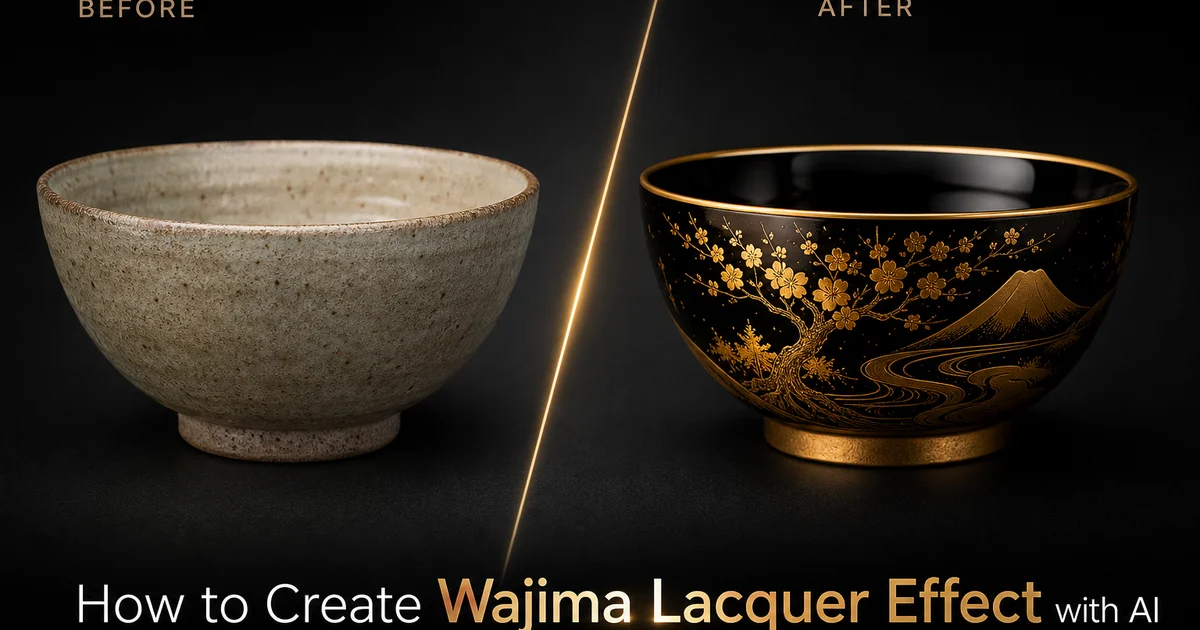
Wajima-nuri está entre as formas mais prestigiadas de laca japonesa, produzida na cidade de Wajima na Noto Peninsula, Ishikawa Prefecture, há mais de seiscentos anos. O que distingue a laca Wajima de outras tradições de laca japonesas é a extraordinária durabilidade e profundidade do seu acabamento, alcançado através de um processo que aplica mais de cem camadas de urushi. A seiva da árvore de laca Toxicodendron vernicifluum — sobre uma base de madeira reforçada com terra diatomácea jinoko de origem local misturada nas camadas de base. Esta fundação intensiva em mão de obra cria uma superfície de excepcional dureza e suavidade que serve como tela para técnicas decorativas transmitidas através de linhagens mestre-aprendiz.
As qualidades visuais da laca Wajima são inconfundíveis: um brilho espelhado com extraordinária profundidade de cor, como se a superfície fosse uma janela para uma piscina profunda de resina pigmentada em vez de um revestimento pintado. Os acabamentos Wajima mais tradicionais são shunuri (vermelho vermelhão) e roiro (preto polido), cada um alcançando sua intensidade através de ciclos repetidos de aplicação, secagem e polimento. Técnicas decorativas incluindo chinkin (linhas incisas preenchidas com ouro), maki-e (desenhos de pó metálico salpicado), raden (incrustação de madrepérola) adicionam elementos metálicos e iridescentes que flutuam sobre ou dentro da superfície laqueada. Estas qualidades combinadas — profundidade, brilho, cor rica, decoração metálica — criam uma linguagem visual que influenciou o design, a arquitetura e a moda japonesa por séculos.
As ferramentas de edição de fotos AI podem agora simular as qualidades visuais distintivas da laca Wajima em fotografias comuns, transformando imagens digitais planas em composições que evocam a profundidade, o brilho e a riqueza decorativa da laca urushi. A AI analisa a geometria da superfície para aplicar efeitos de brilho que respondem à estrutura tridimensional da sua imagem, adiciona decoração metálica que segue as linhas composicionais em vez de se sentar como uma sobreposição plana e desloca as paletas de cores para os tons focados e intencionais dos acabamentos de laca tradicionais. O resultado conecta a fotografia digital a uma das mais refinadas tradições artísticas decorativas do Japão.
- Aplique brilho profundo de laca urushi a fotografias — o acabamento espelhado e rico em profundidade alcançado através do processo de aplicação de cem camadas de Wajima.
- Adicione trabalho de linha dourada chinkin e decoração de pó metálico maki-e que seguem os contornos naturais da composição da sua imagem.
- Desloque as paletas de cores para os tons clássicos Wajima — shunuri vermelho vermelhão profundo, roiro preto polido e quentes acentos metálicos dourados.
- Crie profundidade de superfície que se lê como camadas de cor transparente em vez de tinta plana, imitando as propriedades óticas do urushi multicamadas.
- Exporte com preservação de gradiente suave em PNG ou WebP de alta qualidade para evitar artefatos de banding nas amplas transições tonais das superfícies laqueadas.
Compreendendo a estética da laca Wajima para reprodução digital
As propriedades óticas da laca Wajima diferem fundamentalmente da tinta, verniz ou qualquer outro revestimento comum. Compreender estas diferenças é chave para criar efeitos de laca digital convincentes. A laca urushi é um polímero natural que se reticular e endurece através de oxidação enzimática em condições de alta umidade. Cada camada curada é semitransparente, permitindo que a luz penetre na superfície, interaja com partículas de pigmento suspensas na resina e reflita através das camadas acima. Isto cria a profundidade característica que distingue a laca da tinta. A cor parece existir dentro da superfície em vez de sobre ela, similar a olhar através de vidro colorido em vez de uma parede pintada.
A qualidade do brilho da laca Wajima acabada é igualmente distintiva. Após as últimas camadas de laca serem aplicadas e curadas, a superfície é polida com abrasivos cada vez mais finos: carvão, pedras de amolar e finalmente a própria mão do artesão com pó de polimento — até atingir um acabamento espelhado. Este acabamento produz realces especulares amplos e suaves em vez dos reflexos nítidos de fonte pontual de superfícies metálicas ou de vidro. A luz refletida da laca Wajima parece suave e quente, espalhando-se pela superfície curva em gradientes que revelam a forma tridimensional. Reproduzir digitalmente esta qualidade requer transições de realce suaves sem bordas duras ou pontos especulares nítidos.
Os elementos decorativos na laca Wajima existem em profundidades específicas dentro da superfície. Chinkin envolve cortar linhas finas na superfície de laca curada e preenchê-las com folha de ouro ou pó de ouro, criando decoração que está nivelada com o plano da superfície. Maki-e envolve salpicar pó metálico sobre laca molhada e depois selá-lo com camadas extras de laca transparente, criando decoração que parece flutuar dentro da superfície a uma profundidade determinada por quantas camadas de selagem foram aplicadas. As incrustações de concha raden ficam ao nível da superfície e captam a luz de forma diferente da laca circundante. Imitar com precisão estas relações de profundidade digitalmente requer posicionar elementos metálicos na profundidade visual correta em relação à camada de brilho.
- Urushi cria profundidade através de camadas semitransparentes que permitem a luz penetrar, interagir com pigmento e refletir — ao contrário da tinta opaca.
- O polimento Wajima produz realces especulares amplos e suaves que se espalham em gradientes uniformes, não reflexos nítidos de fonte pontual.
- A decoração chinkin é nivelada com a superfície; maki-e flutua em profundidade dentro de camadas de selagem; raden fica no plano da superfície.
- A reprodução digital requer corresponder estas relações de profundidade — camada de brilho acima, elementos decorativos em profundidades visuais específicas dentro da superfície.
Aplicando brilho de laca e decoração metálica com filtros AI
A etapa de aplicação de brilho transforma uma superfície fotográfica padrão em algo que se lê como laqueado. A AI analisa o mapa de luminosidade da sua imagem para determinar onde os realces devem cair numa superfície brilhante. Áreas mais claras recebem realces especulares mais fortes enquanto áreas mais escuras mantêm a cor profunda e saturada do corpo de laca. A forma do realce é crítica: ao contrário de superfícies metálicas que produzem reflexos nítidos do ambiente, superfícies laqueadas produzem realces amplos e difusos com bordas suaves que gradualmente se misturam na cor circundante. A AI gera estes realces amplos e mapeia-os à curvatura implícita das superfícies na sua fotografia. Formas convexas recebem propagação de realce enquanto áreas côncavas permanecem em sombra profunda e saturada.
Efeitos de decoração metálica requerem integração cuidadosa com a camada de brilho para manter a ilusão de profundidade. Para linhas douradas incisas em estilo chinkin, a AI identifica bordas e linhas estruturais na composição: bordas arquitetônicas, contornos de objetos, linhas de contorno natural em paisagens ou retratos — e aplica linhas douradas finas ao longo destas estruturas. O ouro tem suas próprias propriedades refletivas, captando luz em ângulos onde a laca circundante não o faz, criando contraste sutil entre o preenchimento de ouro fosco e a superfície laqueada brilhante. Para metal salpicado em estilo maki-e, a AI gera aglomerados de partículas metálicas que variam em densidade e concentração, mais densos em áreas focais e mais esparsos em direção às bordas, imitando a técnica de salpico controlado do artesão.
A interação entre camadas é o que separa um efeito de laca convincente de um simples filtro de brilho mais sobreposição dourada. Na laca Wajim real, as camadas de selagem transparente acima da decoração maki-e suavizam e aquecem os elementos metálicos abaixo, dando-lhes uma qualidade diferente do ouro aplicado diretamente à superfície. A AI aproxima isto aplicando um ligeiro desvio de cor quente e suavidade aos elementos metálicos, depois sobrepondo a camada de realce de brilho por cima para que os realces cruzem tanto as áreas laqueadas quanto as metálicas uniformemente. Esta camada de brilho unificada é o que faz toda a composição ler-se como uma única superfície laqueada em vez de elementos decorativos separados colados juntos.
- Realces brilhantes são amplos e difusos com bordas suaves, mapeados à curvatura superficial implícita — formas convexas recebem realces espalhados, áreas côncavas permanecem saturadas.
- Linhas douradas chinkin seguem bordas composicionais e contornos estruturais, com ouro fosco contrastando com a laca altamente brilhante circundante.
- Partículas metálicas maki-e variam em densidade — concentradas em pontos focais, esparsas nas bordas — replicando a técnica de salpico controlado do artesão.
- Uma camada de brilho unificada sobre elementos laqueados e metálicos faz a composição ler-se como uma única superfície laqueada em vez de sobreposições separadas.
Graduação de cor para paletas tradicionais de laca Wajima
A paleta de cores Wajima é estreita e intencional. Peças tradicionais usam uma de duas cores primárias de corpo: shunuri vermelho vermelhão ou roiro preto polido. O vermelhão não é um vermelho cereja brilhante mas um vermelho profundo e quente com subtons alaranjados, a cor natural do pigmento cinábrio (sulfeto de mercúrio) suspenso na resina urushi. Múltiplas camadas desta laca pigmentada criam um vermelho que aparece quase bordô em áreas de sombra enquanto brilha laranja-avermelhado quente nos realces. O preto não é um preto plano e neutro mas um preto quente com subtons acastanhados sutis, alcançado adicionando compostos de ferro ao urushi que escurecem durante o processo de cura. Polir este preto até um acabamento espelhado revela estes subtons quentes nos realces.
O ouro é a terceira cor chave na paleta Wajima, presente no chinkin, maki-e e detalhes em folha de ouro. O ouro usado no trabalho tradicional Wajima varia de folha de ouro puro (amarelo quente) através de ligas ouro-cobre (ouro avermelhado) até prata e estanho (metálico frio). Quando selado sob camadas de laca, o ouro assume um tom mais quente e profundo que o ouro exposto porque o urushi tingido de âmbar atua como um filtro quente. Para alcançar isto digitalmente, aplique efeitos metálicos dourados e depois desloque-os ligeiramente para o quente antes de aplicar a camada de brilho de laca transparente, imitando o efeito ótico do urushi sobre metal.
A graduação de cor para o efeito de laca deve suprimir todas as cores fora da paleta. Num tratamento de laca vermelha, azuis, verdes, cinzas frios e tons pastel devem ser eliminados ou deslocados para a gama vermelho-alaranjado quente. Num tratamento de laca preta, todas as cores exceto os castanhos quentes dos realces e as decorações metálicas douradas devem ser conduzidas para o rico tom de corpo preto quente. Esta paleta estreita é parte do que dá à laca o seu poder visual. A restrição de cor força a atenção do espectador para a forma, qualidade da superfície e detalhe decorativo em vez de variedade cromática.
- Shunuri vermelhão é um vermelho profundo e quente com subtons alaranjados do pigmento cinábrio — bordô nas sombras, laranja-avermelhado brilhante nos realces.
- Roiro preto é um preto quente com subtons acastanhados revelados pelo polimento espelhado, não um preto plano ou neutro.
- Ouro selado sob camadas de urushi aparece mais quente e profundo que ouro exposto devido à laca tingida de âmbar atuar como filtro de cor.
- Suprimir todas as cores fora da paleta força a atenção visual para forma, qualidade da superfície e detalhe decorativo — a marca da estética da laca.
Aplicações criativas e considerações de exportação
O efeito de laca Wajima traduz-se poderosamente em branding de luxo, embalagem de produto e design de conteúdo premium onde riqueza visual e qualidade material partilham valor. Fotografia de joias processada com efeitos de laca ganha uma associação imediata com artesanato e herança. Imagens editoriais de moda tratadas com laca preta e efeitos maki-e dourados evocam uma estética de luxo japonesa que ressoa através dos mercados globais. Fotografia de restaurantes e comida para kaiseki japonês ou alta gastronomia beneficia da associação com a laca. Tigelas e bandejas Wajima são recipientes de serviço tradicionais na culinária formal japonesa.
Para conteúdo digital, o efeito de laca cria uma distinção visual que comanda atenção em contextos saturados com design plano e minimalista. Publicações em redes sociais e sequências de histórias processadas com tratamento consistente de laca Wajima estabelecem uma estética de marca imediatamente distinta. O brilho profundo, a paleta restrita e os acentos metálicos formam uma assinatura visual que seguidores associam a qualidade e intencionalidade. Aplique a variante de laca vermelha para conteúdo caloroso e convidativo e a variante de laca preta para conteúdo elegante, premium ou dramático para criar variação tonal dentro de um sistema estético unificado.
A otimização de exportação para efeitos de laca exige atenção cuidadosa à renderização de gradientes. As amplas transições suaves de realce que definem o brilho da laca são muito sensíveis a artefatos de compressão. Banding, posterização e ruído de quantização destroem a ilusão de uma superfície lisa e polida. PNG preserva estes gradientes perfeitamente para uso arquivístico e impressão. WebP na qualidade 90 ou superior mantém a suavidade para distribuição web em tamanhos de ficheiro razoáveis. Para plataformas de redes sociais que recompactam uploads, comece com a fonte de maior qualidade e aceite que alguma suavidade de gradiente será perdida. Evite JPEG abaixo da qualidade 85 completamente, pois a compressão com perda introduz artefatos diretamente nas áreas de realce suave onde são mais visíveis.
- Branding de luxo, fotografia de joias e embalagens premium ganham associações imediatas de qualidade material do tratamento de laca.
- Tratamento Wajima consistente em conteúdo social cria uma assinatura visual reconhecível — use laca vermelha para calor, preta para drama.
- Gradientes amplos de realce são sensíveis à compressão — PNG para arquivo, WebP na qualidade 90+ para web, evite JPEG abaixo da qualidade 85.
- Fotografia de restaurantes e kaiseki beneficia da associação cultural direta com recipientes de serviço Wajima usados na gastronomia formal japonesa.
How to do it
- 1
Choose a source image with smooth surfaces and strong compositional forms
Wajima lacquerware is defined by its mirror-like gloss and deep, saturated color on smooth surfaces. Select a source photograph with prominent smooth areas — product shots, portraits with clear skin, still lifes, or architectural surfaces. Images with existing dark tones and high contrast respond best because Wajima lacquer achieves its depth through dozens of layers of urushi resin built up over months, creating a surface that is at once deeply colored and reflective. Avoid images dominated by fine textures like grass or gravel, as these compete with the smooth lacquer illusion.
- 2
Apply the lacquer surface gloss and depth effect using AI Filter
Open the image in AI Filter and select a gloss or lacquer preset. The AI analyzes the surface geometry and applies a multi-layer treatment that mimics the characteristic Wajima finish: a deep, transparent color layer over a smooth foundation, with a high-gloss surface that reflects light in broad, soft highlights rather than sharp specular points. Adjust the gloss intensity to control how reflective the surface appears. The key visual quality to achieve is depth. Wajima lacquer looks like you are seeing color through a transparent layer, not just seeing color on a flat surface.
- 3
Add chinkin or maki-e gold decoration effects
Wajima lacquerware is renowned for its chinkin technique. Incised lines filled with gold leaf or gold dust — and maki-e — sprinkled metallic powder designs over the lacquer surface. Use AI Filter's metallic overlay tools to add gold, silver, or colored powder decorative elements that follow the natural contours and composition of your image. For chinkin-style effects, apply fine gold line work along edges and structural lines in the composition. For maki-e-style effects, add metallic particle clusters in organic patterns that complement the image's focal areas.
- 4
Refine the color palette to classic Wajima lacquer tones
Use AI Enhance to shift the color palette toward the traditional Wajima palette. The most iconic being shunuri deep vermillion red, roiro mirror-finish black, and the warm gold tones of metallic decoration. For a red lacquer effect, shift midtones and highlights toward deep vermillion while pushing shadows toward near-black. For a black lacquer effect, deepen all tones toward a rich, warm black with subtle warm undertones that distinguish lacquer from flat matte black. Reduce color variety outside the lacquer palette to maintain the focused, intentional quality of a handcrafted object.
- 5
Export the finished Wajima lacquer image with gloss preservation
Save in PNG format to preserve the smooth gradients and subtle highlight transitions that create the lacquer gloss illusion. For web use, export as WebP at quality 90 or higher. The broad, smooth tonal gradients in lacquer surfaces are susceptible to banding artifacts at lower quality settings. For print applications like product packaging or gallery prints, export at 300 DPI minimum and verify that the smooth highlight transitions render without visible stepping or banding in the print proof.
Fontes
- Wajima Lacquerware: Living Tradition of Noto Peninsula — Wajima Lacquerware Cooperative
- Japanese Lacquer Technology: Materials, Techniques, and Conservation — Getty Conservation Institute
- Urushi: The Science and Art of Japanese Lacquerware — Progress in Organic Coatings