
Como Criar o Efeito Tenmoku Glaze com AI — Magic Eraser
Transforme fotos em obras de arte no estilo tenmoku glaze (oil spot) usando AI. Guia passo a passo sobre paletas de óxido de ferro, cristalização de gotas de óleo, padrões de pelo de lebre e superfícies cerâmicas metálicas.

Product Marketing
Revisado por Magic Eraser Editorial ·
Índice
- A ciência do tenmoku: separação de fase do óxido de ferro e formação de cristais
- Configurando a paleta de óxido de ferro e o mapeamento tonal do fundo escuro
- Gerando padrões de cristalização: gotas de óleo, pelo de lebre e iridescência yohen
- Refletividade metálica, efeitos de profundidade e acabamento superficial final
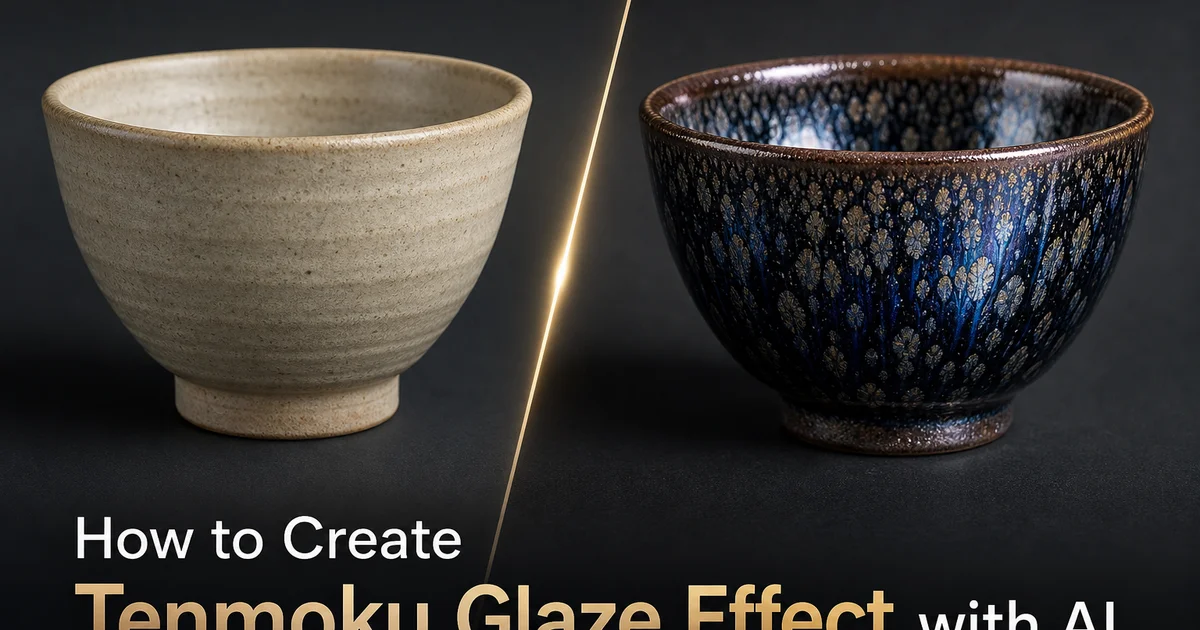
Tenmoku é uma das tradições de esmaltação cerâmica mais dramáticas e cientificamente fascinantes já desenvolvidas, originada nos fornos Jian da província de Fujian durante a dinastia Song e nomeada por monges japoneses que trouxeram as preciosas tigelas de chá de volta da Montanha Tianmu, na China. O esmalte é definido por sua química rica em ferro, contendo até dez por cento de óxido de ferro — que sob as condições extremas da queima redutora em alta temperatura produz uma família de efeitos superficiais extraordinários que nenhum ceramista pode controlar completamente e que duas queimas jamais replicam exatamente. Os mais celebrados destes efeitos são as gotas de óleo (yuteki tenmoku), onde o óxido de ferro se separa do esmalte fundido e cristaliza em círculos metálicos dispersos na superfície escura, e o pelo de lebre (nogime tenmoku), onde os cristais de ferro formam finas estrias radiais que descem da borda à medida que o esmalte flui durante a queima.
Recriar digitalmente a estética tenmoku tem sido uma das simulações cerâmicas mais desafiadoras porque o efeito visual é, em sua essência, um fenômeno superficial que ocorre na fronteira entre química e física. Diferente do celadon, que é primariamente um efeito de cor e translucidez, ou do raku, que envolve padrões de craquelê, o caráter distintivo do tenmoku vem de formações cristalinas que têm propriedades refletivas próprias, distintas da matriz de esmalte circundante. As gotas de óleo são metálicas — elas brilham e mudam de cor com o ângulo de visão porque são formações reais de cristais de ferro sobre ou dentro da superfície do esmalte. As estrias de pelo de lebre têm uma qualidade refletiva diferente do esmalte de base. E o yohen (mudança-de-forno) tenmoku, que representa o auge absoluto da tradição, produz manchas iridescentes azuis e roxas cuja cor vem da interferência de filme fino em camadas cristalinas de espessura específica — a mesma física que cria cor nas asas de borboletas e bolhas de sabão.
A conversão tenmoku AI-powered aborda estes desafios treinando em extensas coleções de fotografias tenmoku de qualidade museológica para aprender as complexas relações visuais entre o fundo escuro de óxido de ferro, as formações cristalinas superficiais e a forma como ambos interagem com a luz em diferentes ângulos. Este guia aborda o uso do AI Filter para transformar fotografias em obras de arte inspiradas em tenmoku, cobrindo a seleção de subestilos históricos, calibração do tom base de óxido de ferro, geração de padrões de cristalização, simulação de refletividade metálica e o acabamento de textura superficial que distingue uma renderização tenmoku convincente de simples efeitos de filtro escuro.
- O AI Filter gera padrões de cristalização de gotas de óleo e pelo de lebre fisicamente informados que replicam os fenômenos de separação de fase do óxido de ferro dos esmaltes tenmoku da cerâmica Jian da dinastia Song.
- Os predefinidos de subestilos históricos abrangem desde o preto tenmoku padrão, os círculos metálicos yuteki oil-spot, as estrias radiantes nogime pelo de lebre, até as raras formações iridescentes azul-roxas yohen.
- A simulação de reflexão metálica distingue as formações cristalinas do fundo opaco de óxido de ferro, criando o contraste dramático entre áreas escuras que absorvem luz e realces brilhantes.
- A variação de profundidade replica como o esmalte tenmoku acumula-se espesso no interior das peças com densa formação cristalina enquanto afina em direção às bordas onde o corpo de argila mais claro transparece.
- O acabamento de textura superficial adiciona as qualidades físicas do grês de alta temperatura — superfície vítrea do esmalte, formações cristalinas em relevo e o característico anel de pé rugoso das peças Jian.
A ciência do tenmoku: separação de fase do óxido de ferro e formação de cristais
Compreender o caráter visual do tenmoku requer a compreensão da química física que o cria. A aparência do esmalte não é desenhada ou pintada, mas emerge de processos moleculares durante a queima. Os esmaltes tenmoku contêm uma alta proporção de óxido de ferro, frequentemente oito a doze por cento em peso — dissolvido em uma matriz de silicato vítreo. Em temperaturas de queima acima de 1250 graus Celsius, o óxido de ferro está completamente dissolvido no esmalte fundido. À medida que o forno esfria, o óxido de ferro atinge um ponto de saturação onde não pode mais permanecer dissolvido e começa a se separar da matriz vítrea, formando fases distintas ricas em ferro dentro ou na superfície do esmalte. O padrão específico que esta separação de fase assume — se o ferro forma manchas circulares dispersas, estrias radiantes ou partículas finas uniformes — depende da concentração de ferro, da viscosidade do esmalte, da taxa de resfriamento, da atmosfera do forno e da orientação da superfície em relação à gravidade.
A formação de gotas de óleo ocorre quando bolhas de vidro ricas em óxido de ferro sobem à superfície do esmalte fundido durante a queima, carregadas para cima pelas bolhas de gás que se formam à medida que o esmalte libera gases dissolvidos na temperatura máxima. Estas gotículas ricas em ferro espalham-se na superfície do esmalte e, durante o resfriamento, o ferro concentrado cristaliza nos discos metálicos que dão nome ao oil-spot tenmoku. O tamanho das gotas depende de quanto ferro se acumulou em cada poça superficial antes do início da cristalização. Gotas maiores formavam-se onde mais líquido rico em ferro se acumulava, frequentemente em áreas onde o esmalte era mais espesso ou onde a geometria da superfície prendia o material ascendente. O brilho metálico das gotas vem dos próprios cristais de ferro — eles refletem a luz de forma diferente do vidro amorfo circundante, da mesma maneira que uma superfície metálica polida reflete diferentemente do mesmo metal em forma pulverizada.
A formação de pelo de lebre segue um mecanismo diferente, impulsionado pelo efeito da gravidade no esmalte fundido. Quando o esmalte tenmoku derrete e se torna fluido na temperatura máxima, ele flui para baixo sob a gravidade em superfícies verticais ou inclinadas. Este fluxo carrega a fase rica em ferro que começou a se separar, esticando-a em finas estrias paralelas alinhadas com a direção do fluxo, frequentemente da borda para baixo em direção ao pé da tigela. À medida que o esmalte esfria e solidifica, estas linhas ricas em ferro esticadas cristalizam no lugar, criando as finas estrias radiantes que lembram pelo de animal. O efeito pelo de lebre é mais pronunciado perto da borda onde o esmalte é mais fino e o fluxo começou, podendo desaparecer completamente no esmalte espesso que se acumula no fundo da tigela onde o fluxo parou e o ferro se redissolveu na matriz vítrea circundante.
- Esmaltes tenmoku contêm oito a doze por cento de óxido de ferro que se separa da matriz vítrea fundida durante o resfriamento, formando fases cristalinas distintas ricas em ferro na ou sobre a superfície do esmalte.
- Gotas de óleo formam-se quando bolhas ricas em ferro sobem à superfície do esmalte e cristalizam em discos metálicos durante o resfriamento — seu tamanho reflete quanto ferro se acumulou em cada poça superficial.
- Estrias de pelo de lebre formam-se quando o fluxo de esmalte impulsionado pela gravidade estica as fases de ferro em separação em linhas paralelas da borda ao pé, cristalizando no lugar enquanto o forno esfria.
- O brilho metálico dos cristais tenmoku vem do ferro na forma cristalina em vez de amorfa — refletindo luz como metal polido em vez de absorvê-la como pó de óxido de ferro.
Configurando a paleta de óxido de ferro e o mapeamento tonal do fundo escuro
A conversão tenmoku começa com o estabelecimento da cor de fundo escura do óxido de ferro que ocupa a maior parte da área da imagem e fornece o pano de fundo contra o qual as formações cristalinas criam drama visual. Esta cor de fundo não é simplesmente preta. É um tom escuro complexo que pode variar de um quente marrom-mel através do preto-ferro neutro até um preto-azulado frio, dependendo da tradição tenmoku específica sendo referenciada e das condições de queima sendo simuladas. O marrom-preto quente do tenmoku padrão vem do óxido de ferro que cristalizou parcialmente em toda a profundidade do esmalte, criando um fundo escuro mas ligeiramente translúcido que revela subtons quentes quando a luz entra na matriz vítrea. O preto-azulado frio de algumas peças yohen tenmoku vem de um esmalte mais completamente vitrificado onde o ferro está uniformemente disperso como partículas finas que absorvem comprimentos de onda quentes e dispersam os frios.
O mapeamento tonal do AI Filter para tenmoku comprime toda a gama da imagem fonte na paleta restrita do fundo escuro, mantendo separação tonal suficiente para preservar a legibilidade do sujeito. Diferente da conversão celadon onde a paleta ocupa a gama de tons médios, o mapeamento tenmoku empurra a maioria dos valores para a extremidade escura da escala, com apenas os realces mais brilhantes da imagem original mapeados para os tons âmbar e dourado onde as formações cristalinas aparecerão. A curva de conversão é intencionalmente íngreme nas sombras, comprimindo variações sutis de tom escuro que seriam visíveis numa paleta mais clara mas desaparecem no fundo escuro do tenmoku, e mais gradual nos realces, preservando a nuance tonal nas áreas claras onde o olho naturalmente se foca e onde o detalhe cristalino fornecerá o interesse visual principal.
A temperatura de cor do fundo de óxido de ferro interage com a sobreposição cristalina para determinar o calor ou frieza geral da imagem finalizada. Fundos quentes com subtons âmbar produzem uma estética rica e convidativa quando combinados com gotas de óleo douradas — esta é a aparência mais comumente associada à cerâmica tenmoku de uso diário para chá. Fundos frios com subtons preto-azulados criam uma estética mais dramática e austera quando combinados com formações cristalinas prateadas ou iridescentes — este é o raro e altamente prezado efeito yohen que produz iridescência azul e roxa através de interferência de filme fino em camadas cristalinas de espessura específica. O controle deslizante de temperatura permite posicionar-se em qualquer ponto deste continuum para corresponder a uma referência histórica específica ou preferência estética pessoal.
- A cor de fundo tenmoku varia de marrom-mel quente através de preto-ferro neutro a preto-azulado frio, com cada variação referenciando diferentes condições históricas de queima e formulações de esmalte.
- A compressão tonal empurra a maioria dos valores da imagem para a extremidade escura, preservando nuance apenas nos realces onde as formações cristalinas fornecem o interesse visual principal contra o fundo absorvente.
- Fundos quentes com subtons âmbar combinados com gotas de óleo douradas produzem a estética convidativa da cerâmica de chá tenmoku cotidiana, enquanto fundos preto-azulados frios criam o drama do raro yohen.
- Os controles deslizantes de saturação de ferro e temperatura permitem posicionamento preciso entre subestilos históricos, do tenmoku marrom-preto utilitário ao azul-roxo iridescente de peças yohen de qualidade museológica.
Gerando padrões de cristalização: gotas de óleo, pelo de lebre e iridescência yohen
O gerador de padrões de cristalização é o recurso central que distingue a conversão tenmoku de simples efeitos de filtro escuro. Sua qualidade determina se o resultado é lido como uma superfície cerâmica ou uma fotografia escurecida. Para oil-spot tenmoku, o gerador cria formações circulares de diâmetro variável distribuídas pela imagem com o agrupamento semi-aleatório que caracteriza a separação de fase real do óxido de ferro. Cada gota não é um círculo uniforme mas uma micro-paisagem complexa: o centro é frequentemente de um tom diferente da periferia porque a formação de cristais começou nas bordas da poça rica em ferro e progrediu para dentro. As bordas das gotas são irregulares porque o limite entre a fase rica em ferro e a matriz vítrea circundante é determinado pela química local em vez de precisão geométrica. O AI Filter modela estas variações internas das gotas para produzir pontos que são lidos como formações cristalinas em vez de círculos carimbados.
A geração de padrões de pelo de lebre requer uma abordagem algorítmica diferente que imita o fluxo direcional do esmalte fundido. O gerador cria linhas paralelas finas orientadas ao longo da direção em que a gravidade puxaria o esmalte líquido na geometria superficial implícita pelo conteúdo da imagem — geralmente para baixo no quadro, mas curvando-se em torno de formas e intensificando-se onde o ângulo superficial implícito aceleraria o fluxo do esmalte. Densidade, largura e regularidade das linhas são todas configuráveis: alguns tenmoku de pelo de lebre mostram linhas finas, regulares e próximas sugerindo condições de fluxo controladas; outros exemplos mostram estrias mais grossas e irregulares sugerindo fluxo mais vigoroso num esmalte menos viscoso. As linhas transitam de distintas perto da porção superior da imagem, onde o esmalte era mais fino e o fluxo mais visível, para cada vez mais dissolvidas nas porções inferiores onde o esmalte espesso acumulado reabsorveu as estrias de ferro na matriz vítrea.
A iridescência yohen — o efeito tenmoku mais raro e visualmente espetacular — requer uma camada de simulação extra porque a cor não vem de pigmento mas de interferência estrutural. No verdadeiro yohen tenmoku, cristais de ferro formam-se em camadas de espessura específica na superfície do esmalte, e a luz refletida das superfícies superior e inferior destas camadas interfere construtivamente para certos comprimentos de onda e destrutivamente para outros, produzindo cores iridescentes — frequentemente azul e roxo — que mudam com o ângulo de visão. O AI Filter imita isto aplicando mudanças de cor dependentes do ângulo a formações cristalinas selecionadas, criando gotas que mostram iridescência azul ou roxa quando a normal da superfície está orientada perto do observador e mudam para a cor base do óxido de ferro em ângulos oblíquos. Este é o efeito mais desafiador de renderizar de forma convincente numa imagem estática porque a verdadeira iridescência é inerentemente dinâmica — calibração cuidadosa da gama de mudança de cor e sensibilidade angular produz resultados que capturam o caráter visual chave das peças yohen.
- A geração de gotas de óleo cria formações circulares com variação tonal interna — centros mais escuros e bordas mais claras refletindo como a cristalização progride para dentro a partir dos limites das poças ricas em ferro.
- A geração de pelo de lebre simula o fluxo de esmalte impulsionado pela gravidade com linhas paralelas direcionais que se intensificam onde ângulos superficiais implícitos aceleram o fluxo e se dissolvem onde o esmalte acumulado reabsorve o ferro.
- A simulação de iridescência yohen adiciona mudanças de cor azul e roxa dependentes do ângulo às formações cristalinas usando modelagem de interferência de filme fino de espessuras específicas de camadas cristalinas.
- A distribuição de padrões segue a física da separação de fase do óxido de ferro em vez de posicionamento aleatório, concentrando-se onde a espessura do esmalte e a dinâmica do fluxo promoveriam a formação de cristais.
Refletividade metálica, efeitos de profundidade e acabamento superficial final
A qualidade metálica das formações cristalinas tenmoku é sua propriedade visual mais distintiva e a característica mais responsável pelo impacto dramático do esmalte. Diferente do fundo opaco de óxido de ferro que absorve luz, as gotas e estrias cristalinas refletem luz com intensidade metálica, criando uma superfície onde elementos escuros e brilhantes coexistem em contraste extremo. O AI Filter imita este comportamento duplo tratando o fundo de óxido de ferro e as formações cristalinas como materiais opticamente distintos: o fundo recebe um shader opaco absorvente de luz que escurece as áreas entre cristais, enquanto as formações recebem um shader de reflexão metálica que as ilumina em relação ao esmalte circundante. O equilíbrio entre estes dois shaders — quão escuro o fundo aparece e quão brilhantes os cristais aparecem — determina o contraste geral e o drama visual do efeito tenmoku.
A variação de profundidade do esmalte adiciona a camada final de realismo físico imitando como o esmalte tenmoku se comporta diferentemente em diferentes espessuras na superfície de uma peça. Nas porções superiores de uma tigela ou perto da borda, o esmalte é fino porque a gravidade puxa o material fundido para baixo durante a queima. Nestas áreas finas, o corpo de argila mais claro transparece através do esmalte translúcido, criando um tom âmbar ou marrom quente que contrasta com o preto profundo das áreas mais espessas. A transição do esmalte fino da borda para o esmalte espesso acumulado no fundo interno cria um gradiente constante de cor e densidade cristalina que é uma das características visuais mais marcantes da verdadeira cerâmica tenmoku. O AI Filter mapeia esta variação de espessura para a disposição espacial da imagem, afinando o efeito do esmalte perto das bordas superiores e intensificando-o nas áreas inferiores e centrais.
O acabamento superficial final aplica a textura física do grês de alta temperatura que distingue a simulação cerâmica de um filtro digital plano. O tenmoku é um esmalte de alta temperatura aplicado a corpos de argila de grês. A superfície é vítrea e lisa nas áreas de esmalte bem fundido mas pode mostrar ligeiras variações onde formações cristalinas criam textura elevada acima da superfície vítrea circundante. O anel de pé não esmaltado — o fundo de argila nu onde o suporte de forno do ceramista sustentava a peça — mostra o corpo de grês rugoso e vitrificado sob o esmalte, fornecendo um contraste textural que emoldura a superfície esmaltada. Adicionar estes detalhes físicos no momento da exportação cria uma imagem finalizada que é lida como uma fotografia de uma superfície cerâmica em vez de uma fotografia processada digitalmente, completando a ilusão da qual a simulação tenmoku depende para sua eficácia visual.
- A sombreamento de material duplo trata o fundo de óxido de ferro e as formações cristalinas como opticamente distintos — áreas escuras opacas absorventes de luz contrastando com realces cristalinos metálicos refletores de luz.
- O mapeamento de espessura do esmalte afina o efeito perto das bordas superiores onde a gravidade afasta o esmalte fundido, revelando tons quentes do corpo de argila, e intensifica nas áreas inferiores onde o esmalte acumula profundamente.
- O gradiente de fino a espesso da borda ao interior da tigela cria a transição tonal característica que é uma das características visuais mais reconhecíveis da autêntica cerâmica tenmoku.
- A textura de grês adiciona suavidade vítrea nas áreas fundidas, formações cristalinas em relevo e o rugoso anel de pé não esmaltado que emoldura a superfície esmaltada com autenticidade física.
How to do it
- 1
Upload your photo and evaluate its suitability for tenmoku glaze conversion
Open your image in AI Filter and assess how the existing composition will translate into the dramatic dark-ground aesthetic of tenmoku glaze. Tenmoku effects work best on images with strong focal subjects, clear spatial depth, and interesting tonal variation because the conversion compresses the palette into a range between deep iron-black and warm amber-gold highlights where the oil-spot or hare's-fur patterns catch light. Images with existing warm tones, metallic reflections, or organic textures convert especially well because these qualities align with the visual vocabulary of iron-rich ceramic glazes.
- 2
Select the tenmoku sub-style and configure the iron-oxide base tone
Choose from tenmoku sub-styles that reference different historical glaze effects. The scattered metallic circles of yohen (oil spot) tenmoku, the fine streaked lines of nogime (hare's fur) tenmoku, the deep uniform black of standard tenmoku, or the dramatic iridescent patches of yohen tenmoku with its rare blue-purple oil spots. AI Filter establishes the dark iron-oxide ground color that forms the foundation of all tenmoku glazes, ranging from warm brown-black through neutral black to cool blue-black depending on the selected sub-style and the iron saturation slider.
- 3
Generate the oil-spot or hare's-fur crystallization pattern
Enable the crystallization pattern generator to overlay the distinctive surface phenomena that make tenmoku glazes visually extraordinary. For oil-spot tenmoku, the AI generates scattered circular formations of varying size that represent areas where iron oxide has separated from the glaze matrix and crystallized on the surface during cooling, creating metallic spots that shimmer with gold, silver, or iridescent blue depending on crystal thickness. For hare's-fur tenmoku, the generator produces fine streaked lines radiating from the rim downward where iron crystals have formed along the paths of glaze flow during firing.
- 4
Add depth variation and metallic reflection behavior to the glaze surface
Configure the glaze depth and reflectivity simulation that gives tenmoku its characteristic interaction with light. Real tenmoku surfaces are neither uniformly dark nor uniformly reflective. The iron-oxide ground absorbs most light while the crystalline formations reflect it with metallic intensity, creating a dramatic contrast between matte dark areas and shimmering highlights that shifts as the viewing angle changes. Adjust the metallic intensity to control how prominently the crystal formations catch light. Configure the depth variation to simulate the way tenmoku glaze pools thickly on vessel interiors while thinning toward rims where the lighter clay body shows through.
- 5
Export with ceramic surface texture and verify against museum reference images
Apply the final surface texture layer that adds the physical qualities of high-fired stoneware. The slight roughness of the unglazed foot ring area, the smooth glassy surface of well-melted tenmoku, and the raised texture of crystalline formations that sit above the glaze surface. Save at full resolution and compare the result against museum photographs of historical Jian ware tenmoku bowls to verify that the color temperature, crystal distribution, metallic reflection quality, and overall visual weight match authentic examples of the selected sub-style.
Fontes
- Jian Ware Tea Bowls: Oil Spot, Hare's Fur, and Tenmoku Glazes of the Song Dynasty — The Metropolitan Museum of Art
- Phase Separation and Crystallization in Iron-Rich Silicate Glazes: The Science of Tenmoku — Ceramic Arts Daily
- AI-Driven Material Appearance Transfer: Challenges in Simulating Complex Surface Phenomena — arXiv — Computer Graphics and Visualization