
Como Criar o Efeito Vitral com AI — Magic Eraser
Guia passo a passo para transformar fotografias em arte de vitrais usando AI. Abrange os estilos catedral, Tiffany e geométrico moderno, segmentação de painéis, saturação de cor, configurações de linhas de chumbo e simulação de transmissão de luz para efeitos de vidro autênticos.

Product Marketing
Revisado por Magic Eraser Editorial ·
Índice
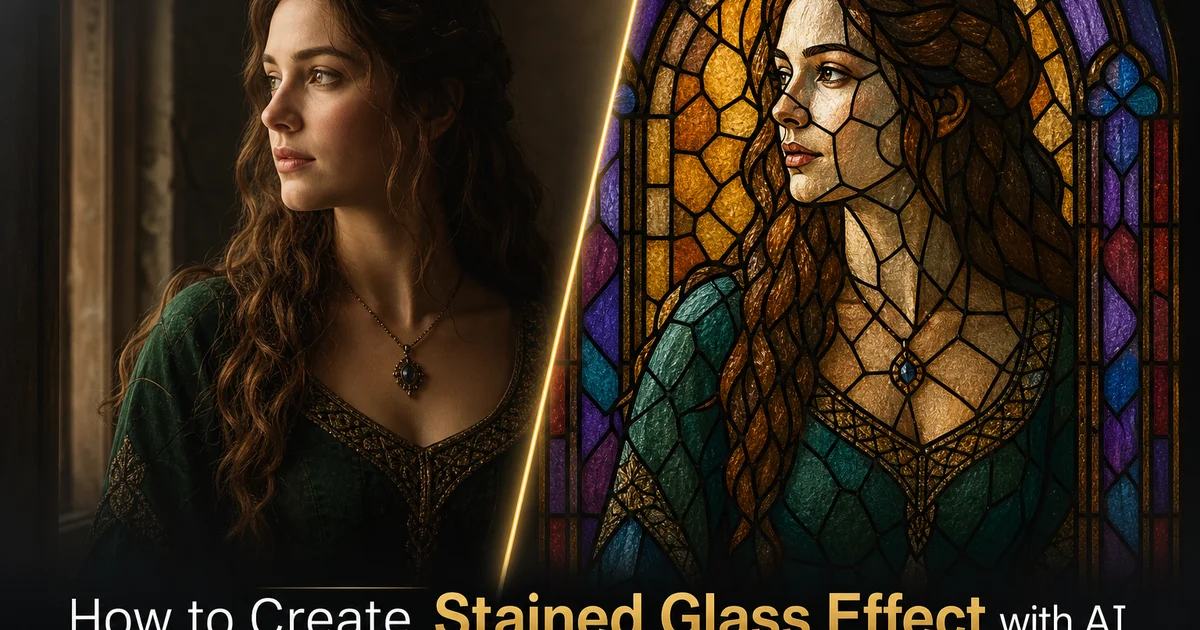
Os vitrais cativam espectadores há mais de mil anos com sua combinação única de cor intensa e composição geométrica. A forma como a luz se transforma ao passar pelo vidro colorido. O efeito visual é inconfundível — cores profundamente saturadas delimitadas por linhas escuras de chumbo, com cada painel brilhando pela luz transmitida em vez da cor refletida na superfície. Esta estética distinta foi muito além de igrejas e catedrais, alcançando o design de interiores moderno, a arte digital, as embalagens de produtos e os conteúdos de mídias sociais, onde o visual de vitral evoca artesanato, tradição e sofisticação artística. Transformar uma fotografia em estilo vitral cria uma imagem que é ao mesmo tempo fiel ao assunto original e elevada a algo que parece feito à mão e luminoso.
Criar manualmente um efeito de vitral convincente a partir de uma fotografia é um processo trabalhoso que exige compreender tanto as tradições artísticas quanto as limitações físicas do meio. Um artesão vidreiro habilidoso não simplesmente sobrepõe linhas escuras a uma imagem. Ele precisa decidir como segmentar a composição em painéis distintos que sigam os contornos naturais do assunto, respeitando as necessidades estruturais da construção em chumbo ou folha de cobre. Cada painel deve ser de uma única cor ou gradiente simples, porque peças de vidro reais não podem conter detalhes fotográficos dentro de uma única peça. A paleta de cores deve considerar como o vidro pigmentado transmite luz de forma diferente do pigmento sobre uma superfície. Essas decisões exigem tanto julgamento artístico quanto conhecimento técnico das tradições vidreiras.
Os efeitos de vitrais AI-powered aplicam compreensão computacional das tradições da arte em vidro para automatizar essas complexas decisões de segmentação e cor. A AI analisa a fotografia para identificar limites naturais entre regiões de diferentes cores e brilhos, então segmenta a imagem em painéis que seguem esses limites enquanto mantêm os padrões estruturais característicos da construção real de vitrais. O processamento de cor imita a transmissão de luz através do vidro em vez da reflexão superficial, produzindo a qualidade luminosa típica das janelas reais. Este guia explica como usar os filtros de vitral do Magic Eraser para transformar qualquer fotografia em arte de vitral autêntica, desde a escolha do estilo tradicional apropriado até a configuração dos painéis e exportação com opções de retroiluminação.
- Os efeitos de vitral segmentam fotografias em painéis coloridos distintos delimitados por linhas escuras de chumbo, criando uma forma de arte que comunica artesanato e sofisticação visual.
- Três tradições principais produzem resultados diferentes: estilo catedral com chumbo pesado e painéis grandes, estilo Tiffany com curvas orgânicas e linhas finas de cobre, e geométrico moderno com painéis angulares uniformes.
- A densidade de painéis é o controle principal — menos painéis grandes criam composições ousadas e monumentais, enquanto muitos painéis pequenos preservam mais detalhes fotográficos.
- A saturação de cor deve exceder as normas fotográficas porque o vidro de vitral usa vidro profundamente pigmentado que transmite em vez de refletir a luz.
- A simulação de transmissão de luz adiciona o centro brilhante e as bordas mais escuras dentro de cada painel, distinguindo efeitos de vitral autênticos de sobreposições de cor plana.
Como a AI segmenta fotografias em painéis de vitral
O desafio fundamental ao converter uma fotografia em vitral é decidir onde colocar os limites dos painéis. No trabalho real com vidro, o artista deve equilibrar três preocupações concorrentes: a composição estética que segue os contornos naturais do assunto, a integridade estrutural que impede que os painéis sejam grandes ou com formas estranhas que não se sustentem, e as limitações práticas de fabricação que restringem a complexidade dos cortes que podem ser feitos no vidro. A AI deve pesar todas essas três preocupações simultaneamente ao analisar uma fotografia, produzindo layouts de painéis que pareçam artisticamente intencionais, estruturalmente plausíveis e consistentes com a tradição de vitral escolhida.
O processo de segmentação começa com a detecção de bordas que identifica os principais limites na fotografia: onde o céu encontra um edifício, onde um rosto encontra o fundo, onde uma região de cor faz transição para outra. Essas bordas primárias tornam-se locais candidatos para as linhas de chumbo. A AI então subdivide regiões maiores em painéis de tamanho adequado com base na densidade de painéis selecionada, adicionando linhas de chumbo secundárias que seguem os contornos internos de cada região. Uma área de céu pode ser dividida em três ou quatro painéis seguindo as formas das nuvens. Um rosto pode ser segmentado ao longo dos limites entre zonas de luz e sombra. O resultado é um layout de painéis que segue a estrutura natural da fotografia em vez de impor uma grade arbitrária.
A forma dos painéis varia conforme a tradição e a AI ajusta sua estratégia de segmentação de acordo. O estilo catedral produz painéis maiores e mais irregulares com limites curvos orgânicos que lembram o vidro cortado à mão. O estilo Tiffany gera painéis fluidos que seguem as curvas naturais do assunto com atenção especial a formas botânicas e orgânicas. O estilo geométrico moderno cria painéis mais uniformes com bordas retas e interseções angulares. A lógica de painéis de cada tradição é aprendida analisando milhares de exemplos de vitrais reais nesse estilo. Os padrões de segmentação referenciam métodos construtivos autênticos em vez de divisões matemáticas arbitrárias.
- O posicionamento dos painéis deve equilibrar composição estética, plausibilidade estrutural e restrições de fabricação — a AI pondera todos os três simultaneamente.
- As linhas de chumbo primárias seguem as bordas naturais da fotografia, enquanto as secundárias subdividem regiões grandes de acordo com a densidade de painéis selecionada.
- O estilo catedral produz painéis orgânicos irregulares, o estilo Tiffany cria seções curvas fluidas e o geométrico moderno usa divisões angulares uniformes.
- Os padrões de segmentação são aprendidos de milhares de exemplos reais de vitrais, não impostos como grades matemáticas arbitrárias.
Processamento de cor para aparência autêntica de luz transmitida
A distinção mais crítica entre efeitos de vitral convincentes e sobreposições de cor plana é como a cor é renderizada dentro de cada painel. O vidro colorido real não simplesmente exibe cor em uma superfície. Ele transmite luz através de um meio colorido, produzindo características visuais fundamentalmente diferentes da cor pintada ou impressa. A luz que atravessa o vidro é mais brilhante no centro de cada painel, onde o vidro é mais fino devido à ligeira concavidade dos vidros soprados à mão, e mais escura nas bordas, onde o vidro encontra o chumbo e onde o ângulo de transmissão da luz aumenta. Isso cria um sutil gradiente luminoso dentro de cada painel que o olho humano reconhece como luz transmitida mesmo em uma representação bidimensional.
O processo de processamento de cor da AI começa analisando a cor média de cada painel segmentado da fotografia original, então mapeia essa cor para a cor de vidro disponível mais próxima na paleta da tradição selecionada. O vidro das catedrais medievais usava uma paleta limitada dominada por azul cobalto, vermelho rubi, verde esmeralda, amarelo âmbar e vidro claro ou branco. Selecionar esta paleta restringe a saída a cores historicamente autênticas. O vidro Tiffany introduziu variedades opalescentes e iridescentes que misturam múltiplas cores dentro de uma única peça. A paleta Tiffany permite variações de cor mais complexas por painel. O vidro moderno oferece o espectro completo, então a paleta moderna aplica restrição de cor mínima enquanto ainda aumenta a saturação além dos níveis fotográficos.
Após o mapeamento da paleta, a simulação de transmissão de luz aplica o gradiente dentro do painel que faz cada peça de vidro parecer brilhar por trás. O centro de cada painel é clareado e ligeiramente dessaturado para simular o vidro mais fino no centro. As bordas são escurecidas e saturadas para simular o vidro mais espesso próximo ao chumbo. O brilho geral da imagem é aumentado acima das normas fotográficas porque os vitrais são retroiluminados pela luz do dia. A janela em si é uma fonte de luz em vez de uma superfície refletora. Este aumento de brilho, combinado com o gradiente por painel, produz a qualidade luminosa que imediatamente se reconhece como vitral em vez de uma fotografia colorida em blocos.
- O vidro real transmite luz com centros brilhantes característicos e bordas mais escuras em cada painel — a AI simula este gradiente por painel para autenticidade.
- As paletas medievais restringem a cores historicamente autênticas como cobalto, rubi, esmeralda, âmbar e vidro claro para resultados fiéis ao período.
- As paletas Tiffany permitem variação opalescente multicolorida dentro dos painéis, enquanto as paletas modernas aplicam cor de espectro completo com saturação aumentada.
- O brilho geral é aumentado acima das normas fotográficas porque os vitrais são fontes de luz retroiluminadas em vez de superfícies refletoras.
Design das linhas de chumbo e seu impacto na autenticidade visual
As linhas de chumbo são o esqueleto estrutural de qualquer vitral e a característica mais imediatamente reconhecível desta forma de arte. Em vitrais reais, estas linhas escuras não são adornos decorativos. São a estrutura física que mantém as peças individuais de vidro no lugar. O chumbo em came é um canal em forma de H de liga de chumbo que segura as bordas dos painéis de vidro adjacentes. A técnica de folha de cobre usa finas tiras de cobre envolvidas em cada borda de vidro e soldadas juntas. O caráter visual destes métodos de união difere grandemente: o chumbo em came produz linhas escuras mais largas e uniformes com perfil ligeiramente arredondado. O cobre cria linhas mais finas e variáveis com uma superfície mais plana e brilhante onde a solda foi aplicada.
A AI ajusta as características das linhas com base na tradição selecionada e na escala da composição. As linhas de chumbo em came estilo catedral são renderizadas a quatro-seis pixels para imagens de resolução padrão, com borda ligeiramente irregular que imita as tiras de chumbo moldadas à mão usadas na construção medieval. A textura superficial inclui variação sutil na escuridão e o leve padrão de oxidação do chumbo envelhecido. As linhas de folha de cobre estilo Tiffany são renderizadas a um-três pixels com borda mais lisa e consistente e destaque metálico opcional ao longo do centro que imita a solda capturando luz. As linhas geométricas modernas podem ser renderizadas com largura perfeitamente uniforme e bordas limpas para um visual gráfico contemporâneo, ou com sutil irregularidade para um toque artesanal.
O peso da linha em relação ao tamanho do painel é crítico para o equilíbrio visual. Linhas muito finas para o tamanho do painel produzem um efeito que parece mais um desenho para colorir do que um vitral. Linhas muito pesadas sobrecarregam painéis pequenos e obscurecem o conteúdo cromático. A AI ajusta automaticamente o peso da linha em relação ao tamanho do painel, garantindo que a proporção permaneça dentro da faixa observada em vitrais reais. Para ajuste manual, a regra geral é que a largura da linha deve ser cerca de um a dois por cento do diâmetro médio do painel, uma proporção que produz linhas visíveis o suficiente para serem lidas como estrutura de suporte sem dominar a composição.
- O chumbo em came produz linhas mais largas e ligeiramente arredondadas, enquanto a folha de cobre cria linhas mais finas e planas com realces de solda — cada tradição tem uma assinatura visual distinta.
- As linhas estilo catedral incluem sutil irregularidade e textura de oxidação, enquanto as linhas Tiffany são mais lisas com realces metálicos opcionais ao longo da solda.
- O peso da linha deve escalar proporcionalmente ao tamanho do painel — aproximadamente um a dois por cento do diâmetro médio do painel mantém o equilíbrio visual autêntico.
- A AI ajusta automaticamente a proporção linha-painel com base na tradição e na escala da composição para evitar que as linhas desapareçam ou sobrecarreguem a cor do vidro.
Aplicações práticas, da arte mural ao marketing digital
A arte mural e a decoração de interiores representam o maior mercado para efeitos de vitral em fotografia. Um retrato de família, uma foto de casamento ou uma paisagem transformada em estilo vitral e impressa em acrílico retroiluminado ou filme translúcido cria uma peça decorativa marcante que funciona tanto como fotografia pessoal quanto como objeto de arte. O efeito é especialmente poderoso quando a impressão é montada em uma janela ou lightbox onde a luz real atravessa o meio translúcido, recriando a experiência de um vitral verdadeiro. Retratos de animais de estimação, imagens memoriais e fotografias de marcos importantes são assuntos populares porque o tratamento de vitral eleva uma imagem pessoal a algo que parece permanente e cerimonial.
As aplicações de marketing e branding aproveitam as fortes associações que o vitral evoca — tradição, artesanato, qualidade e sofisticação artística. Rótulos de vinho, embalagens de luxo e campanhas de marcas tradicionais usam efeitos de vitral para comunicar tradição e qualidade premium. O marketing para igrejas e organizações religiosas beneficia naturalmente da associação, mas empresas seculares como hotéis boutique, produtores artesanais de alimentos e varejistas de luxo também usam esta estética para distinguir sua identidade visual. Conteúdos de mídias sociais que usam efeitos de vitral geram forte engajamento porque o estilo é visualmente distinto e imediatamente reconhecível em feeds de rolagem.
A criação de conteúdo digital para jogos, aplicativos e design web inclui cada vez mais estéticas de vitral para telas de carregamento, medalhas de conquistas, retratos de personagens e elementos decorativos de UI. A estrutura clara de painéis e as cores ousadas tornam os efeitos de vitral especialmente legíveis em tamanhos pequenos em telas móveis. Conteúdos educacionais sobre história, arte e arquitetura usam efeitos de vitral para transformar fotografias documentais em ilustrações que correspondem à linguagem visual dos períodos discutidos. A versatilidade do efeito abrange desde a arte mural profundamente pessoal até o branding comercial e elementos funcionais de design digital.
- Impressões retroiluminadas em acrílico ou filme translúcido criam arte mural que funciona tanto como fotografia pessoal quanto como elemento decorativo luminoso.
- Marcas tradicionais, embalagens de luxo e produtores artesanais usam efeitos de vitral para comunicar tradição, artesanato e qualidade premium.
- Conteúdos de mídias sociais com efeitos de vitral geram forte engajamento devido à sua distintividade visual em feeds de rolagem.
- Aplicações digitais incluem medalhas de conquistas em jogos, telas de carregamento de aplicativos e elementos de UI onde a estrutura ousada de painéis permanece legível em tamanhos pequenos.
How to do it
- 1
Upload the photo and evaluate its composition for stained glass conversion
Open the image in Magic Eraser and assess how well its structure translates to stained glass. Photos with clearly defined regions of color, strong subject outlines, and moderate complexity convert best because stained glass relies on distinct bordered sections rather than smooth gradients. Landscapes with a clear horizon line, architectural shots with geometric elements, and portraits with strong silhouettes all produce excellent results. Avoid images with very fine detail or uniform textures. A field of grass with no variation becomes a single flat panel that lacks the sectioned quality of real stained glass.
- 2
Select the stained glass style preset and configure panel segmentation
Choose from the available stained glass presets. Cathedral style uses large irregular panels with thick lead lines inspired by Gothic rose windows, Tiffany style features flowing organic curves with thinner came lines and iridescent color shifts, and geometric modern style creates uniform angular panels with clean metallic dividers. After selecting a base style, adjust the panel density parameter. Lower density with fewer larger panels produces a bold monumental look suitable for simple compositions. Higher density with many smaller panels captures more detail and works better for complex scenes with multiple subjects.
- 3
Adjust color saturation and light transmission settings for authentic glass appearance
Configure the color processing to simulate how light passes through colored glass. Real stained glass transmits light rather than reflecting it, giving colors an internal luminosity that differs at its core from painted or printed surfaces. Increase color saturation beyond photographic norms. Stained glass uses deeply saturated cobalt blues, ruby reds, emerald greens, and amber yellows that would look excessive in a photograph but appear natural when framed by dark lead lines. Enable the light transmission simulation to add the characteristic bright center and darker edges within each glass panel that makes the effect look like actual backlit glass rather than a flat color overlay.
- 4
Refine lead line weight and texture for the target stained glass tradition
The dark lines separating glass panels are the most distinct feature of stained glass art. In real windows, these are lead came strips or copper foil soldered joints that hold individual glass pieces in place. Adjust line weight to match your chosen tradition. Medieval cathedral windows use heavy lead came that creates prominent dark borders four to six pixels wide, while Tiffany-style pieces use thinner copper foil lines at one to two pixels. Add texture to the lines for realism. Real lead came has an irregular, slightly oxidized surface rather than the perfectly uniform lines that basic filters produce.
- 5
Export the stained glass image with appropriate format and background options
Export the finished stained glass effect at full resolution. For digital display on screens, PNG format preserves the sharp panel boundaries and saturated colors without compression artifacts. For a more authentic display, enable the backlit background option that places a soft white or warm gradient behind the stained glass image, mimicking window light passing through the glass from behind. This backlit display greatly enhances the luminous quality of the effect. For print applications, export at three hundred DPI minimum. The bold lines and flat color panels of stained glass art scale exceptionally well to large formats including actual window-sized prints.
Fontes
- The Art and Science of Stained Glass: Techniques from Medieval to Modern — The Metropolitan Museum of Art
- Neural Style Transfer: A Review — arXiv
- Image Segmentation Techniques for Artistic Style Applications — IEEE