
Criar efeito Soma ware com IA: tutorial de cerâmica japonesa
Crie um efeito Soma ware com IA: esmalte namako azul-acinzentado, cavalos hashiri-uma, profundidade futae-yaki, craquelê e contexto respeitoso de Fukushima.

Technical Writer
Revisado por Magic Eraser Editorial ·
Índice
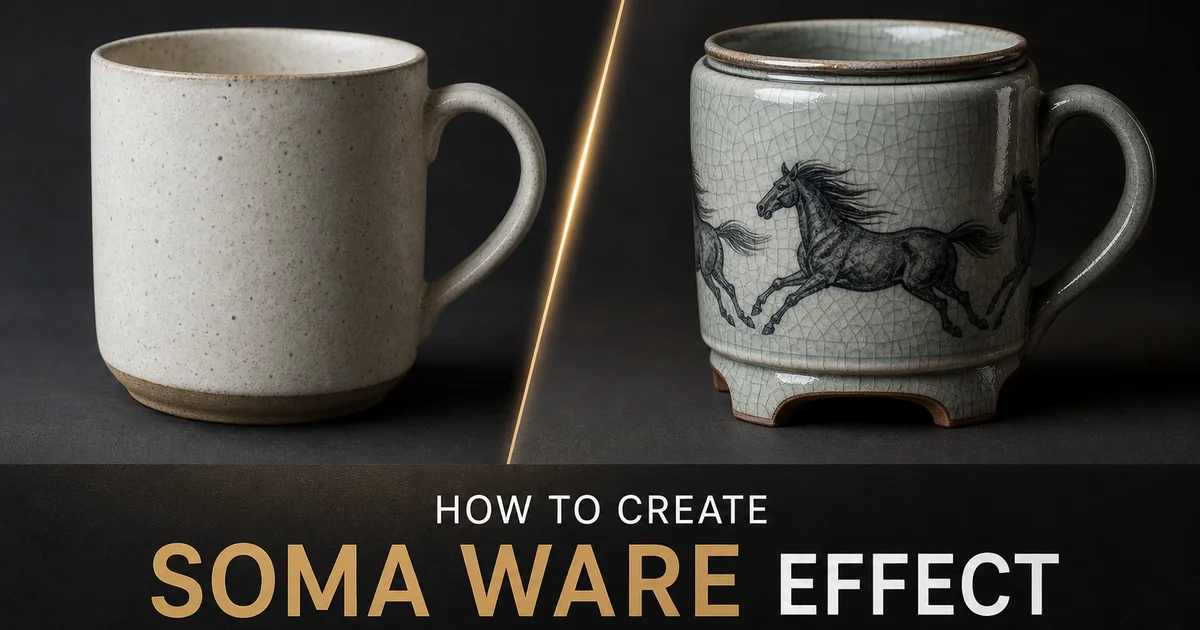
A cerâmica Soma -- Soma-yaki -- é uma das tradições cerâmicas regionais mais distintas do Japão, produzida no distrito de Soma da Província de Fukushima há mais de trezentos anos. O que torna a cerâmica Soma instantaneamente distinta entre as centenas de tradições cerâmicas japonesas é seu motivo característico hashiri-uma: cavalos galopando pintados com pinceladas caligráficas ousadas em marrom-ferro sobre um esmalte namako azul-acinzentado. Estes cavalos galopando não são meramente decorativos -- são o emblema heráldico do clã Soma, os senhores feudais que patrocinaram os fornos. Eles carregam associações com o festival Soma Nomaoi de caça a cavalos selvagens, realizado na região há mais de mil anos. Cada peça de cerâmica Soma se conecta a esta história cultural específica de cavalos, tradição marcial e identidade regional.
Além dos famosos motivos equestres, a cerâmica Soma possui várias qualidades técnicas distintas que contribuem para seu caráter visual. O esmalte namako é um azul-acinzentado fluido e variegado, criado pela sobreposição de múltiplos esmaltes que interagem durante a queima em alta temperatura, produzindo padrões orgânicos onde tons claros e escuros se acumulam e estriam pela superfície. Muitas peças Soma apresentam a construção de parede dupla futae-yaki -- uma parede interna funcional cercada por uma parede externa decorativa perfurada ou vazada, criando uma câmara de isolamento térmico que mantém o chá quente enquanto o exterior permanece fresco ao toque. A superfície do esmalte desenvolve um fino padrão de craquelê que, com anos de uso, absorve chá e desenvolve uma pátina valorizada na estética cerâmica japonesa.
A edição de fotos com AI agora pode simular as qualidades visuais distintas da cerâmica Soma -- o esmalte namako fluido, a energética pincelada equestre hashiri-uma, a textura craquelada. A qualidade dimensional da construção de parede dupla -- em fotografias comuns. Analisando a geometria superficial e a estrutura composicional, os filtros de AI transformam imagens digitais planas em composições que carregam a energia caligráfica e a presença material desta tradição cerâmica de Fukushima. Este tutorial guia a construção de um efeito Soma ware completo, desde a superfície esmaltada até a decoração equestre e a pátina de envelhecimento.
- Aplique o esmalte namako azul-acinzentado com padrões tonais fluidos e variegados criados pela interação de esmaltes multicamadas durante a queima simulada em alta temperatura.
- Adicione motivos de cavalos galopando hashiri-uma pintados com pinceladas caligráficas ousadas em marrom-ferro que transmitem energia e movimento de galope.
- Crie efeitos de profundidade de parede dupla futae-yaki que sugerem construção dimensional além da simples decoração de superfície.
- Construa redes autênticas de craquelê com manchas de chá kannyu que desenvolvem a preciosa pátina de cerâmicas japonesas envelhecidas.
- Exporte com dupla fidelidade para gradientes suaves de esmalte e pinceladas caligráficas nítidas em PNG ou WebP com qualidade 88+.
Compreendendo a estética da cerâmica Soma e a tradição hashiri-uma
O cavalo galopando hashiri-uma é muito mais que um motivo decorativo -- é a identidade visual da cerâmica Soma e carrega séculos de significado cultural específico da região de Soma em Fukushima. O clã Soma adotou o cavalo galopando como seu mon, o brasão da família. O motivo equestre nas cerâmicas servia tanto como expressão artística quanto como identificador regional. Os cavalos são pintados com uma técnica caligráfica específica: um engobe rico em ferro aplicado com um pincel largo e flexível em traços rápidos e confiantes que capturam a forma do cavalo em movimento. As melhores pinturas equestres Soma ware alcançam a mesma qualidade prezada na caligrafia japonesa -- ki-in, a energia viva do pincel, onde cada traço é irreversível, irrepetível. Vivo com o movimento do braço do pintor e o fluxo do engobe sobre a superfície esmaltada.
A tensão visual na cerâmica Soma vem do contraste entre o fundo controlado e fluido do esmalte namako e a pintura espontânea e energética do cavalo sobre ele. O esmalte namako é produzido através de um lento processo químico -- múltiplas camadas de esmalte aplicadas na superfície bruta e transformadas através de horas de queima em alta temperatura a cerca de 1300 graus Celsius. A superfície resultante é serena, com variações tonais fluidas que sugerem água ou névoa. Contra este fundo calmo, o cavalo explode com energia dinâmica, suas patas estendidas em galope completo, crina e cauda fluindo, capturado em traços que levaram segundos para serem executados. Este contraste entre processo lento e expressão rápida, fundo calmo e figura dinâmica, é o motor estético da cerâmica Soma.
Os cavalos Soma ware são frequentemente mostrados em grupos de um, dois ou três, com cada configuração carregando diferente impacto visual. Um único cavalo domina a superfície com presença isolada. Cavalos emparelhados criam uma sensação de corrida ou companheirismo. Três cavalos sugerem a energia de bando da carga montada do festival Nomaoi. Os cavalos são sempre mostrados correndo para a esquerda em peças tradicionais, seguindo a convenção do brasão do clã Soma. Suas proporções são estilizadas em vez de anatomicamente precisas -- patas longas, pescoços arqueados, caudas fluidas -- enfatizando graça e velocidade sobre a anatomia equina realista. Compreender estas convenções ajuda a criar efeitos digitais Soma ware que parecem autênticos em vez de genericamente temáticos de cavalo.
- O motivo hashiri-uma serve como identificador regional e cultural ligado ao brasão do clã Soma e ao milenar festival equestre Nomaoi.
- As pinturas equestres alcançam ki-in, a energia viva, através de pinceladas caligráficas rápidas com engobe rico em ferro -- cada traço irreversível e vivo de movimento.
- A tensão estética vem do contraste entre o fundo sereno e lento do esmalte namako e a pintura equestre espontânea e energética.
- Os cavalos tradicionais correm para a esquerda seguindo a convenção do brasão do clã, com proporções estilizadas enfatizando graça e velocidade sobre precisão anatômica.
Aplicando efeitos de esmalte namako e profundidade de parede dupla com AI
O esmalte namako é a superfície fundamental da cerâmica Soma. Reproduzir suas qualidades visuais requer compreender como os esmaltes multicamadas se comportam na queima em alta temperatura. Namako -- literalmente significando pepino-do-mar -- descreve a cor azul-acinzentada e a qualidade fluida e orgânica da superfície esmaltada onde diferentes camadas de esmalte interagiram, derreteram em diferentes temperaturas e se depositaram em um padrão variegado que nenhuma peça compartilha. Algumas áreas mostram o azul mais claro onde uma camada superior de esmalte afinou durante a queima, revelando o engobe mais pálido abaixo. Outras áreas se acumulam em um azul-acinzentado mais profundo onde o esmalte superior se depositou em reentrâncias e superfícies horizontais. As transições entre claro e escuro são fluidas e orgânicas, nunca nítidas ou geométricas.
A AI aplica este efeito de esmalte mapeando a variação tonal para a geometria superficial implícita da fotografia fonte. Superfícies convexas e áreas elevadas recebem o tratamento de esmalte mais fino e claro porque a gravidade afasta o esmalte derretido dos pontos altos durante a queima. Áreas côncavas, reentrâncias e a parte inferior das formas recebem o tratamento de esmalte mais escuro e acumulado. Superfícies verticais mostram estrias onde o esmalte escorreu para baixo durante a queima. Este mapeamento fisicamente fundamentado -- claro nos pontos altos, escuro nas poças, estrias nos verticais -- é o que faz o efeito de esmalte ser lido como um fenômeno cerâmico natural em vez de uma sobreposição digital de cor. A gama cromática permanece dentro da paleta namako: azul-acinzentado frio como tom dominante, com marrom-acinzentado mais quente onde o ferro do corpo argiloso aparece através das áreas de esmalte mais fino.
O efeito de parede dupla futae-yaki adiciona uma dimensão de complexidade visual única à cerâmica Soma. Em peças tradicionais, a parede externa é perfurada ou esculpida em padrões vazados. A parede interna é visível através das aberturas, criando uma profundidade visual estratificada. Imitar isto digitalmente envolve criar a impressão de uma camada superficial secundária atrás da superfície primária da imagem -- visível através de lacunas, perfurações ou áreas translúcidas. A AI gera esta sugestão de profundidade tratando elementos composicionais selecionados como parede externa e renderizando uma superfície com tom sutilmente diferente visível atrás deles, criando uma profundidade semelhante a um efeito de paralaxe que confere à composição uma complexidade dimensional maior que uma superfície esmaltada plana sozinha.
- A variação do esmalte namako mapeia a geometria superficial: mais fino e claro em áreas convexas, mais profundo e escuro onde o esmalte se acumula em reentrâncias e horizontais.
- Superfícies verticais mostram estrias de esmalte devido ao fluxo gravitacional durante a queima, adicionando energia visual direcional ao tratamento superficial.
- A gama cromática permanece dentro da paleta namako -- azul-acinzentado frio dominante, com marrom-acinzentado quente onde o corpo argiloso aparece através do esmalte mais fino.
- Os efeitos de profundidade futae-yaki criam estratificação visível entre superfícies externas e internas, adicionando complexidade dimensional além da decoração superficial plana.
Pintando cavalos hashiri-uma com autenticidade caligráfica
A etapa de pintura do cavalo é o coração criativo do efeito Soma ware. Seu sucesso depende de capturar a qualidade caligráfica que distingue a cerâmica Soma tradicional de uma simples ilustração. A AI gera formas equestres usando renderização baseada em traços em vez de contorno e preenchimento, imitando a técnica onde o oleiro carrega um pincel largo com engobe rico em ferro e pinta o cavalo em uma sequência constante de traços rápidos. O corpo é um único traço largo. As patas são traços rápidos individuais que começam grossos no corpo e afinam até cascos finos. A crina e a cauda são traços fluidos e arrastados que expressam velocidade através de sua qualidade estendida e ondulante. A cabeça é um traço compacto e preciso com orelha e olho sugeridos por marcas mínimas.
A cor marrom-ferro da decoração equestre tem qualidades ópticas específicas que diferem do esmalte namako circundante. O engobe de ferro é opaco onde aplicado espesso -- ao longo do corpo do cavalo e patas superiores -- e torna-se semitransparente nas bordas onde o pincel levantou ou secou, permitindo que o esmalte azul-acinzentado apareça através. Esta variação de transparência de espesso a fino é uma característica do traço caligráfico e é chave para o realismo. A AI renderiza os traços equestres com esta opacidade graduada: marrom-ferro opaco e cheio no centro de cada traço, transitando para semitransparente nas bordas e nos pontos terminais onde o pincel estava se levantando da superfície.
O posicionamento dos motivos equestres dentro da composição segue tanto a convenção tradicional quanto os princípios de design visual. Os cavalos devem ocupar uma posição proeminente mas não dominante -- frequentemente a metade superior ou zona média da composição, com espaço abaixo e ao redor para o esmalte namako respirar. Na cerâmica Soma tradicional, o cavalo é dimensionado para ocupar cerca de um terço a metade da superfície visível, deixando o restante como fundo esmaltado. A direção da corrida deve seguir o fluxo visual dominante da composição. A energia do cavalo deve realçar em vez de combater o movimento composicional da imagem subjacente. Múltiplos cavalos são dispostos em paralelo mas em alturas e escalas ligeiramente diferentes, sugerindo profundidade e o movimento sequencial de um grupo galopando.
- A renderização baseada em traços captura a técnica caligráfica -- corpo como traço largo único, patas afinando de grossas para finas, crina fluindo com velocidade.
- O engobe marrom-ferro é opaco nos centros dos traços e semitransparente nas bordas, mostrando o esmalte azul-acinzentado através das áreas finas da pincelada.
- Os cavalos ocupam um terço a metade da superfície visível, deixando o fundo esmaltado respirar como elemento composicional positivo.
- Múltiplos cavalos se dispõem em paralelo em alturas e escalas diferentes, sugerindo o movimento sequencial e a profundidade de um grupo galopando.
Aplicações criativas e otimização de exportação
O efeito Soma ware é particularmente poderoso para marcas e conteúdos que desejam comunicar simultaneamente energia, tradição e identidade regional japonesa. O motivo do cavalo galopando é dinâmico e memorável -- para a rolagem em feeds de mídias sociais porque a forma equestre caligráfica é visualmente marcante e diferente de qualquer filtro ou efeito padrão. Marcas equestres, marcas esportivas, empresas de esportes de ação. Criadores de conteúdo cultural japonês podem usar o tratamento Soma ware para colocar suas imagens dentro de uma tradição específica e histórica, mantendo ao mesmo tempo energia visual e movimento para frente. A paleta azul-acinzentada e marrom-ferro é sofisticada sem ser discreta, funcionando tanto em contextos de marcas de luxo quanto orientadas à ação.
Para o branding regional de Fukushima e conteúdos turísticos, o efeito Soma ware carrega um significado cultural particular. O festival Soma Nomaoi -- onde cavaleiros armados perseguem e capturam cavalos selvagens numa tradição que remonta ao período Heian -- é um dos eventos culturais mais importantes de Tohoku. Conteúdos que referenciam visualmente esta tradição através do motivo hashiri-uma conectam-se a um profundo poço de orgulho regional e identidade cultural, principalmente na recuperação em curso e revitalização cultural da costa de Fukushima após o terremoto e tsunami de 2011. Usar o efeito Soma ware de forma respeitosa e consciente neste contexto apoia a conscientização cultural e o desenvolvimento econômico regional.
A exportação otimizada para o efeito Soma ware deve equilibrar duas necessidades técnicas concorrentes: os gradientes suaves e fluidos do esmalte namako e as bordas caligráficas nítidas da pincelada equestre. A compressão com perda tende a borrar as bordas nítidas do pincel enquanto introduz bandeamento nos gradientes suaves do esmalte, degradando ambos os elementos simultaneamente. O PNG preserva perfeitamente ambas as qualidades para uso arquivístico e impressão. O WebP com qualidade 88 ou superior mantém qualidade aceitável para ambos os elementos na entrega web. Para plataformas de mídias sociais que recompactam uploads, comece pela fonte de maior qualidade possível. Na conversão CMYK para impressão, verifique se os tons namako azul-acinzentados e as cores marrom-ferro dos cavalos mantêm separação suficiente -- estas cores são próximas em valor tonal e podem se fundir num cinza-marrom uniforme se a separação não for cuidadosamente gerenciada.
- O motivo equestre dinâmico para a rolagem das mídias sociais com energia caligráfica visualmente marcante, diferente de efeitos de filtro padrão.
- Marcas equestres, esportivas e de cultura japonesa ganham tanto tradição quanto energia de movimento para frente com o tratamento Soma ware.
- Conteúdos regionais e turísticos de Fukushima conectam-se à herança do festival Nomaoi e à revitalização cultural em curso através do motivo hashiri-uma.
- A conversão CMYK requer gerenciamento cuidadoso de separação para manter a distinção entre o esmalte azul-acinzentado e os tons marrom-ferro do cavalo, próximos em valor tonal.
How to do it
- 1
Select a source image with dynamic forms suited to equestrian motifs
Soma ware is instantly distinct by its hashiri-uma running horse motifs -- spirited horses painted in bold, calligraphic brushstrokes that convey movement and energy on the ceramic surface. Choose a source photograph with dynamic compositional elements that can anchor the horse motifs: action shots, landscapes with sweeping lines, or product images with bold forms. The image should have areas of clear surface where the running horse can be placed without competing with excessive visual detail. Images with warm, earthy tones work especially well because they harmonize with Soma ware's signature blue-gray namako glaze and iron-brown horse decoration.
- 2
Apply the namako glaze and double-walled texture effect using AI Filter
Open the image in AI Filter and apply a ceramic glaze preset that mimics Soma ware's distinctive namako glaze -- a blue-gray glaze with flowing, wave-like patterns created by the interaction of multiple glaze layers during firing. The AI transforms smooth surfaces into the signature Soma ware finish where the glaze appears to move and pool, creating organic patterns of lighter and darker blue-gray tones. For areas mimicking Soma ware's famous futae-yaki double-walled construction, the AI adds a subtle dimensional quality that suggests an inner wall visible through a perforated or openwork outer wall, creating visual depth beyond a simple surface treatment.
- 3
Paint the hashiri-uma running horse motifs with calligraphic energy
The heart of the Soma ware effect is the hashiri-uma -- running horses painted with a free, calligraphic brush technique that captures galloping energy in a few bold strokes. Use AI Filter's decorative overlay to add horse motifs rendered in iron-brown against the blue-gray glaze ground. The horses should appear painted with confident, single-pass brushstrokes rather than carefully outlined and filled -- the speed and spontaneity of the brush technique is what gives Soma ware horses their vitality. Position the horses in dynamic running poses along compositional lines where their movement energy enhances the overall sense of flow in the image.
- 4
Add crackle glaze and weathering effects for authenticity
Soma ware's glaze surface develops a characteristic crackle pattern -- a network of fine lines where the glaze has contracted differently from the clay body during cooling. Use AI Enhance to add a subtle crackle network across the glazed surfaces, denser in areas of thicker glaze accumulation and sparser on thinner areas and raised edges. For a more aged look, add slight warmth to the crackle lines suggesting centuries of tea and use staining the cracks. This is a valued aesthetic quality in Japanese ceramics called kannyu. The crackle should enhance the organic, handcrafted quality without overwhelming the horse decoration.
- 5
Export the finished Soma ware image with glaze and brushwork fidelity
Save in PNG format to preserve the subtle blue-gray glaze variations and the brushwork quality of the horse motifs. The flowing tonal transitions of the namako glaze require smooth gradient rendering. The calligraphic horse strokes require sharp edge keeping -- both suffer from aggressive lossy compression. For web delivery, use WebP at quality 88 or higher. For print applications including product packaging, exhibition materials, or gallery catalogs, export at 300 DPI and verify that the blue-gray glaze tones and iron-brown horse colors maintain their distinction without merging into a uniform gray-brown under CMYK conversion.
Fontes
- Soma-yaki: The Running Horse Pottery of Fukushima — Soma Ware Pottery Association
- Traditional Pottery of the Tohoku Region — Tohoku Bureau of Economy, Trade and Industry
- Japanese Ceramic Traditions: Regional Styles and Techniques — Nippon Communications Foundation