
Como Criar um Efeito de Grés Shigaraki com IA: Tutorial de Textura de Cerâmica Japonesa
Aprenda a criar efeitos autênticos de grés Shigaraki em fotos usando IA. Tutorial passo a passo sobre texturas de argila rugosa, esmaltes naturais de cinzas e padrões de queima da cerâmica japonesa.

Product Marketing
Revisado por Magic Eraser Editorial ·
Índice
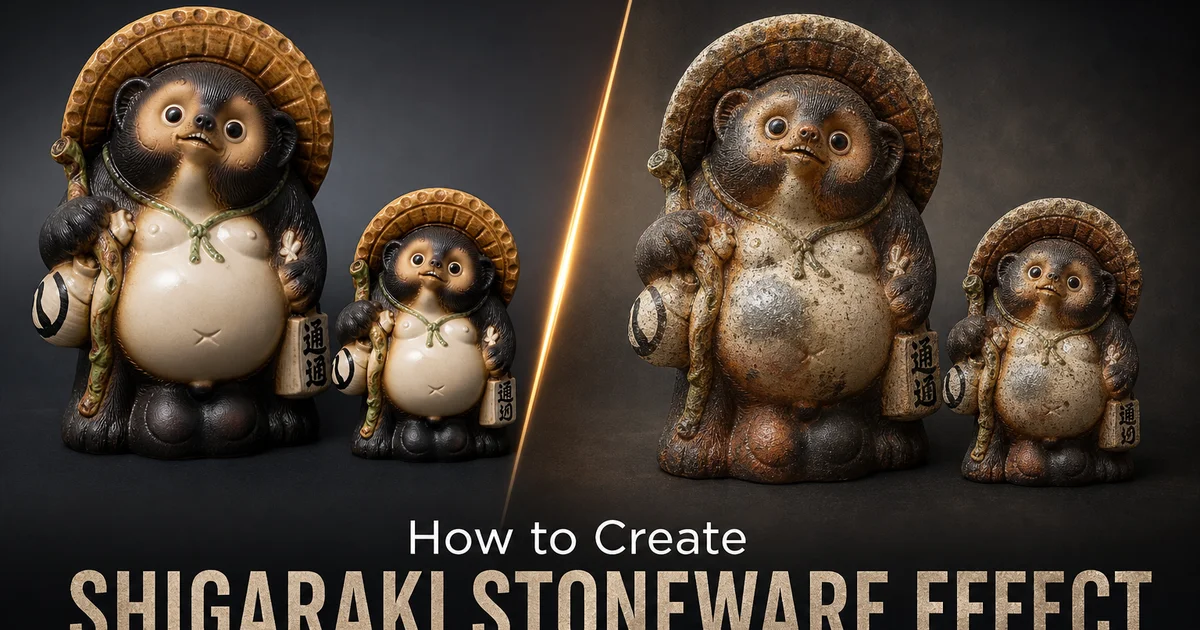
A cerâmica Shigaraki é uma das seis tradições antigas de forno do Japão, produzida na região de Shigaraki, na Província de Shiga, desde o século XIII. Diferente das superfícies refinadas e lisas da porcelana, o grés Shigaraki celebra a beleza crua da argila queimada em alta temperatura. Texturas granulares rugosas provenientes de argila local grossa misturada com feldspato e areia de quartzo, superfícies marcadas pela ação direta das chamas durante queimas a lenha de vários dias, e a beleza acidental da cinza natural que se deposita e derrete em manchas vítreas sobre o corpo de argila durante o processo no forno.
A estética distinta Shigaraki influenciou a arte, a arquitetura e o design muito além do mundo da cerâmica. As famosas estátuas de tanuki guaxinim Shigaraki ficam nas entradas de lojas em todo o Japão. Arquitetos modernos incorporam elementos de azulejo e grés Shigaraki em fachadas de edifícios por sua textura quente e orgânica. No design digital, o visual Shigaraki se traduz em imagens com superfícies rugosas e táteis e paletas de tons terrosos quentes — a qualidade visual específica de um material moldado pelo fogo e forças naturais, em vez do controle humano preciso.
Ferramentas de edição de fotos com IA agora tornam possível aplicar efeitos de grés inspirados em Shigaraki a fotografias comuns, transformando imagens digitais lisas em composições que evocam o calor, a textura e a imperfeição wabi-sabi da cerâmica japonesa queimada a lenha. A IA analisa a geometria da superfície e aplica sobreposições de textura, efeitos de esmalte de cinzas e padrões de queima que respondem à estrutura da sua imagem original em vez de serem aplicados como um filtro plano sobreposto. O resultado é um tratamento em grés que envolve naturalmente as formas da sua fotografia.
- Aplique texturas autênticas de grés Shigaraki — argila rugosa, inclusões de areia e granularidade de feldspato — a qualquer fotografia usando filtros de IA.
- Adicione efeitos de esmalte natural de cinzas (bidoro) que se depositam realisticamente em superfícies voltadas para cima na sua composição.
- Crie padrões de queima (koge) que simulam o contato direto da chama durante a queima em forno a lenha.
- Mude as paletas de cores para os tons terrosos quentes Shigaraki — argila rosa-acastanhada, marrom-ferro, verde-cinza e queimado preto-carvao.
- Exporte em PNG para preservação total da gama tonal ou otimize para redes sociais com dimensões nativas da plataforma com contraste aumentado.
Compreendendo a estética do grés Shigaraki para aplicação digital
O grés Shigaraki obtém seu caráter de três elementos que interagem: a argila, o fogo e a cinza. A argila local Shigaraki é de granulação grossa, contendo partículas visíveis de feldspato e areia de quartzo que criam uma superfície rugosa e granular mesmo após queima em alta temperatura de 1200 a 1300 graus Celsius. Essa textura rugosa não é um defeito, mas uma característica definidora que confere à cerâmica Shigaraki sua qualidade tátil e cria microsuperfícies onde a cinza pode se acumular e derreter durante a queima. Compreender esses três elementos é fundamental para criar um efeito Shigaraki digital convincente em vez de uma sobreposição genérica de textura rugosa.
O fogo deixa suas próprias marcas distintas na cerâmica Shigaraki. Durante queimas a lenha de vários dias, as chamas se movem pela câmara do forno em padrões determinados pelo design do forno, cronograma de alimentação e tipo de madeira. Onde as chamas entram em contato direto com a superfície da argila, deixam koge — áreas queimadas que variam de marrom quente a preto carvao profundo. Essas marcas de fogo não são uniformes; seguem o caminho da chama, criando padrões direcionais que envolvem a forma da peça. No lado oposto à fonte de fogo, a argila mantém sua cor natural mais clara, criando um contraste dramático entre as superfícies expostas ao fogo e as protegidas.
O terceiro elemento — o esmalte natural de cinzas, chamado bidoro em japonês — é talvez a característica mais distintiva da cerâmica Shigaraki. À medida que a madeira queima no forno por vários dias, partículas de cinza se tornam aerotransportadas e se depositam nas superfícies cerâmicas. Nas temperaturas máximas do forno, essa cinza derrete e se funde com a superfície da argila, formando um esmalte natural que varia de verde claro translúcido a marrom-oliva escuro. A cinza se acumula mais pesadamente em superfícies horizontais e voltadas para cima e em reentrâncias onde se coleta, criando um padrão de esmalte irregular que registra a orientação da peça no forno.
- A argila Shigaraki contém partículas visíveis de feldspato e areia de quartzo que criam textura superficial rugosa e granular característica.
- Marcas de fogo (koge) seguem caminhos direcionais de chama, criando gradientes quentes a carvao que envolvem formas tridimensionais.
- O esmalte natural de cinzas (bidoro) acumula-se em superfícies voltadas para cima e em reentrâncias, formando manchas verde-acastanhadas translúcidas.
- Efeitos Shigaraki autênticos exigem a interação de todos os três elementos — textura da argila, marcas de fogo e acúmulo de cinzas — não apenas uma única sobreposição rugosa.
Aplicando textura e efeitos de esmalte com filtros de IA
A etapa de aplicação de textura é onde o filtro de IA transforma uma fotografia digital lisa em algo que se lê como uma superfície cerâmica. A IA analisa a luminosidade e a estrutura de bordas da sua imagem para determinar onde a textura deve ser mais ou menos pronunciada. Em áreas de alto detalhe — rostos, texto, bordas arquitetônicas — a textura é aplicada mais sutilmente para preservar a legibilidade. Em áreas mais lisas — céus, paredes, tecidos — a textura é aplicada mais agressivamente porque há menos detalhes concorrentes. Essa aplicação adaptativa previne o problema comum com sobreposições de textura estáticas.
O efeito de esmalte de cinzas requer uma consciência espacial que filtros de sobreposição simples não podem fornecer. Em um forno real, a cinza se deposita para baixo e acumula em superfícies que enfrentam a direção da corrente de ar carregada de cinza. A IA aproxima isso analisando a orientação tridimensional implícita das superfícies na sua fotografia. Superfícies horizontais e planos voltados para cima recebem acúmulo de esmalte mais pesado. Superfícies verticais e partes inferiores recebem depósitos mais leves ou nenhum. Essa aplicação consciente da gravidade cria uma ilusão cerâmica muito mais convincente.
Efeitos de marcas de fogo seguem uma lógica espacial semelhante. A IA determina uma fonte de luz direcional na imagem, ou permite que você defina uma manualmente — e aplica efeitos de queima mais fortes em superfícies voltadas para essa direção, com superfícies mais frias e claras no lado oposto. Isso cria a coloração assimétrica característica da cerâmica queimada a lenha, onde um lado é fortemente marcado pela chama e o outro retém a cor natural da argila. A transição entre áreas queimadas e protegidas deve ser gradual, não uma linha dura.
- A IA analisa luminosidade e estrutura de bordas para aplicar textura adaptativamente — mais sutil em detalhes finos, mais forte em áreas lisas.
- Efeitos de esmalte de cinzas são conscientes da gravidade, acumulando-se mais pesadamente em superfícies voltadas para cima e horizontais como em um forno real.
- Marcas de fogo seguem lógica direcional com queima forte em superfícies expostas à chama e tons naturais de argila em lados protegidos.
- A transição entre áreas queimadas e protegidas usa gradientes graduais em vez de bordas duras para aparência autêntica de forno.
Graduação de cores para tons terrosos Shigaraki autênticos
A paleta de cores Shigaraki é decididamente quente e de alcance estreito. A argila crua queima para um rosa-acastanhado chamado hi-iro (cor do fogo), que é o tom base subjacente a todos os outros efeitos de superfície. Áreas ricas em ferro da argila queimam mais escuras, produzindo marrons quentes e marrom-avermelhados. Áreas com esmalte de cinzas variam de verde celadon claro a oliva a marrom escuro, dependendo da composição da cinza e da temperatura de queima. Áreas queimadas variam de âmbar quente a marrom profundo a preto carvao. A impressão geral é quente, terrosa e contida.
Para alcançar essa paleta digitalmente, comece mudando a temperatura geral da cor para quente. Reduza a intensidade do canal azul em sombras e meios-tons enquanto aumenta o calor nos canais vermelho e amarelo. Suprima quaisquer verdes que não estejam no alcance oliva-celadon do esmalte de cinzas. Dessature cores que caem fora da paleta Shigaraki — vermelhos brilhantes, roxos e quaisquer matizes saturados — mantendo o calor suave da gama de tons terrosos. O objetivo é uma gama tonal estreita onde a variação vem de diferenças sutis entre argila, cinza e fogo.
O manuseio de sombras é crítico para a ilusão cerâmica. O grés Shigaraki real tem sombras quentes porque o corpo de argila irradia calor — absorve e reflete luz no espectro quente mesmo em áreas de sombra. Imagens digitais geralmente têm sombras frias ou neutras que parecem inorgânicas. Aquecer os tons de sombra e adicionar um leve tom laranja-acastanhado às áreas mais escuras da imagem cria a sensação de um material que é em sua essência quente em toda parte. Esse ajuste sutil faz a diferença entre uma imagem que parece ter recebido um filtro quente e uma que parece ser realmente feita de argila queimada.
- A paleta Shigaraki centra-se em argila rosa-acastanhada (hi-iro), marrom-ferro, esmalte de cinzas oliva-celadon e marcas de fogo carvao.
- Suprima cores não-terrosas — vermelhos brilhantes, azuis, roxos e cinzas frios — preservando a variação de tons quentes suaves.
- Aqueça as sombras com tom laranja-acastanhado para simular o calor radiante de um corpo de argila que reflete luz no espectro quente.
- A variação tonal deve vir de diferenças sutis entre zonas de argila, cinza e fogo, em vez de uma ampla gama de matizes.
Aplicações criativas e otimização de exportação
O efeito de grés Shigaraki funciona excepcionalmente bem para branding e embalagens nos setores alimentício, de bem-estar e artesanal, onde estéticas orgânicas, artesanais e inspiradas no Japão ressoam com o público-alvo. Fotos de restaurantes processadas com texturas Shigaraki evocam os vasos cerâmicos artesanais que restaurantes japoneses de alto padrão usam para apresentação de alimentos. Fotos de produtos para cuidados naturais com a pele, chás ou artigos feitos à mão ganham credibilidade artesanal imediata quando os elementos visuais ao redor carregam o calor e a textura da cerâmica queimada a lenha.
Para conteúdo de redes sociais, o efeito Shigaraki cria uma identidade visual distinta que se destaca em feeds dominados por imagens limpas, polidas e de alta saturação. As texturas rugosas, os tons terrosos suaves e as imperfeições orgânicas são visualmente marcantes precisamente porque contrastam com a estética predominante da perfeição digital. Criadores de conteúdo focados em cerâmica, cultura japonesa, design de interiores ou estética minimalista podem usar o efeito para criar uma marca visual coesa em suas postagens. Aplique o efeito em intensidades variadas para manter o interesse visual.
Ao exportar imagens processadas com Shigaraki, a escolha do formato é importante porque a qualidade do efeito depende da preservação de variações tonais sutis e detalhes finos de textura. O formato PNG preserva cada nuance da textura da argila e dos gradientes do esmalte de cinzas. Para uso na web onde o tamanho do arquivo importa, WebP na qualidade 85 ou superior retém a maior parte da qualidade da textura com tamanhos de arquivo muito menores. Evite compressão JPEG pesada, que tende a suavizar a textura granular fina que torna o efeito de grés convincente.
- Branding alimentício, de bem-estar e artesanal se beneficia do calor artesanal Shigaraki — comunica autenticidade feita à mão e materiais naturais.
- Conteúdo para redes sociais se destaca com texturas orgânicas e tons terrosos suaves que contrastam com a estética predominante de alta saturação.
- Aplique em intensidades variadas em uma série de conteúdo — força total para imagens principais, aplicação mais leve para conteúdo de apoio.
- Use PNG ou WebP na qualidade 85+ para preservar detalhes finos de textura — compressão JPEG pesada destrói a superfície granular que torna o efeito convincente.
How to do it
- 1
Select a photo with strong surface texture and earthy tones
Shigaraki stoneware is defined by its rough, tactile surfaces and warm earth-tone palette. Choose a source image with visible texture. Stone walls, weathered wood, clay landscapes, or close-up portraits where skin texture is prominent. Images with existing warm tones in the brown, orange. Ochre range respond best to the Shigaraki treatment because the AI filter can amplify these natural qualities rather than forcing an unnatural color shift onto cool-toned source material.
- 2
Apply the Shigaraki stoneware texture overlay using AI Filter
Open the image in AI Filter and select a ceramic or stoneware texture preset. The tool analyzes the surface geometry of your image and applies a texture layer that mimics the rough, granular surface of Shigaraki clay. The visible sand and feldspar inclusions, the irregular surface undulations, and areas where the unglazed clay body shows through. Adjust the texture intensity to control how strongly the stoneware surface dominates the original image detail.
- 3
Add natural ash glaze effects and fire-marking patterns
Shigaraki ware is famous for its natural ash glaze — bidoro — where wood ash settles on the clay surface during firing and melts into a glassy green-brown coating. Use AI Filter's glaze overlay to add patches of semi-translucent glassy texture across the image, concentrated on surfaces that face upward in the composition. Add subtle scorching and fire-color variations — the koge markings where flames directly contacted the clay — to create an authentic kiln-fired look.
- 4
Refine the earth-tone color palette and surface warmth
Use AI Enhance to shift the color palette toward Shigaraki's distinctive warm earth tones. The pinkish-tan of the raw clay body, the deep brown of iron-rich areas, the subtle green of ash accumulation zones, and the charcoal black of heavy fire marking. Reduce color saturation in non-earth tones to suppress blues and greens that would break the ceramic illusion. Increase warmth in the shadows to simulate the radiant heat glow that wood-fired ceramics retain in their look.
- 5
Export the finished Shigaraki stoneware image
Save the final image in PNG format to preserve the full tonal range of the subtle earth-tone variations and fine texture detail. For social media, export at platform-native dimensions with a slight contrast boost to ensure the delicate texture and glaze effects remain visible after platform compression. For print applications like gallery cards or ceramic studio marketing, export at 300 DPI minimum to capture the granular detail that makes the stoneware illusion convincing at close viewing distances.
Fontes
- Shigaraki Ware: Tradition and Innovation in Japanese Ceramics — Shigaraki Ceramic Cultural Park
- Japanese Stoneware: A Handbook of Clays and Glazes — The Metropolitan Museum of Art
- Natural Ash Glazes and Kiln Effects in Wood-Fired Ceramics — Journal of the American Ceramic Society