
Como Criar um Efeito de Esmalte Raku com Edição de Fotos por IA
Transforme fotos em efeitos cerâmicos de esmalte queimado em raku usando transferência de estilo por IA. Guia passo a passo sobre brilho metálico de cobre, padrões de craquelê, redução de carbono, naked raku e texturas autênticas de superfície por choque térmico.

Product Marketing
Revisado por Magic Eraser Editorial ·
Índice
- Como a renderização raku por IA difere de abordagens simples com textura craquelê e sobreposição metálica
- Química do cobre raku: a ciência por trás da cor metálica e da iridescência
- Efeitos de carbono: penetração no craquelê, escurecimento da argila e decoração com crina de cavalo
- Tradição raku japonesa versus raku ocidental: duas estéticas distintas de um único nome
- Aplicações criativas: visualização cerâmica, arte mista e branding artesanal
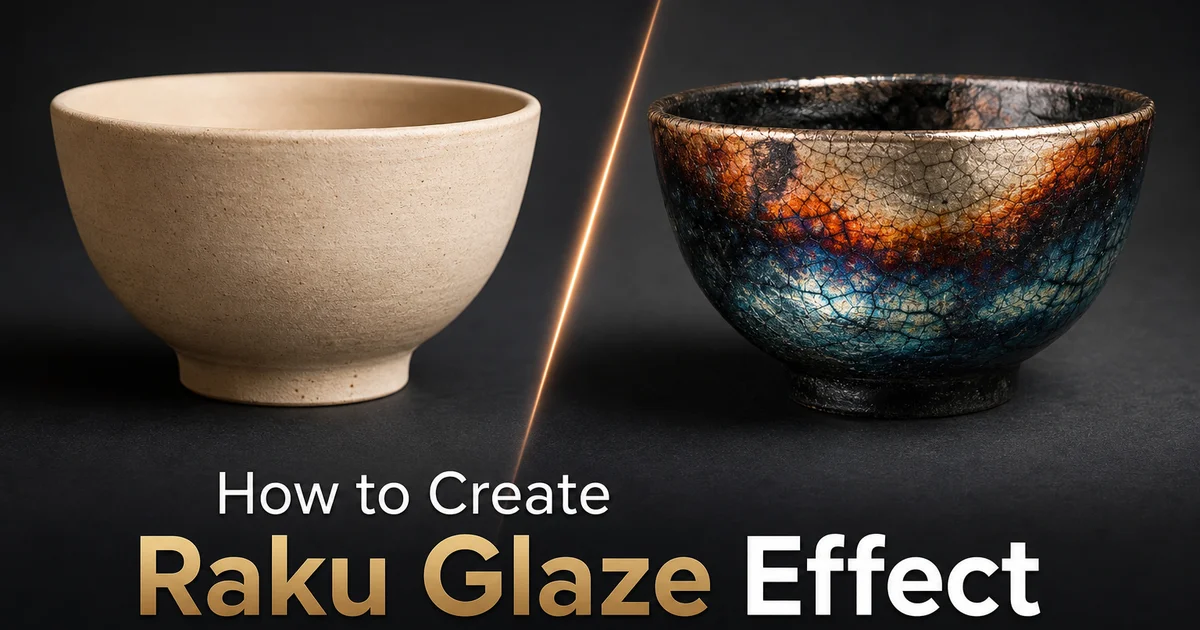
A queima raku — o dramático processo cerâmico no qual a cerâmica esmaltada é retirada do forno em temperatura máxima e submetida a resfriamento rápido e redução pós-queima em materiais combustíveis — produz efeitos de superfície que estão entre os mais impressionantes visualmente e, em seu núcleo, imprevisíveis de toda a arte cerâmica. O extremo choque térmico de retirar uma peça de um forno a mais de mil graus Celsius e expô-la ao ar ambiente faz com que o esmalte craquele instantaneamente, fraturando-se em uma rede de trincas nas quais a fumaça de carbono penetra durante a fase de redução, quando a peça é enterrada em serragem, jornais ou folhas. Os óxidos metálicos no esmalte — principalmente o cobre — respondem à atmosfera rica em carbono da redução produzindo uma extraordinária gama de cores: cobre lustroso profundo, ouro iridescente, turquesa cintilante, rosa capturado por carbono, prata espelhada, geralmente na mesma peça a centímetros de distância uns dos outros.
O apelo visual do raku reside precisamente em sua resistência ao controle completo. Ao contrário da maioria dos processos cerâmicos nos quais o oleiro controla variáveis para obter resultados previsíveis e repetíveis, o raku celebra a intervenção do fogo, da atmosfera e da física térmica como co-criadores da superfície final. Cada queima raku produz resultados únicos. Mesmo peças usando a mesma argila, o mesmo esmalte e os mesmos ciclos de queima emergem da câmara de redução com diferentes padrões de craquelê, diferentes quebras de cor e diferentes áreas de brilho metálico versus superfície fosca. Essa imprevisibilidade inerente confere às superfícies raku uma vitalidade visual e complexidade orgânica que nenhum processo industrial controlado pode replicar. É essa qualidade que torna o raku uma das estéticas de superfície mais reconhecidas e desejadas na cerâmica moderna.
O style transfer baseado em IA pode capturar essa imprevisibilidade controlada porque a IA aprende não um modelo fixo, mas uma distribuição de probabilidade dos comportamentos de superfície do raku: quais densidades de craquelê são fisicamente plausíveis, onde o brilho metálico geralmente se desenvolve versus onde superfícies foscas persistem, como a penetração de carbono escurece a argila exposta com gradientes em vez de coloração uniforme e como a variação da espessura do esmalte sobre a topografia da superfície produz as quebras de cor nas bordas e pontos elevados que são característicos da queima raku. Este guia cobre cada etapa da criação de efeitos de esmalte raku usando AI Filter e AI Enhance, desde a seleção da família de esmaltes e parâmetros de redução até a configuração dos efeitos de choque térmico e carbono que definem esta tradição cerâmica única.
- A IA captura a imprevisibilidade controlada do raku aprendendo distribuições de probabilidade do comportamento da superfície em vez de modelos fixos. Densidade de craquelê, posicionamento do brilho e penetração de carbono variam organicamente.
- Vários presets de esmalte raku cobrem brilho metálico de cobre, craquelê branco, naked raku com padrões fantasma de esmalte removido e traços de crina de cavalo em superfícies de argila nua.
- A simulação de padrão de craquelê usa física de choque térmico para gerar redes de fratura fisicamente plausíveis, desde finas trincas capilares até fissuras superficiais ousadas e dramáticas.
- A renderização de brilho metálico captura as mudanças de cor dependentes do ângulo do cobre reduzido — de cobre profundo através de ouro e prata até iridescência arco-íris — que mudam com a direção de visualização.
- AI Enhance nitifica as linhas de craquelê preenchidas com carbono, as zonas de transição entre esmalte e argila nua e as variações iridescentes em microescala que conferem às superfícies raku sua característica complexidade visual.
Como a renderização raku por IA difere de abordagens simples com textura craquelê e sobreposição metálica
O efeito digital craquelê mais comum aplica uma textura craquelê pré-fabricada como camada de sobreposição, produzindo um padrão de fratura uniforme em toda a imagem, independentemente do conteúdo subjacente ou das propriedades do material simulado. Essa abordagem falha em capturar o raku porque o craquelê real do raku não é uniforme. É uma resposta física à relação específica entre espessura do esmalte, expansão térmica do corpo cerâmico e taxa de resfriamento em cada ponto da superfície. Áreas com esmalte espesso desenvolvem craquelê mais denso e fino porque o estresse térmico acumulado é maior. Áreas com esmalte fino sobre bordas e cristas podem craquelar menos, mas mostram quebras de cor mais dramáticas. Áreas de argila nua onde o esmalte se soltou durante a queima não mostram craquelê, mas forte escurecimento por carbono. Uma superfície raku realista é um mosaico complexo de diferentes estados de superfície, não uma textura única aplicada uniformemente.
A renderização raku por IA gera o padrão de craquelê como uma resposta computada à topografia simulada da superfície, em vez de como uma sobreposição plana. A IA analisa a forma tridimensional implícita na imagem de origem, identificando cristas, vales, planos planos e superfícies curvas, e gera padrões de craquelê com densidade e orientação adequadas para cada zona superficial. Áreas planas recebem redes de craquelê razoavelmente uniformes. Cristas convexas e bordas recebem trincas esparsas e amplamente espaçadas onde o esmalte se adelgaça e tende para superfícies inferiores. Áreas côncavas onde o esmalte se acumula recebem o craquelê mais denso e fino. Essa abordagem espacialmente variável produz resultados que são lidos como superfícies cerâmicas fisicamente plausíveis, em vez de fotografias com uma textura craquelê colada por cima.
A renderização do brilho metálico apresenta um desafio igualmente complexo porque as áreas lustrosas de uma superfície raku não são uniformemente metálicas. O brilho do cobre raku se desenvolve onde as condições de redução são mais fortes, geralmente onde a peça estava mais profundamente enterrada em material combustível, e transita para áreas foscas ou de cor diferente onde a redução foi parcial ou onde a peça foi exposta à reoxidação durante o resfriamento. Dentro das zonas lustrosas, a qualidade metálica muda com o ângulo de visualização de maneiras que dependem da química específica de redução do cobre: redução pesada produz bronze-cobre profundo, redução moderada produz tons de ouro e prata. As camadas metálicas mais finas produzem efeitos arco-íris iridescentes. A IA mapeia essas zonas de redução pela superfície com limites orgânicos e variação interna, em vez de aplicar refletância metálica uniforme.
- Sobreposições craquelê pré-fabricadas produzem padrões de fratura uniformes que ignoram a variação espacial na espessura do esmalte, topografia superficial e estresse térmico que define o craquelê raku real.
- A IA gera craquelê como resposta computada à forma superficial simulada — redes densas e finas em poças de esmalte espesso, trincas esparsas e largas em cristas onde o esmalte adelgaça e nenhum craquelê em argila nua.
- O brilho metálico varia com a intensidade da redução na superfície — cobre profundo em áreas fortemente reduzidas, ouro e prata em zonas moderadas e arco-íris iridescente nas camadas metálicas mais finas.
- Os limites orgânicos entre diferentes estados de superfície — lustroso, fosco, craquelado, argila nua — criam o mosaico complexo que distingue o verdadeiro raku da aplicação uniforme de textura digital.
Química do cobre raku: a ciência por trás da cor metálica e da iridescência
A extraordinária gama de cores dos esmaltes raku de cobre resulta de uma das mudanças químicas mais dramáticas na arte cerâmica. Durante a queima inicial na atmosfera oxidante do forno, o óxido de cobre no esmalte se derrete na matriz vítrea fundida como íons dissolvidos, produzindo a familiar cor verde do cobre oxidado. Quando a peça é retirada do forno e imersa em uma câmara de redução cheia de material combustível, a atmosfera ao redor da peça muda repentinamente de rica em oxigênio para rica em carbono. O monóxido de carbono retira oxigênio dos íons de cobre dissolvidos, reduzindo-os do estado cúprico para átomos de cobre metálico que precipitam da matriz vítrea como uma camada extremamente fina de cobre metálico na superfície do esmalte ou nas proximidades.
Essa camada de cobre metálico é o que produz o brilho característico e as mudanças de cor do raku. Quando a camada é espessa o suficiente para ser opaca, aparece como um espelho de bronze-cobre profundo. Quando é ligeiramente mais fina, transmite luz suficiente para mostrar tons de ouro e prata quente. Quando é ainda mais fina — com apenas algumas dezenas de átomos de espessura — atua como uma camada de interferência de filme fino, produzindo os efeitos arco-íris iridescentes onde comprimentos de onda específicos da luz são interferidos construtiva ou destrutivamente dependendo do ângulo de visualização. Esta é a mesma física que produz as cores arco-íris em bolhas de sabão e películas de óleo na água. É por isso que o brilho raku muda de cor tão acentuadamente quando você gira a peça em suas mãos.
A IA imita essa física de interferência de filme fino em vez de simplesmente aplicar um gradiente de cor metálica. Em cada ponto da superfície lustrosa, a IA calcula a cor aparente com base na espessura simulada da camada de cobre e na geometria de visualização da imagem de origem, produzindo as mudanças de cor dependentes do ângulo — azul e violeta em ângulos de visão quase normais mudando para ouro e cobre em ângulos rasantes — que caracterizam o verdadeiro brilho metálico de filme fino. Essa abordagem baseada na física é a razão pela qual o brilho raku da IA parece convincentemente metálico em vez de um mapa de gradientes ou sobreposição de cor. Ela reproduz o mecanismo óptico real que cria as cores em cerâmicas autênticas de cobre reduzido.
- A redução do cobre na câmara pós-queima transforma íons cúpricos dissolvidos em átomos de cobre metálico que precipitam como uma camada refletora extremamente fina na superfície do esmalte.
- A espessura da camada determina a cor — espelho de bronze-cobre opaco para camadas espessas, ouro e prata para espessura moderada e arco-íris iridescente por interferência de filme fino para os depósitos mais finos.
- A interferência de filme fino produz mudanças de cor dependentes do ângulo, idênticas em física às bolhas de sabão e películas de óleo — azul-violeta em ângulos de visão normais mudando para ouro-cobre em ângulos rasantes.
- A IA calcula a cor aparente em cada ponto da superfície com base na espessura simulada da camada de cobre e na geometria de visualização, em vez de aplicar gradientes metálicos uniformes ou sobreposições de cor.
Efeitos de carbono: penetração no craquelê, escurecimento da argila e decoração com crina de cavalo
O carbono desempenha um papel duplo na queima raku. Ele impulsiona a redução química que cria os efeitos de brilho metálico no esmalte e penetra fisicamente a superfície cerâmica para criar os dramáticos padrões escuros que constituem a outra metade da identidade visual do raku. Quando a peça quente entra na câmara de redução e os materiais combustíveis se inflamam, a fumaça rica em carbono inunda a superfície. Onde o esmalte craquelou, a fumaça penetra nas trincas e mancha o corpo de argila exposto subjacente com depósitos permanentes de carbono. As linhas escuras resultantes que seguem o padrão de craquelê são uma das características mais distintas da cerâmica raku: um mapa do estresse térmico tornado visível pela mancha de carbono, com trincas mais grossas aparecendo como linhas escuras ousadas e trincas capilares como delicados traços.
Em superfícies de argila nua onde nenhum esmalte foi aplicado ou onde o esmalte se soltou durante a queima, a penetração de carbono cria áreas profundamente pretas que contrastam fortemente com as superfícies esmaltadas. A penetração de carbono não é uniforme. Ela grada de preto profundo onde o contato com o carbono foi mais prolongado e a argila era mais absorvente a cinza mais claro onde a exposição foi breve ou a superfície da argila já estava parcialmente selada pelo calor. Esse gradiente cria a qualidade esfumaçada e atmosférica das superfícies de argila raku que difere fundamentalmente da argila simplesmente colorida de preto. A IA renderiza esses gradientes de carbono com os limites irregulares e orgânicos e a variação de profundidade que resultam da física caótica do contato com a fumaça, em vez de aplicação controlada.
O horsehair raku e o feather raku representam técnicas especializadas de decoração com carbono nas quais materiais orgânicos são colocados diretamente na superfície quente de argila nua imediatamente após a remoção do forno. Crinas e penas queimam ao contato com a argila superaquecida, deixando traços de carbono que registram sua forma exata: linhas curvas e delicadas de fios de crina individuais, impressões plumosas das estruturas das barbas e manchas de carbono acumuladas onde as extremidades do material repousavam na superfície. A IA renderiza esses traços orgânicos de carbono com a qualidade de linha específica de fibras naturais queimadas: variação irregular de largura ao longo do fio, bifurcação e divisão onde a estrutura da fibra se desfaz sob o calor e o característico afinamento nas extremidades onde o material em combustão se consumiu totalmente. Essas marcas têm uma qualidade semelhante a desenho que é unicamente associada ao raku e não pode ser replicada de forma convincente por ferramentas de desenho porque a qualidade da linha vem da física da combustão, não do movimento da mão.
- As linhas de craquelê preenchidas com carbono criam um mapa visível do estresse térmico — linhas escuras ousadas em fissuras largas e traços delicados em trincas capilares — manchando permanentemente a argila sob o esmalte fraturado.
- A penetração de carbono na argila nua grada de preto profundo a cinza claro com limites orgânicos irregulares produzidos pela física caótica do contato com a fumaça, em vez de aplicação controlada.
- O horsehair e o feather raku queimam materiais orgânicos na argila quente para criar traços de carbono que registram a forma exata de cada fibra com qualidade de linha específica da combustão, impossível de replicar por desenho.
- A IA renderiza os efeitos de carbono com os gradientes de profundidade, limites orgânicos e detalhes em nível de fibra que distinguem marcas criadas pelo fogo de aproximações digitais desenhadas ou carimbadas.
Tradição raku japonesa versus raku ocidental: duas estéticas distintas de um único nome
O termo 'raku' engloba duas tradições cerâmicas profundamente diferentes que compartilham um nome e alguma conexão histórica, mas produzem resultados visuais muito distintos. O raku japonês, desenvolvido pela família Raku em Kyoto a partir do século XVI sob a influência do mestre do chá Sen no Rikyu, produz tigelas de chá austeras, moldadas à mão, com superfícies silenciosas: esmaltes suaves de chumbo em preto ou vermelho sem brilho metálico, craquelê ou efeitos dramáticos de carbono. A beleza do raku japonês reside em sua contenção, sua irregularidade moldada à mão, sua incorporação dos valores wabi-sabi — imperfeição, impermanência e incompletude. A superfície é uma parceira na experiência contemplativa da cerimônia do chá, não um espetáculo que exige atenção visual.
O raku ocidental, desenvolvido principalmente nos Estados Unidos a partir da década de 1960 por ceramistas como Paul Soldner, que adaptaram o conceito japonês de remover a cerâmica do forno em alta temperatura, mas adicionaram a etapa de redução pós-queima que o raku japonês não utiliza, produz os dramáticos brilhos metálicos, os ousados padrões de craquelê e as superfícies enegrecidas por carbono que a maioria dos ceramistas ocidentais e o público em geral associam à palavra 'raku'. O espetáculo visual do raku ocidental — espelhos de cobre cintilando com iridescência, craquelê branco ousado sobre carbono negro intenso, traços de crina de cavalo como desenhos caligráficos em argila nua — é quase o oposto estético da quieta contenção do raku japonês, apesar de compartilhar a técnica fundamental de remover a cerâmica quente do forno.
A IA fornece presets para ambas as tradições, claramente distinguidas por seus traços visuais. O preset de raku japonês produz superfícies com a qualidade suave e silenciosa de esmaltes de chumbo moldados à mão em formas irregulares: brilho suave, cor preta quente ou vermelho-marrom profundo e a textura sutil da argila moldada à mão em vez de torneada. Os presets de raku ocidental produzem toda a gama de efeitos de atmosfera de redução: brilho metálico de cobre, craquelê branco com penetração de carbono, naked raku com padrões fantasma e decoração de carbono com crina de cavalo. Entender qual tradição o usuário deseja garante que a IA produza a estética correta, em vez de confundir duas abordagens fundamentalmente diferentes da superfície cerâmica sob um único rótulo.
- O raku japonês produz tigelas de chá austeras com esmaltes suaves de chumbo que incorporam os valores wabi-sabi — o oposto visual dos dramáticos efeitos metálicos que a maioria das pessoas associa à palavra 'raku'.
- O raku ocidental adicionou a redução pós-queima à técnica japonesa de remoção a quente, criando brilhos de cobre, craquelê de carbono e efeitos de crina de cavalo que definem a estética raku ocidental contemporânea.
- A IA fornece presets distintos para cada tradição — superfícies silenciosas moldadas à mão com brilho suave para o raku japonês, dramáticos efeitos metálicos e de carbono para as técnicas de redução do raku ocidental.
- A clara distinção entre as tradições impede que a IA confunda duas estéticas cerâmicas fundamentalmente diferentes sob um único rótulo baseado em um nome compartilhado e conexão histórica parcial.
Aplicações criativas: visualização cerâmica, arte mista e branding artesanal
Artistas ceramistas e oleiros de estúdio usam efeitos de esmalte raku para visualizar como diferentes formulações de esmalte e abordagens de queima apareceriam em suas formas antes de se comprometerem com queimas reais. A queima raku consome recursos importantes — combustível do forno, materiais de esmalte, o risco de quebra por choque térmico durante o dramático processo de remoção — e a imprevisibilidade inerente significa que alcançar o efeito de superfície desejado pode exigir múltiplas queimas. Aplicar efeitos raku AI a fotografias de trabalhos não queimados ou biscoitados dá aos oleiros uma aproximação visual da superfície acabada, ajudando-os a decidir quais formas combinar com quais esmaltes e se devem seguir uma abordagem de brilho de cobre, craquelê branco ou naked raku para uma peça específica antes de investir na queima real.
Artistas de mídia mista e fotógrafos incorporam efeitos de superfície raku em composições digitais que exploram a tensão entre os incontroláveis processos de fogo da cerâmica e o controle preciso da criação de imagens digitais. Um retrato renderizado com brilho de cobre raku — reflexos metálicos se movendo pelos planos faciais, padrões de craquelê seguindo a topografia das feições, escurecimento por carbono nas sombras — funde o sujeito humano com a transformação material elementar de fogo, terra e atmosfera. Esses trabalhos extraem poder emocional da associação da estética raku com imprevisibilidade e mudança, aplicando à arte digital a mesma estrutura filosófica que atrai oleiros ao raku: o abraço criativo do que o fogo decide lhe dar, em vez do controle artístico completo sobre o resultado.
Estúdios de cerâmica, empresas de fornecimento para oleiros e programas de educação artesanal usam tratamentos visuais em estilo raku em branding e materiais de marketing que comunicam imediatamente o nicho específico da cerâmica de arte do fogo. A estética raku é tão visualmente distintiva — brilhos metálicos, craquelê dramático, argila nua enegrecida por carbono — que funciona como uma abreviação visual para toda a cultura da cerâmica de estúdio, queima artesanal e engajamento material prático que esses negócios atendem. Aplicar efeitos raku a tratamentos de logotipos, cabeçalhos de mídia social, fotografias de embalagens e materiais de exposição cria uma identidade de marca enraizada em um processo material específico, em vez de imagens genéricas de cerâmica, atraindo o público que já é apaixonado por cerâmica de arte do fogo e pela beleza imprevisível da tradição raku.
- Artistas ceramistas visualizam esmaltes e resultados de queima em fotografias de trabalho não queimado, reduzindo o custo de recursos e o risco de quebra inerente ao processo imprevisível de múltiplas queimas raku.
- Artistas de mídia mista exploram a tensão filosófica entre a imprevisibilidade impulsionada pelo fogo do raku e o controle preciso da arte digital para criar imagens compostas emocionalmente ressonantes.
- Estúdios de cerâmica e negócios artesanais usam a estética visualmente distintiva do raku como abreviação de identidade de marca para a cultura de cerâmica de arte do fogo pela qual seu público é apaixonado.
- A especificidade dos efeitos raku — brilho metálico, craquelê de carbono, fissuração por choque térmico — comunica autenticidade material que imagens genéricas de cerâmica ou louça não podem igualar.
How to do it
- 1
Upload your photo and evaluate its suitability for raku glaze transformation
Open your image in AI Filter and assess how well the composition translates to the visual language of raku-fired ceramics. Raku glazes are defined by the dramatic surface events that occur during the rapid firing and post-firing reduction process. Metallic lusters, iridescent sheens, deep crackle patterns, carbon-blackened bare clay, and unpredictable color breaks where the glaze thins over edges and texture. Images with strong surface areas, clear tonal structure, and subjects that suit the organic unpredictability of raku. Vessels, organic forms, portraits, and abstract compositions — convert most well to this change.
- 2
Select the raku glaze type and configure the firing atmosphere and reduction variables
Choose from presets that simulate different raku glaze families and firing approaches. Copper matte with its dramatic range from deep metallic copper through flashing turquoise to carbon-trapped pink, white crackle raku with its bold dark crackle lines against a white or cream ground, naked raku where the glaze peels away to reveal carbon-smoked bare clay with ghost impressions of the removed glaze, or horsehair raku with its delicate carbon tracery from organic materials burned against the hot clay surface. Configure the reduction intensity to control how much post-firing carbon penetration affects the glaze and exposed clay surfaces.
- 3
Adjust crackle pattern, metallic luster, and the controlled unpredictability of thermal shock effects
Control the signature visual features of raku-fired surfaces. Crackle pattern — caused by the differential thermal expansion between glaze and clay body during rapid cooling — ranges from fine hairline networks barely visible without magnification to bold dramatic fissures that visually fracture the surface into irregular islands. Metallic luster on copper glazes results from carbon reduction creating a thin layer of metallic copper on the glaze surface, producing reflections that shift between copper, gold, silver. Iridescent rainbow depending on viewing angle and light direction. The AI mimics both effects with parameters controlling their scale, intensity. The organic randomness that distinguishes raku from any controlled industrial process.
- 4
Use AI Enhance to sharpen crackle detail, carbon penetration, and surface texture transitions
Run AI Enhance to refine the micro-detail of the raku surface. The dark carbon lines that fill crackle fissures where smoke penetrated the fractured glaze during reduction, the sharp transition zones where glazed surface meets bare carbon-blackened clay, and the subtle iridescent color shifts in metallic luster areas that change character at different scales of observation. Boost also sharpens the texture contrast between smooth glossy glaze pools and rough exposed clay surfaces that characterizes many raku pieces.
- 5
Export and compare against photographs of recognized raku ceramic works
Save the completed image at full resolution and compare it with photographs of notable raku works. From the austere Japanese tea bowls of the Raku family lineage to the metallic-luster vessels of American raku pioneers like Paul Soldner and Wayne Higby. Verify that the crackle pattern scale is physically plausible for thermal shock crazing, that metallic luster effects fall within the color range of actual reduced copper glazes, that carbon penetration patterns follow the physics of smoke interaction with fractured ceramic surfaces. That the overall effect reads as fire-transformed material rather than a digital texture overlay.
Fontes
- Raku: The Art of Imperfection in Japanese Ceramics — Raku Museum, Kyoto
- Western Raku Firing: Chemistry, Process, and Glaze Development — Ceramics Monthly — American Ceramic Society
- The Science of Ceramic Glazes: Thermal Shock, Crazing, and Surface Texture Formation — Digitalfire Reference Library