
Como Criar Efeito de Papel Marmorizado com AI — Magic Eraser
Guia passo a passo para transformar fotos em arte de papel marmorizado Ebru e Suminagashi usando AI. Abrange simulação de dinâmica de fluidos, parâmetros de flutuação de cores, manipulação de padrões com pente e estilete. Exporte para exibição digital e impressão de belas-artes.

Product Marketing
Revisado por Magic Eraser Editorial ·
Índice
- Como a AI simula a dinâmica de fluidos para criar padrões marmorizados autênticos
- Tradições de marmorização: do Ebru turco ao Suminagashi japonês e padrões europeus com pente
- Mapeando o conteúdo fotográfico para a linguagem fluida dos padrões marmorizados
- Aplicações: da encadernação fina e gravuras artísticas ao design de produtos e fundos digitais
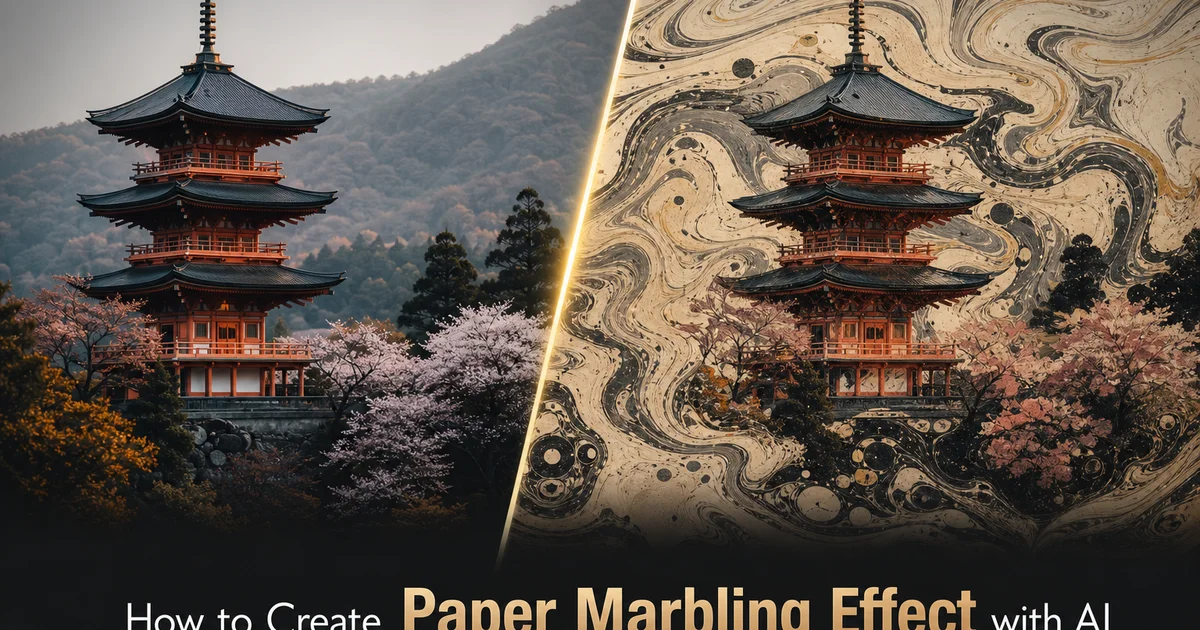
A marmorização de papel é uma arte decorativa centenária que cria padrões fluidos e orgânicos ao fazer pigmentos flutuarem sobre uma superfície líquida e transferir o design para papel ou tecido. A técnica surgiu de forma independente em múltiplas culturas. Como Suminagashi no Japão já no século XII, como Ebru no Império Otomano, onde se tornou uma forma de arte refinada intimamente ligada à caligrafia e às artes decorativas islâmicas, e como artesanato de papel decorativo para encadernação em toda a Europa a partir do século XVII. A UNESCO reconheceu o Ebru turco como Patrimônio Cultural Imaterial da Humanidade em 2014, reconhecendo seu profundo significado cultural e a habilidade necessária para dominar a interação entre pigmentos flutuantes e superfícies líquidas viscosas — os movimentos precisos das mãos que criam seus padrões característicos.
Os traços visuais da marmorização de papel são únicos entre as artes decorativas porque emergem da física da dinâmica de fluidos, em vez de desenho ou impressão diretos. As cores flutuam sobre uma superfície líquida e interagem de acordo com os princípios de tensão superficial, viscosidade e deslocamento. Quando uma gota de cor pousa na superfície, ela empurra as cores existentes para os lados sem se misturar com elas, mantendo limites distintos entre as cores adjacentes mesmo enquanto fluem e se entrelaçam em padrões complexos. Esse comportamento físico produz a estética característica da marmorização: formas fluidas e orgânicas com limites nítidos entre cores, padrões de vórtices onde ferramentas de estilete ou pente arrastaram os pigmentos flutuantes, e uma sensação geral de fluidez controlada que é ao mesmo tempo ordenada e imprevisível. Não existem dois papéis marmorizados exatamente iguais porque a dinâmica de fluidos introduz variação irredutível em cada padrão.
A conversão de marmorização de papel com AI transforma fotografias em imagens que replicam a linguagem visual da arte de pigmentos flutuantes, imitando a dinâmica de fluidos que cria os padrões característicos da marmorização. A AI analisa a paleta de cores e o conteúdo estrutural da fotografia para determinar como as cores devem ser distribuídas como pigmentos flutuantes na superfície líquida virtual, e então imita os processos físicos de deslocamento de cores, interação de tensão superficial e manipulação de ferramentas que produzem os padrões fluidos e orgânicos das tradições Ebru, Suminagashi e de marmorização europeia com pente. Este guia aborda como usar o Magic Eraser para transformar qualquer fotografia em arte de papel marmorizado, com controles para seleção de tradição, parâmetros de fluido e ferramentas de manipulação de padrões — exporte tanto para exibição digital quanto para impressão física.
- A marmorização de papel flutua pigmentos sobre uma superfície líquida viscosa onde as cores empurram e deslocam umas às outras sem se misturar. A AI imita essa física de fluidos para gerar padrões marmorizados autênticos a partir de fotografias.
- O Ebru turco, o Suminagashi japonês e a marmorização europeia com pente aplicam diferentes lógicas de padrão, relações cromáticas e técnicas de manipulação.
- Parâmetros de fluido — viscosidade, tensão superficial e densidade de flutuação das cores — controlam o quão livremente as cores se espalham, como as gotas se comportam ao contato e quantas camadas de cor se acumulam antes da manipulação do padrão.
- Pentes e estiletes virtuais manipulam as cores flutuantes em padrões de ondas, nonpareil, redemoinhos e flores, guiados pelos contornos estruturais naturais da fotografia.
- As opções de exportação incluem acabamentos fosco, brilhante e superfície úmida para aplicações que vão desde exibição digital até guardas de encadernação e impressões de belas-artes.
Como a AI simula a dinâmica de fluidos para criar padrões marmorizados autênticos
A física fundamental da marmorização de papel envolve gotas de pigmento flutuando sobre uma superfície líquida viscosa — no passado, um banho de água engrossado com carragenina, goma adragante ou metilcelulose — onde cada nova gota de cor desloca as cores existentes para fora, de acordo com os princípios de tensão superficial e incompressibilidade do fluido. Quando uma gota de pigmento azul pousa sobre uma superfície já coberta de vermelho, o azul não se mistura com o vermelho, mas o empurra para o lado, criando um círculo azul cercado por um anel vermelho. Uma gota amarela subsequente empurra tanto o azul quanto o vermelho para fora, criando anéis concêntricos de amarelo, azul e vermelho. Esse comportamento de deslocamento, governado pelas equações de fluido de Navier-Stokes, é o que cria a qualidade visual característica da marmorização: múltiplas cores em contato fluido íntimo sem nunca se misturarem em combinações turvas.
A AI imita essa física de deslocamento modelando a superfície líquida virtual como um campo de fluido bidimensional onde os pigmentos de cor são representados como partículas flutuantes que interagem de acordo com equações simplificadas de Navier-Stokes. Quando a AI mapeia a paleta de cores da fotografia para um conjunto de cores de pigmento e distribui gotas pela superfície em posições derivadas da distribuição cromática da fotografia, cada gota desloca suas vizinhas exatamente como os pigmentos físicos fariam. A simulação é executada em tempo real enquanto as cores se estabelecem em suas posições de equilíbrio, produzindo as formações naturais de anéis concêntricos, formas orgânicas de contorno e padrões fluidos de deslocamento que caracterizam o papel marmorizado autêntico. O parâmetro de viscosidade controla a resistência ao fluxo do fluido simulado, afetando diretamente o quanto o deslocamento de cada gota se propaga através do campo de cor existente.
A simulação de tensão superficial determina o comportamento da forma de gotas de cor individuais na superfície líquida. Na marmorização física, adiciona-se fel de boi aos pigmentos para reduzir sua tensão superficial em relação ao banho líquido, fazendo com que se espalhem finamente pela superfície em vez de formarem gotículas. O equilíbrio entre a tensão superficial do pigmento e a tensão superficial do banho controla o diâmetro de espalhamento da gota — uma variável crítica que determina se o padrão marmorizado consiste em pequenos pontos concentrados, círculos médios de espalhamento ou grandes véus finos de cor que cobrem a maior parte da superfície. A AI oferece esse controle como um parâmetro de espalhamento, permitindo ao usuário ajustar a densidade visual e a escala do padrão cromático, de texturas pontilhadas compactas a véus fluidos expansivos que transformam a fotografia em uma composição mais fluidificada.
- Gotas de cor deslocam pigmentos existentes para fora sem se misturar — criando anéis concêntricos e limites fluidos governados pela incompressibilidade do fluido.
- A simulação Navier-Stokes modela a propagação do deslocamento para que o efeito de cada gota sobre as cores vizinhas corresponda ao comportamento físico da marmorização.
- A viscosidade controla a resistência ao fluxo: alta viscosidade produz padrões compactos e controlados; baixa viscosidade produz espalhamento fluido expansivo.
- O equilíbrio de tensão superficial determina o espalhamento da gota, desde pontos concentrados até véus finos e expansivos que cobrem grandes áreas da superfície líquida.
Tradições de marmorização: do Ebru turco ao Suminagashi japonês e padrões europeus com pente
O Ebru turco representa a tradição de marmorização mais desenvolvida e artisticamente refinada, com mestres praticantes — artistas de Ebru que passam anos aprendendo a controlar a interação entre pigmentos, o banho de carragenina e as ferramentas manuais que criam os padrões característicos do Ebru. Os padrões clássicos de Ebru incluem o battal, um padrão não manipulado de gotas de cor livremente flutuantes; o gel-git, criado penteando linhas paralelas de um lado para o outro através das cores flutuantes; o tarakli, ou padrão penteado de ondas senoidais regulares; e o hatip, um padrão elaborado de flores criado manipulando gotas de cor individuais com um furador pontiagudo para formar pétalas e caules. O Ebru utiliza pigmentos ricos em tons de joias — azuis profundos, verdes esmeralda, vermelhos burgundy e amarelos dourados — flutuando sobre um banho claro, produzindo padrões com profundidade cromática luminosa e a qualidade orgânica fluida característica de pigmentos manipulados sobre uma superfície líquida.
O Suminagashi japonês — que significa literalmente tinta flutuante — é a técnica de marmorização de papel mais antiga conhecida, documentada no Japão já no século XII. Ao contrário do Ebru, que usa um banho engrossado para manter as cores no lugar para manipulação prolongada, o Suminagashi tradicional flutua tinta sumi e, ocasionalmente, uma cor de acento sobre água pura, produzindo padrões a partir dos anéis concêntricos que se formam à medida que as gotas de tinta se espalham pela superfície. O artista alterna gotas de tinta e um surfactante que empurra a tinta para fora, criando anéis concêntricos em expansão que são então distorcidos por sopro suave ou correntes de ar em padrões orgânicos fluidos. A estética é caracteristicamente contida — monocromática ou bicolor, com padrões de anéis delicados que sugerem ondulações na água, veios de madeira ou estratos geológicos. A AI gera padrões Suminagashi com essa paleta contida e estrutura baseada em anéis, aplicando uma suave distorção de fluxo que imita o efeito da respiração sobre a tinta flutuante.
A marmorização europeia com pente desenvolveu-se a partir do século XVII como um artesanato decorativo de encadernação, produzindo as guardas marmorizadas encontradas em livros e periódicos finos. A marmorização europeia enfatiza a geração sistemática de padrões usando pentes metálicos — fileiras de dentes igualmente espaçados que são arrastados através das cores flutuantes para criar padrões regulares e repetitivos. O padrão nonpareil, criado por duas passadas perpendiculares do pente, produz um padrão scalloped apertado que se tornou o estilo de marmorização mais comum na encadernação ocidental. O padrão French curl usa um pente com dentes curtos e longos alternados para criar um padrão de curvas em S. O padrão bouquet organiza redemoinhos penteados em formações semelhantes a flores. Esses padrões europeus sistemáticos produzem designs mais regulares e repetitivos do que os padrões orgânicos de forma livre do Ebru, refletindo a ênfase europeia no padrão decorativo reprodutível para a produção comercial de encadernação.
- O Ebru turco inclui battal (gotas flutuantes livres), gel-git (linhas penteadas), tarakli (ondas senoidais) e hatip (formas de flores manipuladas) em paletas de tons de joias.
- O Suminagashi japonês flutua tinta sobre água pura com anéis concêntricos distorcidos pelo sopro em paletas monocromáticas ou bicolores contidas.
- A marmorização europeia com pente cria padrões sistemáticos repetitivos — nonpareil, French curl e bouquet — para guardas decorativas de encadernação.
- As ferramentas de manipulação e a química do banho de cada tradição produzem lógicas de padrão características que a AI aplica ao material fotográfico de origem.
Mapeando o conteúdo fotográfico para a linguagem fluida dos padrões marmorizados
O desafio criativo central da AI na conversão de marmorização é traduzir o conteúdo estruturado de uma fotografia — sujeitos distintos com formas, bordas e relações espaciais definidas — para a linguagem fluida orgânica dos padrões marmorizados, onde todas as formas são produto da dinâmica de fluidos em vez de desenho deliberado. A abordagem usa o mapa de cores da fotografia para determinar a seleção e distribuição de pigmentos, e o mapa estrutural da fotografia — bordas, contornos, regiões — para guiar as ferramentas de manipulação virtuais que criam o fluxo do padrão. Os contornos do sujeito na fotografia tornam-se os caminhos ao longo dos quais estiletes virtuais arrastam as cores flutuantes, criando padrões de redemoinho e fluxo que traçam as linhas naturais da imagem. O resultado é um padrão marmorizado que carrega a paleta de cores e a sugestão estrutural da fotografia original, expressando esses elementos através do vocabulário visual da manipulação de pigmentos flutuantes.
A intensidade do mapeamento fotográfico controla o equilíbrio entre a representação distinta do sujeito e o padrão marmorizado abstrato. Em baixa intensidade de mapeamento, a fotografia fornece apenas uma sugestão de paleta de cores — o padrão marmorizado é essencialmente abstrato, com cores distribuídas e manipuladas sem referência à estrutura espacial da fotografia, produzindo um belo papel marmorizado que compartilha a paleta da fotografia, mas não sua composição. Em intensidade média de mapeamento, os principais elementos estruturais da fotografia — posicionamento do sujeito, contornos primários, distribuição de cores — guiam o padrão de marmorização, criando uma imagem onde o sujeito original é sugerido dentro das formas orgânicas fluidas. Em alta intensidade de mapeamento, o padrão de marmorização segue de perto a estrutura da fotografia, produzindo um resultado onde o sujeito é claramente distinto, mas renderizado na linguagem visual de pigmentos marmorizados fluidos, em vez de tom contínuo fotográfico.
O mapeamento de cores da fotografia para a paleta de marmorização requer tradução do espectro cromático contínuo da fotografia para as gotas de pigmento discretas da marmorização. Na marmorização física, cada cor é um pigmento separado que deve ser misturado e preparado individualmente — os papéis marmorizados frequentemente usam de três a sete cores de pigmento distintas, em vez dos milhões de cores presentes em uma fotografia. A AI reduz a paleta de cores da fotografia para um número apropriado de cores de pigmento distintas, selecionando matizes que representam as famílias cromáticas dominantes da fotografia. Esses pigmentos discretos são então distribuídos pela superfície virtual de acordo com onde suas cores de origem aparecem na fotografia. A simulação de fluidos produz os limites orgânicos fluidos entre as regiões de pigmento que substituem as transições nítidas de cor da fotografia pelas formas características de bordas suaves e fluidas da arte marmorizada.
- Os contornos do sujeito guiam os caminhos do estilete virtual, criando padrões de redemoinho que traçam as linhas estruturais naturais da fotografia através dos pigmentos flutuantes.
- A intensidade do mapeamento controla o equilíbrio, de paletas de cores marmorizadas abstratas a sujeitos claramente reconhecíveis renderizados em linguagem visual marmorizada.
- A cor fotográfica é reduzida de três a sete cores de pigmento discretas que representam as famílias cromáticas dominantes da imagem original.
- A simulação de fluidos substitui as transições nítidas de cor da fotografia pelos limites fluidos de bordas suaves característicos da interação de pigmentos flutuantes.
Aplicações: da encadernação fina e gravuras artísticas ao design de produtos e fundos digitais
A marmorização de papel tem sido usada na encadernação por séculos. A conversão de marmorização com AI estende essa tradição ao permitir a criação de guardas marmorizadas personalizadas derivadas de fotografias relevantes ao conteúdo. Um livro sobre vida oceânica poderia apresentar guardas criadas pela conversão de marmorização de fotografias subaquáticas, produzindo padrões orgânicos fluidos em azuis e verdes marinhos que carregam a paleta de cores do tema, expressando-a através do meio tradicional do papel marmorizado. Uma memória poderia usar a conversão de marmorização de fotografias pessoais importantes para criar guardas que codificam sutilmente imagens de significado pessoal nos padrões fluidos abstratos da decoração tradicional de livros. Esta aplicação combina a riqueza visual e a qualidade artesanal do papel marmorizado com especificidade de conteúdo que os padrões marmorizados genéricos não podem oferecer.
As gravuras artísticas e aplicações de decoração de parede exploram o apelo visual único da marmorização de papel — suas formas orgânicas fluidas, ricas interações cromáticas e estética artesanal criam imagens que funcionam tanto como arte abstrata quanto como fotografia transformada. Impressões em grande formato de conversões marmorizadas de fotografias revelam os padrões de pigmento fluido e os detalhes dos limites de cor em uma escala onde os espectadores podem apreciar as origens na dinâmica de fluidos das formas. A singularidade inerente dos padrões marmorizados — o fato de que a física dos fluidos produz formas que não poderiam ser desenhadas ou projetadas — confere a essas impressões uma complexidade visual e beleza orgânica que envolve os espectadores de maneira diferente da fotografia convencional ou da arte abstrata projetada digitalmente.
O design de produtos e as aplicações digitais usam efeitos marmorizados para adicionar riqueza visual artesanal a superfícies, embalagens e fundos digitais. Padrões marmorizados derivados de fotografia de produto criam designs de embalagem que conectam a identidade visual do produto com a qualidade artesanal associada ao papel marmorizado. Papéis de parede para smartphones e fundos de desktop criados a partir de fotografias pessoais via conversão de marmorização produzem padrões orgânicos únicos em paletas de cores pessoalmente significativas. Papelaria, cartões de felicitações e designs de convites usam fundos fotográficos marmorizados para criar materiais que combinam a relevância pessoal da fotografia com a elegância decorativa de uma tradição artesanal centenária.
- Guardas marmorizadas personalizadas derivadas de fotografias com conteúdo relevante combinam o artesanato tradicional de encadernação com paletas de cores específicas ao tema.
- Gravuras artísticas em grande formato revelam os padrões orgânicos de dinâmica de fluidos em escalas onde os espectadores podem apreciar as formas fluidas derivadas da física.
- Embalagens de produtos com padrões marmorizados a partir de fotografia de produto conectam a identidade visual da marca com associações de qualidade artesanal.
- Fotografias pessoais convertidas em padrões marmorizados criam papéis de parede e papelaria únicos em paletas de cores pessoalmente significativas.
How to do it
- 1
Upload the photo and assess its suitability for paper marbling conversion
Open your image in Magic Eraser and evaluate whether the subject's color palette and composition will translate well into the flowing organic patterns of paper marbling. Paper marbling — known as Ebru in Turkey, Suminagashi in Japan. By various names across Persian, European, and Central Asian traditions — creates patterns by floating pigments on a viscous water surface and manipulating them with combs, styluses, and air before transferring the pattern to paper. Photographs with rich color variety, organic flowing shapes, and moderate complexity convert most well. Portraits, landscapes with water or sky, and botanical subjects provide natural color palettes that translate well into marbled swirl patterns. Avoid images with rigid geometric structures or very low color contrast, as marbling's visual language is defined by organic fluid motion.
- 2
Select the marbling tradition and pattern style
Choose from several historic marbling traditions that define the visual character of the output. Turkish Ebru uses flower-form patterns, nested concentric drops, and combed swirls in rich jewel tones on a thickened carrageenan bath. Japanese Suminagashi uses concentric ink rings that drift and distort in response to gentle breath or air currents on plain water, producing delicate organic ring patterns in restrained monochromatic or two-color palettes. European comb marbling uses metal combs drawn through rows of color drops to create regular wave, nonpareil, and bouquet patterns with systematic repetition. Stone marbling produces fine speckled patterns resembling natural stone grain. Each tradition applies different pattern logic, color relationships, and organic flow traits to the source photograph.
- 3
Configure fluid dynamics and color float parameters
Adjust the fluid simulation parameters that control how colors interact on the virtual water surface. Viscosity determines how freely colors spread and flow. High viscosity produces tight controlled patterns where colors maintain their placement, while low viscosity produces expansive flowing patterns where colors spread and merge more freely. Surface tension controls how color drops behave when they contact the surface. High surface tension produces compact circular drops that maintain their shape, while low surface tension produces drops that spread thin and wide across the surface. Color float density determines how many separate color drops are placed on the surface before pattern manipulation begins. The interaction between these parameters creates the trait marbling aesthetic where colors push against and displace each other on the liquid surface without actually mixing, maintaining distinct boundaries even in complex flowing patterns.
- 4
Apply pattern manipulation using virtual combs and styluses
Select and configure the virtual tools used to manipulate the floating colors into patterns. A comb — a row of evenly spaced tines — drawn through the floating colors creates parallel sinusoidal wave patterns when pulled in one direction. The classic nonpareil pattern when a second perpendicular pass is added. A single-point stylus dragged through the colors creates swirl patterns, vortex spirals, and drawn flower forms. The AI maps the photograph's structural content to the manipulation pattern. Subject edges and contours guide the stylus paths, creating swirl and flow patterns that follow the natural lines of the image. The intensity of manipulation controls how much the colors are displaced from their original positions, from subtle flowing distortion that preserves the photograph's recognizability to dramatic swirling that creates abstract marbled patterns where the original image is suggested rather than directly visible.
- 5
Export the marbled rendering with appropriate finish and format
Export the completed paper marbling effect with a surface finish that completes the illusion of physical marbled paper. A matte finish mimics traditional marbled paper as it appears after the transfer process. Slightly textured, with subtle paper grain visible through the pigment. A glossy finish mimics varnished or polished marbled paper used in bookbinding and decorative applications. A wet finish preserves the liquid look of colors still floating on the water surface before transfer, creating a luminous quality that emphasizes the fluid dynamics origin of the pattern. Export at web resolution for digital display or at three hundred DPI or higher for print applications including bookbinding endpapers, art prints, stationery. Packaging design where the organic flowing patterns of paper marbling add handcrafted visual richness.
Fontes
- The Art of Ebru: Turkish Paper Marbling as Intangible Cultural Heritage — UNESCO Intangible Cultural Heritage
- Suminagashi: The Japanese Art of Floating Ink and Its Historical Development — The Metropolitan Museum of Art
- Fluid Dynamics Simulation for Digital Art: Modeling Color Transport on Viscous Surfaces — ACM Transactions on Graphics