
Como Criar um Efeito Oshiebana com Edicao de Fotos AI — Magic Eraser
Transforme fotos em arte japonesa de flores prensadas (oshiebana) usando transferencia de estilo AI. Guia passo a passo abordando composicao botanica, camadas de petalas translucidas e estetica de herbario vitoriano.
SEO & Growth
Revisado por Magic Eraser Editorial ·
Índice
- Como a conversao AI de oshiebana replica a fisica do material botanico prensado
- Escolhendo tradicoes de oshiebana: estilos japones, vitoriano e contemporaneo
- Transformacao de cor e simulacao de envelhecimento para composicoes com autenticidade de epoca
- Aplicacoes criativas: retratos botanicos, cumprimentos sazonais e decoracao domestica
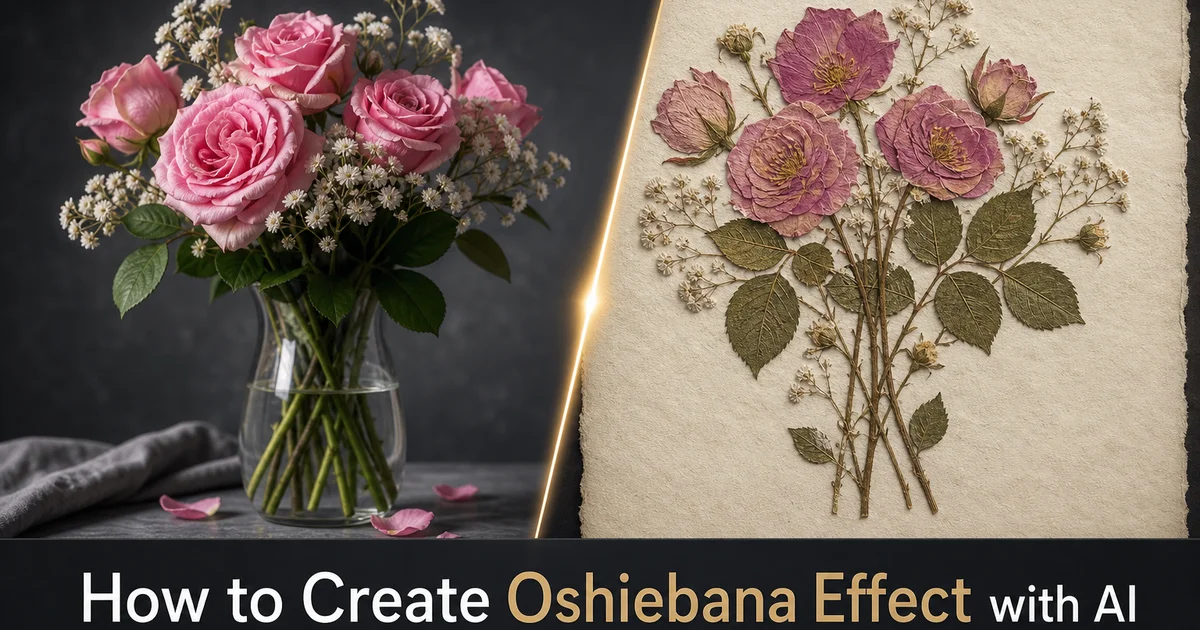
Oshiebana e a arte japonesa de criar quadros e composicoes a partir de flores prensadas, folhas e outros materiais botanicos. Uma pratica que transforma a beleza efemera das plantas vivas em obras de arte bidimensionais preservadas, com sua propria estetica distinta. A tradicao tem raizes no Japao do seculo XVI, onde os samurais praticavam a prensagem de flores como forma de meditacao e apreciacao da natureza. Ela compartilha conexoes profundas com a tradicao do herbario vitoriano que se desenvolveu de forma autonoma na Europa, onde coletar e prensar especimes botanicos tornou-se tanto um metodo de registro cientifico quanto uma arte de salao popular. Ambas as tradicoes valorizam as qualidades visuais unicas que a prensagem cria: a translucidez papiracea das petalas secas, a elegancia estrutural achatada das folhas que revela redes de nervuras invisiveis na planta viva. As sutis mudancas de cor que ocorrem quando os pigmentos vivos secam, transformando-se em quentes tons de arquivo.
Recriar digitalmente o visual do oshiebana tem sido dificil porque o efeito depende de propriedades materiais que os filtros fotograficos padrao nao conseguem simular. A arte de flores prensadas deriva seu carater da translucidez fisica. A luz passa por areas finas das petalas enquanto e bloqueada por nervuras e estruturas espessas, criando uma qualidade luminosa que e, em sua essencia, diferente tanto da transparencia fotografica quanto da simples reducao de opacidade. A camada de elementos botanicos tambem importa: no oshiebana real, uma petala colocada sobre uma folha mostra ambos ao mesmo tempo, com a camada superior modificando a aparencia da camada inferior de maneiras determinadas pela espessura fisica e pigmentacao de cada especime. Efeitos fotograficos tradicionais como dessaturacao, sobreposicao de textura e camadas com modos de mesclagem podem sugerir a estetica geral, mas falham em reproduzir a fisica especifica do material botanico seco e prensado.
A conversao AI-powered de oshiebana aborda esses desafios compreendendo tanto o conteudo botanico da imagem quanto o comportamento fisico do material vegetal prensado. A AI identifica flores, folhas, caules e outros elementos botanicos, entao transforma cada um de acordo com as maneiras especificas como aquele tipo de material vegetal se comporta quando prensado e seco. Petalas delicadas tornam-se translucidas, folhas espessas retem mais opacidade, caules achatam-se em fitas fibrosas, e pequenos detalhes como estames e pistilos comprimem-se em finos elementos decorativos. A mudanca de cor segue a bioquimica da secagem vegetal real, deslocando cada tipo de pigmento ao longo de sua trajetoria natural de envelhecimento. Este guia percorre a criacao de efeitos oshiebana que capturam a beleza meditativa da verdadeira arte de flores prensadas, desde composicoes frescas que retem a cor viva ate especimes de herbario envelhecidos com o calor secular.
- A AI identifica elementos botanicos e transforma cada um de acordo com como aquele material vegetal especifico se comporta quando prensado. Petalas tornam-se translucidas, folhas retem opacidade, caules achatam-se em fitas fibrosas.
- A simulacao de translucidez de petalas replica a fisica da luz passando pelo material vegetal seco, com nervuras e estruturas espessas bloqueando a luz enquanto areas finas brilham luminosamente.
- Multiplas tradicoes de oshiebana estao disponiveis como predefinicoes. Composicoes japonesas classicas assimetricas, layouts de herbario vitoriano, designs romanticos de petalas esparsas e arranjos estruturados inspirados em ikebana.
- Um controle deslizante de envelhecimento temporal simula a evolucao natural da cor das flores prensadas, desde a cor viva e vibrante ate a estetica quente em tom sepia de herbarios antigos.
- AI Enhance nitifica as delicadas redes de nervuras, bordas serrilhadas das folhas e finos detalhes botanicos que se tornam o interesse visual principal em composicoes de flores prensadas.
Como a conversao AI de oshiebana replica a fisica do material botanico prensado
O carater visual das flores prensadas surge de uma mudanca fisica que nao tem paralelo direto no processamento padrao de imagens. Quando uma flor viva e prensada entre folhas absorventes sob peso, a agua celular e extraida ao longo de dias ou semanas. A estrutura tridimensional colapsa em uma forma plana. Estruturas espessas como o calice e as nervuras principais retem substancia e opacidade consideraveis. Estruturas finas como os lobos das petalas secam ate atingir uma translucidez papiracea. Essa espessura diferencial cria a qualidade visual caracteristica do oshiebana. Algumas areas sao opacas, bloqueando completamente o fundo, enquanto areas adjacentes sao semitransparentes, permitindo que a cor e a textura do papel de montagem aparecam atraves do material vegetal seco. O resultado e uma qualidade luminosa que flutua atraves do especime dependendo da espessura local.
A conversao AI de oshiebana comeca segmentando os elementos botanicos na fotografia e estimando a espessura de cada regiao com base no que sabe sobre anatomia vegetal. Bordas de petalas e lobos finos recebem alta translucidez. Areas centrais das petalas proximas ao ponto de fixacao recebem translucidez moderada. Nervuras, caules e elementos estruturais recebem baixa translucidez ou opacidade total. A AI entao renderiza cada regiao com a quantidade certa de transparencia de fundo, usando um modelo de transparencia baseado na fisica em vez de simples mesclagem alfa. A diferenca importa porque a translucidez de flores prensadas nao e uniforme como vidro fosco. Ela varia continuamente atraves do especime, brilhante onde o material e mais fino e opaca onde e mais espesso, com a rede de nervuras criando um esqueleto visivel dentro do tecido translucido circundante.
A camada de multiplos elementos botanicos segue as regras da sobreposicao fisica em vez da composicao digital. Quando uma flor prensada e colocada sobre outra no oshiebana real, a interacao visual depende da opacidade e da cor de cada camada. Uma petala vermelha translucida sobre uma petala azul translucida produz uma mistura de cores visivel nas areas onde ambas sao finas, enquanto areas onde qualquer uma e espessa simplesmente ocluem a camada inferior. A AI replica essas interacoes fisicas de camadas, calculando a cor e a opacidade combinadas em cada ponto onde os elementos botanicos se sobrepoem. Isso produz composicoes onde petalas sobrepostas criam as sutis interacoes cromaticas que tornam o oshiebana real visualmente rico, em vez do visual achatado de recortes empilhados da simples composicao digital por camadas.
- A translucidez de flores prensadas varia continuamente com base na espessura do tecido — bordas de petalas sao altamente transparentes enquanto nervuras e elementos estruturais permanecem opacos, criando uma qualidade luminosa.
- A AI estima a espessura para cada regiao botanica com base na anatomia vegetal, renderizando translucidez diferencial que revela redes de nervuras como esqueletos visiveis dentro do tecido translucido.
- A simulacao de camadas fisicas calcula a mistura de cores e a opacidade em cada ponto de sobreposicao, produzindo as sutis interacoes cromaticas de especimes prensados empilhados reais.
- A transparencia de fundo usa um modelo baseado na fisica em vez de simples mesclagem alfa, replicando com precisao como a cor do papel de montagem aparece atraves do material vegetal seco.
Escolhendo tradicoes de oshiebana: estilos japones, vitoriano e contemporaneo
O oshiebana classico japones segue principios esteticos enraizados no ikebana e em outras formas de arte japonesas. Equilibrio assimetrico, espaco negativo significativo, simbolismo sazonal e uma preferencia por sugerir a beleza natural em vez de reproduzi-la exaustivamente. Uma composicao tradicional de oshiebana pode usar apenas tres ou quatro especimes cuidadosamente escolhidos dispostos com amplo espaco entre eles, permitindo que o papel de montagem participe como um elemento compositivo ativo. O arranjo sugere uma cena de jardim ou um momento natural em vez de representa-lo literalmente. A escolha do material vegetal carrega significado sazonal: flores de cerejeira para a impermanencia primaveril, folhas de bordo para a reflexao outonal, flores de ameixeira para a perseveranca invernal. A predefinicao japonesa do AI Filter gera composicoes seguindo esses principios, selecionando e dispondo elementos botanicos da imagem de origem com a moderacao e sensibilidade simbolica corretas.
As composicoes de herbario vitoriano abordam as flores prensadas de uma perspectiva de registro cientifico, dispondo os especimes sistematicamente com etiquetas, datas e notas de coleta que transformam a obra de arte em um registro de observacao botanica. A estetica visual e ordenada e cheia em vez de esparsa e sugestiva. Os especimes sao centralizados na pagina, prensados e planos com todos os detalhes estruturais visiveis, e acompanhados por texto escrito a mao ou em tipografia. A predefinicao de herbario do AI Filter dispoe os elementos botanicos neste formato sistematico, adicionando tipografia de etiquetas de epoca e numeracao de especimes que confere a composicao a aparencia de uma pagina do livro de coleta de um naturalista do seculo XIX. Este estilo funciona particularmente bem para aplicacoes educacionais e decorativas onde o aspecto de registro botanico acrescenta interesse.
O oshiebana moderno mescla ambas as tradicoes com uma sensibilidade de design contemporanea, criando composicoes mais decorativas e menos restritas por regras historicas. Designs de petalas esparsas sobrepoem muitos elementos para criar composicoes densas e ricas em textura que focam na abundancia visual em vez da moderacao compositiva. Arranjos geometricos colocam elementos botanicos em padroes formais — circulos, mandalas, grades simetricas — que transformam formas naturais em elementos de design decorativo. Abordagens de midia mista combinam elementos de flores prensadas com fundos fotograficos, sobreposicoes de texto e elementos de design grafico para midias sociais, cartoes de felicitacoes e aplicacoes de decoracao de casa. A AI suporta todas essas abordagens modernas enquanto mantem a qualidade chave que torna o oshiebana distintivo: a translucidez fisica e o carater botanico preservado do verdadeiro material vegetal prensado.
- O oshiebana japones usa equilibrio assimetrico, espaco negativo e simbolismo sazonal — arranjos esparsos onde o papel de montagem participa como um elemento compositivo ativo.
- Composicoes de herbario vitoriano dispoem especimes sistematicamente com etiquetas de epoca e notas de coleta, criando a aparencia da documentacao de um naturalista do seculo XIX.
- Abordagens contemporaneas incluem abundancia de petalas esparsas, arranjos geometricos de mandala e combinacoes de midia mista com fundos fotograficos e elementos de design.
- Todos os estilos mantem a qualidade essencial do oshiebana — translucidez fisicamente precisa e carater botanico preservado — independentemente da tradicao compositiva ou aplicacao moderna.
Transformacao de cor e simulacao de envelhecimento para composicoes com autenticidade de epoca
A mudanca de cor que as flores prensadas sofrem durante a secagem e o envelhecimento e um dos elementos visuais mais distintivos do oshiebana. A simulacao precisa requer a compreensao da bioquimica especifica dos diferentes pigmentos vegetais. A clorofila, o pigmento verde em folhas e caules, degrada-se bastante rapidamente durante a prensagem, passando do verde vivido ao verde-oliva e depois ao marrom quente ao longo de meses. Os pigmentos carotenoides — os amarelos e laranjas em girassois, calêndulas e folhas de outono — sao mais estaveis, retendo seus tons quentes por anos. Os pigmentos antocianicos em vermelhos e roxos sofrem mudancas complexas que dependem do pH do tecido vegetal, ora voltando-se para o azul-roxo, ora para o vermelho-marrom. A AI modela essas diferentes curvas de envelhecimento dos pigmentos de forma autonoma, transformando a cor de cada elemento botanico ao longo da trajetoria correta para sua composicao pigmentar especifica.
O controle deslizante de envelhecimento temporal fornece um unico controle intuitivo que avanca todas as mudancas dos pigmentos simultaneamente ao longo de suas linhas do tempo naturais. Na posicao zero, a composicao parece recem-prensada. As cores estao proximas a vitalidade da planta viva com apenas o leve amortecimento que ocorre durante a perda inicial de umidade. No ponto medio, a composicao se assemelha a uma peca bem preservada com talvez uma decada. Os verdes migraram para o verde-oliva quente, os vermelhos se intensificaram e os amarelos se fortaleceram a medida que se tornam proporcionalmente mais dominantes com a degradacao da clorofila. Na configuracao maxima, a composicao assume o calor marrom-dourado dos especimes de herbario antigos, onde todos os pigmentos convergiram para tons quentes de arquivo e o papel de suporte amarelou com a idade.
O envelhecimento do papel deve corresponder ao envelhecimento botanico para que a composicao pareca historicamente coerente. Composicoes frescas em papel aquarela branco brilhante parecem convincentemente modernas. Envelhecimento moderado combina com papel em tom creme que sugere um leve amarelamento ao longo dos anos. Composicoes vintage precisam do pronunciado tom ambar do papel antigo, com manchas de foxing visiveis e leves padroes de descoloracao que o papel antigo real desenvolve ao longo de decadas. A AI gera envelhecimento de papel correspondente automaticamente, vinculando a deterioracao do papel ao mesmo controle deslizante de tempo que controla a mudanca dos pigmentos. Voce tambem pode ajustar o envelhecimento do papel e botanico independentemente se quiser o visual especifico de flores frescas montadas em papel antigo ou especimes vintage fotografados com iluminacao de documentacao moderna.
- Diferentes pigmentos vegetais envelhecem ao longo de trajetorias bioquimicas distintas — a clorofila se degrada mais rapidamente, os carotenoides permanecem estaveis e as antocianinas mudam com base no pH do tecido.
- O controle deslizante de envelhecimento temporal avanca todas as transformacoes dos pigmentos simultaneamente, desde a cor vivida fresca passando pelo amortecimento quente de uma decada ate a convergencia marrom-dourada secular de arquivo.
- O envelhecimento do papel corresponde automaticamente ao envelhecimento botanico para coerencia de epoca, desde papel aquarela branco brilhante atraves do amarelamento tom creme ate o pronunciado ambar antigo com manchas de foxing.
- Os controles independentes de envelhecimento do papel e botanico permitem combinacoes especificas como flores frescas em papel antigo ou especimes vintage sob iluminacao de documentacao moderna.
Aplicacoes criativas: retratos botanicos, cumprimentos sazonais e decoracao domestica
Retratos botanicos fundem tecnicas de oshiebana com retratistica, criando composicoes onde elementos de flores prensadas interagem com caracteristicas faciais para produzir uma estetica hibrida distinta. Um retrato cercado por uma coroa de flores prensadas, um perfil com elementos botanicos substituindo ou enriquecendo o cabelo, ou um retrato de rosto inteiro onde petalas prensadas parecem repousar na superficie da pele. Essas composicoes combinam o calor humano da retratistica com a delicada beleza natural das flores prensadas. A AI lida com a interacao entre elementos botanicos e humanos, gerando as sombras corretas onde as petalas se sobrepoem a pele, ajustando a translucidez onde as flores cruzam diferentes valores tonais do retrato, mantendo a logica visual de flores prensadas repousando em uma superficie plana mesmo quando essa superficie e um rosto fotografico.
Cartoes de cumprimentos sazonais e convites estao entre as aplicacoes mais populares do efeito oshiebana porque a arte de flores prensadas tem uma longa tradicao como presente pessoal feito a mao. Um convite de casamento com a fotografia do casal transformada em uma composicao oshiebana cercada por representacoes prensadas de suas flores de casamento cria uma lembranca distinta que parece artesanal e pessoal. Cartoes de feriado apresentando fotografias de familia com elementos botanicos sazonais — folhas de outono para o Dia de Acao de Gracas, azevinho e visco para o Natal, flores de cerejeira para celebracões primaveris — usam o efeito oshiebana para adicionar calor natural e carater artesanal que os separa dos cartoes fotograficos padrao. A AI gera composicoes adequadas a cada estacao e ocasiao, selecionando e dispondo elementos botanicos que carregam as associacoes simbolicas corretas.
Aplicacoes de decoracao domestica transformam fotografias em obras de arte em estilo oshiebana adequadas para impressao e emolduramento. A estetica de flores prensadas se traduz magnificamente para impressoes fisicas porque faz referencia a uma forma de arte fisica. Uma impressao com efeito oshiebana emoldurada e lida como uma representacao plausivel de uma composicao real de flores prensadas, especialmente na configuracao de envelhecimento moderado que confere a peca o carater caloroso de uma obra de arte vintage bem preservada. Impressoes de grande formato para exibicao em parede, impressoes menores para exibicao em prateleira e mesa, e conjuntos de composicoes coordenadas para arranjos em parede de galeria todos se beneficiam do tratamento oshiebana. O tema botanico e a paleta de cores quentes de arquivo criam obras de arte que complementam interiores residenciais, espacos com tema botanico e esquemas de design com materiais naturais.
- Retratos botanicos combinam elementos de flores prensadas com caracteristicas faciais, gerando sombras apropriadas e interacoes de translucidez onde petalas se sobrepoem a pele e varios tons do retrato.
- Cartoes de cumprimentos sazonais e convites usam elementos botanicos apropriados a ocasiao para adicionar calor artesanal — flores de cerejeira para a primavera, folhas de outono para a colheita, azevinho para as festas de inverno.
- Impressoes de decoracao domestica em configuracoes de envelhecimento moderado sao lidas como representacoes plausiveis de composicoes reais de flores prensadas, complementando interiores residenciais e esquemas de design botanico.
- A AI seleciona e dispoe elementos botanicos com adequacao sazonal e simbolica, mantendo a qualidade artesanal e pessoal que fez do oshiebana uma forma de arte de presente tradicional.
How to do it
- 1
Upload your photo and evaluate its composition for oshiebana conversion
Open your photograph in AI Filter and assess its suitability for conversion into a pressed flower art composition. Oshiebana works by flattening three-dimensional botanical forms into delicate two-dimensional arrangements. Photographs with floral subjects, garden scenes, portraits surrounded by greenery, and still life compositions with botanical elements convert most naturally. The AI identifies plant elements in the image and marks them for oshiebana treatment while handling non-botanical elements like faces and architecture as background mounting surfaces. Images with clear botanical forms against fairly simple backgrounds produce the most convincing results because the pressed flower elements can be clearly distinguished from the mounting paper beneath them.
- 2
Select the oshiebana style and configure petal translucency
Choose from pressed flower presets that simulate different oshiebana traditions. Classic Japanese arrangements with asymmetric botanical balance and negative space, Victorian herbarium compositions with systematic specimen placement and label-style typography, romantic scattered petal designs with overlapping translucent layers, and formal ikebana-inspired structured arrangements with deliberate seasonal symbolism. Adjust the petal translucency slider to control how much light appears to pass through the pressed botanical elements. Freshly pressed flowers retain more opacity while aged specimens develop the papery translucency that is the hallmark of well-preserved oshiebana. The translucency setting determines whether the composition reads as fresh craft or vintage art.
- 3
Adjust color palette and aging characteristics for period authenticity
Control the color change that pressed flowers undergo during drying. Fresh oshiebana retains much of the living flower's color. Aged pieces shift toward muted warm tones as chlorophyll breaks down and pigments transform over time. The AI provides a time-aging slider that mimics this natural color evolution — at zero, petals retain vivid living color. At maximum, the entire composition takes on the warm sepia-tinged palette of a century-old herbarium specimen. Set the paper background tone to match the aging level, from bright white watercolor paper for fresh compositions to yellowed antique laid paper for period-right vintage displays.
- 4
Use AI Enhance to refine petal edges and vein detail for botanical accuracy
After the initial oshiebana conversion, apply AI Enhance to sharpen the delicate structural details that make pressed flowers visually strong. The branching vein networks in translucent petals, the serrated edges of leaves that become more visible when pressed flat, and the fine texture of dried stem surfaces. AI Enhance also cleans up areas where the conversion produced edges that are too sharp or too soft for a convincing pressed flower look, finding the balance between the crisp flatness of a real pressed specimen and the organic irregularity of botanical material that resists perfectly uniform compression.
- 5
Export the finished composition and compare against real oshiebana reference artworks
Save the completed oshiebana effect at full resolution and compare it with photographs of actual pressed flower art from the tradition you selected. Check that petal translucency looks physically plausible. Real pressed flowers allow light to pass through thin petal areas while remaining opaque at veins and thick structures like the calyx. Verify that the color palette matches the aging level you selected, that the mounting paper texture shows through translucent petal areas properly, and that the overall composition follows the aesthetic principles of the chosen tradition. Adjust settings if any element appears outside what real pressed flower art could achieve.
Fontes
- Oshibana: The Japanese Art of Pressed Flower Craft — Japan Experience — Cultural Arts Guide
- Texture Synthesis and Style Transfer for Botanical Art Generation — arXiv — Computer Vision and Pattern Recognition
- The Art of Pressing Flowers: Victorian Herbarium Techniques and Modern Practice — Royal Botanic Gardens, Kew