
Como Criar Efeito de Laca com IA — Magic Eraser
Transforme fotos em arte de laca japonesa e chinesa usando simulacao de materiais com IA. Guia passo a passo abordando urushi, maki-e dourado, cinabrio esculpido, incrustacao de madreperola e efeitos de superficie de laca brilhante.

Visual Arts Editor
Revisado por Magic Eraser Editorial ·
Índice
- A arte e a ciencia da laca tradicional: materiais, tecnicas e significado cultural
- Como a AI simula as propriedades materiais da laca e a interacao com a luz
- Selecao de assunto e composicao para efeitos de laca convincentes
- Estilizacao especifica por tradicao: maki-e, laca entalhada e incrustacao de concha
- Aplicacoes criativas: branding de luxo, design de interiores e colecionaveis digitais
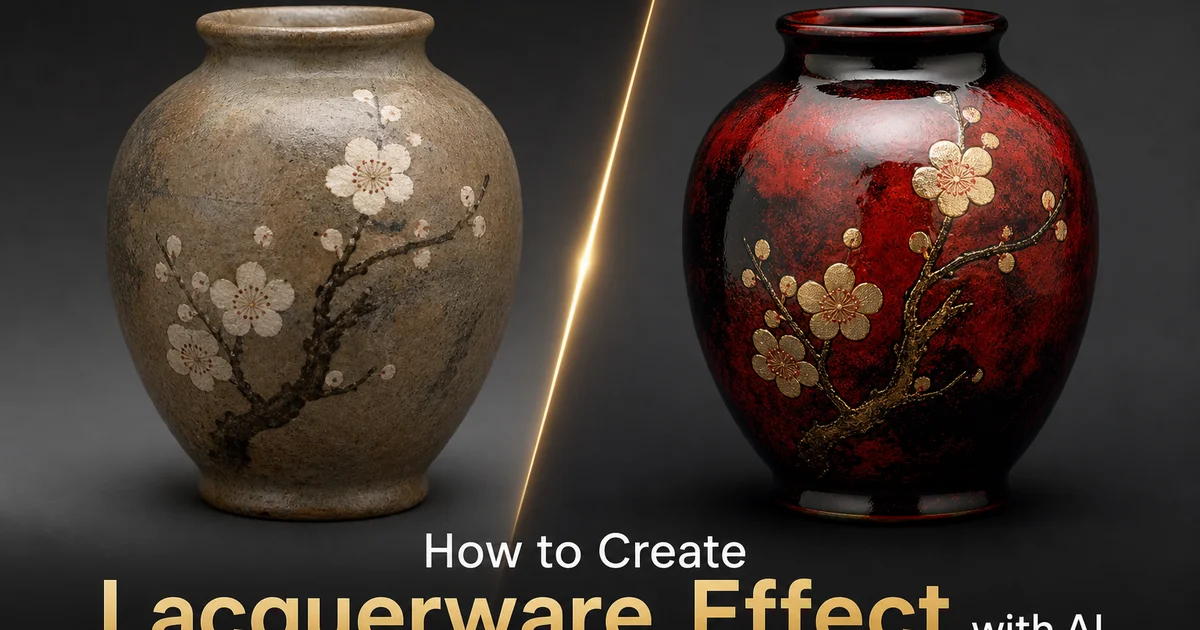
A laca representa uma das tradicoes artisticas decorativas mais tecnicamente exigentes e visualmente deslumbrantes da cultura do Leste Asiatico, com uma historia que abrange mais de sete mil anos na China e mais de mil anos de pratica refinada no Japao e na Coreia. O meio e unico entre as artes decorativas por causa do proprio material. A seiva da arvore Toxicodendron vernicifluum, conhecida como urushi em japones ou qi em chines, transforma-se por meio da polimerizacao de um liquido viscoso em um solido extraordinariamente duro, durave e belo que pode ser polido ate obter um brilho semelhante ao vidro. Essa mudanca requer controle ambiental preciso: a laca deve curar em niveis especificos de temperatura e umidade. Cada uma das vinte a trinta camadas que compoem uma superficie de laca requer dias de secagem antes que a proxima possa ser aplicada. A superficie resultante tem uma profundidade e luminosidade que nenhum outro material de revestimento pode igualar, e por isso a laca tem sido valorizada como a mais luxuosa das superficies decorativas em toda a historia da arte asiatica.
As tecnicas decorativas aplicadas as superficies de laca sao tao variadas quanto virtuosisticas. O maki-e japones polvilha po de ouro e prata sobre a laca molhada para criar imagens que brilham com radiancia metalica contra fundos pretos ou vermelhos profundos. A laca entalhada chinesa acumula dezenas ou ate centenas de camadas de laca e depois as escava para revelar desenhos tridimensionais em relevo nas camadas de cinabrio vermelho, preto ou policromaticas. O najeonchilgi coreano incrusta finas laminas de concha de abalone iridescente na superficie da laca, criando imagens que mudam de cor conforme o angulo de visao. As pinturas em laca son mai vietnamitas incorporam casca de ovo triturada, folha de ouro e laca colorida dentro das camadas superficiais para criar arte moderna com materiais tradicionais. Cada tecnica produz um efeito visual instantaneamente distinto e profundamente conectado a sua origem cultural.
A conversao de laca com tecnologia AI transforma fotografias em imagens que replicam essas qualidades materiais distintas. O brilho profundo da laca polida, a luminosidade interna quente das camadas sobrepostas, o brilho do po de ouro incrustado, a profundidade tridimensional do relevo esculpido e o jogo iridescente da concha incrustada. A AI nao simplesmente aplica uma sobreposicao brilhante a fotografia, mas imita as propriedades materiais da laca no nivel de renderizacao, calculando como a luz interage com uma superficie semitransparente multicamadas, como as inclusoes metalicas dispersam e refletem a luz em diferentes angulos, e como o relevo esculpido cria sombras e realces que definem a forma. Este guia percorre o processo completo, desde a selecao do assunto ate a estilizacao especifica da tradicao, configuracao da superficie e os detalhes materiais que fazem a diferenca entre uma conversao convincente em laca e um filtro brilhante generico.
- A AI imita as propriedades oticas unicas da laca: dispersao subsuperficial atraves de camadas translucidas, brilho superficial com refletividade controlada e o caloroso brilho interno criado pela luz interagindo com camadas de pigmento.
- Multiplas tradicoes de laca do Leste Asiatico estao disponiveis, incluindo decoracao japonesa maki-e em ouro, relevo chines em cinabrio esculpido, incrustacao coreana de madreperola e tecnicas de pintura vietnamita son mai.
- A simulacao de ouro e metalurgia renderiza po maki-e, folha de ouro e elementos de prata com comportamento de dispersao metalica fisicamente preciso em vez de preenchimentos planos de cor amarela.
- O modo laca entalhada cria efeitos de relevo tridimensional onde os elementos da imagem parecem fisicamente elevados da superficie, com projecao de sombras e modelagem de realces adequadas.
- Os controles de envelhecimento e patina introduzem a craquelacao superficial caracteristica, o embacamento do brilho e o amarelamento âmbar da laca antiga, adicionando autenticidade historica ao resultado renderizado.
A arte e a ciencia da laca tradicional: materiais, tecnicas e significado cultural
A seiva da arvore de urushi que forma a base de toda a laca tradicional do Leste Asiatico e um notavel polimero natural. Quando expostos a enzima lacase na presenca de umidade e oxigenio, os compostos urushiol na seiva passam por polimerizacao oxidativa, reticulando-se em um plastico termofixo mais duro que muitos revestimentos sinteticos, resistente a agua, alcool, acido e calor moderado, e capaz de ser polido ate uma superficie brilhante como um espelho. Este material natural possui propriedades que nenhum revestimento sintetico igualou ate o seculo vinte, e em termos de profundidade otica e beleza superficial, muitos artistas da laca e conservadores argumentam que os materiais modernos ainda sao inferiores. O processo de cura requer um ambiente paradoxal: a alta umidade acelera a polimerizacao, entao a laca deve ser seca em um armario umido especial chamado furo em vez de ar seco, que causaria a formacao de pelicula superficial antes que o interior cure.
O maki-e japones, que se traduz literalmente como 'imagem salpicada', e considerado o apice da decoracao em laca. A tecnica envolve pintar desenhos na laca molhada e depois polvilhar pos de ouro, prata ou outros metais na superficie umida antes que ela cure. A superficie curada e entao revestida com camadas extras de laca transparente, polidas para revelar a decoracao metalica incrustada na profundidade da laca. O processo e repetido para camadas adicionais de imagens em diferentes profundidades. As pecas maki-e mais elaboradas contem dezenas de camadas de imagens douradas em diferentes profundidades dentro da laca, criando uma experiencia visual onde o observador percebe multiplos planos de decoracao atraves da superficie transparente da laca, um efeito que os historiadores da arte descrevem como 'pintar em tres dimensoes com luz'. Mestres artistas maki-e passam decadas desenvolvendo a habilidade de controlar o posicionamento do po de ouro com a precisao necessaria para imagens figurativas detalhadas.
A laca entalhada chinesa, conhecida como diaoqi, adota uma abordagem fundamentalmente diferente tratando a propria laca como um meio escultorico. Os artesaos aplicam de cem a varias centenas de camadas individuais de laca colorida, mais comumente vermelho cinabrio, permitindo que cada camada cure antes de aplicar a proxima. O bloco de laca solida resultante pode ter um centimetro ou mais de espessura, fornecendo profundidade suficiente para entalhes em relevo detalhados. Entalhadores habilidosos entao cortam atraves das camadas de laca para criar desenhos tridimensionais: paisagens, dragoes, flores e padroes geometricos emergem em relevo escultorico da superficie vermelha, com a profundidade e sombra do entalhe fornecendo definicao visual. Os exemplos mais refinados mostram detalhes extraordinarios, com petas de flores individuais, agulhas de pinheiro e detalhes de figuras entalhados nitidamente atraves da laca densa. O najeonchilgi coreano adiciona outra dimensao atraves da incrustacao de finas fatias de concha de abalone e nautilo na superficie lacada, criando imagens que transitam entre azul, verde, roxo e rosa conforme o angulo de visao muda.
- A laca urushi passa por polimerizacao oxidativa exigindo condicoes umidas de cura, produzindo um revestimento termofixo natural mais duro que muitos sinteticos com profundidade otica sem igual.
- O maki-e japones incorpora multiplas camadas de imagens em po de ouro em diferentes profundidades dentro da laca transparente, criando composicoes tridimensionais visiveis atraves da superficie.
- A laca entalhada chinesa acumula centenas de camadas coloridas e depois entalha desenhos em relevo tridimensional no bloco de laca resultante com um centimetro de espessura.
- O najeonchilgi coreano incrusta fatias de concha iridescentes que mudam de cor com o angulo de visao, adicionando efeitos oticos dinâmicos a superficie estavel do fundo lacado.
Como a AI simula as propriedades materiais da laca e a interacao com a luz
A qualidade visual que distingue a laca de outras superficies brilhantes e a interacao entre o brilho superficial e a profundidade subsuperficial. Uma superficie de laca nao e simplesmente brilhante na parte superior: ela tem profundidade translucida criada por dezenas de camadas de laca que permitem que a luz penetre, se disperse em particulas de pigmento em diferentes profundidades e saia da superficie com um caloroso brilho interno. Esse efeito de dispersao subsuperficial da a laca sua luminosidade caracteristica, fazendo a laca preta parecer nao como um preto opaco plano, mas como um espaco profundo e aparentemente infinito com sutis tons quentes visiveis na luz angulada. A laca vermelha parece brilhar de dentro porque a luz penetra nas camadas superiores, ricocheteia nas camadas pigmentadas mais profundas e sai com intensidade de cor acumulada. A AI imita isso renderizando a superficie de laca com um modelo de material multicamadas onde cada camada virtual de laca tem transparencia, densidade de pigmento e propriedades de dispersao definidas.
A refletividade superficial da laca segue um perfil especifico que difere de outros materiais brilhantes. A laca roiro recem-polidA, o acabamento espelhado preto profundo considerado a maior conquista na preparacao da superficie de laca japonesa, tem refletividade especular muito alta com reflexos nitidos levemente aquecidos pelo âmbar da laca. O reflexo nao e frio ou perfeito como um espelho de vidro porque a natureza organica da laca curada introduz textura superficial sutil em nivel microscopico que suaviza muito levemente os reflexos enquanto mantem sua nitidez geral. A laca envelhecida mostra reflexos progressivamente mais suaves a medida que a craquelacao superficial fina, uma rede de rachaduras capilares invisiveis ao olho nu mas que afetam a dispersao da luz, se desenvolve ao longo de decadas. O controle de brilho superficial da AI interpola entre esses extremos, imitando o perfil de refletividade especifico da laca em vez de usar um shader generico de material brilhante.
A renderizacao de elementos metalicos e critica para os efeitos maki-e e najeonchilgi. O po de ouro no maki-e nao reflete a luz como uma superficie de ouro solida: as particulas individuais, variando em tamanho de graos grossos a po fino, cada uma reflete e dispersa a luz independentemente, criando um brilho mais suave e complexo que o ouro solido. O po de prata adiciona tons mais frios e um padrao de dispersao diferente. A AI renderiza cada particula metalica de acordo com seu tamanho e orientacao simulados, calculando como ela refletiria as fontes de luz ambiente e o fundo de laca circundante. Para incrustacao de concha, a AI imita a interferencia de filme fino que cria o jogo de cores iridescente do nacre, o mesmo fenomeno otico que faz as bolhas de sabao formarem arco-iris, calculando a cor aparente com base no angulo de visao simulado e na espessura do filme fino da camada de concha.
- O modelo de material multicamadas renderiza a laca com transparencia e dispersao definidas por camada virtual, produzindo o caracteristico brilho subsuperficial visivel em superficies de laca reais.
- A refletividade superficial segue perfis especificos da laca: reflexos nitidos levemente aquecidos para acabamento roiro fresco, reflexos progressivamente suavizados para patina de craquelacao envelhecida.
- A renderizacao de po de ouro simula a reflexao e dispersao de particulas individuais em vez de superficies metalicas solidas, produzindo o brilho complexo caracteristico da decoracao maki-e.
- A simulacao de incrustacao de concha calcula interferencia de filme fino para cores iridescentes dependentes do angulo de visao que replicam o comportamento otico do nacre no najeonchilgi.
Selecao de assunto e composicao para efeitos de laca convincentes
O efeito laca funciona de forma mais convincente quando o assunto se alinha com as tradicoes decorativas do estilo de laca selecionado. Espectadores que reconhecem a forma de arte esperarao um assunto consistente com seu repertorio historico. O maki-e japones tradicionalmente retrata assuntos naturais: flores de cerejeira, pinheiros, grous, ondas, montanhas e a lua, renderizados com uma combinacao de observacao naturalistica e elegância estilizada. A laca entalhada chinesa favorece paisagens com estudiosos e pavilhoes, motivos de dragao e fenix e rolos florais densamente compostos que preenchem toda a superficie decorada. O najeonchilgi coreano frequentemente apresenta passaros entre flores, videiras e padroes geometricos de borda. Fotografias de assuntos naturais, animais, paisagens e elementos arquitetonicos convertem-se geralmente bem porque se enquadram no vocabulario tematico esperado da decoracao em laca.
A composicao para conversao em laca se beneficia dos principios de equilibrio assimetrico que caracterizam as artes decorativas japonesas e chinesas. Um assunto posicionado fora do centro com espaco aberto permitindo que o fundo de laca sirva como elemento compositivo produz resultados mais consistentes com o design tradicional de laca do que uma composicao centrada e firmemente enquadrada. No maki-e, a relacao entre areas decoradas e nao decoradas e uma decisao critica de design: o brilho profundo do fundo de laca nao decorado e por si so um elemento visual, e sua proporcao em relacao a decoracao dourada determina o sentimento geral da peca. Composicoes que deixam areas principais do fundo de laca visiveis produzem resultados que parecem mais com objetos de laca autenticos e menos com superficies pintadas totalmente cobertas.
A iluminacao na fotografia original afeta grandemente a conversao em laca porque a AI utiliza as informacoes de luz e sombra existentes da imagem para determinar como a superficie de laca reflete e como os elementos metalicos brilham. Fotografias com iluminacao direcional clara produzem os resultados mais convincentes porque a direcao da luz fornece posicionamento consistente de realces especulares na superficie de laca e sombras em areas de relevo entalhado. Imagens com iluminacao plana e uniforme funcionam adequadamente mas produzem efeitos de superficie de laca menos dinâmicos porque nao ha uma direcao de luz dominante para gerar reflexos convincentes. A iluminacao lateral e particularmente eficaz porque maximiza simultaneamente a visibilidade do brilho superficial, da profundidade entalhada e do brilho metalico, criando o tipo de iluminacao de exposicao que os museus usam ao exibir colecoes de laca.
- Assuntos alinhados com o repertorio tradicional, assuntos naturais, paisagens e motivos culturais, produzem os resultados mais convincentes que os espectadores reconhecem como autentica decoracao em laca.
- A composicao assimetrica com espaco aberto permite que o fundo de laca funcione como elemento visual, correspondendo aos principios de design do maki-e tradicional e da laca entalhada.
- A iluminacao direcional clara em fotografias fonte produz os efeitos de laca mais dinâmicos com realces especulares convincentes, profundidade de sombra e brilho metalico.
- A iluminacao lateral maximiza a visibilidade simultanea do brilho superficial, da profundidade do relevo entalhado e do brilho do po de ouro, replicando condicoes de iluminacao museologicas para laca.
Estilizacao especifica por tradicao: maki-e, laca entalhada e incrustacao de concha
O preset maki-e japones transforma o assunto da fotografia em uma imagem que parece pintada em ouro e laca colorida sobre um fundo preto profundo ou vermelho. A AI mapeia os valores tonais da imagem para diferentes tecnicas de maki-e: as areas mais brilhantes tornam-se takamaki-e, ouro em relevo que parece projetar-se acima da superficie de laca. Os meios-tons tornam-se hiramaki-e, decoracao em ouro plana nivelada com a laca circundante. E as areas mais escuras tornam-se togidashi-maki-e, onde o ouro esta enterrado sob laca transparente e polido de volta a uma superficie lisa que mostra cor dourada atraves da profundidade da laca translucida. Esta abordagem em camadas cria complexidade visual dentro da propria decoracao dourada, com diferentes areas capturando a luz de forma diferente dependendo do seu nivel superficial e da espessura da laca acima delas.
O preset laca entalhada chinesa cria um efeito de relevo tridimensional onde a imagem parece entalhada a partir de camadas solidas de laca vermelha, preta ou policromatica. A AI analisa as informacoes de profundidade da fotografia, assuntos em primeiro plano, elementos de meio-termo e fundo, e atribui a eles diferentes alturas de relevo dentro do entalhe simulado. Elementos em primeiro plano projetam-se mais da superficie, com rebaixos entalhados que projetam sombras e criam forte definicao dimensional. Elementos de fundo recuam para relevo mais raso com menos contraste de sombra. O estilo de entalhe segue as convencoes de diferentes periodos historicos: a austeridade da dinastia Song com composicoes espacadas e elegantes e perfis de entalhe arredondados e lisos, a exuberancia da dinastia Ming com superficies densamente preenchidas e detalhes intricados, ou o virtuosismo da dinastia Qing com relevo muito profundo e composicoes elaboradas multiplano.
O preset najeonchilgi coreano renderiza o assunto da fotografia como incrustacao de concha sobre laca preta, com o jogo de cores iridescente do abalone criando um efeito visual diferente de qualquer outro meio decorativo. A AI mapeia diferentes areas da imagem para diferentes espessuras simuladas de concha, que determinam a cor iridescente dominante em cada ponto. Concha mais fina aparece azul-esverdeada, espessura media transita pelo roxo ate o magenta, e concha mais grossa mostra tons dourados quentes. O resultado brilha com cores que mudam atraves da superficie nao porque pigmentos diferentes sao usados mas porque o padrao de interferencia de filme fino varia com a espessura da concha. A laca preta entre os elementos de concha fornece contraste que torna a iridescencia visualmente marcante. A AI mantem juntas visiveis entre pecas individuais de concha em escala fina, replicando a construcao tipo mosaico do verdadeiro najeonchilgi.
- O preset maki-e mapeia valores tonais para diferentes tecnicas de ouro: takamaki-e em relevo para realces, hiramaki-e plano para meios-tons e togidashi enterrado para sombras, criando complexidade visual em camadas.
- O preset laca entalhada atribui profundidade de relevo com base nas informacoes de profundidade da imagem, com opcoes de periodos historicos da austeridade Song a exuberancia Ming ao virtuosismo Qing.
- O preset najeonchilgi renderiza assuntos como incrustacao de concha com iridescencia dependente da espessura que transita de azul-esverdeado a roxo a dourado, mantendo juntas de construcao tipo mosaico visiveis.
- Cada preset de tradicao aplica nao apenas estilizacao visual, mas principios de composicao culturalmente apropriados, convencoes cromaticas e densidade decorativa caracteristica da tradicao selecionada.
Aplicacoes criativas: branding de luxo, design de interiores e colecionaveis digitais
Marcas de luxo usam o efeito laca para criar imagens de produto e materiais de marketing que comunicam qualidade premium, heranca asiatica e artesanalidade. Converter fotografias de produto em renderizacoes em estilo laca produz ativos de marca que se destacam da fotografia convencional por meio de sua associacao com uma das tradicoes artisticas decorativas mais refinadas da historia. Marcas de perfume, designers de joias e casas de alta-costura há muito se inspiram na estetica da laca para embalagens, exibicoes e imagens publicitarias, e os efeitos de laca gerados por AI tornam essa linguagem visual acessivel a marcas que nao podem encomendar verdadeiras obras de arte em laca. O brilho profundo, o cintilar do ouro e a riqueza material do efeito laca comunicam luxo em um nivel visceral que transcende fronteiras culturais.
Aplicacoes de design de interiores incluem a criacao de paineis artisticos em estilo laca, designs de biombos e superficies decorativas que trazem a estetica da laca tradicional para espacos modernos. Designers podem converter fotografias de assuntos escolhidos pelos clientes, brasoes de familia, paisagens significativas, simbolos culturais, em obras de arte em estilo maki-e ou najeonchilgi que podem ser impressas em substratos de alto brilho para aproximar o efeito visual da verdadeira laca. Embora uma reproducao impressa nao possa igualar a profundidade material da laca real, o padrao visual e a composicao podem evocar a tradicao poderosamente o suficiente para servir como um elemento de design que referencia a laca sem fingir sê-lo. Designers de restaurantes e hospitalidade favorecem particularmente a estetica da laca para ambientes japoneses, chineses e pan-asiaticos, onde a linguagem visual da laca conecta o espaco à sua heranca culinaria.
A arte digital e os colecionaveis representam uma aplicacao emergente onde os efeitos de laca adicionam profundidade cultural e valor percebido a imagens digitais. Criadores de NFT e artistas digitais usam o efeito maki-e para criar imagens que fazem referencia a preciosidade e a tradicao artesanal do trabalho em laca dourada, adicionando uma dimensao de significado cultural que efeitos puramente digitais nao podem evocar. A simulacao de materiais da AI e particularmente valiosa neste contexto porque gera imagens com interacao luminosa fisicamente consistente, reflexos superficiais e comportamento metalico que criam um senso de presenca material mesmo quando a obra de arte existe apenas como pixels. Criadores de conteudo para midias sociais usam o efeito laca para transformar fotografias cotidianas em conteudo visual marcante que para a rolagem por meio da combinacao de assuntos familiares e renderizacao material unfamiliar.
- Marcas de luxo usam imagens de produto em estilo laca para comunicar qualidade premium e heranca artesanal por meio da associacao com refinadas tradicoes decorativas do Leste Asiatico.
- Designers de interiores criam paineis artisticos e superficies decorativas em estilo laca convertendo fotografias significativas em composicoes maki-e ou najeonchilgi para impressao em substratos de alto brilho.
- Artistas digitais e criadores NFT adicionam profundidade cultural e valor material percebido por meio de efeitos maki-e que simulam o comportamento fisicamente consistente do po de ouro e da superficie de laca.
- O conteudo de midias sociais ganha poder de parada da combinacao de assuntos familiares renderizados no vocabulario material unfamiliar da laca, criando intriga visual que impulsiona o engajamento.
How to do it
- 1
Upload your photo and evaluate its suitability for lacquerware-style rendering
Open your image in AI Filter and assess whether the subject has clear forms, good tonal contrast. Elements that will benefit from the deep glossy surface quality of lacquerware art. Lacquerware is made by applying dozens of thin coats of tree sap lacquer onto wood, fabric, or metal substrates, building up a surface that can be polished to a mirror-like gloss and decorated with painting, carving, or inlaid metalwork. Photographs with well-defined subjects, rich color, and good lighting convert most well because the lacquerware effect transforms images into compositions that appear painted onto this luminous, depth-rich surface. Portraits, still life compositions, nature subjects, and decorative objects produce mainly striking results because they align with the traditional subject matter of lacquerware decoration.
- 2
Select the lacquerware tradition and configure surface characteristics
Choose from lacquerware style presets representing different East Asian traditions. Japanese urushi with maki-e gold powder decoration on deep black or vermillion grounds, Chinese carved lacquer with three-dimensional relief patterns in cinnabar red or black, Korean najeonchilgi with iridescent mother-of-pearl inlay on black lacquer, or Southeast Asian yun-de lacquer with incised and color-filled geometric patterns. Each tradition produces a at its core different visual effect because the decorative techniques, color palettes, and surface treatments vary greatly. The surface gloss slider controls the reflectivity of the lacquer ground, from the deep semi-gloss of aged antique pieces to the mirror-bright finish of freshly polished modern work.
- 3
Configure the ground color, decorative technique, and metalwork elements
Set the lacquer ground color that serves as the background field for the decoration. Traditional Japanese lacquer uses deep black (roiro-nuri), vermillion red (shu-nuri), or occasionally gold dust grounds (nashiji). Chinese carved lacquer is mostly cinnabar red, though black, green, and polychrome layered pieces also exist. The decorative technique determines how the photograph's content is rendered on the lacquer surface. As painted imagery using colored lacquer and gold, as carved relief where image elements appear raised from the surface, or as inlaid metalwork where details are rendered as gold, silver, or mother-of-pearl set into the lacquer ground. Each technique has distinct visual properties that the AI mimics by applying appropriate material rendering to the image content.
- 4
Adjust depth, gold leaf application, and aging characteristics
Control the visual depth of the lacquer surface, which is one of the most distinctive properties of real lacquerware. Multiple layers of lacquer create a translucent depth effect where light enters the surface, illuminates subsurface pigment layers, and exits with a warm internal glow. Similar to the depth effect in oil paintings or gemstones. The AI mimics this by rendering the decorated surface with subsurface scattering that gives colors a luminous quality unattainable with flat matte rendering. Gold leaf application controls how much of the decoration is rendered in simulated gold. From sparse accent highlights to extensive maki-e where the entire composition shimmers with gold and silver powder. Aging controls introduce the patina of antique lacquerware, including gentle surface crazing, slight dulling of the gloss, and warm amber yellowing of the lacquer layers.
- 5
Export the lacquerware effect and refine with AI Enhance for material authenticity
Save the lacquerware effect at full resolution and apply AI Enhance to sharpen the most important decorative details. Gold powder particles in maki-e, the crisp edges of carved relief, and the iridescent shimmer of mother-of-pearl inlay. Compare the result against photographs of real lacquerware in museum collections to verify that the surface gloss looks physically convincing, that the relationship between ground color and decoration follows the conventions of the selected tradition. That the overall material quality reads as lacquer rather than plastic or enamel. The distinction matters because authentic lacquer has a specific warmth, depth, and light interaction that differs subtly from other glossy surfaces, and the AI's material rendering aims to capture these distinguishing traits.
Fontes
- Japanese Lacquer Art: History, Techniques, and Conservation — The Metropolitan Museum of Art — Heilbrunn Timeline of Art History
- Chinese Lacquer: The Art of Carved and Painted Lacquerware — Victoria and Albert Museum
- Material Appearance Modeling: Simulating Lacquer and Glossy Coatings — ACM Transactions on Graphics — SIGGRAPH