
Como Criar um Efeito Kumiko com Edicao de Fotos por IA — Magic Eraser
Transforme fotos em trabalhos de marcenaria geometrica japonesa kumiko usando filtros de IA. Guia passo a passo cobrindo padroes entrelacados, designs de folha de cânhamo asanoha, estetica shoji e detalhes autenticos de entalhe sem pregos.

Product Marketing
Revisado por Magic Eraser Editorial ·
Índice
- Como a conversao kumiko por IA difere das sobreposicoes de grade geometrica
- Padroes tradicionais de kumiko e seus principios de construcao geometrica
- Especies de madeira, simulacao de veios e a estetica das superficies aplainadas a mao
- Luz, sombra e a interacao entre grade e imagem
- Aplicacoes criativas: visualizacao arquitetonica, arte de parede e design cultural
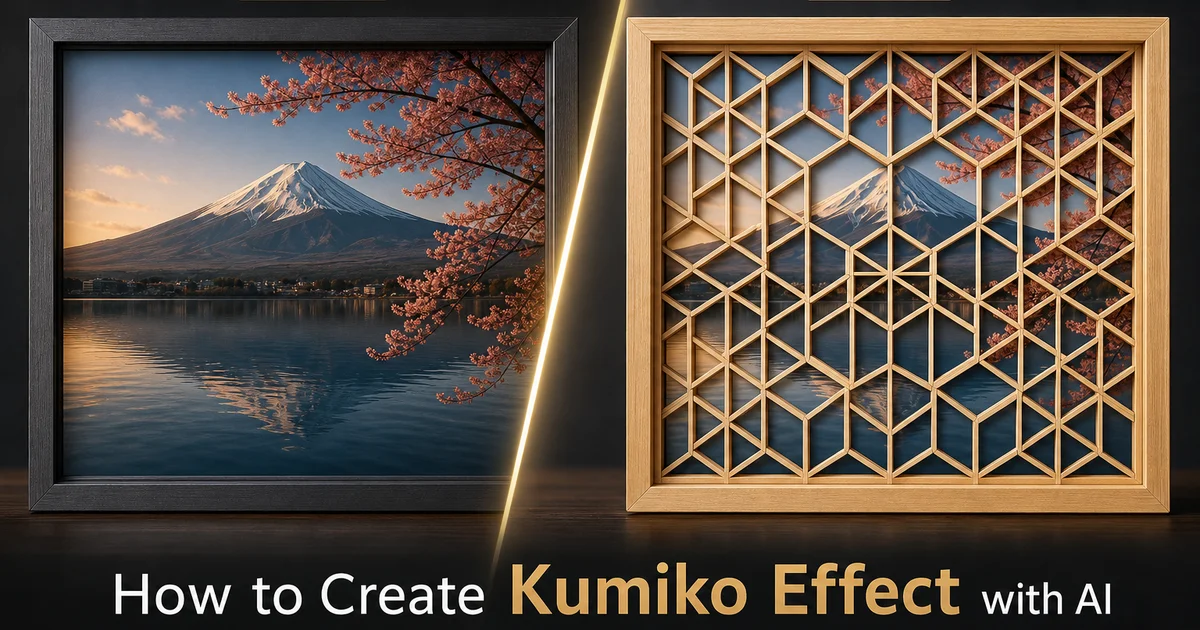
Kumiko e uma das expressoes mais refinadas do artesanato japones de marcenaria, uma tecnica em que finas tiras de madeira sao cortadas em angulos precisos e entrelacadas em padroes geometricos sem usar pregos, parafusos ou adesivo de qualquer tipo. Os paineis de grade resultantes — no passado inseridos em telas deslizantes shoji, transoms ranma acima das portas e insercoes decorativas de moveis — criam designs geometricos intrincados que filtram e transformam a luz que passa por eles, projetando sombras padronizadas que mudam ao longo do dia conforme o angulo do sol se desloca. Esta forma de arte remonta a mais de mil anos no Japao e abrange mais de duzentos tipos distintos de padroes, cada um com seu proprio nome, significado simbolico e conjunto de angulos de corte especificos que um artesao deve dominar. O padrao asanoha de folha de cânhamo, com sua geometria estelar hexagonal radiante, e o motivo kumiko mais amplamente reconhecido e se tornou um icone simbolico do design geometrico japones mundialmente.
Recriar digitalmente a estetica kumiko tem sido dificil porque o efeito depende da natureza tridimensional das tiras de madeira entrelacadas em vez de um padrao plano. Uma sobreposicao geometrica que cria um padrao de grade sobre uma fotografia produz algo que se le como um elemento grafico sobre uma imagem em vez de uma estrutura fisica de madeira atraves da qual a imagem e vista. O kumiko real tem profundidade — as tiras se sobrepoem nos cruzamentos, criando sombra onde uma peca passa sobre outra. As bordas chanfradas de cada tira capturam a luz em angulos que revelam sua forma tridimensional. A propria madeira tem veio, brilho superficial e variacao de cor que a identificam como um material natural. Sem essas pistas de profundidade e materialidade, um padrao estilo kumiko parece uma borda decorativa em vez do trabalho estrutural em madeira que representa.
A conversao kumiko alimentada por IA muda isso gerando uma estrutura de grade tridimensional que se situa em frente a imagem de origem, com cada tira de madeira renderizada como um elemento fisico individual com profundidade, sombra, textura de veio e detalhes de entalhe adequados em cada cruzamento. A IA entende as regras de construcao geometrica de cada tipo de padrao tradicional — os angulos de corte especificos, a sequencia de entrelacamento, as proporcoes de largura das tiras — e gera geometria de grade matematicamente correta em vez de aproximar a aparencia visual. Ela entao determina como a fotografia de origem mapeia os espacos negativos visiveis atraves da grade, ajustando exposicao e cor para simular o efeito de ver uma imagem atraves de uma tela de madeira retroiluminada. Este guia orienta a criacao de efeitos kumiko autenticos usando AI Filter e AI Enhance, cobrindo selecao de padroes, especies de madeira, detalhes de entalhe e a interacao luz-e-sombra que faz do kumiko uma das mais belas interseccoes entre matematica e artesanato.
- A IA gera geometria de grade kumiko matematicamente correta a partir de regras de construcao de padroes tradicionais, produzindo tiras nos angulos de corte precisos usados por marceneiros reais em vez de aproximar a aparencia visual.
- Os predefinidos de padroes cobrem o vocabulario principal do kumiko incluindo asanoha folha de cânhamo, yarai cerca de flechas, izutsu moldura de poco e sakura flor de cerejeira, cada um com geometria de tiras entrelacadas autentica.
- A simulacao de especies de madeira reproduz a direcao do veio, o brilho superficial e as caracteristicas cromaticas dos materiais tradicionais de kumiko, incluindo cipreste hinoki, paulownia kiri e cedro sugi.
- O detalhe de entalhe renderiza as interseccoes de meia-esquadria e encaixe onde as tiras se entrelacam sem pregos, mostrando os cortes angulados precisos que mantem a grade unida apenas pela geometria.
- A simulacao de profundidade tridimensional cria sombra entre tiras sobrepostas e realces de bordas chanfradas, distinguindo a estrutura fisica da grade do padrao grafico plano.
Como a conversao kumiko por IA difere das sobreposicoes de grade geometrica
Uma sobreposicao de grade geometrica na edicao de fotos tradicional cria uma rede de linhas sobre uma imagem, produzindo algo que se parece mais com um grafico ou cerca do que com marcenaria. As linhas tem largura uniforme, bordas de pixel nitidas e nenhuma propriedade fisica. Elas existem puramente como marcas graficas em uma superficie plana. As tiras reais de kumiko sao objetos fisicos com secoes transversais retangulares, geralmente entre dois e seis milimetros de largura e um a tres milimetros de espessura. Elas interagem com a luz como corpos tridimensionais. A superficie superior de cada tira captura luz direta e mostra o plano liso que revela a qualidade da superficie aplainada a mao. Os lados de cada tira caem em sombra, criando as bordas escuras que definem o padrao geometrico. Onde duas tiras se cruzam, uma passa sobre a outra com uma lacuna de sombra visivel. A juncao no cruzamento e um detalhe de entrelacamento precisamente cortado, visivel em inspecao proxima.
A conversao kumiko por IA modela cada tira como um elemento tridimensional posicionado no espaco acima da imagem de origem. A IA calcula os angulos especificos nos quais as tiras devem ser cortadas para criar cada padrao tradicional — 30 graus para os pontos radiantes do asanoha, 45 graus para o padrao izutsu de base quadrada, 60 graus para a grade triangular yarai — e gera geometria de tiras que se entrelaca corretamente em cada cruzamento. O resultado tem profundidade fisica: a grade projeta sombras na imagem atras dela, as tiras ocluem porcoes da imagem em sua largura fisica e os detalhes de entalhe nos cruzamentos mostram como as pecas se conectam. Esta construcao tridimensional significa que o efeito kumiko parece um painel de madeira real colocado em frente a fotografia em vez de um padrao estampado sobre ela.
A simulacao de material adiciona as qualidades que identificam a grade como madeira em vez de geometria abstrata. Cada tira exibe um veio que corre sempre ao longo de seu comprimento — uma propriedade visual tao fundamental para a madeira que sua ausencia e imediatamente desconfortavel. A superficie mostra o brilho caracteristico do hinoki aplainado a mao ou a suavidade sutil da paulownia, dependendo da especie de madeira selecionada. Nos cruzamentos, os cortes de entalhe revelam o veio de topo da madeira onde a tira foi precisamente angulada, mostrando a textura e cor ligeiramente diferentes do veio visto em secao transversal versus ao longo do comprimento. Esses detalhes de material sao um por um sutis, mas coletivamente cruciais para criar a impressao de artesanato em madeira em vez de geometria digital.
- Sobreposicoes de grade produzem linhas graficas planas sem propriedades fisicas, enquanto a IA gera tiras tridimensionais com secoes transversais retangulares, sombra e profundidade.
- Angulos de corte precisos sao calculados para cada padrao tradicional — 30 graus para asanoha, 45 para izutsu, 60 para yarai — produzindo geometria de entrelacamento matematicamente correta.
- As tiras projetam sombras na imagem atras delas e ocluem porcoes em sua largura fisica, criando o efeito de um painel real em vez de um padrao estampado.
- O veio da madeira corre consistentemente ao longo do comprimento de cada tira com veio de topo visivel nos cortes de entalhe, o detalhe material que faz a grade ser lida como madeira em vez de geometria abstrata.
Padroes tradicionais de kumiko e seus principios de construcao geometrica
O padrao asanoha e o design kumiko mais iconico e amplamente reconhecido, composto por seis formas de diamante dispostas em torno de um ponto central para criar uma estrela radiante que se assemelha a uma folha de cânhamo. Daí seu nome, que se traduz como folha de cânhamo em japones. A construcao geometrica comeca com uma grade triangular. Dentro de cada triangulo, tres tiras bissetam os lados para criar a formacao estelar de seis pontas. O angulo de corte para tiras asanoha e de 30 graus. A precisao deste angulo em cada junta determina se o padrao se le como nítido e intencional ou desleixado e aproximado. No predefinido asanoha da IA, cada tira encontra suas vizinhas exatamente a 30 graus, produzindo a simetria matematicamente perfeita que artesaos mestres de kumiko passam anos aprendendo a alcancar. O padrao tem profundo significado simbolico na cultura japonesa. Acreditava-se que o cânhamo crescia forte e ereto, entao padroes asanoha eram historicamente usados em roupas infantis e itens de nursery como um desejo de crescimento saudavel.
O padrao yarai imita uma cerca diagonal de flechas, criando uma grade de tiras que se cruzam em angulos de 60 graus para formar um campo de triangulos equilateros. Este e um dos padroes kumiko mais simples em termos de construcao. Sua simplicidade lhe confere uma qualidade grafica ousada que o torna eficaz em escalas maiores. Dentro de cada triangulo, tiras extras podem ser adicionadas para criar subpadroes mais complexos, uma tecnica chamada jigumi base patterning que constroi complexidade a partir de inicios simples. O padrao izutsu moldura de poco trabalha a partir de uma grade quadrada, com tiras se cruzando a 90 e 45 graus para criar uma geometria quadrada entrelacada que lembra a moldura de madeira de poco tradicional japones. O padrao asa-no-ha-kuzushi e uma variacao distorcida do asanoha onde os pontos radiantes sao esticados ou comprimidos para criar formas estelares alongadas, adicionando energia dinâmica ao padrao base de outra forma perfeitamente simetrico.
Padroes kumiko mais complexos sobrepoem multiplos sistemas geometricos uns sobre os outros. O padrao sakura flor de cerejeira combina uma construcao pentagonal com curvas sobrepostas implicadas pela grade de tiras retas, uma tecnica engenhosa onde o olho percebe curvas mesmo que cada tira seja perfeitamente reta. O yae-asanoha folha de cânhamo dupla aninha um padrao asanoha menor dentro de cada celula de um maior, criando uma hierarquia de escala fractal. O tsuno-asanoha folha de cânhamo com chifres estende cada ponto do asanoha basico com projecoes triangulares extras, aumentando grandemente a densidade do padrao e o numero de cruzamentos de entalhe por area unitaria. A IA oferece esses padroes complexos nas configuracoes de densidade adequadas. A construcao matematica garante que mesmo os padroes mais intrincados se tesselem corretamente em toda a imagem sem erros de alinhamento nos limites.
- Asanoha folha de cânhamo irradia seis formas de diamante em angulos de corte de 30 graus em torno de pontos centrais, simbolizando crescimento saudavel na tradicao cultural japonesa.
- Yarai cerca de flechas cria grade triangular ousada com cruzamentos de 60 graus, com jigumi base patterning adicionando complexidade dentro de cada celula triangular.
- Sakura flor de cerejeira combina construcao pentagonal onde tiras retas implicam curvas atraves da percepcao visual, criando formas florais organicas a partir de geometria linear.
- Padroes complexos em camadas como yae-asanoha aninham padroes menores dentro de maiores, criando hierarquia fractal que a IA tessel corretamente em qualquer escala.
Especies de madeira, simulacao de veios e a estetica das superficies aplainadas a mao
A escolha da especie de madeira no kumiko nao e meramente estetica. Afeta a integridade estrutural do entalhe, a facilidade de cortar angulos precisos e a maneira como a grade acabada interage com a luz. O cipreste japones (hinoki) e o material kumiko mais tradicional e venerado, apreciado por seu veio fino e reto, estabilidade dimensional, cor creme claro que escurece para mel dourado com o envelhecimento e a fragrancia distinta que perfuma um ambiente quando a madeira e recem aplainada. O predefinido hinoki da IA renderiza tiras com as caracteristicas linhas de veio estreitas e paralelas e a cor quente amarelo-esbranquicada que escurece sutilmente em direcao as bordas de cada tira onde ocorre oxidacao natural. O hinoki tem um brilho superficial natural de seu conteudo de resina que difere da aparencia fosca da madeira lixada. A IA replica isso adicionando um leve realce especular ao longo da superficie superior de cada tira.
A paulownia (kiri) e a madeira comercialmente usada mais leve do mundo. Seu uso no kumiko produz paineis de grade com uma aparencia palida quase etérea que maximiza a transmissao de luz atraves dos espacos negativos. A madeira kiri tem um padrao de veio mais largo que o hinoki com linhas ligeiramente onduladas que dao a cada tira um carater visual mais suave e menos rigido. A IA renderiza tiras de kiri com este veio mais amplo e fluido e a cor distintamente palida, quase branco-prateada, que torna a paulownia instantaneamente distinta para qualquer pessoa familiarizada com o artesanato japones em madeira. O cedro vermelho (sugi) introduz o contraste de cor e veio mais dramatico, com cerne marrom-avermelhado mostrando padroes de veio ousados que tornam cada tira individual altamente visivel dentro da grade. O kumiko sugi tem um calor rustico que funciona bem para paineis de grande formato e instalacoes arquitetonicas modernas onde o carater da madeira e destinado a ser um elemento visual proeminente em vez de uma estrutura sutil.
A qualidade superficial das tiras de kumiko e um dos marcadores mais importantes da qualidade do artesanato e e um detalhe critico para a IA simular com precisao. No kumiko tradicional, cada tira e finalizada com uma plaina manual kanna em vez de lixa. A superficie aplainada tem uma lisura semelhante ao vidro que reflete a luz com um brilho suave e, sob ampliacao, mostra as celulas de madeira limpa e precisamente cortadas que uma lamina de plaina afiada produz, em oposicao a superficie áspera e desfiada da madeira lixada onde particulas abrasivas rasgaram as celulas em vez de corta-las. A IA imita a qualidade da superficie aplainada atraves da maneira especifica como a luz interage com as superficies das tiras: um componente especular suave que cria realces sutis ao longo do comprimento de cada tira, combinado com a qualidade ligeiramente translucida da madeira cortada limpa que permite que a luz penetre ligeiramente abaixo da superficie, aquecendo a cor aparente.
- Cipreste hinoki oferece veio fino e reto, cor creme claro escurecendo para mel dourado e brilho resinoso natural que produz o suave realce especular do kumiko tradicional.
- Paulownia kiri cria grade palida etérea com linhas de veio mais largas e fluidas, maximizando a transmissao de luz para o peso visual mais leve possivel.
- Cedro vermelho sugi introduz padroes de veio ousados marrom-avermelhados para calor rustico em instalacoes arquitetonicas contemporaneas de grande formato.
- A simulacao de superficie aplainada a mao replica a lisura do acabamento kanna com brilho suave e ligeira translucidez, distinguindo o artesanato tradicional de superficies lixadas ou usinadas.
Luz, sombra e a interacao entre grade e imagem
A experiencia definitiva do kumiko em ambientes arquitetonicos e a maneira como a grade transforma a luz que passa por ela. Esta interacao luz-sombra e central para o efeito kumiko da IA. Quando a luz solar passa por um painel kumiko real instalado em uma tela shoji, a grade geometrica projeta sombras padronizadas no chao e nas paredes que se deslocam e evoluem conforme o sol se move pelo ceu. A IA imita isso calculando como uma fonte de luz direcional interagiria com a estrutura de grade tridimensional. As tiras mais proximas da fonte de luz projetam as sombras mais nitidas, enquanto as tiras mais distantes projetam sombras mais suaves e difusas que se sobrepoem e criam padroes secundarios complexos. Voce pode ajustar o angulo de luz simulado para produzir o padrao de sombra que melhor complementa o conteudo da imagem.
A relacao entre a grade kumiko e a fotografia de origem cria um dialogo visual entre abstracao geometrica e realidade fotografica. A imagem e visivel atraves dos espacos negativos da grade, parcialmente ocluida pelas tiras de madeira e sutilmente alterada pela sombra da grade caindo sobre ela. Esta experiencia visual em camadas — ver a fotografia atraves da estrutura do padrao geometrico — muda como o observador se envolve com ambos os elementos. O conteudo da imagem ganha uma qualidade meditativa e contemplativa por ser visto atraves da grade, como se visto atraves da tela de um ambiente japones tradicional. O padrao geometrico ganha riqueza e profundidade do conteudo da imagem visivel atraves dele, impedindo que a grade seja lida como abstracao vazia.
A interacao de borda entre as tiras da grade e a imagem visivel e um detalhe sutil mas importante que a IA trata com cuidado. Quando uma tira de madeira cruza uma area clara da imagem, a tira aparece como uma silhueta escura contra o fundo luminoso. Quando a mesma tira cruza uma area escura, sua superficie de madeira clara se torna o elemento mais brilhante. Esta inversao tonal ao longo do comprimento de uma unica tira e uma consequencia fisica do empilhamento tridimensional. A aparencia da tira e constante, mas seu contraste percebido muda em relacao ao fundo atras dela. A IA renderiza esta interacao com precisao, e o resultado e um efeito kumiko onde a grade e a imagem estao fisicamente entrelacadas em vez de existirem como camadas separadas empilhadas juntas.
- A simulacao de luz direcional projeta sombras padronizadas da grade tridimensional sobre a imagem, com nitidez da sombra variando conforme a distancia da tira a fonte de luz.
- A imagem visivel atraves dos espacos negativos da grade ganha uma qualidade meditativa, como se vista atraves de uma tela shoji tradicional, mudando como os observadores se envolvem com o conteudo.
- A inversao tonal ao longo das tiras — silhueta escura sobre areas claras, madeira clara sobre areas escuras — cria entrelacamento fisico entre grade e imagem em vez de empilhamento plano de camadas.
- O angulo de luz ajustavel permite posicionar a fonte de luz simulada para produzir padroes de sombra que complementam a composicao e o conteudo especificos da fotografia de origem.
Aplicacoes criativas: visualizacao arquitetonica, arte de parede e design cultural
Projetos de visualizacao arquitetonica usam a conversao kumiko para mostrar a clientes como paineis de tela de grade apareceriam em espacos internos. Converter uma fotografia de uma janela, porta ou abertura de divisoria de ambiente em uma vista filtrada por kumiko mostra o efeito visual da instalacao de telas de grade tradicionais sem o custo de encomendar marcenaria real para uma pre-visualizacao. Designers de interiores trabalhando com esteticas de inspiracao japonesa, instalacoes de sala de cha e espacos modernos que incluem elementos artesanais tradicionais usam essas visualizacoes para compartilhar a intencao do design. A precisao matematica dos padroes gerados por IA significa que as visualizacoes podem mostrar tipos de padrao especificos na escala correta, ajudando os clientes a entender a diferenca entre uma grade yarai grossa e uma grade asanoha fina no contexto de seu espaco real.
Arte de parede e gravuras de belas-artes aproveitam o efeito kumiko para criar imagens que existem na interseccao entre fotografia e artesanato tradicional. Uma fotografia de paisagem renderizada atraves de uma grade kumiko se torna uma meditacao sobre a relacao entre beleza natural e ordem geometrica, temas profundamente enraizados na filosofia estetica japonesa. Um retrato visto atraves da geometria asanoha carrega associacoes com o simbolismo tradicional do padrao de folha de cânhamo. Essas gravuras atraem audiencias interessadas em cultura japonesa, arte matematica e a estetica contemplativa da luz filtrada, e podem ser produzidas em qualquer escala, desde gravuras intimas de mesa ate grandes paineis arquitetonicos. A precisao geometrica da grade permanece nítida independentemente da escala, evitando as limitacoes de resolucao que restringem a ampliacao fotografica.
Aplicacoes de design cultural para efeitos kumiko variam de identidade de marca para empresas de inspiracao japonesa a ilustracao editorial para artigos sobre marcenaria, geometria e artes japonesas. Branding de restaurantes, design de centros de spa e bem-estar, promocao de workshops de artesanato e graficos de eventos culturais todos se beneficiam da referencia visual autentica a uma forma de arte japonesa especifica e distinta. A atencao da IA a precisao material — entalhe correto, especie de madeira adequada, orientacao de veio apropriada — garante que a referencia cultural seja renderizada com a precisao e o respeito que o design cultural requer, evitando a aproximacao superficial que pode resultar da aplicacao de padroes geometricos genericos sem entender o artesanato que eles referenciam.
- Visualizacoes arquitetonicas mostram a clientes como tipos de padrao kumiko especificos apareceriam em seus espacos reais, comunicando escala e densidade em proporcoes matematicamente precisas.
- Gravuras de arte de parede na interseccao entre fotografia e artesanato atraem audiencias interessadas em cultura japonesa, arte matematica e a estetica da luz filtrada.
- Design cultural para empresas de inspiracao japonesa, ilustracao editorial e graficos de eventos obtem referencia visual autentica que respeita a tradicao artesanal especifica.
- A precisao material no entalhe, especie de madeira e orientacao de veio previne a aproximacao cultural superficial, renderizando referencias tradicionais com precisao e respeito adequados.
How to do it
- 1
Upload your photo and assess its suitability for kumiko lattice conversion
Open your image in AI Filter and evaluate whether the composition will translate well into the geometric lattice framework of Japanese kumiko woodwork. Kumiko is a technique where thin strips of wood are precisely cut at specific angles and interlocked without nails or adhesive to form geometric patterns set within a wooden frame. The result is an intricate lattice where light passes through the negative spaces between the wooden strips. Images with clear structural elements, good tonal contrast between light and dark areas. Well-defined subjects convert most well because the AI needs to determine which areas become solid wood strips and which become the open negative spaces that define the pattern.
- 2
Select the kumiko pattern type and configure the geometric lattice style
Choose from kumiko presets that simulate specific traditional patterns from the Japanese woodworking vocabulary. The asanoha hemp leaf pattern with its radiating six-pointed star structure, the yarai arrow-fence pattern with its diagonal lattice grid, the izutsu well-frame pattern with its interlocking square geometry, or the sakura cherry blossom pattern with its five-petaled floral lattice. Each pattern determines the fundamental geometric structure of the lattice and how the wooden strips intersect. Adjust the lattice density to control the fineness of the woodwork. Coarse lattice mimics large-format shoji screen panels while fine lattice replicates the intricate detail of kumiko ranma transoms and decorative inserts.
- 3
Adjust wood species, grain direction, and joinery detail for authentic appearance
Configure the simulated wood species to match traditional kumiko materials. Japanese cypress (hinoki) produces a pale creamy lattice with fine straight grain. Paulownia (kiri) offers an even lighter, almost white wood with soft flowing grain. Red cedar (sugi) introduces warm reddish-brown tones with pronounced grain patterns. The AI renders each wood strip with grain direction that follows the length of the piece. A fundamental visual cue in real kumiko where the grain always runs along the strip rather than across it. Enable the joinery detail that shows the precise angled cuts where strips interlock, revealing the half-lap and mortise joints that hold the lattice together without any adhesive or fasteners.
- 4
Use AI Enhance to sharpen joinery precision and refine wood surface quality
After the initial kumiko conversion, apply AI Enhance to crisp the edges of each wooden strip and bring out the surface qualities that distinguish hand-planed wood from machined surfaces. Traditional kumiko strips are planed to a mirror-smooth finish with a kanna hand plane, producing a surface sheen that differs from sanded wood. The boost step sharpens the joinery intersections where strips meet at precisely calculated angles, ensures the wood grain texture is legible at the viewing resolution. Adds the subtle shadow depth between overlapping strips that gives the lattice its three-dimensional layered look.
- 5
Export the finished kumiko effect and compare against traditional woodwork references
Save the completed kumiko image at full resolution and compare it against photographs of actual kumiko panels from Japanese architectural installations and museum collections. Check that the geometric pattern is consistent throughout. In real kumiko, every instance of a particular joint angle is identical because the strips are cut using precisely set angle guides. Verify that the wood grain runs always along each strip, that the joinery details at intersections show realistic interlocking cuts. That the negative spaces between strips read as physical openings rather than areas of flat color. The overall effect should suggest a backlit wooden lattice panel with your image visible through the geometric openings.
Fontes
- Kumiko: The Ancient Art of Japanese Geometric Woodwork — Government of Japan — Highlighting Japan
- Traditional Japanese Woodworking Joinery and Lattice Patterns — The Metropolitan Museum of Art
- Geometry of the Asanoha Pattern in Japanese Decorative Arts — Bridges: Mathematics, Music, Art, Architecture, Culture