
Como Criar um Efeito Cloisonné com Edição de Fotos AI
Transforme fotos em arte de esmalte cloisonné usando transferência de estilo AI. Guia passo a passo cobrindo divisórias de arame metálico, preenchimentos vibrantes de esmalte colorido e texturas douradas. Efeitos artísticos decorativos inspirados nas tradições chinesa, japonesa e Byzantine.
SEO & Growth
Revisado por Magic Eraser Editorial ·
Índice
- Como a conversão cloisonné AI difere do traçado manual de divisórias e preenchimentos de cor sólida
- Selecionando estilos de divisória das tradições chinesa, japonesa e ocidental
- Comportamento da cor do esmalte: preenchimentos opacos, plique-à-jour translúcido e profundidade champlevé
- Acabamento de superfície: brilho polido, metal martelado e efeitos de envelhecimento com pátina
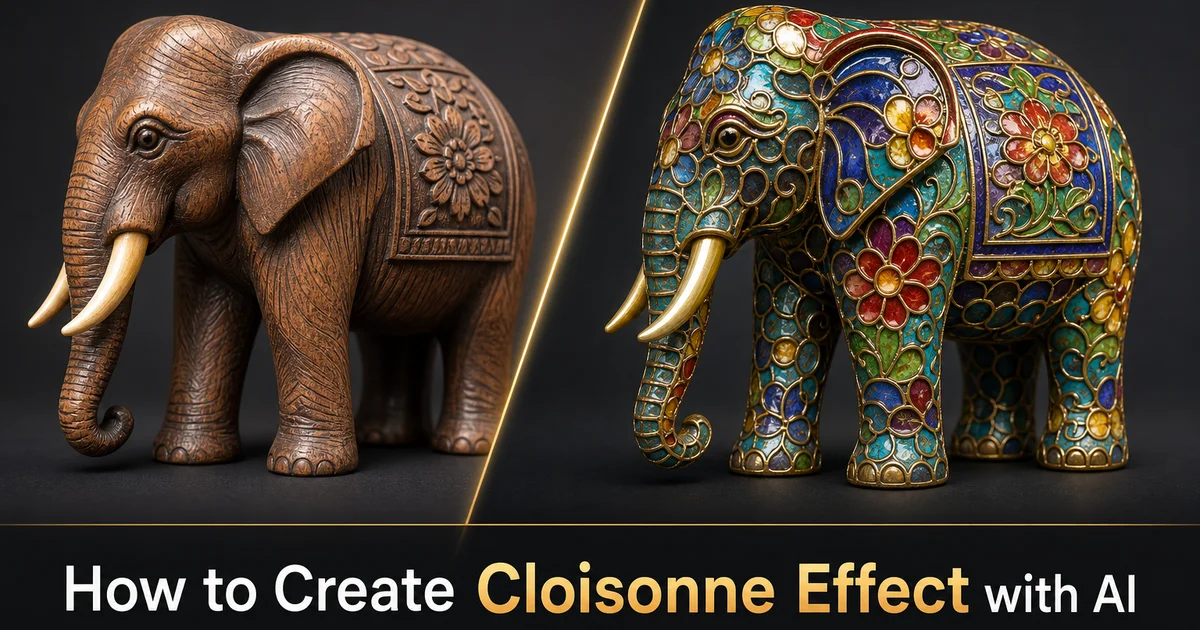
O cloisonné é uma das artes decorativas mais impressionantes já desenvolvidas, e sua estética característica — cores vivas de esmalte separadas por divisórias metálicas em relevo — tem cativado artesãos e colecionadores por mais de três mil anos. A técnica envolve soldar finas tiras de arame metálico em uma base para formar células fechadas, preencher cada célula com pasta de esmalte colorido e queimar a peça em temperaturas altas o suficiente para fundir o vidro em uma superfície brilhante, semelhante a uma joia. O resultado é um objeto onde grandes extensões de cor saturada são emolduradas por contornos metálicos reluzentes, criando um efeito visual que se situa entre o vitral e a ourivesaria fina. Essa combinação de cor ousada e fronteira metálica precisa confere ao cloisonné seu caráter inconfundível, e o torna uma estética extraordinariamente poderosa para aplicar à fotografia por meio da transferência de estilo AI.
Recriar a aparência cloisonné digitalmente tem sido historicamente um exercício de trabalho manual minucioso. Designers traçavam os contornos do assunto para criar caminhos de divisórias, preenchiam cada região delimitada com cor sólida extraída da imagem original e, em seguida, sobrepunham texturas metálicas ao longo de cada linha de fronteira. O processo podia levar horas para uma única imagem. Os resultados geralmente pareciam mecânicos, pois designers humanos têm dificuldade em determinar onde as divisórias devem cair para criar o equilíbrio entre complexidade e clareza que caracteriza o verdadeiro cloisonné. Poucas divisórias e a imagem perde detalhes; muitas e a rede de arame sobrecarrega os campos de cor. Os verdadeiros artesãos de cloisonné desenvolvem esse equilíbrio através de anos de prática, aprendendo quais contornos merecem ênfase e quais áreas devem se fundir em células de cor unificadas.
A conversão cloisonné com AI resolve isso analisando o conteúdo semântico da fotografia antes de decidir onde colocar as divisórias e como simplificar as regiões de cor. A AI identifica contornos de objetos, transições de cor e áreas de importância visual, então gera uma rede de divisórias que segue contornos naturais enquanto mantém o equilíbrio decorativo do esmalte autêntico. Rostos recebem detalhes de divisória mais finos ao redor dos olhos e lábios, enquanto fundos se fundem em campos de cor mais amplos; flores recebem contornos de arame que traçam as bordas das pétalas, enquanto caules se simplificam em células únicas. Assuntos arquitetônicos recebem divisórias que enfatizam a geometria estrutural. Este guia explica como usar AI Filter e AI Enhance para criar efeitos cloisonné que capturam o brilho de joia do esmalte tradicional, cobrindo seleção de estilo de arame, comportamento da cor do esmalte, textura de superfície e os detalhes de acabamento que tornam o efeito convincente.
- A AI analisa o conteúdo semântico e a distribuição de cores da imagem para colocar divisórias ao longo de contornos significativos — bordas de objetos, transições de cor e áreas de importância visual — em vez de aplicar divisões geométricas arbitrárias.
- Múltiplos estilos de cloisonné simulam diferentes tradições históricas, incluindo os arabescos chineses Ming, os círculos entrelaçados japoneses shippo, o champlevé Byzantine e o arame orgânico Art Nouveau, cada um adequado a diferentes assuntos.
- Os modos de preenchimento de cor do esmalte variam do cloisonné opaco tradicional com células planas e saturadas ao plique-à-jour translúcido que simula a luz passando através do esmalte transparente como um vitral.
- Os controles de divisórias permitem selecionar a espessura do arame, desde o delicado fio de ouro até a grossa fita de latão, com opções de material incluindo ouro, prata, cobre e bronze oxidado.
- O AI Enhance nitida as fronteiras entre arame e esmalte e adiciona a sutil textura de superfície do esmalte aplicado à mão, dando a cada célula profundidade física em vez de cor digital perfeitamente plana.
Como a conversão cloisonné AI difere do traçado manual de divisórias e preenchimentos de cor sólida
Abordagens manuais para criar efeitos cloisonné em editores de foto geralmente usam detecção de bordas para gerar contornos e, em seguida, preenchem cada região delimitada com uma única cor média. Isso produz resultados que parecem imagens posterizadas com contornos escuros — reconhecíveis como fotografias processadas em vez de esmalte decorativo. O problema fundamental é que a detecção de bordas responde a cada mudança tonal na imagem sem distinguir entre contornos importantes que merecem divisórias e detalhes incidentais que deveriam se fundir em células de esmalte unificadas. Um gradiente através de um céu produz dezenas de linhas de divisória desnecessárias. Uma pétala de flor com cores sutis pode não receber divisória alguma porque suas bordas carecem de contraste tonal nítido.
A conversão cloisonné AI começa com reconhecimento de objetos e agrupamento de cores, em vez de detecção de bordas em nível de pixel. A AI identifica objetos distintos, superfícies e regiões de cor na imagem, então determina quais fronteiras são estruturalmente importantes o suficiente para justificar divisórias de arame metálico. Um rosto é dividido em células que correspondem aos planos das bochechas, órbitas oculares, testa e queixo — as mesmas áreas que um artesão de cloisonné definiria ao traduzir um retrato em esmalte. A AI entende que um céu gradiente deve se tornar uma ou duas grandes células de esmalte em vez de dezenas de faixas finas, e que a borda de uma pétala merece uma divisória mesmo que seu contraste tonal seja sutil. Essa abordagem consciente do assunto produz redes de divisórias que parecem intencionalmente projetadas em vez de geradas algoritmicamente.
A simplificação de cor dentro de cada célula é igualmente importante. O esmalte tradicional usa cor plana e uniforme dentro de cada divisória — não há gradientes, variações de textura ou modulação tonal dentro de uma única célula. A AI converte cada região em uma única cor saturada que representa o tom dominante daquela área, intensificada para a vibração característica do esmalte vítreo queimado. A transição da cor fotográfica para a cor do esmalte envolve mais do que simples média: a AI seleciona cores que mantêm as relações visuais entre células adjacentes enquanto empurra cada uma em direção à paleta de tons de joia que define o autêntico cloisonné: azuis cobalto profundos, verdes esmeralda ricos, vermelhos vermilion brilhantes e turquesas luminosas.
- A detecção manual de bordas trata todas as mudanças tonais igualmente, produzindo resultados posterizados com divisórias desnecessárias em gradientes e fronteiras ausentes em transições de cor sutis.
- A AI identifica fronteiras estruturalmente importantes através do reconhecimento de objetos, colocando divisórias onde um artesão habilidoso definiria células para preenchimento de esmalte.
- A simplificação de cor converte gradientes fotográficos em preenchimentos saturados planos que mantêm relações visuais entre células enquanto alcançam a vibração de tom de joia do esmalte queimado.
- A densidade de divisórias consciente do assunto ajusta automaticamente a complexidade — detalhes mais finos em áreas focais como rostos e células mais amplas em fundos — espelhando os instintos de design dos mestres artesãos de esmalte.
Selecionando estilos de divisória das tradições chinesa, japonesa e ocidental
A história do cloisonné abrange múltiplas civilizações, cada uma desenvolvendo abordagens distintas para o design de divisórias que a AI pode simular. O cloisonné chinês, principalmente das dinastias Ming e Qing, favorece intrincados padrões de arabescos onde as divisórias formam motivos decorativos elaborados — arabescos de lótus, escamas de dragão, faixas de nuvens e gregas geométricas — que preenchem áreas de fundo com complexidade ornamental. Os próprios arames são frequentemente de ouro ou cobre dourado, criando uma superfície densa e ricamente detalhada onde o padrão do arame é tão importante quanto as cores do esmalte. Este estilo funciona lindamente para retratos e assuntos detalhados porque os preenchimentos ornamentais de arame adicionam riqueza visual a áreas que de outra forma seriam simples.
O cloisonné japonês, conhecido como shippo, desenvolveu uma estética distinta caracterizada por precisão geométrica e tratamento naturalista do assunto. A tradição de Nagoya produziu obras notáveis onde as divisórias seguem as formas naturais de flores, pássaros e paisagens com precisão botânica, enquanto áreas de fundo usam padrões geométricos como círculos sobrepostos e grades hexagonais. Alguns mestres japoneses desenvolveram o cloisonné sem arame (musen-shippo) onde as divisórias são removidas antes da queima final, deixando apenas as transições de cor entre as células de esmalte. A AI imita estilos japoneses com e sem arame, este último produzindo fronteiras mais suaves entre regiões de cor que parecem uma mistura de aquarela com metalurgia.
As tradições ocidental e Byzantine enfatizam divisórias mais largas e contrastes de cor mais ousados. O cloisonné Byzantine usava arame de ouro bastante grosso e grandes células de esmalte com cores primárias intensas, criando imagens gráficas poderosas que frequentemente retratavam figuras religiosas. O Art Nouveau cloisonné bebeu de formas botânicas orgânicas, usando arames curvos e fluidos que seguem as linhas sinuosas de caules de plantas, pétalas de flores e asas de insetos. A AI oferece predefinições para cada tradição, e você pode misturar elementos — intensidade de cor Byzantine com posicionamento naturalista japonês de divisórias, ou densidade ornamental chinesa com perfis de arame curvos Art Nouveau — para criar estilos híbridos adequados à sua imagem específica e objetivos estéticos.
- Os estilos chineses Ming e Qing apresentam intrincados padrões de arame em arabescos — arabescos de lótus, escamas de dragão, faixas de nuvens — onde o design do arame é tão importante quanto o preenchimento de esmalte.
- O shippo japonês combina padrões geométricos de fundo com tratamento naturalista do assunto, incluindo o musen-shippo sem arame que remove divisórias para transições de cor mais suaves.
- O cloisonné Byzantine usa arame de ouro grosso e grandes células com cores primárias intensas, criando poderoso impacto gráfico ideal para retratos ousados e trabalhos figurativos.
- O arame orgânico Art Nouveau segue formas botânicas sinuosas, e a AI permite misturar elementos de diferentes tradições para criar estilos híbridos adequados a assuntos específicos.
Comportamento da cor do esmalte: preenchimentos opacos, plique-à-jour translúcido e profundidade champlevé
O caráter visual do cloisonné depende enormemente do tipo de preenchimento de esmalte utilizado. A AI oferece modos de simulação que replicam três variantes principais. O cloisonné opaco padrão — a forma mais comum e distinta — preenche cada célula de divisória com cor sólida e plana que obscurece completamente o metal base subjacente. A superfície do esmalte é polida lisa e nivelada com as divisórias, criando um plano uniforme onde cor e metal existem no mesmo nível. A AI imita isso convertendo cada célula em uma única cor saturada com um brilho superficial sutil, produzindo a aparência característica de caixa de joias que a maioria das pessoas associa ao esmalte cloisonné.
O plique-à-jour é a técnica de esmalte mais rara e espetacular. O esmalte translúcido é aplicado sem uma placa de apoio, de modo que a luz passa através das células como um vitral. O efeito é de tirar o fôlego pessoalmente: cada célula brilha com luz transmitida enquanto as divisórias de arame metálico aparecem como silhuetas escuras contra a cor luminosa. A AI imita isso renderizando células com transparência variável com base nos valores de brilho da imagem original, fazendo com que os realces pareçam transmitir luz enquanto as sombras mantêm a opacidade. Aplicado a fotografias de assuntos com contraluz — flores contra o céu, arquitetura contra o pôr do sol, vitrais — o modo plique-à-jour produz imagens com uma luminosidade etérea que sugere luz passando através de vidro colorido.
O champlevé difere do cloisonné porque as células são esculpidas ou gravadas em uma grossa base metálica em vez de formadas por arame aplicado. Isso cria células que ficam abaixo da superfície metálica, dando a cada área preenchida com esmalte uma sensação de profundidade e contenção. As divisórias no champlevé são mais largas e planas que os arames do cloisonné, e o efeito geral é mais pesado e arquitetônico. A AI imita o champlevé renderizando linhas de divisória mais largas com bordas chanfradas e adicionando sombra sutil dentro de cada célula que sugere que o esmalte está assentado em um recesso esculpido. Este modo funciona particularmente bem para assuntos gráficos ousados — logotipos, padrões geométricos, detalhes arquitetônicos — onde o peso maior da divisória reforça a solidez estrutural.
- O cloisonné opaco preenche cada célula com cor saturada plana polida nivelada com as divisórias, criando a clássica superfície de caixa de joias que a maioria das pessoas associa à forma de arte.
- O plique-à-jour simula esmalte translúcido sem suporte, renderizando células luminosas que brilham com luz transmitida — ideal para assuntos com contraluz como flores contra o céu.
- O modo champlevé renderiza divisórias mais largas e chanfradas com sombras de célula recuadas, simulando esmalte esculpido em metal grosso para uma aparência mais pesada e arquitetônica.
- Cada modo de preenchimento responde diferentemente aos valores tonais da imagem original, permitindo controle criativo sobre como luz e sombra fotográficas se traduzem na estética do esmalte.
Acabamento de superfície: brilho polido, metal martelado e efeitos de envelhecimento com pátina
O cloisonné autêntico passa por extenso acabamento após a queima do esmalte, e esses tratamentos de superfície contribuem enormemente para o visual final. O polimento tradicional traz tanto a superfície do esmalte quanto as divisórias de arame a um acabamento liso como espelho, onde a luz reflete uniformemente em toda a peça. A AI imita esse acabamento polido com um sutil realce especular que se move pela superfície com base em uma direção de luz assumida, dando à imagem digital plana uma sensação de curvatura tridimensional da superfície. A intensidade do realce pode ser ajustada de um brilho acetinado suave a um acabamento espelhado de alto brilho, com as configurações mais brilhantes produzindo reflexos mais dramáticos que enfatizam a qualidade de joia das cores do esmalte.
O acabamento de metal martelado aplica textura às divisórias de arame enquanto deixa as células de esmalte lisas, criando um contraste entre a estrutura metálica fosca e texturizada e os preenchimentos de cor brilhantes. Este tratamento era comum no esmalte do movimento Arts and Crafts, onde as marcas visíveis de martelo no metal eram consideradas evidência de artesanato manual. A AI renderiza isso adicionando uma textura fina de covinhas às superfícies das divisórias de arame, mantendo ao mesmo tempo esmalte liso e reflexivo dentro de cada célula. O contraste textural atrai a atenção para a rede de divisórias como um elemento de design por si só, o que pode ser desejável quando o padrão do arame tem significado decorativo próprio.
Efeitos de pátina e envelhecimento simulam a aparência de cloisonné antigo que desenvolveu caráter superficial ao longo de décadas ou séculos de manuseio. O cloisonné envelhecido frequentemente mostra microfissuras na superfície do esmalte, escurecimento sutil das divisórias metálicas expostas por oxidação e uma mudança tonal geral mais quente devido ao acúmulo de óleos superficiais e exposição ambiental. A AI aplica esses efeitos de envelhecimento com intensidade configurável: envelhecimento leve adiciona calor e variação superficial sutil sem obscurecer a cor, enquanto envelhecimento intenso produz a aparência de peças de museu com marcas de desgaste visíveis, lascas de esmalte nas bordas das células e divisórias de arame fortemente oxidadas. Este modo de envelhecimento é particularmente eficaz para criar imagens que parecem fotografias de verdadeiros objetos cloisonné antigos.
- O acabamento polido adiciona realces especulares que simulam a luz refletindo em uma superfície lisa de esmalte, ajustável de brilho acetinado suave a espelho de alto brilho para máximo brilho de joia.
- A texturização de metal martelado aplica superfícies com covinhas nas divisórias de arame enquanto mantém as células de esmalte lisas, criando o contraste textural valorizado no esmalte do movimento Arts and Crafts.
- A pátina de envelhecimento simula caráter antigo com microfissuras no esmalte, escurecimento do metal por oxidação e mudanças tonais quentes que fazem as imagens parecerem fotografias de autênticas peças de qualidade museológica.
- As opções de acabamento de superfície podem ser combinadas com qualquer estilo de arame e modo de preenchimento de esmalte, fornecendo amplo controle sobre a estética final, do contemporâneo impecável ao antigo desgastado.
How to do it
- 1
Upload your photo and assess its suitability for cloisonné conversion
Open your image in AI Filter and evaluate it for strong color blocks and well-defined subject boundaries. Cloisonné enamelwork is at its core a medium of flat, vivid color fields separated by raised metal wire partitions. Photographs with distinct color regions, bold shapes, and clear subject separation translate most convincingly. Portraits with dramatic lighting, floral close-ups with defined petal boundaries, and architectural details with geometric patterns all convert well. Images with subtle gradients, soft focus, or monochromatic palettes tend to produce less strong results because the cloisonné aesthetic depends on saturated color contrast between neighboring cells.
- 2
Select the cloisonné style preset and configure wire partition parameters
Choose from cloisonné presets that simulate different historical traditions. Chinese Ming dynasty with intricate scrollwork partitions, Japanese shippo with geometric interlocking circles, Byzantine champlevé with broader carved channels, or Art Nouveau organic wirework with flowing botanical lines. AI Filter analyzes the image content and suggests the most appropriate partition density based on subject complexity: detailed portraits receive finer wire networks while bold graphic compositions use heavier partitions. Adjust the wire gauge slider to control the thickness of simulated metal cloisons from delicate hairline gold wire to substantial brass ribbon, and select the wire material color. Gold, silver, copper, or oxidized bronze.
- 3
Adjust enamel color saturation and cell fill behavior
Control the enamel saturation to determine how vivid the color fills appear within each partition cell. Real cloisonné enamel achieves extraordinary color intensity because the vitreous glass paste is fired at high temperatures, fusing into a glossy opaque surface that reflects light with jewel-like brilliance. The AI mimics this by boosting color saturation within each cell while maintaining flat, uniform fill that eliminates photographic gradients. Set the cell fill mode to either opaque enamel. Solid flat color throughout each partition — or translucent plique-à-jour, which mimics the stained-glass variant of cloisonné where light passes through transparent enamel without a backing plate. The translucent mode produces luminous cells that glow against darker wire partitions.
- 4
Use AI Enhance to refine wire edges and add gilded surface texture
After the initial cloisonné conversion, run AI Enhance to sharpen the wire partition edges and ensure clean separation between adjacent color cells. Real cloisonné has precisely defined boundaries where metal meets enamel, and any blurring at these transitions undermines the effect. The boost step also adds subtle surface texture that mimics the polished but slightly uneven surface of hand-applied enamel. Microscopic variations in thickness that catch light differently across the surface, giving each cell a sense of physical depth rather than perfectly flat digital color.
- 5
Export the final image and compare against museum-quality cloisonné references
Save the finished cloisonné effect at full resolution and compare it with photographs of authentic enamelwork from museum collections. Verify that the wire partitions form a coherent network that follows the contours of the subject rather than creating arbitrary geometric divisions. Check that the enamel colors within each cell are saturated and uniform without photographic gradients bleeding through, that the wire material has a consistent metallic look with subtle reflective highlights, and that the overall composition reads as a decorative art object rather than a filtered photograph. Adjust partition density and color saturation until the result achieves the jewel-like quality associated with master cloisonné.
Fontes
- Cloisonné: Chinese Enamels from the Yuan, Ming, and Qing Dynasties — The Metropolitan Museum of Art
- Image Style Transfer Using Convolutional Neural Networks — IEEE Conference on Computer Vision and Pattern Recognition
- Enamelling: Techniques and History of a Decorative Art — Victoria and Albert Museum