
Como criar um efeito de azulejo com edição de fotos por IA
Transforme fotos em efeitos de azulejaria pintada portuguesa e espanhola com transferência de estilo por IA. Guia passo a passo sobre painéis de faiança estanífera azul e branco, padrões geométricos mouriscos, azulejos figurativos barrocos e texturas de superfície cerâmica autênticas.
SEO & Growth
Revisado por Magic Eraser Editorial ·
Índice
- Em que difere a renderização de azulejo por IA das abordagens de simples tonalização azul e sobreposição de grelha
- Períodos históricos do azulejo e tradições regionais: da geometria mourisca à narrativa barroca
- Dominar a paleta do azul de cobalto: gama tonal, comportamento do pigmento e interação com o fundo branco
- Engenharia da grelha de azulejos: tamanho, alinhamento e a realidade estrutural dos painéis cerâmicos
- Aplicações criativas: fotografia de viagem, visualização de design de interiores e identidade de marca cultural
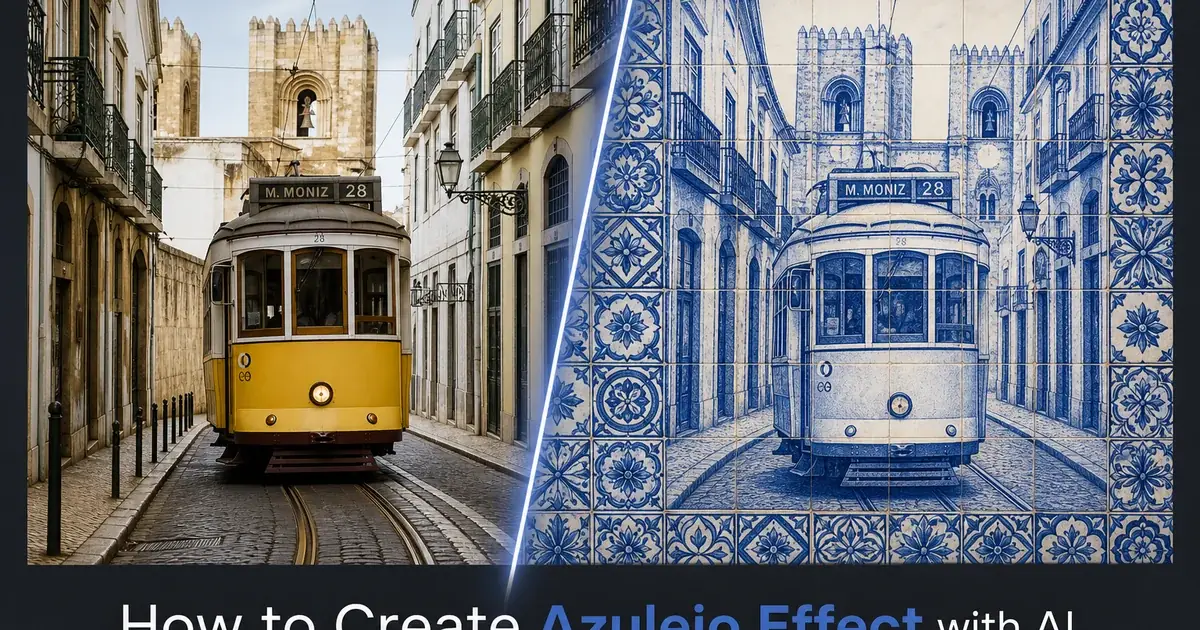
O azulejo — o ladrilho de cerâmica vidrada a estanho e pintado à mão que definiu a identidade visual de Portugal e da Espanha por mais de cinco séculos — representa uma das tradições de arte decorativa mais distintivas e duradouras do mundo. Dos padrões geométricos de estrelas entrelaçadas da azulejaria mourisca do século quinze aos monumentais painéis narrativos azul e branco que cobrem fachadas inteiras de igrejas e palácios portugueses, a tradição do azulejo abrange uma extraordinária variedade de abordagens estéticas unidas por um meio comum: pigmento de cobalto e cores de óxidos metálicos pintados sobre um fundo de vidrado estanífero branco e cozidos em forno para produzir a característica superfície vitrificada que resistiu a séculos de clima atlântico com notável robustez. A tradição está tão profundamente enraizada na cultura ibérica que a capital de Portugal, Lisboa, tem sido chamada de museu a céu aberto da arte do azulejo, com painéis de azulejos em praticamente todo edifício importante a contar histórias, a celebrar acontecimentos e a definir espaços através da cor da cerâmica pintada.
A reprodução digital da estética do azulejo caiu, no passado, em dois campos, ambos insatisfatórios. Uma simples tonalização azul sobre um padrão em grelha produz resultados que parecem uma fotografia vista através de um filtro azul com linhas traçadas por cima. Não há tinta, não há ladrilho, não há superfície cerâmica, apenas manipulação de cor disfarçada de ofício. Abordagens mais sofisticadas aplicam uma etapa de posterização para reduzir a imagem a áreas de cor chapada antes de sobrepor uma grelha de azulejos, o que capta a redução do detalhe fotográfico a simplificação pictórica mas continua a falhar as qualidades materiais que definem o meio. A superfície brilhante e ondulada do vidrado estanífero, a pincelada distintiva do cobalto aplicado com pincéis de cerda natural, o empoçamento e o esborratar do pigmento nos limites das pinceladas e o subtil craquelado que se desenvolve à medida que o vidrado envelhece ao longo de décadas e séculos.
A transferência de estilo por IA resolve estas limitações ao compreender o azulejo simultaneamente como tradição artística e como sistema material físico. A IA aprende, a partir de milhares de fotografias de instalações de azulejos autênticos, como realmente se apresenta a pincelada de cobalto pintada à escala do ladrilho. A qualidade de linha característica, a gama tonal alcançável com óxido de cobalto sobre fundo branco, o modo como o pigmento se empoça nas extremidades das pinceladas e se esborrata ligeiramente para as áreas adjacentes onde o vidrado ainda está húmido durante a pintura. Ela compreende o ladrilho como um objeto tridimensional de superfície ligeiramente abaulada, de bordos chanfrados, e as juntas de argamassa que formam uma grelha estrutural em qualquer painel composto por vários azulejos. Este guia cobre cada etapa da criação de efeitos de azulejo com AI Filter e AI Enhance, da escolha do período histórico e do estilo regional adequados ao ajuste da pincelada, da textura do vidrado e dos detalhes materiais que fazem o resultado ler-se como cerâmica pintada autêntica em vez de uma aproximação digital.
- A IA reproduz a pincelada distintiva do cobalto sobre vidrado estanífero. Bordos de cerda irregulares, empoçamento de pigmento nas extremidades das pinceladas e transparência onde uma aplicação fina deixa o fundo branco transparecer através da tinta azul.
- Vários predefinidos de períodos históricos abrangem toda a tradição do azulejo, da geometria mourisca do século quinze ao barroco português do século dezoito, até aos estilos de revivalismo contemporâneos.
- A simulação da grelha de azulejos inclui as qualidades tridimensionais da cerâmica real — superfícies ligeiramente abauladas, bordos chanfrados, sombras das juntas e variações de altura entre azulejos adjacentes do painel.
- A textura de superfície do vidrado acrescenta o característico acabamento brilhante da maiólica estanífera, com microcraquelado e a subtil ondulação de um vidrado por imersão à mão em vez de pulverizado industrialmente.
- O AI Enhance apura os detalhes pintados finos — linhas de bordadura, gavinhas florais e traços das figuras — preservando ao mesmo tempo a qualidade deliberadamente solta da pintura à mão que autentica a tradição artesanal.
Em que difere a renderização de azulejo por IA das abordagens de simples tonalização azul e sobreposição de grelha
O efeito de azulejo digital mais comum aplica um desvio de cor azul à imagem e sobrepõe uma grelha de linhas brancas ou escuras para sugerir os limites dos azulejos. Esta abordagem trata o azulejo como um esquema de cores. Azul e branco — em vez de como um meio de cerâmica pintada com propriedades materiais e convenções artísticas específicas. O resultado parece uma fotografia vista através de um filtro azul do Instagram com linhas de papel milimétrico sobrepostas, não captando nem a qualidade pintada à mão da verdadeira decoração de azulejos nem a superfície cerâmica tridimensional que dá às instalações de azulejos o seu carácter visual distintivo. O detalhe da imagem permanece fotográfico em vez de pintado, a gama tonal é arbitrária em vez de limitada pela química do cobalto. A grelha de azulejos é uma sobreposição plana em vez de uma grelha estrutural de objetos cerâmicos físicos.
A renderização de azulejo por IA começa pela mudança mais fundamental: converter o detalhe fotográfico em detalhe pintado. Uma fotografia capta o tom contínuo com precisão microscópica, enquanto um azulejo pintado representa o mesmo sujeito através da aplicação deliberada de pigmento com um pincel. Cada marca é uma decisão consciente do pintor, com a direção da pincelada, a variação de pressão e a carga de pigmento todas visíveis na obra acabada. A IA realiza esta conversão analisando o conteúdo da imagem e regenerando cada elemento como pincelada pintada, com a qualidade de linha, a segurança do traço e o controlo tonal adequados ao período histórico selecionado. Um painel do século dezassete de influência holandesa recebe uma pincelada fina e precisa com representação detalhada. Um painel barroco do século dezoito recebe traços mais largos e expressivos, com maior ênfase no dramático contraste de valores.
A própria superfície do azulejo é renderizada como um objeto cerâmico tridimensional, e não como um plano de imagem plano. Cada azulejo tem uma superfície ligeiramente convexa. A cúpula natural que se forma quando uma placa de barro plana é cozida em forno — que capta a luz como um suave reflexo ao longo do seu centro. Os bordos de cada azulejo são chanfrados onde o processo de vidragem cria um ligeiro lábio arredondado. As juntas de argamassa entre os azulejos formam canais estreitos e rebaixados, com sombras suaves projetadas pelos bordos dos azulejos adjacentes. Visto ao longo de um grande painel, esta tridimensionalidade cria a característica superfície ondulante de uma verdadeira instalação de azulejos. Centenas de azulejos individuais ligeiramente curvos produzem uma modulação ondulante da luz refletida em toda a composição. Nenhuma sobreposição de grelha plana consegue reproduzir esta qualidade material imediatamente evidente em qualquer fotografia de autênticas paredes de azulejos.
- As abordagens de simples tonalização azul tratam o azulejo como um esquema de cores em vez de um meio de cerâmica pintada, preservando um detalhe fotográfico que deveria ser convertido em pincelada pintada à mão.
- A IA converte o tom fotográfico contínuo em pinceladas pintadas deliberadas, com uma qualidade de linha, segurança de traço e controlo tonal próprios de cada estilo histórico.
- Cada azulejo é renderizado como um objeto cerâmico tridimensional de superfície convexa, bordos chanfrados e sombras das juntas que produzem a característica superfície ondulante das instalações reais.
- A simulação material combinada — pincelada de cobalto pintada sobre cerâmica tridimensional vidrada a estanho — distingue a renderização por IA de toda aproximação por sobreposição plana.
Períodos históricos do azulejo e tradições regionais: da geometria mourisca à narrativa barroca
A tradição do azulejo começou na Península Ibérica com a chegada de artesãos mouriscos que trouxeram do Norte de África as técnicas islâmicas de fabrico de ladrilhos. Estes primeiros azulejos apresentavam padrões geométricos derivados dos princípios matemáticos islâmicos. Estrelas entrelaçadas, hexágonos e complexas redes de polígonos que criam hipnotizantes campos visuais através da pura geometria, sem qualquer imagística figurativa, em consonância com o aniconismo islâmico. A paleta estendia-se para além do azul e do branco, incluindo o verde do óxido de cobre, o âmbar do óxido de ferro. O púrpura de manganês, aplicados nas técnicas da cuerda seca e da arista, em que linhas de cera ou relevos moldados separavam os diferentes vidrados coloridos para impedir que se misturassem entre si durante a cozedura. O palácio da Alhambra em Granada e o Alcázar de Sevilha preservam os mais belos exemplos desta tradição.
O século dezasseis trouxe a influência do Renascimento italiano ao fabrico de azulejos ibérico, introduzindo a representação figurativa e a técnica da maiólica de pintar diretamente sobre superfícies de vidrado estanífero por cozer. As oficinas portuguesas adotaram e adaptaram esta abordagem, lançando as fundações da distintiva tradição nacional do azulejo. O século dezassete viu a cerâmica holandesa de Delft azul e branca inspirar as oficinas portuguesas a adotar a paleta monocromática de cobalto que se tornou a assinatura da arte do azulejo português, produzindo enormes painéis narrativos que retratavam cenas religiosas, acontecimentos históricos e composições alegóricas. Estes painéis azul e branco — alguns cobrindo centenas de metros quadrados de superfície mural — representam o contributo mais distintivo de Portugal para o património cerâmico mundial.
O século dezoito trouxe a exuberância barroca ao desenho do azulejo, com elaborados enquadramentos arquitetónicos em trompe-l'oeil, rodapés de acanto rodopiantes. Dramáticas composições figurativas que transformavam interiores inteiros de igrejas em cenários de cerâmica pintada de avassaladora riqueza visual. Mestres pintores de azulejos como António de Oliveira Bernardes e o seu filho Policarpo criaram ciclos monumentais que figuram entre as mais belas realizações da arte decorativa barroca de toda a Europa. A paleta policromática regressou a par do azul e branco, com o amarelo, o verde e o púrpura de manganês a enriquecer as cenas narrativas. A IA oferece predefinidos para cada um destes grandes períodos, com restrições de paleta, características de pincelada e convenções de composição calibradas para corresponder à identidade visual específica de cada tradição.
- Os azulejos mouriscos apresentam padrões geométricos islâmicos — estrelas e polígonos entrelaçados — em paletas policromáticas que incluem verde, âmbar e púrpura, aplicados com técnicas de cuerda seca ou arista.
- A influência holandesa de Delft no século dezassete estabeleceu a paleta monocromática de cobalto azul e branco que se tornou o contributo cerâmico de assinatura de Portugal para a arte decorativa mundial.
- Os azulejos barrocos do século dezoito apresentam enquadramentos arquitetónicos em trompe-l'oeil, rodapés de acanto rodopiantes e dramáticos ciclos narrativos de mestres como António de Oliveira Bernardes.
- Os predefinidos de IA para cada período histórico incluem restrições de paleta calibradas, características de pincelada próprias da época e convenções de composição correspondentes à identidade visual dessa tradição.
Dominar a paleta do azul de cobalto: gama tonal, comportamento do pigmento e interação com o fundo branco
A icónica paleta azul e branca do azulejo é bem mais matizada do que parece à primeira vista. O óxido de cobalto aplicado sobre um fundo de vidrado estanífero branco pode produzir uma extraordinária gama tonal, da mais pálida aguada azul-gelo ao mais profundo azul-meia-noite que se aproxima do preto, consoante a concentração do pigmento, o número de camadas de tinta aplicadas e a temperatura de cozedura. Um hábil pintor de azulejos explora toda esta gama para criar imagens de notável profundidade e luminosidade, usando o fundo branco não como mero fundo mas como participante ativo da composição. Os realces mais brilhantes obtêm-se deixando o vidrado estanífero completamente por pintar, e os meios-tons criam-se diluindo a aguada de cobalto para que o branco transpareça através do azul, produzindo um efeito translúcido diferente de qualquer outro meio pictórico.
A IA imita o comportamento específico do óxido de cobalto sobre vidrado estanífero, em vez de simplesmente aplicar cor azul sobre um fundo branco. O pigmento de cobalto na pintura cerâmica tem propriedades distintivas que diferem da aguarela, do óleo ou da tinta da china. Assenta sobre a superfície do vidrado com uma ligeira granulosidade que se torna visível nas áreas aplicadas com leveza, esborrata-se ligeiramente nos bordos das pinceladas onde o vidrado húmido absorve as partículas de pigmento da tinta, e escurece ligeiramente e torna-se mais uniforme durante a cozedura em forno que o funde de forma permanente ao vidrado. Estes traços materiais conferem à verdadeira pintura de azulejo uma qualidade visual que nenhum outro meio azul e branco partilha. A reprodução pela IA destes comportamentos específicos é o que torna o efeito digital convincente para os espetadores familiarizados com a verdadeira pintura de azulejos.
A gestão do espaço em branco na composição de azulejo segue convenções que diferem muito das tradições ocidentais de pintura de cavalete. Na pintura de azulejo, o fundo branco é visualmente agressivo. Brilhante, de alto contraste e exigente de atenção — o que significa que deixar demasiada superfície por pintar cria um aspeto inacabado ou esparso em vez da elegante contenção que o espaço em branco transmite, por exemplo, na pintura japonesa a tinta. Os pintores de azulejos históricos preenchiam muitas vezes a maior parte da superfície do azulejo com conteúdo pintado, usando o fundo branco para os realces e os valores tonais mais claros da composição em vez de como amplo espaço negativo. A IA segue esta convenção, assegurando que a proporção entre superfície pintada e por pintar na composição acabada corresponde à densidade típica do período histórico selecionado.
- O óxido de cobalto produz uma gama tonal da pálida aguada azul-gelo ao azul-meia-noite que se aproxima do preto, com o fundo de vidrado estanífero branco a servir de elemento compositivo ativo para os realces.
- A IA simula o comportamento cerâmico específico do cobalto — ligeira granulosidade nas aplicações finas, esborratar nos bordos das pinceladas onde o vidrado húmido absorve o pigmento, e escurecimento uniforme durante a cozedura em forno.
- As convenções de espaço em branco no azulejo diferem da pintura de cavalete — o brilhante fundo de vidrado estanífero é visualmente agressivo, pelo que os pintores históricos preenchiam habitualmente a maior parte da superfície do azulejo com conteúdo.
- A proporção entre superfície pintada e por pintar no resultado da IA corresponde à densidade típica de cada período histórico, evitando o aspeto esparso que o excesso de espaço em branco cria neste meio específico.
Engenharia da grelha de azulejos: tamanho, alinhamento e a realidade estrutural dos painéis cerâmicos
Um autêntico painel de azulejos é um conjunto de ladrilhos cerâmicos individuais, muitas vezes de catorze a quinze centímetros de lado, dispostos em grelha e assentes com argamassa numa superfície de parede ou pavimento. Esta realidade física impõe ao desenho restrições estruturais dentro das quais todo pintor de azulejos histórico trabalhou e que qualquer simulação digital convincente tem de respeitar. A restrição mais fundamental é que cada azulejo tem de ser cozido individualmente em forno. Significa que o desenho pintado deve ser planeado de modo a que a composição visual funcione quando dividida em unidades do tamanho de um azulejo. Uma curva ampla na pintura atravessa os limites dos azulejos e tem de ser alinhada com precisão para que a linha prossiga sem interrupções de um azulejo ao seguinte. Qualquer desalinhamento durante o assentamento torna-se imediatamente visível como um desvio ou rutura no desenho.
A IA gera divisões da grelha de azulejos que respeitam estas realidades estruturais. Os elementos de desenho que atravessam os limites dos azulejos mantêm o alinhamento, de modo que linhas, curvas e gradações tonais prosseguem sem interrupções através da junta de argamassa. A própria grelha é ligeiramente imperfeita, como é sempre o assentamento de azulejos feito à mão. Os azulejos não são exatamente idênticos em tamanho devido à variação de retração no forno, as linhas de argamassa não são perfeitamente uniformes em largura, e a grelha global mostra a subtil irregularidade que distingue o assentamento artesanal do azulejamento industrial de precisão mecânica. Estas imperfeições são minúsculas — percetíveis apenas num exame de perto — mas a sua ausência numa grelha perfeitamente regular sinaliza imediatamente o fabrico digital a qualquer espetador habituado a olhar para verdadeiras paredes de azulejos.
A cor e a textura da argamassa acrescentam outra camada de realismo material. O assentamento tradicional de azulejos usa argamassa à base de cal que envelhece para um branco-sujo quente ou um creme pálido, escurecendo nas áreas expostas e mantendo-se mais clara nas juntas protegidas. A argamassa assenta ligeiramente rebaixada entre os bordos dos azulejos, criando finas linhas de sombra que formam uma grelha visível no painel. Esta grelha faz parte do carácter estético das instalações de azulejos, conferindo um ritmo estrutural que unifica composições que se estendem por centenas de azulejos individuais. A IA renderiza a argamassa com a profundidade de rebaixo, a intensidade de sombra e a coloração envelhecida adequadas, que varia ligeiramente ao longo do painel, evitando a argamassa uniforme de um branco brilhante dos azulejos novos de casa de banho que minaria imediatamente o realismo histórico do efeito.
- Os elementos de desenho que atravessam os limites dos azulejos mantêm um alinhamento preciso, de modo que linhas e gradações prosseguem sem interrupções através das juntas, reproduzindo o cuidadoso planeamento da autêntica pintura de painéis de vários azulejos.
- A irregularidade da grelha de azulejos — variação de retração no forno, largura de argamassa não uniforme e subtil imperfeição de assentamento — distingue o trabalho artesanal da perfeita regularidade que denuncia o fabrico digital.
- A renderização da argamassa usa a coloração envelhecida da argamassa de cal com ligeiro rebaixo e linhas de sombra em vez da argamassa industrial de um branco brilhante uniforme que minaria a autenticidade histórica.
- A grelha estrutural de azulejos confere um ritmo visual que unifica as grandes composições, funcionando como elemento estético em vez de mera restrição material do meio cerâmico.
Aplicações criativas: fotografia de viagem, visualização de design de interiores e identidade de marca cultural
Os fotógrafos de viagem e criadores de conteúdo usam o efeito de azulejo para transformar a sua fotografia de viagem ibérica em imagens que incorporam a cultura visual de Portugal e da Espanha mais plenamente do que a representação fotográfica padrão. Uma paisagem do Vale do Douro renderizada como painel de azulejo azul e branco capta o espírito da cultura visual portuguesa de um modo que uma simples fotografia, por mais bela que seja, não consegue. Coloca a cena moderna dentro de uma tradição de cinco séculos de narrativa visual ibérica através da arte cerâmica. Estas imagens transformadas funcionam excecionalmente bem nas plataformas sociais visuais, onde os tratamentos estéticos distintivos travam o deslizamento e geram envolvimento, sobretudo junto de públicos com ligações à cultura portuguesa e espanhola que reconhecem a tradição do azulejo e respondem a ela.
Os designers de interiores e arquitetos usam as transformações de azulejo para criar visualizações de design para projetos que incluem instalações de azulejos cerâmicos. Converter a fotografia de um cliente — um retrato de família, uma paisagem querida, uma vista arquitetónica significativa — num render de azulejo mostra como a imagem ficaria como painel de azulejos por encomenda instalado num resguardo de cozinha, numa parede de casa de banho ou numa fachada de edifício. Esta capacidade de visualização é particularmente valiosa porque os painéis de azulejos por encomenda estão a viver um renascimento contemporâneo, com oficinas artesanais em Lisboa, Porto e Sevilha a produzir painéis figurativos por encomenda para clientes residenciais e de hotelaria que desejam instalações de azulejos únicas que contem histórias pessoais através do meio tradicional.
As marcas culturais, os negócios de hotelaria e as organizações de turismo de Portugal e da Espanha usam as transformações em estilo azulejo para criar materiais de marketing que comunicam instantaneamente a identidade ibérica. Cadeias hoteleiras integram o efeito em modelos de redes sociais que marcam cada publicação com um distinto ADN visual português. Produtores de vinho renderizam a fotografia de vinhas como painéis azul e branco que ligam os seus produtos a séculos de tradição ibérica. As entidades de turismo criam imagens de destino em estilo azulejo que diferenciam os destinos portugueses e espanhóis de qualquer outro concorrente mediterrânico. A estética do azulejo está tão fortemente associada à cultura ibérica que até os espetadores não familiarizados com a forma artística específica associam instintivamente o aspeto da cerâmica pintada azul e branca a Portugal e à Espanha, tornando-a uma ferramenta de branding visual extraordinariamente eficaz.
- Os criadores de conteúdo de viagem transformam a fotografia ibérica em painéis de azulejos que incorporam a cultura visual portuguesa e espanhola mais profundamente do que a representação fotográfica padrão.
- Os designers de interiores visualizam encomendas de azulejos personalizados convertendo fotografias pessoais em renders de azulejo que mostram como os painéis ficariam instalados em contextos arquitetónicos específicos.
- As marcas de hotelaria e turismo usam as transformações de azulejo como ferramentas de identidade visual que comunicam instantaneamente o património cultural ibérico em materiais de marketing e modelos de redes sociais.
- A estética do azulejo carrega uma associação cultural tão forte com Portugal e a Espanha que até os espetadores não familiarizados ligam instintivamente o aspeto da cerâmica pintada azul e branca à identidade ibérica.
How to do it
- 1
Upload your photo and evaluate its suitability for azulejo tile painting transformation
Open your image in AI Filter and assess how well the composition translates to the visual language of painted ceramic tiles. Azulejos are tin-glazed ceramic tiles painted with decorative designs, ranging from individual tiles with geometric or floral motifs to enormous multi-tile pictorial panels that cover entire church interiors and palace walls. Photographs with clear compositional structure, strong tonal contrast, and subjects that suit the azulejo tradition. Architectural scenes, landscapes, religious narratives, botanical subjects, and geometric patterns — convert most well. The classic blue-and-white palette works best with images that have good value range. The entire tonal spectrum must be expressed through shades of cobalt blue on a white tin-glaze ground.
- 2
Select the azulejo style period and configure tile grid and palette
Choose from presets that simulate different historical periods and regional traditions. Fifteenth-century Moorish geometric patterns with Islamic-inspired interlocking star and polygon designs, sixteenth-century Hispano-Moresque majolica with Italian Renaissance influence, seventeenth-century Dutch-influenced blue-and-white pictorial panels, eighteenth-century Portuguese Baroque with elaborate frames and narrative scenes, or modern revival styles with modern subject matter in traditional technique. Configure the tile grid to control individual tile size, grout line width. Whether the composition spans a single tile or fills a multi-tile panel. The AI maps the image to the selected style, adjusting the painting technique and color palette to match the historical period.
- 3
Adjust brushwork simulation, glaze texture, and the characteristic cobalt blue rendering
Control the hand-painted quality of the simulated brushwork to determine how closely the result resembles genuine artisan tile painting. Real azulejo painting shows trait brush marks. Slightly uneven line edges from bristle variation, pooling of pigment at stroke endpoints, and the subtle transparency of thinly applied cobalt where the white ground shows through the blue. The AI replicates these qualities with a brushwork intensity slider that ranges from pristine precise rendering to loose expressive painting with visible artist's hand. The tin-glaze surface texture adds the trait slightly irregular glossy finish of majolica ceramics, with micro-crazing that develops as glaze ages and the subtle undulation of hand-dipped rather than industrially sprayed glaze coats.
- 4
Use AI Enhance to sharpen tile edges, grout definition, and fine painted details
Run AI Enhance to refine the grid of individual tiles within the composition, sharpening the grout lines that separate each tile and adding the subtle shadow and height variation where tiles meet that distinguishes a real tiled surface from a painted image. The boost also sharpens the finest painted details within each tile. Thin decorative border lines, delicate floral tendrils, and the fine facial features of figures in narrative panels — ensuring these details remain legible despite the on purpose loose brushwork of the hand-painted simulation. Edge chipping and glaze wear on individual tiles can be selectively added for compositions intended to evoke historical installations.
- 5
Export and compare against photographs of iconic azulejo installations
Save the completed image at full resolution and compare it with photographs of landmark azulejo installations. The blue-and-white narrative panels of the Igreja de Sao Roque in Lisbon, the elaborate Baroque compositions at the Palacio Nacional de Sintra, and the Moorish geometric tilework at the Alhambra in Granada. Verify that the tile grid alignment is structurally plausible, that the painted brushwork falls within the range of human hand-painting capability, that the cobalt blue palette matches the tonal range achievable with traditional metallic oxide pigments on tin glaze. That the overall composition respects the design conventions of the selected historical period and regional tradition.
Fontes
- Azulejo: The Art of Portuguese Ceramic Tiles — Museu Nacional do Azulejo, Lisbon
- Image Style Transfer Using Convolutional Neural Networks — IEEE Conference on Computer Vision and Pattern Recognition
- Islamic Geometric Patterns: Their Historical Development and Traditional Methods of Construction — Springer — Jay Bonner