
Edição de fotos com IA para clínicas de remoção de tatuagem: Marketing antes/depois e acompanhamento de pacientes
Como clínicas de remoção de tatuagem usam a edição de fotos com IA para criar documentação antes/depois profissional, construir galerias de marketing convincentes e acompanhar o progresso do tratamento dos pacientes entre sessões.

Product Marketing
Revisado por Magic Eraser Editorial ·
Índice
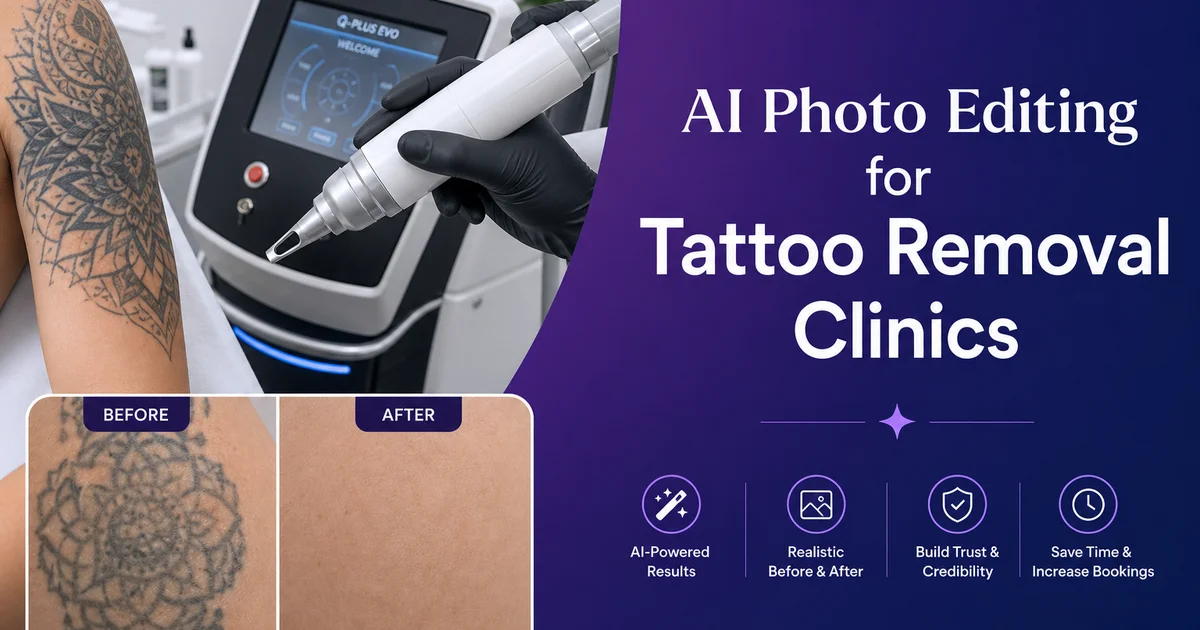
A remoção de tatuagens é um negócio visual. Toda consulta começa com um possível paciente fazendo a mesma pergunta: como serão os meus resultados? A resposta mais convincente não é uma explicação verbal de como a tecnologia a laser decompõe as partículas de tinta. É uma galeria de fotos antes/depois mostrando resultados reais em pele real. Clínicas com registros visuais fortes convertem mais consultas em planos de tratamento. Pacientes que conseguem ver o progresso documentado têm mais probabilidade de concluir todo o ciclo de sessões.
O desafio é que a fotografia clínica raramente tem qualidade clínica. As fotos são tiradas às pressas entre os atendimentos com um celular, sob iluminação inconsistente, contra fundos desordenados, com ângulos variados que dificultam distinguir o progresso genuíno das diferenças fotográficas. O resultado é um portfólio que mina justamente a credibilidade que deveria construir. Os possíveis pacientes veem iluminação incompatível e se perguntam se o desbotamento que estão observando é real ou apenas um truque da câmera.
A edição de fotos com IA aborda essa lacuna entre a realidade clínica e a apresentação visual. O Magic Eraser limpa fundos e remove elementos indesejados. O AI Enhance aguça os detalhes do tratamento e normaliza as diferenças de iluminação entre as sessões. O resultado são registros de nível profissional que representam com precisão os resultados do tratamento sem exigir um fotógrafo dedicado ou a montagem de um estúdio.
- A fotografia antes/depois consistente é o ativo de marketing de maior conversão para clínicas de remoção de tatuagens.
- O Magic Eraser remove a desordem clínica, os detalhes identificáveis e as inconsistências visuais entre as fotos das sessões.
- O AI Enhance aguça o detalhe do desbotamento e normaliza a iluminação para que o progresso do tratamento seja fotografado com precisão.
- A documentação profissional aumenta as taxas de conversão das consultas e a conclusão dos planos de tratamento.
- O consentimento do paciente deve ser verificado para cada canal de uso específico: site, redes sociais, listagens de diretórios.
Por que fotos antes/depois impulsionam reservas de remoção de tatuagem
A remoção de tatuagens é um procedimento eletivo com um longo cronograma de tratamento. A maioria dos pacientes precisa de seis a doze sessões espaçadas de seis a oito semanas, com um investimento total de vários milhares de dólares. Isso significa que cada novo paciente assume um compromisso importante baseado em grande parte na confiança de que o processo funciona. Estudos clínicos e descrições de tecnologia ajudam, mas nada fecha a lacuna de confiança como ver resultados documentados de pacientes anteriores com tatuagens semelhantes, tons de pele semelhantes e cores de tinta semelhantes.
Os dados confirmam isso. Clínicas que destacam galerias antes/depois com proeminência em seus sites relatam taxas de conversão mais altas da visita ao site para o agendamento da consulta. Taxas de conversão mais altas da consulta para a aceitação do plano de tratamento. O motivo é simples: um possível paciente com uma grande tatuagem tribal preta no antebraço pode olhar uma galeria, encontrar um caso semelhante. Ver exatamente o que seis sessões de tratamento produziram. Essa evidência visual é mais persuasiva do que qualquer depoimento ou explicação tecnológica.
O inverso também é verdadeiro. Clínicas com registros visuais ruins — fotos borradas, fundos inconsistentes, ângulos variados que tornam a comparação impossível — na verdade prejudicam sua credibilidade. Os possíveis pacientes interpretam a fotografia desleixada como um indicador de prática clínica desleixada. Se a clínica não se dá ao trabalho de tirar fotos consistentes, pensam, ela realmente presta atenção aos detalhes do próprio tratamento? Justo ou não, a apresentação visual dos resultados torna-se um indicador da qualidade clínica.
- A remoção de tatuagens exige de seis a doze sessões ao longo de meses — os pacientes precisam de prova visual de que o processo funciona.
- Galerias antes/depois aumentam as taxas de conversão das visitas ao site para consultas e das consultas para planos de tratamento.
- Os possíveis pacientes procuram casos que correspondam ao seu próprio tipo de tatuagem, tamanho, tom de pele e cores de tinta.
- Documentação ruim prejudica a credibilidade — fotos desleixadas sinalizam práticas clínicas desleixadas aos possíveis pacientes.
Construindo um fluxo de trabalho fotográfico consistente entre sessões
O alicerce de registros antes/depois úteis é a consistência. Quando a foto da Sessão 1 de um paciente foi tirada à distância de um braço sob iluminação superior quente contra uma parede branca. Sua foto da Sessão 6 foi tirada de perto sob luz fluorescente fria diante de uma cortina verde, ninguém consegue dizer o que é progresso do tratamento e o que é variação fotográfica. A solução é simples, mas exige disciplina: estabelecer uma estação fotográfica fixa e usá-la para cada paciente em cada sessão.
Uma estação fotográfica dedicada não precisa ser cara. Duas luzes softbox posicionadas em ângulos de 45 graus eliminam sombras duras e fornecem temperatura de cor constante. Um fundo cinza fosco ou azul fosco evita o brilho estourado dos fundos brancos e os padrões carregados das paredes clínicas. Marque as posições no chão para o paciente e o fotógrafo de modo que a distância e o ângulo permaneçam constantes. Use a mesma câmera ou celular para todas as fotos. Trave o balanço de branco em uma configuração fixa em vez de deixá-lo no automático, que deslocará as cores entre as sessões.
Mesmo com uma montagem consistente, pequenas variações se infiltram. O tom de pele do paciente muda com as estações. A área tratada pode estar levemente avermelhada ou inchada logo após uma sessão, em contraste com a cicatrização completa na foto pré-tratamento seguinte. Essas variações naturais são esperadas e legítimas, mas os elementos de fundo indesejados. Uma cadeira que se moveu, um novo cartaz na parede atrás do fundo, um cabo diferente visível no chão — não são. É aqui que a edição com IA transforma bons registros em registros de nível profissional.
- A fotografia inconsistente torna o progresso genuíno do tratamento indistinguível das mudanças de iluminação e ângulo.
- Duas luzes softbox, um fundo fosco e posições marcadas no chão criam consistência suficiente.
- Trave o balanço de branco em uma configuração fixa para evitar deslocamentos de temperatura de cor entre as sessões.
- A edição com IA corrige as pequenas variações ambientais que se infiltram apesar de uma montagem consistente.
Limpando fotos clínicas para apresentação profissional
O Magic Eraser transforma fotos clínicas brutas em imagens prontas para a galeria. Comece pelo fundo: remova equipamentos médicos visíveis, carrinhos de suprimentos, cabos de energia, dispensadores de toalhas de papel, recipientes de resíduos biológicos. Qualquer outra coisa que sinalize um ambiente clínico em vez de um estúdio profissional. Mesmo com um fundo, objetos nas bordas do enquadramento ou visíveis por frestas são comuns. Limpe-os para que o olhar do espectador se concentre totalmente na área tratada e no progresso sendo documentado.
Em seguida, trate da privacidade do paciente e da consistência visual dentro da série de tratamento. Remova joias, relógios, elásticos de cabelo e acessórios que mudam entre as sessões e criam descontinuidade visual. Se o paciente consentiu em mostrar sua tatuagem, mas não o rosto ou outros traços identificáveis, use o Magic Eraser para limpar essas áreas. Para tatuagens próximas a manchas de nascença ou cicatrizes distintivas que o paciente prefere não exibir publicamente, remova-as também. O objetivo é uma imagem limpa e focada em que a única variável entre as fotos da série seja o próprio progresso do tratamento.
Para consultórios que fotografam a área tratada e a pele ao redor, o AI Enhance normaliza a representação do tom de pele ao longo das sessões. O bronzeamento sazonal, a vermelhidão pós-tratamento e a variação natural entre um atendimento matinal e um no fim da tarde criam pequenas diferenças de cor que podem confundir a comparação antes/depois. O AI boost iguala essas diferenças para que o espectador possa se concentrar no desbotamento da tinta em vez da mudança da cor da pele entre as fotos.
- Remova equipamentos médicos, carrinhos de suprimentos e desordem clínica do fundo das fotos de tratamento.
- Apague acessórios e traços identificáveis que mudam entre as sessões ou comprometem a privacidade do paciente.
- Normalize as variações de tom de pele causadas por bronzeamento sazonal, vermelhidão pós-tratamento e mudanças de iluminação.
- O objetivo é uma série em que a única variável visível entre as fotos seja o progresso do tratamento.
Usando galerias de tratamento para marketing e consultas
Uma galeria de tratamento bem organizada cumpre duas funções distintas que exigem abordagens diferentes. No seu site e nas redes sociais, a galeria é uma ferramenta de marketing projetada para atrair e converter possíveis pacientes. Aqui, você quer apresentar seus resultados mais fortes em um formato limpo e profissional, com pares antes/depois ou sequências de progresso que transmitem imediatamente a eficácia do seu tratamento. Selecione casos que representem a diversidade da sua base de pacientes. Diferentes tamanhos de tatuagens, cores, locais, tons de pele e tipos de tinta — para que cada possível paciente possa encontrar um caso parecido com o seu.
Na sala de consulta, a galeria torna-se uma ferramenta clínica para definir expectativas realistas. Esta versão deve incluir mais casos, inclusive resultados parciais e tratamentos em andamento. O paciente em consulta precisa entender como será o seu cronograma específico. Um possível paciente com uma tatuagem multicolorida precisa ver que as tintas azuis e verdes desbotam de forma diferente do preto. Que o seu resultado na quarta sessão pode não se parecer com o de um paciente com uma tatuagem preta pura na quarta sessão. Registros honestos constroem confiança e reduzem a desistência no meio do tratamento decorrente de expectativas irrealistas.
Ambas as versões se beneficiam do mesmo fluxo de edição com IA. Fundos consistentes, detalhes realçados e iluminação normalizada fazem sua galeria parecer profissional independentemente de onde for exibida. O investimento em editar cada nova foto de caso à medida que é tirada. Alguns minutos por imagem — acumula-se ao longo de meses e anos em um portfólio visual completo que nenhum concorrente sem registros sistemáticos consegue igualar.
- As galerias do site mostram os resultados mais fortes em casos diversos para atrair e converter possíveis pacientes.
- As galerias de consulta incluem resultados parciais e casos em andamento para definir expectativas realistas.
- A representação diversa — tamanhos de tatuagens, cores, tons de pele e tipos de tinta — ajuda os pacientes a encontrar casos com os quais se identificar.
- A edição sistemática com IA de cada nova foto constrói um portfólio abrangente ao longo do tempo.
How to do it
- 1
Establish a consistent photography setup for patient documentation
Set up a dedicated photo station with fixed lighting, a neutral background. A marked floor position so every patient photo is taken from the same angle and distance. Consistency is critical for before/after records because prospective patients. And the patients themselves — need to trust that the visible changes come from the treatment, not from different lighting or camera angles. A simple setup with two softbox lights and a gray backdrop works better than an expensive camera with inconsistent positioning.
- 2
Remove identifying details and background distractions with Magic Eraser
Use Magic Eraser to remove any identifying features the patient has not consented to show. Jewelry, distinctive birthmarks, or clothing logos. Clean up the background to remove clinical equipment, cables, chairs, paper towel dispensers. Other medical office clutter that makes photos look unprofessional. For arm and leg tattoo removal photos, erase unwanted elements like watches, bracelets. Hair ties that shift between sessions and create visual inconsistency in the progress series.
- 3
Enhance skin detail and treatment visibility with AI Enhance
Apply AI Enhance to sharpen the treatment area so prospective patients can clearly see the fading progress. Clinical photos are often taken under fluorescent lighting that washes out subtle color differences between partially faded ink and surrounding skin. AI boost recovers these tonal differences, making the treatment progress visible in the photo the way it appears in person. This is mainly important for light-colored tattoos where fading progress is real but hard to photograph.
- 4
Create side-by-side comparison layouts for marketing materials
Arrange before, mid-treatment, and after photos in a consistent grid format for your website gallery, consultation displays, and social media posts. Maintain the same crop, the same boost level, and the same background treatment across all images in a series. Label each image with the session number or timeframe. This systematic display shows both the treatment timeline and the professionalism of your practice.
- 5
Export for website galleries, social media, and consultation decks
Save high-resolution versions for your website portfolio and consultation iPad. Export cropped, optimized versions for Instagram and Facebook where before/after content drives engagement and inquiries. Create a separate set with extra privacy measures. Tighter crops, more background cleanup — for Google Business Profile and directory listings where you have less control over display context. Always verify patient consent covers each specific usage channel before posting.
Fontes
- Tattoo Removal Market Size and Growth Trends 2025-2030 — Grand View Research
- Before and After Photography in Medical Aesthetics: Best Practices — Aesthetics Business Journal
- Patient Consent and Medical Photography Standards — American Academy of Dermatology