
Edição de fotos com IA para espeleólogos: Capture mundos subterrâneos — Magic Eraser
Edição especializada de fotografia de cavernas para espeleólogos. Ferramentas de IA para aprimorar detalhes de formações, correção de cor mineral, remoção de equipamentos e registros de qualidade topográfica em ambientes sem luz.

SEO & Growth
Revisado por Magic Eraser Editorial ·
Índice
- Iluminação subterrânea: estratégias de posicionamento do flash para documentação de formações
- Aprimoramento de formações: estruturas cristalinas, bandas de crescimento e coloração mineral
- Remoção de equipamentos e documentação limpa para registros topográficos
- Fotografia criativa de cavernas: passagens panorâmicas, light painting e narrativa de conservação
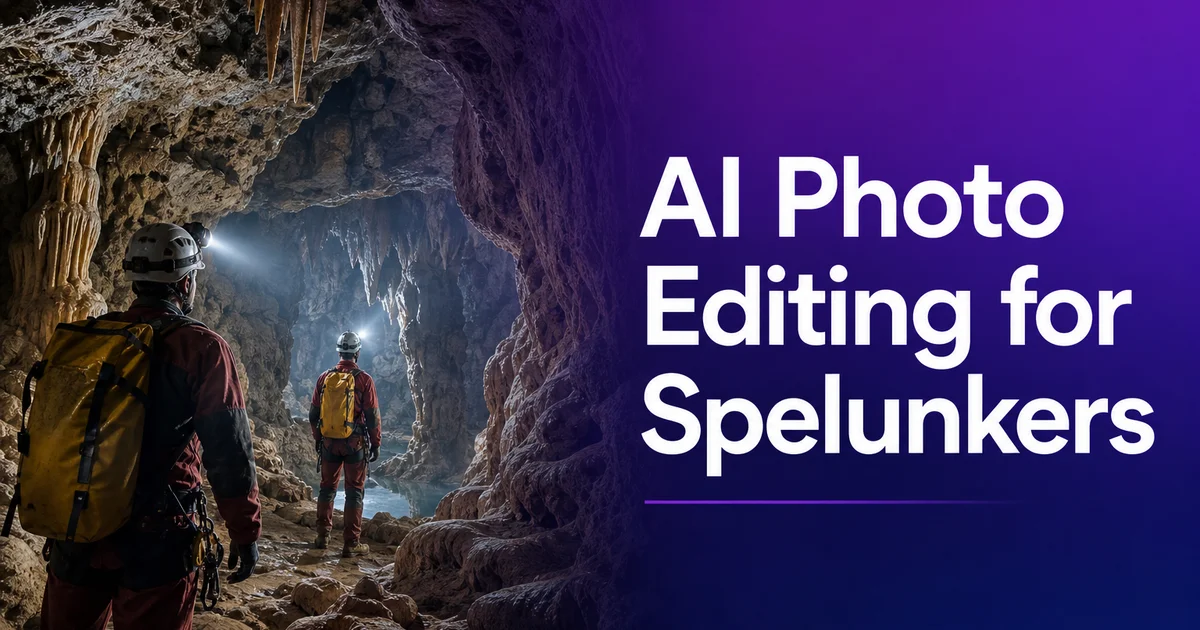
A fotografia de cavernas é uma das especializações tecnicamente mais exigentes de toda a fotografia, exigindo que os praticantes criem cada aspecto da sua iluminação do zero em ambientes que apresentam luz ambiente nula, umidade extrema e espaços confinados. A isso soma-se o risco constante de danificar formações geológicas insubstituíveis que podem ter levado centenas de milhares de anos para se desenvolver. Para os espeleólogos amadores e os espeleólogos científicos — respectivamente exploradores recreativos e pesquisadores científicos de cavernas — a fotografia atende a propósitos que vão desde registros pessoais de expedição e compartilhamento em redes sociais até levantamentos geológicos formais e ilustração de publicações científicas. A isso somam-se as imagens de defesa da conservação que transmitem a beleza e a fragilidade dos ambientes subterrâneos a públicos que nunca os visitarão pessoalmente. A diferença de qualidade entre o que o olho humano percebe numa caverna cuidadosamente iluminada e o que o sensor de uma câmera capta nas mesmas condições é maior nas cavernas do que em quase qualquer outro contexto fotográfico.
O desafio fundamental da fotografia de cavernas é a escuridão total. Ao contrário de qualquer contexto de fotografia de superfície, uma caverna não oferece luz ambiente alguma. A cena que a câmera registra é criada inteiramente pela iluminação artificial do fotógrafo, e qualquer área não iluminada diretamente torna-se preto absoluto na fotografia. Isso significa que uma única posição de flash ou lâmpada produz uma iluminação dura e direcional com sombras de preto profundo que ocultam a complexidade tridimensional das galerias e formações da caverna. Os fotógrafos experientes de cavernas resolvem isso usando vários flashes disparados à distância distribuídos por toda a cena, mas mesmo as fotografias de cavernas bem iluminadas sofrem de inconsistência de temperatura de cor entre diferentes fontes de luz e de pontos quentes onde o flash direto atinge superfícies molhadas reflexivas. A isso soma-se o ruído das configurações de ISO alto necessárias para obter exposição adequada em grandes espaços subterrâneos com potência de flash limitada.
As ferramentas de edição de fotos com IA abordam toda a gama de desafios da fotografia de cavernas, desde a redução de ruído e o realce de detalhe que recuperam informações geológicas perdidas pelas limitações do sensor, passando pela correção de balanço de branco que assegura um registro fiel da cor mineral, até a remoção de objetos que elimina o equipamento de expedição e o pessoal que aparecem nas fotografias de cavernas em condições de trabalho. O processamento do fundo pode isolar formações do seu contexto geológico para estudos comparativos, enquanto o realce recupera as estruturas cristalinas e as bandas de crescimento. A isso soma-se a coloração mineral que carrega os dados científicos que os espeleólogos fotografam nas cavernas para documentar. Este guia cobre todo o fluxo de trabalho, da captura de imagens no subterrâneo à edição e exportação, com técnicas desenvolvidas especificamente para as condições ópticas e ambientais únicas que tornam a fotografia de cavernas ao mesmo tempo excepcionalmente difícil e extraordinariamente gratificante.
- AI Enhance recupera as bandas de crescimento dos espeleotemas e o detalhe do hábito cristalino. A isso soma-se a coloração mineral de fotografias de cavernas com ISO alto onde o ruído do sensor oculta os dados geológicos captados sob iluminação portátil.
- Magic Eraser remove o equipamento de espeleologia, os dispositivos de segurança, as cordas, as estações de levantamento e o pessoal das imagens de documentação de formações, preservando ao mesmo tempo a iluminação de expedição cuidadosamente posicionada.
- A correção de balanço de branco normaliza a temperatura de cor na iluminação de caverna de fontes mistas para assegurar uma reprodução fiel do branco da calcita, do laranja do óxido de ferro e dos depósitos minerais pretos de manganês.
- Background Eraser isola formações individuais do contexto da galeria para estudos geológicos comparativos e bases de dados padronizadas de morfologia de espeleotemas.
- A exportação em lote cria derivados para relatórios de levantamento, publicações científicas, arquivos de expedição, apresentações educativas e redes sociais a partir de um único arquivo mestre editado.
Iluminação subterrânea: estratégias de posicionamento do flash para documentação de formações
A colocação de luzes artificiais numa caverna determina não apenas a qualidade estética da fotografia, mas também a sua utilidade científica. O ângulo com que a luz incide na superfície de uma formação controla quais características geológicas são visíveis e quais ficam ocultas na sombra. A iluminação mais informativa para o registro de espeleotemas usa uma luz principal posicionada em ângulo baixo em relação à superfície da formação. Uma luz rasante que capta a microtopografia das camadas de crescimento, das faces cristalinas e das texturas de superfície que um flash frontal achataria numa superfície clara sem feições. Uma estalactite iluminada diretamente por baixo com luz rasante revela as bandas de crescimento concêntricas da sua seção transversal que registram a história de deposição de milhares de anos. Uma cortina de fluxstone iluminada por trás mostra as camadas translúcidas de calcita que revelam o seu processo de formação. As mesmas formações iluminadas com um flash montado na câmera aparecem como superfícies brancas ou fulvas indiferenciadas, sem detalhe geológico legível.
As configurações multiflash abordam o problema das sombras preenchendo as áreas escuras que uma única fonte de luz cria nas galerias de caverna tridimensionais complexas. A abordagem padrão posiciona uma luz principal para o detalhe geológico e uma ou mais luzes de preenchimento para abrir as sombras sem competir com a direcionalidade da luz principal. Às vezes uma luz de contorno ou de recorte atrás do sujeito para separar as formações do fundo escuro. Na prática, os fotógrafos de cavernas posicionam os flashes em tripés, prendem-nos às superfícies rochosas, ou pedem que membros da equipe os segurem em posições designadas, disparando todas as unidades ao mesmo tempo por meio de disparadores sem fio. A fotografia resultante mostra mais da galeria do que qualquer posição de luz única poderia revelar. As distâncias e ângulos mistos dos vários flashes criam uma variação de exposição em todo o quadro que o realce com IA aborda normalizando o brilho e mantendo ao mesmo tempo a qualidade direcional intencional da luz principal.
As superfícies molhadas das cavernas apresentam um desafio de iluminação específico porque a água age como um espelho, criando reflexos especulares que estouram para branco puro onde quer que um flash se reflita diretamente em direção à câmera. As formações ativas — estalactites ainda gotejando, fluxstones ainda fluindo, represas de calcita ainda enchendo — costumam ser os sujeitos fotograficamente mais fortes precisamente porque a água indica atividade geológica em curso. A água também cria as condições de iluminação mais difíceis. Posicionar as luzes de modo que o ângulo de incidência não se reflita em direção à lente da câmera é a principal mitigação. Em ambientes molhados complexos alguns reflexos especulares são inevitáveis. O processamento com IA pode reduzir as altas-luzes estouradas a níveis recuperáveis, revelando o detalhe da formação sob o reflexo da água que a exposição original perdeu por causa da superexposição especular.
- A luz rasante de ângulo baixo revela as bandas de crescimento dos espeleotemas, as faces cristalinas e a microtopografia de superfície que o flash montado na câmera achata em superfícies claras sem feições.
- As configurações multiflash de principal-preenchimento-contorno iluminam galerias tridimensionais complexas enquanto a IA normaliza a variação de exposição das distâncias e ângulos de flash mistos.
- A contraluz sobre formações finas — canudos de calcita, cortinas em bacon, cortinas translúcidas — revela o estratificação interna de calcita que demonstra o processo de formação para a documentação científica.
- A recuperação de altas-luzes especulares com IA restaura o detalhe da formação sob os reflexos da água em superfícies molhadas ativas onde posicionar as luzes para evitar os ângulos de espelho é impossível.
Aprimoramento de formações: estruturas cristalinas, bandas de crescimento e coloração mineral
O detalhe geológico visível nos espeleotemas. Formações de caverna criadas pela deposição mineral a partir de água que goteja, flui ou percola — carrega os dados científicos que justificam o grande esforço da fotografia subterrânea. Estalactites e estalagmites mostram bandas de crescimento concêntricas em seção transversal, registrando cada banda um período de deposição mineral cuja espessura corresponde à taxa de precipitação da calcita e cuja química preserva um registro das condições climáticas de superfície no momento da formação. O fluxstone mostra bandas estratificadas que podem ser lidas como anéis de árvore, com camadas densas e porosas alternadas refletindo as variações sazonais da química da água e da vazão. O realce com IA voltado a essas feições de crescimento aumenta a visibilidade das bandas potencializando o contraste entre camadas adjacentes de densidade, composição ou estrutura cristalina ligeiramente diferentes que se fotografam em tons quase idênticos.
O hábito cristalino — a forma característica que um mineral assume quando cresce livremente — fornece informações mineralógicas diagnósticas que os fotógrafos de cavernas precisam captar com clareza. A calcita aparece em formas que vão de maciços blocos cristalinos a delicados cristais de espato em dente de cão e espato em cabeça de prego. A isso somam-se os prismas hexagonais da calcita escalenoédrica. A aragonita forma cristais aciculares, agregados de frostwork e as bizarras helictites que crescem em direções que parecem desafiar a gravidade. O gesso produz cristais de selenita translúcidos, flores de gesso encaracoladas e formações capilares tipo cabelo de anjo. Cada hábito cristalino é diagnóstico para a espécie mineral e para as condições em que se formou. AI Enhance aguça as arestas dos cristais e recupera as qualidades transparentes e translúcidas dos minerais cristalinos. A isso soma-se o aumento da visibilidade da geometria das faces cristalinas que as câmeras de telefone e até as DSLRs em ISO alto tendem a borrar.
A coloração mineral nas cavernas fornece informações sobre o ambiente químico da formação e a presença de elementos-traço na água que deposita. A calcita pura é branca ou incolor, mas a coloração por óxido de ferro cria o laranja e o vermelho. A isso soma-se a coloração marrom comum em muitas cavernas. Os depósitos de óxido de manganês produzem revestimentos pretos e dendritos. Os minerais de cobre criam raros depósitos verdes e azuis. Os ácidos húmicos do solo de superfície que percolam pela rocha podem tingir as formações de fulvo ou marrom. Essas cores são cientificamente importantes e devem ser reproduzidas fielmente nas fotografias. Isso significa que o realce de cor com IA deve distinguir entre a coloração mineral genuína que deve ser preservada e a contaminação de cor das fontes de luz que deve ser corrigida. A melhor abordagem aumenta seletivamente a saturação das áreas de cor mineral enquanto corrige a temperatura de cor geral para um padrão neutro.
- O realce das bandas de crescimento potencializa o contraste entre camadas de deposição adjacentes de densidade e composição ligeiramente diferentes, tornando visíveis os registros paleoclimáticos nas seções de estalactite e fluxstone.
- O aguçamento do hábito cristalino recupera a geometria mineral diagnóstica — calcita em dente de cão, agulhas de aragonita, lâminas de selenita, flores de gesso — que o ruído de ISO alto e as limitações do sensor borram.
- A coloração mineral carrega dados de formação química: os vermelhos do óxido de ferro, os pretos do manganês e os verdes do cobre exigem uma reprodução de cor fiel que a IA distingue da contaminação por iluminação.
- O realce seletivo da saturação preserva as cores minerais genuínas enquanto corrige a temperatura de cor geral, assegurando uma documentação cromática cientificamente fiel em todo o ambiente da caverna.
Remoção de equipamentos e documentação limpa para registros topográficos
A fotografia de levantamento de cavernas cumpre um propósito de documentação formal dentro da comunidade espeleológica, fornecendo o registro visual que acompanha os mapas de galerias de qualidade de levantamento, os inventários geológicos e os catálogos de formações. As fotografias de levantamento precisam mostrar a caverna no seu estado natural. Isso significa remover a grande quantidade de equipamento humano que as fotografias de cavernas em condições de trabalho muitas vezes captam. Cordas e escadas usadas para acessar galerias verticais, estações de levantamento marcadas com etiquetas numeradas e fita refletiva, cordas-guia esticadas por sifões e galerias complexas, ancoragens de chumbador perfuradas na rocha para instalações de corda. A isso soma-se o próprio equipamento de iluminação, que aparece todo em fotografias tiradas durante expedições de levantamento ativas. Magic Eraser remove esses elementos mantendo ao mesmo tempo as superfícies da caverna por trás deles, reconstruindo a textura rochosa natural e o detalhe da formação. A isso soma-se a geometria da galeria que o equipamento ocultava parcialmente.
A gestão da referência de escala é uma consideração importante ao remover equipamento das fotografias de cavernas. As fotografias de levantamento e científicas incluem por convenção uma referência de escala. Uma barra calibrada, um objeto familiar ou, às vezes, um espeleólogo posicionado para comparação de tamanho — que permite a quem observa julgar as dimensões das formações e galerias mostradas. Ao remover pessoal e equipamento para registros limpos, a referência de escala deve ser preservada se for discreta ou substituída por uma barra de escala padrão acrescentada como sobreposição gráfica após o processamento de remoção. O objetivo são imagens de caverna limpas com a informação dimensional cientificamente necessária mantida num formato padronizado. O processamento com IA cuida da remoção subjacente enquanto o fotógrafo julga quais elementos de referência servem ao propósito de documentação e quais constituem desordem visual.
Os registros de antes e depois servem tanto a propósitos científicos quanto de defesa. Magic Eraser permite criar pares emparelhados que mostram a mesma formação ou galeria com e sem presença humana. A versão com espeleólogos mostra a escala e a dificuldade de acesso, transmitindo os desafios físicos de alcançar e documentar os sítios subterrâneos. A versão sem espeleólogos mostra o sujeito geológico intocado, transmitindo a beleza natural e o interesse científico que motivam a conservação. Essas imagens emparelhadas são sobretudo eficazes para pedidos de financiamento e defesa da conservação. A isso somam-se as exposições educativas onde o público precisa compreender tanto o esforço humano envolvido na ciência das cavernas quanto a importância natural daquilo que esse esforço revela. Manter ambas as versões a partir de uma única fotografia original é simples quando a remoção com IA produz resultados limpos que preservam todo o detalhe geológico da exposição original.
- Magic Eraser remove cordas, estações de levantamento, marcadores refletivos, ancoragens de chumbador e equipamento de iluminação, reconstruindo ao mesmo tempo as superfícies naturais da caverna que ocultavam parcialmente.
- A gestão da referência de escala preserva ou substitui os indicadores dimensionais durante a remoção de equipamento, mantendo a capacidade de medição científica num formato de documentação padronizado.
- As imagens emparelhadas de antes e depois mostram a mesma formação com e sem presença humana para uma defesa que comunica tanto a dificuldade da exploração quanto a importância geológica natural.
- A documentação de qualidade de levantamento exige imagens de caverna limpas que representem as condições naturais da galeria, livres da infraestrutura de expedição visível nas fotografias de exploração em condições de trabalho.
Fotografia criativa de cavernas: passagens panorâmicas, light painting e narrativa de conservação
Além da documentação formal, a fotografia de cavernas oferece extraordinárias possibilidades criativas que a edição com IA realça e amplia. A fotografia panorâmica de galerias capta a escala grandiosa das grandes salas subterrâneas unindo várias exposições em imagens grande-angulares ou totalmente esféricas que mostram o volume inteiro de espaços grandes demais para qualquer fotografia única. O processamento com IA melhora a costura panorâmica normalizando a variação de exposição e temperatura de cor entre quadros tirados com diferentes posições de flash, reduzindo as emendas visíveis que ocorrem quando quadros adjacentes foram iluminados de ângulos diferentes. O resultado capta a escala impressionante das grandes galerias de caverna. Salas do tamanho de catedrais com tetos medidos em dezenas de metros, rios subterrâneos correndo por galerias-canyon esculpidas, e galerias decoradas onde as formações se estendem em todas as direções — em imagens que transmitem a experiência espacial de estar realmente de pé nesses lugares.
A pintura com luz é uma técnica de fotografia de cavernas que usa tempos de exposição longos enquanto o fotógrafo move uma fonte de luz constante pela cena, iluminando gradualmente diferentes áreas ao longo de um único quadro. A técnica produz imagens de atmosfera única com uma iluminação suave e uniforme que revela toda a forma tridimensional de uma galeria sem as sombras duras e os reflexos especulares da fotografia com flash. Contudo, a pintura com luz muitas vezes capta vestígios da fonte de luz em movimento. Um facho de lanterna de cabeça, um rastro luminoso, ou o corpo do fotógrafo como um borrão fantasmagórico na longa exposição. O processamento com IA limpa esses artefatos das imagens pintadas com luz, removendo os vestígios do processo de iluminação e mantendo ao mesmo tempo a bela iluminação uniforme que produziu. O resultado combina a qualidade de atmosfera da pintura com luz com a apresentação limpa e sem equipamento de uma imagem estática iluminada com perfeição.
A narrativa de conservação por meio da fotografia de cavernas transmite a fragilidade e a insubstituibilidade dos ambientes subterrâneos a públicos que talvez nunca visitem uma caverna. As imagens realçadas com IA que revelam toda a beleza dos espeleotemas. O brilho translúcido das estalactites ativas, a perfeição cristalina das formações intactas, a delicada complexidade das helictites e do frostwork — servem como argumentos poderosos para a proteção das cavernas. As imagens de comparação que mostram seções intocadas ao lado de áreas danificadas onde as formações foram quebradas por visitantes descuidados, manchadas por marcas de mãos enlameadas, ou degradadas por mudanças no uso do solo de superfície que afetam a hidrologia subterrânea tornam o argumento de conservação visualmente forte. O realce com IA assegura que tanto a beleza das formações intactas quanto o dano das degradadas sejam claramente visíveis. Magic Eraser pode mostrar como teriam parecido intactas as formações danificadas, criando uma visualização comovente daquilo que o acesso descuidado destrói.
- A costura panorâmica beneficia-se da normalização de exposição e cor com IA entre os quadros, reduzindo as emendas onde imagens adjacentes foram iluminadas em diferentes posições de flash.
- A remoção de artefatos da pintura com luz preserva a iluminação uniforme e atmosférica enquanto elimina vestígios de lanterna de cabeça, rastros de luz e borrões fantasmagóricos do fotógrafo das longas exposições.
- A narrativa de conservação usa comparações de formações intocadas e danificadas realçadas com IA para comunicar visualmente a insubstituibilidade do patrimônio geológico subterrâneo.
- A reconstrução com IA de formações danificadas mostra como teriam parecido intactos os espeleotemas quebrados, manchados ou degradados, criando argumentos visuais poderosos para a proteção das cavernas.
How to do it
- 1
Photograph cave formations and passages with portable lighting that reveals geological detail
Set up cave photography with multiple portable flash units or LED panels positioned to reveal the three-dimensional form of speleothems, passage walls. Geological features in an setting that has zero ambient light. The complete absence of natural light means every photon in a cave photograph comes from the photographer's equipment, making lighting placement the single most important creative and technical decision. Position key lights to rake across formation surfaces at low angles that reveal the layered growth bands of stalactites, the flowstone drapery folds, the crystal structures of helictites. The delicate features of soda straws and cave pearls. Use fill lights to open shadows in complex three-dimensional passages without flattening the depth that makes cave photography strong.
- 2
Remove equipment, personnel, and safety gear from formation documentation images
Use Magic Eraser to remove the caving equipment, safety gear, and personnel that appear in cave photographs. Helmets, headlamps, ropes, ladder systems, survey stations, reflective markers, and the cavers themselves who may have been positioned to provide scale but whose presence distracts from the geological subject. Cave photography in active exploration settings in time captures the infrastructure of the expedition alongside the natural features being documented. Magic Eraser isolates the geological formations from the human elements, creating clean records images that show the cave as a natural setting while keeping the lighting that the expedition team carefully set up.
- 3
Enhance formation detail, crystal structure, and mineral coloration with AI Enhance
Apply AI Enhance to recover the geological detail that camera sensors struggle to capture in cave settings. The banding patterns in cross-sectioned stalactites that record thousands of years of mineral deposition, the crystal habit of calcite, aragonite, and gypsum formations, the iron oxide and manganese coloration that creates the red, orange, and black mineral staining on cave walls, and the translucency of thin formations like bacon strips and soda straws where backlighting reveals internal structure. Cave photographs are often shot at high ISO to compensate for the limitations of portable lighting, introducing noise that obscures fine detail. AI boost recovers this detail while reducing the noise that degrades it.
- 4
Correct white balance and color temperature for accurate mineral color documentation
Use AI processing to correct the color temperature inconsistencies that plague cave photography where mixed lighting sources. Daylight-balanced LED panels, warm-toned tungsten modeling lights, and neutral flash units — illuminate different parts of the same scene with different color temperatures. The accurate reproduction of mineral colors is key for geological records: the white of pure calcite, the orange of iron-stained flowstone, the blue-gray of cave moonmilk. The black of manganese oxide deposits each provide mineralogical information that incorrect white balance can distort. AI color correction normalizes the color temperature across the entire image while keeping the true mineral colors that carry scientific significance.
- 5
Export cave images for survey reports, scientific publications, and expedition documentation
Save edited cave photographs at full resolution for survey report integration, scientific publication submission. Expedition archive records, then create derivatives for display use, social media sharing, and educational outreach. Survey reports need images keyed to passage maps with consistent orientation and scale reference. Scientific publications require high-resolution formation detail photographs with accurate color and embedded metadata. Expedition records benefits from both clean formation images and separate versions that show the exploration context with personnel and equipment visible. Batch export handles the full range of output needs from a single edited master file.
Fontes
- Cave Photography Techniques: Lighting Underground Environments for Scientific Documentation — National Speleological Society
- Speleothem Science: Formation Processes, Photography, and Conservation — Cambridge University Press
- Cave Survey and Mapping: Standards for Documentation and Digital Cartography — British Cave Research Association