
Fluxo de edição de fotos com IA para fabricantes de velas — Magic Eraser
Como fabricantes de velas usam a edição de fotos com IA para criar imagens de produtos profissionais a partir de fotografias de navegação reais. Remoção de fundo, aprimoramento de detalhes, correção de cor e preparação de catálogos.
SEO & Growth
Revisado por Magic Eraser Editorial ·
Índice
- Por que a fotografia de velas é um desafio único para pequenas empresas marítimas
- Técnicas de remoção de fundo para fotografia de produtos marítimos
- Aprimoramento de detalhes e correção de cor para materiais de marketing de velas
- Remoção seletiva de objetos para apresentações de velas mais limpas
- Construindo uma marca visual consistente em todos os canais de marketing
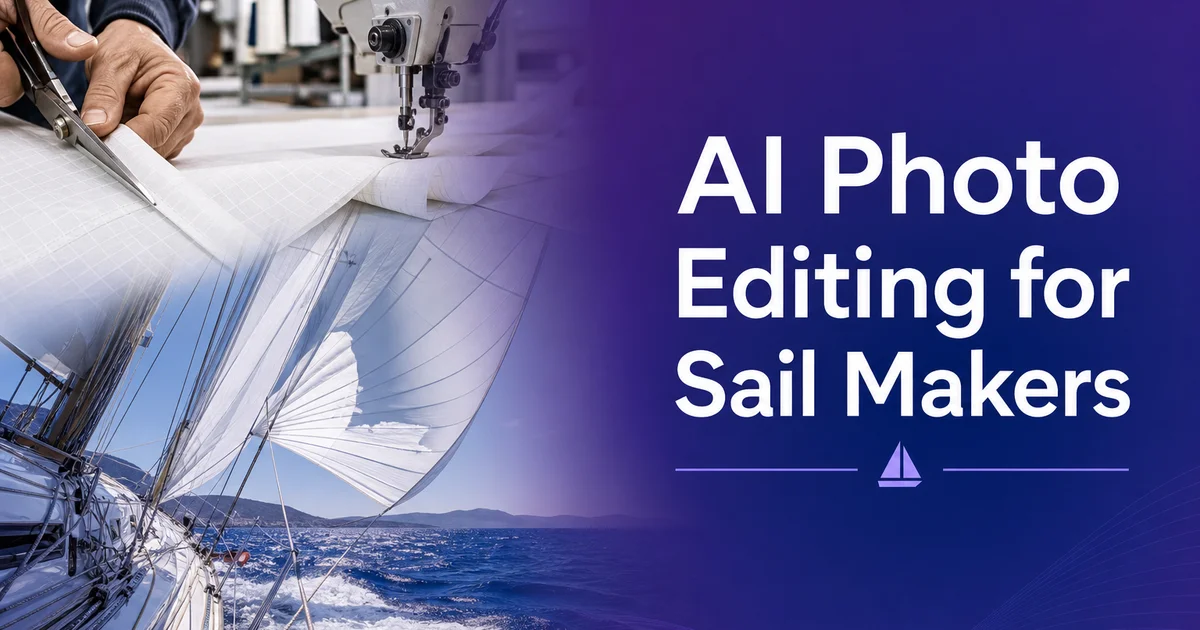
A fabricação de velas é um setor artesanal em que a apresentação visual do produto acabado influencia diretamente as decisões de compra. A maioria das veleiras não dispõe da infraestrutura fotográfica profissional que os grandes fabricantes náuticos mantêm. Uma vela de regata que custa milhares de dólares merece imagens de produto que transmitam a engenharia de precisão, a qualidade do material e o design aerodinâmico que justificam o seu preço. Mas a realidade é que a maioria das fotos de velas é tirada às pressas durante os testes no mar, no espaço apertado da oficina ou no cais entre entregas. As imagens resultantes mostram as velas sobre fundos desordenados, com iluminação pouco favorável, com tripulantes, cordame. Outros barcos disputando a atenção visual. Essas imagens documentam o produto com precisão, mas não conseguem apresentá-lo com o acabamento visual que impulsiona as vendas num mercado cada vez mais online.
As soluções tradicionais para esse problema são caras e impraticáveis para a maioria das operações de fabricação de velas. Contratar um fotógrafo náutico para um ensaio dedicado exige coordenar tempo de barco, condições climáticas ideais e tripulação. Um processo que pode custar vários milhares de dólares por dia e ainda depende de fatores incontroláveis como vento, ondas e cobertura de nuvens. A fotografia de velas em estúdio é fisicamente difícil porque os produtos são enormes, flexíveis. Precisam ser exibidos sob carga para mostrar sua forma projetada. Muitos veleiros simplesmente aceitam uma fotografia de produto medíocre como uma limitação inevitável do negócio, usando quaisquer imagens que consigam capturar no curso normal das operações e perdendo vendas potenciais para concorrentes cujos materiais de marketing por acaso incluem fotos melhores.
As ferramentas de edição de fotos com IA eliminam a lacuna entre as imagens que os veleiros conseguem capturar na prática e os materiais de marketing refinados de que o negócio precisa. A remoção de fundo isola de forma limpa as velas de ambientes náuticos desordenados, o realce de detalhes torna mais nítidas as características de construção que os compradores avaliam, a correção de cor compensa as difíceis condições de iluminação da fotografia náutica. A remoção seletiva de objetos limpa elementos indesejados sem exigir novas tomadas. Este guia percorre o fluxo de trabalho completo para os veleiros, desde a captura de fotos de origem adequadas durante as operações normais até a produção de imagens de produto prontas para catálogo, conteúdo para redes sociais. Recursos web que apresentam as velas com a qualidade visual que sua arte merece.
- O Background Eraser isola as velas de ambientes náuticos desordenados, lidando com bordas complexas como o tecido translúcido, as silhuetas das ferragens. Fitas indicadoras esvoaçantes que tornam impraticável o mascaramento manual.
- O AI Enhance torna mais nítidos os detalhes de construção cruciais que os compradores avaliam — qualidade da costura, sobreposição de reforços, construção dos bolsos de retranca e curvatura dos painéis que indica um projeto adequado.
- A correção de cor normaliza os efeitos ambientais da fotografia náutica, garantindo que os clientes vejam cores de tecido precisas em vez das dominantes cinza-azuladas ou dos tons desbotados causados pelo reflexo da água e pelos céus encobertos.
- O Magic Eraser remove elementos que distraem, como cabos de amarração, tripulantes, sombras do cordame e marcas de fabricação das fotos de trabalho, eliminando a necessidade de ensaios fotográficos limpos dedicados.
- A exportação em lote gera imagens otimizadas para páginas de produto web, catálogos impressos e redes sociais a partir de um único master editado, mantendo uma qualidade consistente em todos os canais de marketing.
Por que a fotografia de velas é um desafio único para pequenas empresas marítimas
A fabricação de velas ocupa uma posição incomum na manufatura, em que o produto é grande demais para ser fotografado em um estúdio controlado, flexível demais para ser exibido corretamente sem estar carregado no cordame, e usado em um ambiente. Mar aberto — que introduz variáveis incontroláveis em cada fotografia. Uma vela grande de cruzeiro típica pode medir oito metros na testa e cinco metros na esteira, tornando-a maior do que a maioria dos estúdios fotográficos. Mesmo que uma oficina tenha pé-direito para içar uma vela em ambiente fechado, o tecido pende frouxo sem carga de vento, mostrando vincos e um perfil disforme que deturpa a forma aerodinâmica projetada. O produto só fica com bom aspecto quando está voando em um barco com vento real, o que significa que o fotógrafo precisa trabalhar na água com toda a instabilidade, os respingos. Os fundos desordenados que os ambientes náuticos apresentam.
A dinâmica competitiva do setor de velas amplifica a importância de uma boa fotografia de produto. Os compradores de velas pesquisam e comparam opções online cada vez mais antes de contatar as veleiras para orçamentos. A qualidade das imagens de produto influencia diretamente quais veleiras entram na lista de finalistas. Uma vela de regata sob medida representa um investimento importante, e os compradores querem ver provas da qualidade de construção. Costuras justas e uniformes ao longo das emendas, transições de painéis suaves que indicam formas cortadas por computador com precisão, pontos de fixação de ferragens bem posicionados e reforçados, e a forma aerodinâmica geral sob carga que determina o desempenho. Fotos que não mostram esses detalhes com clareza, ou que os apresentam sobre fundos indesejados, não conseguem transmitir a proposta de valor que distingue uma vela sob medida premium de uma importação produzida em massa.
A natureza sazonal e dependente do clima da fotografia de velas agrava o problema. A maioria das velas novas é entregue na primavera e no início do verão, criando uma janela comprimida durante a qual os veleiros precisam capturar imagens de dezenas de produtos diferentes. Cancelamentos por causa do clima, dias encobertos que produzem uma iluminação plana e sem vida. A impossibilidade prática de agendar condições ideais para cada entrega faz com que a maioria das fotos de velas seja tirada em condições de compromisso. Quando um veleiro acumula um portfólio de fotos de navegação razoáveis, os modelos podem ter mudado, os projetos de velas podem ter evoluído. As imagens já podem parecer datadas em comparação com concorrentes que investiram em ensaios profissionais.
- As velas são grandes demais para a fotografia de estúdio e só mostram sua forma projetada sob carga de vento em barcos reais, forçando os fotógrafos a trabalhar em ambientes náuticos não controlados.
- As compras comparativas online significam que a qualidade das imagens de produto influencia diretamente quais veleiras chegam às listas de finalistas dos compradores, tornando uma fotografia ruim uma desvantagem competitiva.
- As temporadas de entrega na primavera comprimem a janela fotográfica, e a dependência do clima significa que a maioria das fotos de produto é capturada em condições de compromisso.
- Os detalhes de construção que distinguem as velas sob medida premium das importações em massa. Qualidade da costura, transições de painéis, reforço de ferragens — exigem fotos nítidas e bem compostas para serem bem transmitidos.
Técnicas de remoção de fundo para fotografia de produtos marítimos
O Background Eraser lida com os desafios específicos da fotografia de velas com os quais as ferramentas genéricas de remoção de fundo têm dificuldade. O tecido das velas costuma ser parcialmente translúcido. A luz do sol atravessa os laminados leves de regata, criando áreas onde o fundo fica visível através da própria vela. A IA distingue entre o tecido de vela semitransparente e o fundo real, preservando o caráter visual do tecido, incluindo sua translucidez, em vez de tratar as áreas transparentes como fundo a ser removido. Isso é crucial porque a translucidez dos materiais de vela de alto desempenho é um atributo positivo que os compradores reconhecem como indicador de construção leve. Removê-la deturparia o produto.
Os perfis de borda complexos das velas sob carga apresentam outro desafio que a IA gerencia melhor do que as ferramentas de seleção manual. Uma vela voando tem bordas de testa e esteira curvas e suaves que uma ferramenta de seleção pode seguir com facilidade. A baluma muitas vezes tremula, criando uma borda borrada que muda entre os quadros. As retrancas que se projetam dos bolsos criam saliências angulares no contorno de outro modo suave da vela. As fitas indicadoras — pequenas tiras de fio ou fita presas à vela para visualizar o fluxo de ar — esvoaçam atrás da baluma em finos filetes quase impossíveis de mascarar manualmente sem dedicar um tempo excessivo. A IA identifica essas características de borda próprias das velas e aplica o tratamento de borda correto. Mascaramento limpo ao longo da testa estável, mascaramento ciente do borrão de movimento ao longo da baluma esvoaçante, e preservação dos filetes das fitas indicadoras que mostram que a vela foi fotografada em condições reais de navegação.
Uma vez isoladas, as velas podem ser compostas sobre fundos selecionados para fins de marketing. Um fundo branco é o padrão para o catálogo e as páginas de produto de e-commerce, onde uma exibição limpa e um tratamento visual consistente em toda a linha de produtos importam mais do que a atmosfera contextual. Os fundos de céu azul e oceano — fotografados separadamente em condições ideais ou gerados por IA — fornecem um contexto aspiracional que ajuda os compradores a imaginar a vela em uso. Para redes sociais e publicidade, as velas podem ser compostas sobre fundos dramáticos de pôr do sol ou de fotografia de regata que criam impacto emocional. A IA gerencia a mesclagem de bordas entre a vela e o novo fundo, combinando a temperatura de cor e a direção da luz para que a composição pareça natural em vez de colada.
- A IA preserva a semitranslucidez dos laminados leves de regata durante a remoção de fundo, mantendo um atributo positivo do material em vez de deturpar o produto.
- Os perfis de borda complexos, incluindo balumas esvoaçantes, saliências dos bolsos de retranca e fitas indicadoras esvoaçantes, são tratados com um tratamento de borda apropriado para cada tipo de característica.
- Os fundos brancos servem à consistência do catálogo e do e-commerce, enquanto as composições de céu e oceano fornecem um contexto de navegação aspiracional para a publicidade e as redes sociais.
- A mesclagem de bordas combina a temperatura de cor e a direção da luz entre a vela isolada e os novos fundos, produzindo composições de aparência natural em vez de recortes evidentes.
Aprimoramento de detalhes e correção de cor para materiais de marketing de velas
O AI Enhance faz sobressair os detalhes de construção que os compradores de velas examinam ao avaliar a qualidade e o acabamento. A costura das emendas talvez seja o detalhe mais importante. Os compradores de velas examinam a firmeza, a uniformidade e o padrão da costura ao longo das emendas dos painéis, o que indica a precisão do processo de costura e a durabilidade de longo prazo da vela. O aguçamento por IA traz o detalhe da costura a um foco nítido até em fotos tiradas do cockpit de um barco adernado, onde a trepidação da câmera e os respingos conspiram contra a nitidez. Os reforços em pontos de alta carga como o topo, a amura. O punho da escota recebem tratamento semelhante, com a IA identificando essas áreas estruturalmente importantes e aplicando um realce seletivo que torna a sobreposição, as fitas e os métodos de fixação das ferragens claramente visíveis.
A fidelidade da cor é um desafio persistente na fotografia náutica porque o ambiente introduz dominantes de cor que distorcem a aparência do tecido. Os céus encobertos produzem uma dominante cinza-azulada fria que faz as velas brancas parecerem encardidas. A luz solar intensa refletida na água verde introduz uma dominante amarelo-esverdeada quente. A luz dourada do fim de tarde — que os fotógrafos costumam considerar ideal para a fotografia geral — desloca as cores da vela para o laranja e torna impossível uma representação fiel da cor. A correção de cor por IA identifica essas influências ambientais analisando o contexto completo da imagem, e então aplica correções que restauram o tecido à sua cor real sob luz neutra. Isso é sobretudo importante para velas coloridas, capas de vela. Gráficos de marca em que o cliente espera que o produto entregue corresponda à cor mostrada nos materiais de marketing.
A visualização da forma dos painéis é um realce sutil, mas importante, para o marketing de velas de desempenho. As curvas suaves onde os painéis individuais de tecido de vela se unem indicam a precisão do projeto assistido por computador e a exatidão do processo de corte e montagem. Vincos ao longo das emendas sugerem mau alinhamento dos painéis, enquanto curvas suaves e harmoniosas mostram qualidade de engenharia. O AI Enhance pode aumentar sutilmente a visibilidade das emendas dos painéis e das linhas de curvatura na foto, tornando a forma aerodinâmica da vela mais aparente sem introduzir artefatos artificiais. Isso é sobretudo valioso para velas de proa e balões, em que a forma tridimensional sob carga é o principal diferenciador entre os produtos. Os compradores precisam ver que a vela assume sua forma projetada em vez de se deformar sob pressão.
- O realce da costura das emendas traz a firmeza, a uniformidade e o padrão a um foco nítido, permitindo que os compradores avaliem a qualidade de construção mesmo a partir de fotos de navegação tiradas à mão.
- O detalhe dos reforços em pontos de alta carga é aguçado seletivamente para tornar a sobreposição, as fitas e os métodos de fixação das ferragens claramente visíveis nas imagens de marketing.
- A correção de cor ambiental remove a dominante de céus encobertos, água refletora e luz dourada, restaurando cores de tecido fiéis, essenciais para gerenciar as expectativas do cliente.
- A visualização da curvatura dos painéis aumenta sutilmente a visibilidade das emendas para demonstrar a precisão do design aerodinâmico, ajudando os compradores a avaliar a forma tridimensional sob carga das velas de desempenho.
Remoção seletiva de objetos para apresentações de velas mais limpas
A capacidade de remoção seletiva do Magic Eraser é sobretudo valiosa para os veleiros porque a maioria das fotos de velas é capturada durante operações reais de navegação em que o objetivo principal é testar, entregar ou competir — não fotografar. A foto de uma genoa voando lindamente também pode incluir cabos de amarração se estendendo pelo primeiro plano, um tripulante ajustando a escota que não assinou uma autorização de imagem, um barco vizinho com as velas de um concorrente visíveis, ou sombras do cordame projetadas sobre a superfície da vela que criam padrões visuais confusos. No passado, remover esses elementos exigia ou um trabalho cuidadoso no Photoshop por alguém com habilidades de edição de fotos. Uma especialização rara numa veleira — ou aceitar as imperfeições na esperança de que os clientes as ignorassem.
A IA identifica e remove essas distrações comuns da fotografia náutica preservando a textura do tecido da vela por baixo. Os cabos de amarração e as escotas que cruzam à frente da vela são removidos de forma limpa, com o padrão do tecido reconstruído sem emendas atrás de onde estava o cabo. Os tripulantes podem ser apagados das áreas do cockpit, com o convés, as ferragens e o cordame atrás deles recriados com naturalidade. Os barcos concorrentes e suas velas ao fundo são substituídos por água e céu limpos que combinam com o fundo existente. A IA compreende o contexto visual bem o suficiente para gerar o conteúdo de substituição correto. Superfície de água nas áreas de água, céu nas áreas de céu, superfície de convés nas áreas de convés — em vez de deixar manchas em branco ou borrões evidentes.
As marcas de fabricação representam uma categoria especial de elementos removíveis própria da fabricação de velas. Durante a construção, os veleiros costumam aplicar marcas de alinhamento temporárias, anotações de medição. Etiquetas de marcação com fita, marcadores ou giz que não deveriam aparecer nas fotos de marketing. Uma vela fotografada logo após a entrega ainda pode mostrar esses artefatos de construção antes de o cliente ter tido a chance de navegar e desgastá-los naturalmente. O Magic Eraser remove essas marcas de forma limpa, apresentando a vela como o produto acabado que o cliente usará, em vez do produto recém-entregue com seus vestígios de fabricação ainda visíveis. Isso é sobretudo importante para velas brancas, onde qualquer marca ou descoloração é muito visível e poderia ser confundida com um defeito em vez de um artefato de construção temporário.
- Os cabos de amarração, as escotas e o cordame que cruzam à frente das velas são removidos de forma limpa, com a textura do tecido reconstruída sem emendas atrás dos elementos retirados.
- Os tripulantes sem autorização de imagem e os barcos concorrentes ao fundo são substituídos por água, céu e superfícies de convés contextualmente apropriados.
- As marcas de fabricação temporárias, incluindo fita de alinhamento, anotações de medição e etiquetas de identificação, são apagadas de forma limpa para apresentar as velas como produtos acabados.
- A IA gera conteúdo de substituição apropriado com base no contexto visual em vez de deixar manchas em branco, garantindo resultados sem emendas que mantêm a naturalidade fotográfica.
Construindo uma marca visual consistente em todos os canais de marketing
O efeito cumulativo da edição de fotos com IA permite que os veleiros construam uma marca visual consistente que antes só era alcançável por empresas com departamentos de marketing dedicados e orçamentos fotográficos. As imagens de produto no site, no catálogo impresso, nas contas de redes sociais e nos materiais de feiras podem compartilhar um estilo visual unificado. Fundos consistentes, tratamento de cor combinado, níveis de detalhe equivalentes e composição profissional — mesmo que as fotos de origem tenham sido capturadas por pessoas diferentes em dias diferentes sob condições extremamente variadas. Essa consistência visual é um poderoso sinal de marca que transmite profissionalismo e atenção aos detalhes, qualidades que os compradores de velas associam diretamente à qualidade de fabricação.
A produção do catálogo se beneficia enormemente da edição de fotos assistida por IA porque a consistência entre as fichas de produto é um dos fatores mais importantes de uma exibição profissional. Quando cada vela do catálogo é mostrada sobre o mesmo fundo limpo, com o mesmo tratamento de cor e o mesmo nível de detalhe, a linha de produtos parece coesa e as variações entre os modelos tornam-se o foco visual em vez das variações na qualidade fotográfica. Um veleiro que produz quarenta modelos de velas diferentes pode processar toda a sua biblioteca de fotos de produto pelo mesmo fluxo de edição por IA e produzir páginas de catálogo que parecem ter sido fotografadas em uma única sessão coordenada, mesmo que as fotos na verdade tenham sido acumuladas ao longo de anos de tomadas oportunistas durante entregas e testes no mar.
A criação de conteúdo para redes sociais é outra área em que a edição por IA multiplica a produção das pequenas operações de fabricação de velas. Uma única foto de navegação pode ser processada em vários recursos para redes sociais. Uma foto de produto limpa em fundo branco para a consistência da grade do Instagram, uma imagem composta dramática para publicidade no Facebook, um recorte de detalhe destacando a qualidade de construção para o público profissional do LinkedIn, e uma comparação de antes e depois mostrando a alteração de edição para conteúdo sobre o próprio processo de fabricação de velas. Essa multiplicação de recursos transforma cada foto de origem numa biblioteca de conteúdo em vez de uma imagem de uso único, dando às pequenas empresas a velocidade de marketing de concorrentes maiores sem o orçamento de marketing correspondente.
- Um tratamento visual consistente no site, no catálogo, nas redes sociais e nos materiais de feiras comunica um profissionalismo que os compradores associam à qualidade de fabricação.
- A produção do catálogo se beneficia de fundos e tratamento de cor uniformes que tornam as variações de produto o foco visual em vez das variações na qualidade fotográfica.
- A multiplicação de recursos para redes sociais transforma fotos de origem individuais em vários recursos específicos por plataforma — fotos de produto limpas, composições dramáticas, recortes de detalhe e conteúdo de processo.
- O fluxo de edição por IA permite que pequenas veleiras igualem a qualidade do marketing visual de concorrentes maiores sem equipe fotográfica dedicada nem orçamentos de ensaios profissionais.
How to do it
- 1
Photograph your sails in real-world conditions and import images for editing
Capture your sails in their natural context. Hoisted on boats during sea trials, displayed in your loft, or laid flat for detail shots showing stitching and reinforcements. Import these images into Magic Eraser for processing. The challenge with sail photography is that real-world sailing conditions create busy backgrounds, including choppy water, dock clutter, other boats, and overcast skies that flatten the visual appeal of the sail itself. AI photo editing lets you start with authentic records photographs and transform them into polished marketing assets without needing an expert photography studio or staged photo shoots that would require taking sails out of production.
- 2
Use Background Eraser to isolate sails from cluttered marine environments
Run Background Eraser on your sail photographs to cleanly separate the sail from its surroundings. The AI identifies the sail fabric boundaries even when the sail is translucent, backlit, or partially furled, handling the complex edge cases that manual masking makes tedious. Including battens visible through the cloth, telltales streaming from the leech, and hardware at the tack and head that creates complex silhouette shapes. Once isolated, the sail can be placed against clean white backgrounds for catalog use, composite backgrounds showing ideal sailing conditions, or transparent backgrounds for use in layout software where the sail needs to overlay other design elements.
- 3
Enhance sail detail and correct color accuracy with AI processing
Apply AI Enhance to sharpen the critical details that sail buyers evaluate. Stitch quality along seam lines, reinforcement patch layering at high-load points, batten pocket construction, and the smooth panel curvature that indicates proper design and fabrication. Color correction is key because marine photography in bright sunlight and reflective water produces color casts that misrepresent fabric color. A sail that appears blue-gray in overcast dock photos or washed-out yellow in bright sun needs to be corrected to show its actual white, off-white, or laminate color accurately. AI color correction normalizes these environmental effects so customers see the true product color.
- 4
Remove imperfections and prepare images for catalog and web use
Use Magic Eraser to remove unwanted elements from sail photographs. Dock lines crossing in front of the sail, rain spots on the camera lens, crew members who did not sign photo releases, rigging shadows that create confusing visual patterns across the sail surface, and temporary tape or marks from the fabrication process that should not appear in marketing materials. This selective removal capability means you can use photographs taken during actual sail tests and deliveries rather than needing to organize dedicated clean photo shoots, saving time and ensuring the images show sails in realistic working configurations.
- 5
Export optimized images for web, print catalog, and social media channels
Save your edited sail images in multiple formats and resolutions optimized for each marketing channel. Web product pages need compressed images that load quickly while showing enough detail for customers to evaluate construction quality. Print catalogs require high-resolution files with accurate CMYK color profiles. Social media posts need attention-grabbing crops and compositions that work in square and vertical formats. AI batch processing lets you take a single edited master image and generate all required format variations automatically, maintaining consistent color and detail quality across every output while reducing the time spent manually preparing individual exports.
Fontes
- Digital Photography for Marine Industry Marketing — Sail Magazine
- E-Commerce Product Photography Best Practices — Baymard Institute