
Edição de fotos com IA para revendedores de motorhomes — Magic Eraser
Como revendedores de motorhomes usam a edição de fotos com IA para fotos de listagem internas e externas, melhoria de fundos de camping cênico e remoção de desordem do pátio. Marketing de inventário que vende o estilo de vida junto com o veículo.
SEO & Growth
Revisado por Magic Eraser Editorial ·
Índice
- A lacuna do estilo de vida: por que a fotografia do pátio falha com compradores de motorhomes
- Fotografia exterior: removendo o contexto do pátio e adicionando contexto de estilo de vida
- Fotografia de interiores: fazendo espaços compactos parecerem convidativos e espaçosos
- Fotografia de recursos e hierarquia visual de venda para listagens de motorhomes
- Distribuição multiplataforma e campanhas de marketing sazonal
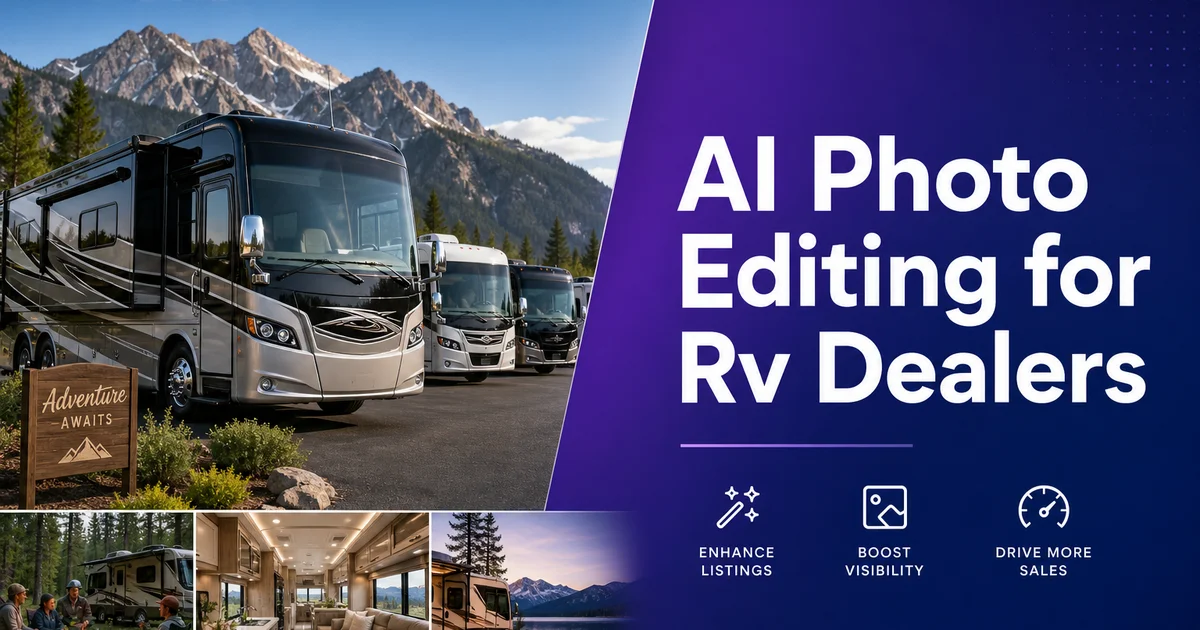
As vendas de motorhomes são guiadas pela emoção mais do que qualquer outra categoria de veículo. Um comprador que considera um sedã compara consumo de combustível, classificações de segurança e parcelas mensais. Um comprador que considera um motorhome está adquirindo uma visão de liberdade. Noites de fim de semana junto à fogueira em um local à beira do lago, viagens de costa a costa pelos parques nacionais, a promessa de um lar que vai aonde quer que a estrada leve. Essa dinâmica de compra emocional significa que as fotos de um anúncio de motorhome não apenas documentam as características de um veículo. Elas precisam evocar o estilo de vida que o veículo torna possível. Um motorhome bem fotografado em um camping pitoresco desencadeia a resposta emocional que leva um comprador a agendar uma visita. O mesmo motorhome fotografado em um pátio lotado de revenda, com postes de energia, unidades vizinhas e asfalto em todas as direções, não comunica nada além de estoque que precisa ser girado.
O desafio para os revendedores de motorhomes é que seu estoque fica em pátios de revenda, não em campings pitorescos. Fotografar de 30 a 100 unidades em ambientes naturais exigiria transportar cada unidade até um local, montá-la, fotografá-la e trazê-la de volta. Um gasto impraticável de tempo, combustível e logística para um estoque que pode girar em semanas. A realidade prática é que a fotografia de motorhomes acontece no pátio, sob quaisquer condições que o pátio apresente: espaçamento apertado entre as unidades, infraestrutura de serviços em cada fundo, iluminação inconsistente das estruturas suspensas. A monotonia visual de fileiras de veículos semelhantes sobre o asfalto. A edição de fotos com IA resolve essa lacuna entre o imaginário de estilo de vida que vende motorhomes e as condições do pátio onde a fotografia de motorhomes realmente acontece.
Este guia cobre todo o fluxo de trabalho de marketing fotográfico para revendedores de motorhomes e campervans. Da fotografia sistemática de estoque à remoção da bagunça do pátio, à melhoria de interiores, à colocação de fundos pitorescos e à distribuição multiplataforma. O objetivo é um estoque visual em que cada unidade seja apresentada em sua versão mais aspiracional, mostrando aos compradores o estilo de vida que os aguarda em vez do pátio onde a unidade está atualmente.
- O Magic Eraser remove unidades vizinhas, postes de energia, sinalização do pátio e etiquetas de preço das fotos externas para isolar o estoque em destaque sobre fundos limpos.
- O AI Enhance equilibra a iluminação interna mista para revelar a qualidade dos móveis, do estofamento e das bancadas no ambiente compacto e desafiador da fotografia de motorhomes.
- A substituição de fundo por um camping pitoresco transforma fotos comerciais do pátio em imagens de estilo de vida que desencadeiam a resposta emocional por trás da maioria das compras de motorhomes.
- As sequências de fotos de interior devem seguir um percurso lógico de visita, da porta de entrada pela área de estar, cozinha, quarto e banheiro, para os usuários online.
- A distribuição multiplataforma abrange sites de revendedores, RV Trader, Camping World, Facebook Marketplace e redes sociais, com recortes adequados ao formato de cada canal.
A lacuna do estilo de vida: por que a fotografia do pátio falha com compradores de motorhomes
Todo revendedor de motorhomes conhece a sensação de ver os olhos de um cliente brilharem durante a visita a uma unidade que esteve meses no pátio com interesse online mínimo. A unidade é linda pessoalmente. Os acabamentos internos são quentes e acolhedores, a planta flui com naturalidade e os recursos são exatamente o que o comprador precisa. Mas as fotos do anúncio online mostravam a mesma unidade espremida entre outros dois motorhomes em um pátio de asfalto com uma cerca de alambrado ao fundo e cabos elétricos arrastados pelo chão. Uma caçamba de lixo visível atrás da unidade vizinha. As fotos documentavam o veículo com precisão, mas não comunicavam nada sobre a experiência de possuí-lo. O comprador que percorreu o pátio descobriu a unidade por acaso. As dezenas de compradores que navegaram pelo anúncio online passaram direto porque as fotos não despertaram nenhum envolvimento emocional.
Essa é a lacuna do estilo de vida — a desconexão entre como um motorhome se apresenta em um pátio de revenda e como se apresenta na imaginação do proprietário. O comprador disposto a gastar 80.000 dólares em um trailer de viagem não está comprando revestimento de alumínio e um sistema a propano. Está comprando manhãs de sábado acordando com vista para as montanhas pela janela panorâmica, noites preparando o jantar em um camping com o pôr do sol atrás das árvores. A liberdade de mudar de cenário quando quiser. Cada anúncio de revendedor concorrente que mostra um motorhome em um cenário de estilo de vida está vendendo esse sonho. Cada anúncio que mostra a mesma unidade de qualidade em um pátio está vendendo peças e especificações. Em um mercado em que 40 a 60 por cento dos compradores começam a busca online e restringem suas escolhas antes mesmo de visitar um revendedor, os anúncios que vendem o estilo de vida conquistam as visitas. Os anúncios que vendem o veículo ficam parados no pátio.
A edição de fotos com IA fecha essa lacuna por uma fração do custo e do tempo de ensaios fotográficos em locação física. Uma única foto externa tirada no pátio pode ser transformada em uma imagem de estilo de vida em minutos. A bagunça do pátio removida, a unidade isolada e um fundo de camping pitoresco colocado atrás dela que combina com o caso de uso aspiracional do comprador-alvo. A imagem resultante é fotograficamente convincente, emocionalmente forte. Honesta quanto ao próprio veículo, ao mesmo tempo que o contextualiza no cenário em que o comprador imagina usá-lo. Isso não é engano: é o equivalente visual de um anúncio imobiliário que mobília uma casa vazia para ajudar os compradores a se imaginarem morando ali.
- As fotos do anúncio online determinam se os compradores agendam visitas — fotos de pátio atraentes perdem para unidades inferiores apresentadas em cenários de estilo de vida.
- Os compradores de motorhomes adquirem uma visão de liberdade e experiência, não especificações do veículo — as fotos devem evocar o estilo de vida que o veículo torna possível.
- De 40 a 60 por cento dos compradores restringem suas escolhas online antes de visitar os revendedores, o que torna a qualidade das fotos do anúncio um motor de vendas primordial.
- A substituição de fundo com IA é o equivalente visual do home staging imobiliário — contextualizar o produto no cenário em que os compradores imaginam usá-lo.
Fotografia exterior: removendo o contexto do pátio e adicionando contexto de estilo de vida
A fotografia de pátio eficaz começa pelo posicionamento. Quando possível, leve a unidade em destaque para a borda do pátio, onde as opções de fundo são melhores. Perto do paisagismo, do céu aberto ou ao menos longe do aglomerado mais denso de estoque. Estacione a unidade com o lado de exibição voltado para o melhor fundo e posicione-a de modo que o ângulo da câmera evite os piores elementos do pátio. Mesmo com posicionamento ideal, a maioria das fotos do pátio incluirá elementos que precisam ser removidos: motorhomes vizinhos cujos toldos e extensões invadem o enquadramento, colunas de serviços e ligações elétricas, estacas de número de vaga, etiquetas de estoque, etiquetas de preço nos para-brisas, placas provisórias. A infraestrutura industrial da revenda. O Magic Eraser remove cada um desses elementos e preenche o espaço com um fundo adequado ao contexto.
A substituição de fundo pega a foto externa editada e coloca o motorhome em um cenário que combina com seu uso pretendido e seu público comprador. Um trailer de viagem voltado à família pertence a um camping bem equipado com mesas de piquenique, fogueiras e árvores altas. O cenário que as famílias imaginam ao pensar em seus fins de semana de acampamento. Um fifth wheel de luxo pertence a um resort premium de motorhomes com vagas pavimentadas, paisagismo cuidado. Um cenário natural deslumbrante à altura do estilo de vida elevado que seu preço promete. Um campervan compacto Classe B pertence a uma estrada florestal remota, a um mirante litorâneo ou a um estacionamento de início de trilha. Os cenários de viagem aventureiros e espontâneos que atraem o público comprador da vanlife. Combinar o fundo com a aspiração do comprador é a diferença entre uma foto de estilo de vida genérica e uma que fala diretamente ao cliente com maior probabilidade de comprar aquela unidade específica.
A variação sazonal de fundos prolonga o valor de marketing de cada conjunto de fotos. O mesmo motorhome pode ser colocado diante de um camping com folhagem outonal para o marketing de outono, de uma cena de montanha com neve para a promoção de acampamento quatro estações no inverno, de um prado de flores silvestres para campanhas de primavera. De um cenário de verão à beira do lago para a alta temporada. Essa rotação sazonal mantém o conteúdo de redes sociais e e-mail marketing fresco o ano todo, sem exigir novas fotos de um estoque que talvez não mude com tanta frequência. Para revendedores em regiões de invernos rigorosos, onde a fotografia no pátio é impraticável por meses, a substituição de fundo com IA significa que o estoque pode ser comercializado visualmente o ano todo, independentemente das condições climáticas reais no pátio.
- Posicione as unidades nas bordas do pátio, perto do paisagismo ou do céu aberto, antes de fotografar para minimizar o trabalho de edição na limpeza do fundo.
- Combine os fundos substitutos com o público comprador — campings familiares para trailers, resorts premium para fifth wheels de luxo, mirantes remotos para campervans.
- A variação sazonal de fundos mantém o conteúdo de marketing fresco o ano todo, sem novas fotos de um estoque inalterado.
- Revendedores de regiões de inverno podem manter um marketing visual de estoque atraente durante os meses em que a fotografia ao ar livre no pátio é impraticável.
Fotografia de interiores: fazendo espaços compactos parecerem convidativos e espaçosos
A fotografia de interiores de motorhomes está entre as categorias tecnicamente mais desafiadoras da fotografia imobiliária porque combina os piores traços da fotografia arquitetônica de espaços pequenos com a diversidade de materiais de uma casa totalmente mobiliada. Um trailer de viagem de 9 metros contém uma sala de estar, uma cozinha, um quarto e um banheiro em cerca de 23 metros quadrados de área, tudo acabado com uma variedade de materiais. Armários de madeira, estofamento de tecido, bancadas laminadas, pisos de vinil, eletrodomésticos de aço inox e boxes de vidro — cada um refletindo a luz de maneira diferente. A iluminação LED superior cria sombras duras para baixo, as janelas estouram em branco enquanto as superfícies internas caem na sombra. A lente grande-angular necessária para captar todo o espaço introduz uma distorção que faz o interior parecer um túnel em vez de aberto.
O AI Enhance aborda cada um desses desafios de forma sistemática. O algoritmo de equilíbrio de luz traz as exposições das janelas e dos interiores para a mesma faixa tonal, revelando tanto a vista pelas janelas quanto os detalhes de acabamento interno sem os duros compromissos de altas-luzes estouradas ou sombras esmagadas que as fotos de interior de motorhome não tratadas costumam mostrar. A recuperação de sombras revela a qualidade dos materiais nas áreas sob os armários, nos compartimentos de armazenamento. Nos espaços escuros entre o teto e os armários suspensos onde os compradores em potencial querem ver a qualidade de construção. A melhoria da precisão de cor garante que os tons quentes da madeira, as cores neutras do estofamento. Os acabamentos de aço inox sejam todos reproduzidos com naturalidade, em vez de adquirirem o tom esverdeado ou azulado que as fontes mistas de LED e luz do dia costumam produzir em fotos não editadas.
O objetivo da melhoria de interiores é mostrar o espaço em sua melhor versão honesta. Como ele aparece a um visitante que abre a porta numa tarde ensolarada com todas as luzes acesas, as persianas abertas e as extensões estendidas. Essa é a condição em que o revendedor mostra a unidade durante uma visita. As fotos devem corresponder a essa experiência. Os compradores que chegam para uma visita esperando o espaço que viram online devem encontrar exatamente o que esperavam, ou melhor. Superprocessar os interiores para parecerem maiores ou mais luminosos do que realmente são cria uma decepção durante a visita muito mais prejudicial à venda do que fotos conservadoras que subestimam o espaço. A foto de interior ideal faz o comprador pensar sim, é exatamente isso que eu quero em vez de isso parece bom demais para ser verdade.
- Os interiores de motorhomes combinam os desafios da fotografia de espaços pequenos com uma refletância de materiais variada — madeira, tecido, laminado, aço inox e vidro, tudo num único enquadramento.
- O AI Enhance equilibra as altas-luzes das janelas e as sombras internas para revelar a qualidade do acabamento em toda a faixa dinâmica da cena.
- A recuperação de sombras expõe a qualidade de construção nas áreas sob os armários e nos compartimentos de armazenamento onde os compradores avaliam os padrões de fabricação.
- A melhoria deve corresponder à experiência da visita — uma apresentação honesta nas melhores condições que gera confiança em vez de supervalorizar o espaço.
Fotografia de recursos e hierarquia visual de venda para listagens de motorhomes
Os anúncios de motorhomes online vivem ou morrem pela sequência das fotos. Um comprador navegando no RV Trader ou no Facebook Marketplace vê uma miniatura e clica. Depois rola pela galeria de fotos tomando decisões rápidas de ficar ou sair a cada imagem. A primeira foto deve ser a tomada externa de estilo de vida mais forte. A unidade em um cenário pitoresco que comunica a experiência de propriedade. A segunda foto deve ser a tomada principal do interior. Frequentemente a área de estar principal vista em direção à cozinha, que é o ângulo que mais comunica sobre a planta, o nível de acabamento e a atmosfera interna geral. A partir daí, a sequência deve seguir uma visita lógica: a área de estar a partir da entrada, a cozinha e a copa, a copa de refeições ou a área de jantar, o quarto principal, os beliches ou camas secundárias se houver, e o banheiro. As tomadas de detalhe dos recursos são intercaladas nos pontos em que são mais relevantes. O detalhe da cozinha externa após o interior da cozinha, o detalhe do compartimento de armazenamento após o quarto.
Cada foto de detalhe de um recurso deve isolar claramente o argumento de venda. Em vez de uma tomada ampla da cozinha com um círculo desenhado em torno da geladeira de estilo residencial, fotografe a geladeira diretamente. Sua frente inteira de aço inox com as portas francesas fechadas, depois abertas para mostrar a capacidade e a organização internas. Em vez de tentar captar todo o toldo em uma tomada externa, mostre o toldo estendido ao entardecer com as fitas de LED integradas criando um brilho acolhedor ao longo do espaço de convivência externo. Essas tomadas de detalhe são onde o AI Enhance agrega mais valor: recuperar a textura do estofamento de tecido, revelar o padrão de veios da madeira real em comparação ao laminado impresso. Garantir que os acabamentos de aço inox reflitam com naturalidade em vez de estourarem em branco ou captarem tons de cor das superfícies ao redor.
Para anúncios premium, a miniatura em colagem que aparece nos resultados de busca combina a tomada externa de estilo de vida mais forte com dois ou três destaques do interior em um layout de múltiplas imagens que comunica tanto o apelo externo quanto a qualidade interna num único olhar. Esse formato de colagem supera as miniaturas de imagem única porque dá ao comprador que navega informações suficientes para decidir se o anúncio merece um clique. Ele consegue ver o tamanho e o estilo geral da unidade, o nível de acabamento interno e um ou dois recursos de destaque sem sair da página de resultados de busca. A edição com IA garante que cada imagem da colagem seja forte por si só e que a composição geral tenha um tratamento de cor e uma qualidade de iluminação consistentes nas imagens combinadas.
- A sequência de fotos segue uma visita visual da tomada externa principal de estilo de vida pela área de estar, cozinha, quarto e banheiro, com os recursos intercalados conforme o contexto.
- Os detalhes dos recursos isolam argumentos de venda individuais — uma geladeira fotografada diretamente comunica mais do que uma tomada ampla de cozinha com o recurso circulado.
- O AI Enhance revela as diferenças de qualidade dos materiais que justificam o preço — veios de madeira real em comparação ao laminado, textura do tecido e precisão do acabamento de aço inox.
- As miniaturas em colagem que combinam estilo de vida externo e destaques internos superam as miniaturas de imagem única ao comunicar tanto o apelo quanto a qualidade à primeira vista.
Distribuição multiplataforma e campanhas de marketing sazonal
Os revendedores de motorhomes distribuem anúncios em mais plataformas do que quase qualquer outra categoria de varejo. O site do revendedor é o destino principal, mas os canais de descoberta incluem RV Trader, o marketplace online da Camping World, General RV, La Mesa RV, Facebook Marketplace, Craigslist. Um número crescente de plataformas especializadas para categorias específicas, como trailers vintage e campervans. Cada plataforma tem necessidades de imagem diferentes: o RV Trader favorece externos em formato paisagem com um mínimo recomendado de 20 fotos por anúncio. O Facebook Marketplace mostra primeiro uma miniatura quadrada. Os sites de revendedores usam banners principais, sliders de galeria e grades de miniaturas que exigem, cada um, proporções diferentes. Produzir exportações otimizadas por plataforma a partir de uma única sessão de fotos é a chave para um marketing de estoque eficiente.
O marketing em redes sociais para revendedores de motorhomes evoluiu além das simples publicações de anúncios para conteúdo de estilo de vida que constrói reconhecimento de marca e engajamento da comunidade. Grades do Instagram com belas tomadas de motorhomes na natureza estabelecem a revenda como uma marca de estilo de vida em vez de uma simples varejista de veículos. Painéis do Pinterest organizados por tipo de motorhome e destino de viagem geram tráfego orgânico de longo prazo de usuários na fase de pesquisa de sua jornada de compra. Stories do Facebook e do Instagram mostrando novidades, tours de recursos. Depoimentos de clientes criam um engajamento regular que mantém a revenda em mente. A edição com IA garante que cada peça de conteúdo mantenha uma qualidade profissional e um branding visual consistente, independentemente de qual membro da equipe fotografou a unidade ou das condições do pátio naquele dia.
As campanhas sazonais aproveitam a substituição de fundo com IA para alinhar a exibição do estoque à mentalidade atual do comprador. O marketing de primavera enfatiza a empolgação com a temporada de acampamento que se aproxima, com paisagens verdes frescas e flores silvestres em floração. O marketing de verão mostra cenários de alta temporada à beira do lago e da praia. As campanhas de outono apresentam fundos de folhagem outonal que atraem os compradores migratórios que planejam sua descida invernal rumo ao sul. As campanhas de inverno para unidades quatro estações mostram cenários de montanha com neve que comunicam capacidade para o ano todo. Cada rotação sazonal de fundo renova o marketing visual sem exigir novas fotos. A consistência da edição com IA faz com que uma unidade fotografada em janeiro pareça tão forte em um fundo de verão quanto uma unidade fotografada em julho.
- RV Trader, Facebook Marketplace, sites de revendedores e plataformas especializadas exigem, cada um, formatos de imagem, proporções e quantidades de fotos diferentes por anúncio.
- O conteúdo de estilo de vida nas redes sociais constrói reconhecimento de marca além dos anúncios individuais — grades do Instagram e painéis do Pinterest estabelecem a revenda como uma marca de estilo de vida.
- A rotação sazonal de fundos alinha a apresentação do estoque à mentalidade do comprador — frescor primaveril, beira de lago no verão, folhagem de outono e capacidade quatro estações no inverno.
- Uma qualidade de edição com IA consistente garante um branding visual profissional, independentemente de qual membro da equipe fotografou a unidade ou de quais eram as condições do pátio.
How to do it
- 1
Photograph RV inventory covering exterior profiles, interior layouts, and key features
Build a complete visual inventory of each unit with three categories of shots. First, exterior photos from multiple angles: the full profile showing the overall size and shape, a three-quarter front view that shares the driving or towing experience. Detail shots of awnings, slide-outs, storage compartments, and hitch configurations. Second, interior photos of every living space: the main living area, kitchen and galley, sleeping quarters, bathroom. Any special features like bunk rooms, outdoor kitchens, or entertainment systems. Third, lifestyle and feature detail shots that highlight specific selling points. The panoramic window view, the residential-style refrigerator, the powered leveling system, or the upgraded upholstery.
- 2
Remove lot clutter and neighboring units from exterior shots with Magic Eraser
Dealer lots present crowded conditions where adjacent RVs, utility poles, lot signage, parked cars, power hookup pedestals. Industrial fencing appear in the background of every exterior shot. Brush Magic Eraser over each unwanted element to isolate the featured unit against a clean background. The AI fills removed areas with contextually right surroundings — sky, ground, or distant landscape that match the existing scene. Pay particular attention to removing price stickers on windshields, temporary lot numbers taped to windows, dealer stickers and license plate frames. Any visible damage or wear on neighboring units that could create negative associations with your inventory.
- 3
Enhance interior shots to reveal space and finishes using AI Enhance
RV interiors are notoriously difficult to photograph well. The combination of compact spaces, mixed lighting from overhead LEDs and window light. Reflective surfaces like countertops, appliances, and mirrors creates challenging exposure conditions. AI Enhance balances the interior lighting to reveal the full quality of cabinetry, upholstery, countertops. Floor coverings while recovering detail in shadow areas under overhead cabinets and inside storage compartments. The boost should make the interior look spacious and inviting without misrepresenting the actual dimensions. The goal is showing the space at its honest best, the way it looks to a visitor on a sunny day with all the lights on and the shades open.
- 4
Apply scenic campsite backgrounds for lifestyle context
An RV photographed on a dealer lot sells a vehicle. An RV photographed at a scenic campsite sells a lifestyle. Use AI background replacement to place exterior shots in aspirational settings that match the target buyer's intended use. Place travel trailers and fifth wheels at mountain campgrounds, lakeside sites, and desert vista locations. Place Class A motorhomes at resort-style RV parks with paved pads, manicured landscaping, and mountain or coastal backdrops. Place Class B campervans on forest roads, beach parking areas, and national park scenic overlooks. The scenic background transforms a commercial vehicle listing into a lifestyle advertisement that triggers the emotional response driving most RV purchase decisions.
- 5
Export and distribute across listing platforms and marketing channels
Save exterior photos at high resolution for your dealer website gallery and third-party listing platforms including RV Trader, Camping World, General RV, and Facebook Marketplace. Interior photos need to be well-sequenced so online browsers experience a virtual walkthrough. Start from the entry door and progress logically through the living space, kitchen, bedroom, and bathroom. Create square crops for social media grids and vertical crops for Pinterest and Instagram Stories. For premium listings, combine the best exterior campsite shot with two or three interior highlights into a collage thumbnail that shares both the lifestyle appeal and the interior quality in a single glance on search results pages.
Fontes
- RV Industry Association: Market Research and Consumer Trends — RV Industry Association
- Visual Merchandising Best Practices for Vehicle Dealerships — Dealer.com
- How Lifestyle Photography Drives RV Purchase Decisions — RV Business