
Edição de fotos com IA para fotógrafos de pets — Magic Eraser
Guia completo de edição de fotos com IA para fotografia de pets e animais. Aprenda a melhorar detalhes da pelagem, remover distrações, substituir fundos e criar retratos profissionais de pets com ferramentas de IA.

Product Marketing
Revisado por Magic Eraser Editorial ·
Índice
- Estratégia de captura: maximizar os quadros aproveitáveis de sujeitos imprevisíveis
- Remover distrações: guias, manipuladores e bagunça ambiental
- Realce de pelo e olhos: os detalhes que tornam os retratos de animais cativantes
- Substituição de fundo para resultados com qualidade de estúdio a partir de qualquer lugar
- Eficiência do fluxo de trabalho: processamento em lote e entrega para fotógrafos de animais profissionais
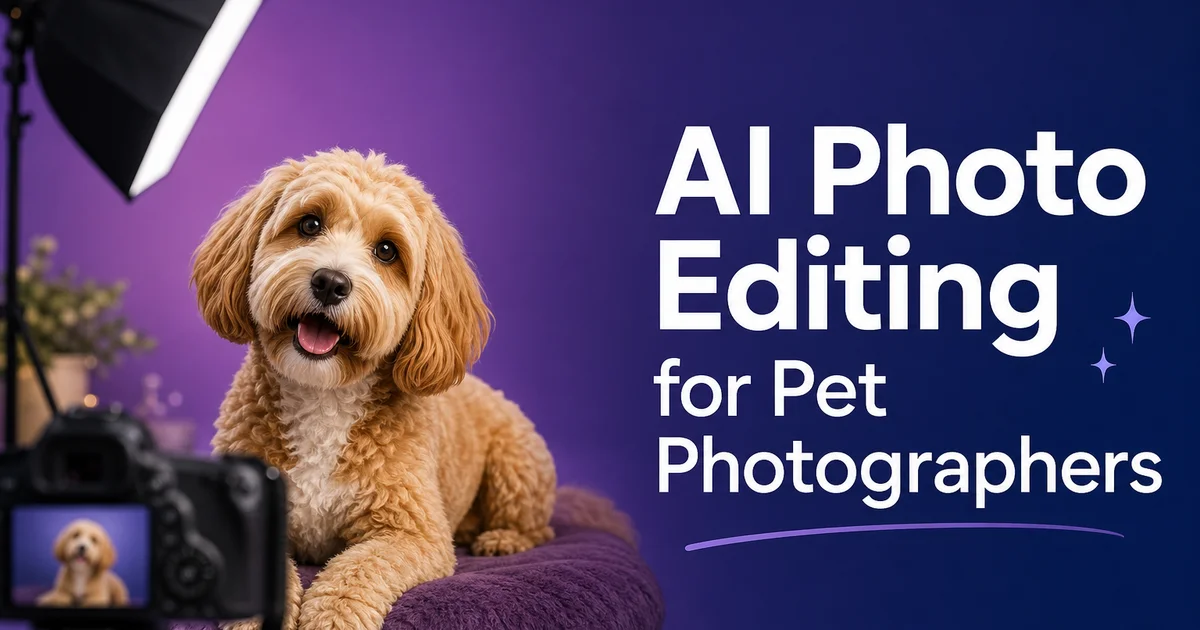
A fotografia de animais de estimação é um dos segmentos de crescimento mais rápido do mercado de fotografia profissional, impulsionada por uma mudança cultural na forma como as pessoas se relacionam com seus animais. Os donos cada vez mais tratam seus cães, gatos e outros animais de companhia como membros da família, e querem retratos que reflitam esse vínculo emocional com a mesma qualidade visual que esperariam de um fotógrafo de família. O desafio é que os animais estão entre os sujeitos fotográficos mais difíceis. Não seguem instruções, raramente ficam parados, movem-se de forma imprevisível, e seu pelo cria desafios de edição que os sujeitos humanos simplesmente não apresentam. Uma única sessão de fotografia de animais pode produzir trezentos quadros para obter vinte composições aproveitáveis. Mesmo os melhores desses vinte costumam precisar de um grande trabalho de pós-produção.
As ferramentas de edição de fotos com IA transformaram o fluxo de trabalho da fotografia de animais ao automatizar as correções técnicas mais demoradas, preservando ao mesmo tempo o caráter natural que torna cada animal único. O Magic Eraser remove as guias, os brinquedos e as distrações ambientais que abarrotam os cenários da fotografia de animais. O Background Eraser dá conta da tarefa notoriamente difícil de separar sujeitos peludos do fundo com uma precisão de bordas que levaria trinta minutos ou mais para alcançar manualmente. O AI Enhance realça a textura do pelo, a definição dos bigodes e os reflexos de luz nos olhos dos animais que transformam uma foto tecnicamente aceitável em um retrato emocionalmente potente. Juntas, essas ferramentas reduzem o tempo de edição por imagem de quinze a vinte minutos para dois ou três minutos sem sacrificar a qualidade.
Este guia cobre o fluxo de trabalho completo assistido por IA para a fotografia de animais, da estratégia de captura à entrega final. Quer você seja um fotógrafo de animais profissional atendendo clientes, um voluntário de abrigo criando anúncios de adoção, ou um dono que quer fotos melhores dos próprios animais, as técnicas tratadas aqui o ajudarão a produzir resultados sempre profissionais. A ênfase está em métodos práticos, de aplicação imediata, que funcionam com qualquer câmera. Incluindo smartphones, porque as ferramentas de IA assumem o trabalho técnico pesado que no passado exigia equipamentos caros e habilidades avançadas de edição.
- O Magic Eraser remove guias, brinquedos, tigelas de comida e distrações ambientais das fotos de animais, substituindo-os por conteúdo contextualmente apropriado por meio do inpainting com IA.
- O Background Eraser separa sujeitos peludos de fundos abarrotados com uma precisão de bordas que lida com pelos e bigodes um a um, uma tarefa que leva mais de trinta minutos manualmente.
- O AI Enhance aguça a textura do pelo, a definição dos bigodes e os reflexos de luz nos olhos, transformando fotos tecnicamente aceitáveis em retratos emocionalmente cativantes.
- O AI Filter aplica gradações de cor otimizadas para diferentes cores de pelo e atmosferas: tons quentes para animais dourados e alaranjados, tons frios para sujeitos pretos e cinzentos.
- O fluxo de trabalho completo com IA reduz o tempo de edição por imagem de quinze a vinte minutos para dois ou três minutos, mantendo uma qualidade de saída profissional.
Estratégia de captura: maximizar os quadros aproveitáveis de sujeitos imprevisíveis
A realidade fundamental da fotografia de animais é que sua taxa de sucesso por disparo é muitíssimo menor do que com sujeitos humanos. Um fotógrafo de retratos profissional trabalhando com um cliente humano adulto pode atingir uma taxa de aproveitamento de cinquenta por cento ou mais, porque o sujeito consegue manter poses, seguir instruções e sustentar expressões. Com animais, uma taxa de aproveitamento de dez a quinze por cento de uma rajada é considerada boa, e mesmo esses aproveitamentos costumam ter pequenos problemas. Um foco ligeiramente suave nos olhos, uma orelha em posição desajeitada, um elemento de fundo não percebido durante o disparo. Aceitar essa realidade e compensá-la com volume e velocidade é o primeiro passo rumo a uma fotografia de animais sempre bem-sucedida.
Os ajustes da câmera devem priorizar a velocidade acima de tudo. O modo de prioridade de abertura a f/2.8 a f/4 oferece profundidade de campo suficiente para manter todo o rosto em foco, ao mesmo tempo que conserva uma velocidade do obturador rápida o bastante para congelar o movimento. Para cães ativos, mude para prioridade de obturador a 1/1000s ou mais rápido. O foco automático contínuo com detecção do olho animal, disponível na maioria das câmeras modernas e em muitos smartphones, acompanha os olhos do sujeito enquanto se movem, aumentando muitíssimo a taxa de olhos nítidos em comparação ao foco de ponto único. Se sua câmera não tiver detecção do olho animal, foque no olho mais próximo e aceite que alguns quadros falharão quando o animal virar a cabeça entre o travamento do foco e a exposição.
A preparação do ambiente reduz a quantidade de pós-produção necessária depois. Antes de levar o animal à área de captura, examine o fundo e retire qualquer objeto que você possa mover fisicamente. Tigelas de água, brinquedos espalhados pelo chão, sapatos junto à porta, mangueiras de jardim no gramado. Cada distração física que você retira antes de disparar é um objeto a menos para apagar digitalmente depois. Para sessões ao ar livre, escolha sempre que possível locais com fundos limpos e desimpedidos: campos abertos, paredes de cor lisa, cercas simples. Quanto mais limpo o cenário de captura, menos tempo de edição cada imagem exige. Mais natural fica o resultado final, porque a IA tem menos trabalho de inpainting a fazer.
- Espere uma taxa de aproveitamento de dez a quinze por cento das rajadas com sujeitos animais: compense fotografando em modo contínuo de alta velocidade e revisando os quadros rapidamente entre as rajadas.
- Use prioridade de abertura a f/2.8 a f/4 para retratos ou prioridade de obturador a 1/1000s ou mais rápido para animais ativos, sempre com foco automático contínuo e detecção do olho animal ativados.
- Retire fisicamente as distrações do ambiente de captura antes do início da sessão: cada objeto retirado antes da captura economiza tempo de edição depois.
- Escolha locais de captura com fundos limpos — campos abertos, paredes lisas, cercas simples — para minimizar o trabalho de inpainting com IA exigido na pós-produção.
Remover distrações: guias, manipuladores e bagunça ambiental
Mesmo com uma preparação cuidadosa do ambiente, as fotos de animais quase sempre contêm elementos a remover na pós-produção. As guias são o culpado mais frequente. São necessárias por segurança durante as sessões ao ar livre, mas ancoram visualmente o animal a uma presença humana que rompe a ilusão de um momento natural e espontâneo. O Magic Eraser remove as guias com uma única pincelada, e o inpainting com IA preenche o traçado da guia com o que estaria ali naturalmente. O céu, a grama, o próprio corpo do animal onde a guia se sobrepõe ao sujeito. Para guias grossas ou de cores vivas que cruzam áreas de fundo complexas, talvez seja preciso processar a remoção em duas passagens: primeiro apagar a guia em si, depois limpar qualquer sombra ou contaminação de cor residual de sua presença.
As mãos e os pés dos manipuladores aparecem com frequência nas bordas de composições fechadas, sobretudo quando alguém segura o animal em posição ou oferece um petisco logo fora do quadro. Esses elementos humanos parciais são profundamente indesejados porque o cérebro do observador tenta instintivamente completar o corpo que falta, desviando a atenção do sujeito animal. O Magic Eraser remove essas intrusões de forma limpa, e como costumam estar nas bordas do quadro onde o fundo é mais simples, os resultados do inpainting são sempre excelentes. Da mesma forma, bolsas de petiscos, clickers e ferramentas de adestramento que possam aparecer no quadro devem ser apagados para manter o aspecto cuidado de um retrato profissional.
A bagunça de fundo em cenários internos — tomadas, aquecedores de rodapé, pés de móveis, passagens de cabos, espelhos de interruptores — cria um ruído visual que degrada a sensação profissional de um retrato de animal. Embora individualmente pequenos, esses elementos em conjunto fazem uma imagem parecer um instantâneo casual em vez de um retrato intencional. Uma passagem de limpeza sistemática com o Magic Eraser, indo das distrações maiores para as menores, transforma o fundo de uma realidade abarrotada em uma simplicidade limpa. A chave é a contenção: remova os elementos que distraem do sujeito, mas preserve os que fornecem contexto ou profundidade. Uma estante desfocada, uma almofada de sofá que ancora o animal numa sala de estar, uma cerca que estabelece um local externo.
- As guias são a distração mais frequente nas fotos de animais: o Magic Eraser as remove em uma única passagem, preenchendo o traçado com céu, grama ou textura corporal contextualmente apropriados.
- Mãos, pés, bolsas de petiscos e ferramentas de adestramento dos manipuladores nas bordas do quadro desviam a atenção do animal e devem ser apagados para manter a ilusão de um momento natural e espontâneo.
- A bagunça de fundo interna — tomadas, cabos, pés de móveis, espelhos de interruptores — degrada em conjunto a qualidade profissional e deve ser limpa sistematicamente do maior para o menor.
- Preserve os elementos de fundo que fornecem contexto ou profundidade úteis — uma estante desfocada, uma almofada de sofá que ancora — removendo apenas os elementos que distraem do sujeito animal.
Realce de pelo e olhos: os detalhes que tornam os retratos de animais cativantes
A textura do pelo é o detalhe mais importante da fotografia de animais porque compartilha a qualidade tátil que os donos associam ao seu vínculo emocional. A maciez do pelo de um filhote de gato, a textura áspera do pelo de um terrier, o brilho liso do pelo curto de um labrador. Quando o pelo parece macio e indefinido numa foto, o retrato fica plano e não consegue evocar a experiência sensorial de estar com o animal. O AI Enhance aborda isso aplicando uma nitidez inteligente que aumenta a definição de cada fio de pelo sem criar o aspecto duro e supernitidez que as ferramentas tradicionais de máscara de nitidez produzem. A IA distingue entre a textura do pelo a realçar e as áreas de fundo a manter suaves, aplicando intensidades de nitidez diferentes a diferentes regiões da imagem.
O realce dos olhos é o outro detalhe crucial porque os olhos são o principal ponto de conexão emocional de qualquer retrato, humano ou animal. Um retrato de animal cujos olhos estão ligeiramente suaves, ligeiramente escuros ou sem seus reflexos de luz parece emocionalmente plano. A mesma composição com olhos nítidos, brilhantes e ricos em reflexos parece viva e envolvente. O AI Enhance mira especificamente nos olhos, aumentando a clareza e realçando o detalhe da íris, o reflexo da fonte de luz na córnea (o reflexo de luz). As sutis variações de cor que dão aos olhos dos animais sua profundidade e seu caráter. Para raças de olhos escuros cuja íris é quase preta, o realce revela os sutis tons castanhos e âmbar presentes, mas não visíveis na exposição original.
Tipos de pelo diferentes exigem abordagens de realce diferentes. As raças de pelo longo — gatos persas, golden retrievers, galgos afegãos — beneficiam-se de uma nitidez moderada que realça o fluxo e a sobreposição do pelo sem criar uma nitidez artificial no que deveria ser pelo macio e fluido. As raças de pelo curto — boxers, gatos siameses, dobermanns — beneficiam-se de uma nitidez mais forte que revela o padrão de cada pelo e o modo como a luz brinca sobre a superfície do pelo justo. As raças de pelo encaracolado — poodles, bichons frisés, cães d'água portugueses — precisam de um realce cuidadoso que defina a estrutura do cacho sem supernitidez da textura num aspecto antinatural e crocante. O AI Enhance adapta seu processamento conforme o padrão de textura detectado. Você também pode ajustar a intensidade manualmente para obter o aspecto específico que deseja para cada animal.
- O AI Enhance aplica ao pelo uma nitidez inteligente que aumenta a definição de cada fio de pelo sem o aspecto duro e superprocessado das ferramentas tradicionais de máscara de nitidez.
- O realce dos olhos mira especificamente nos reflexos de luz, no detalhe da íris e nas sutis variações de cor, transformando olhos animais planos em pontos focais emocionalmente envolventes.
- As raças de pelo longo beneficiam-se de uma nitidez moderada que preserva o fluxo, enquanto as de pelo curto se beneficiam de um realce mais forte que revela os padrões de cada pelo e os jogos de luz.
- As raças de pelo encaracolado precisam de um realce cuidadoso que defina a estrutura do cacho sem supernitidez: o AI Enhance se adapta automaticamente, mas permite ajustar a intensidade manualmente por imagem.
Substituição de fundo para resultados com qualidade de estúdio a partir de qualquer lugar
Os estúdios profissionais de fotografia de animais investem milhares de dólares em fundos de papel sem emendas, iluminação especializada e cenários controlados, mas a maior parte da fotografia de animais acontece em casas, parques, quintais e abrigos onde o cenário é tudo menos controlado. O Background Eraser supera essa distância ao separar o animal de qualquer fundo diante do qual foi fotografado e colocá-lo sobre uma alternativa limpa e profissional. A qualidade da separação é crucial porque as bordas do pelo estão entre os sujeitos mais desafiadores para qualquer ferramenta de mascaramento. Pelos isolados estendem-se além do contorno principal do corpo, os bigodes criam finas linhas semitransparentes, e o espaço entre orelhas eretas pode mostrar um fundo a remover enquanto o interior da orelha deve ser preservado.
O Background Eraser enfrenta esses desafios por meio de uma detecção de bordas com IA treinada especificamente em sujeitos animais. O sistema reconhece os limites do pelo, os traçados dos bigodes e os formatos das orelhas como tipos de borda distintos que exigem abordagens de processamento diferentes. As bordas sólidas do corpo recebem uma separação limpa e precisa. As franjas de pelo recebem uma transparência graduada que preserva a maciez natural da borda do pelo. Os bigodes recebem uma conservação em linha fina que mantém sua visibilidade sem deixar cor de fundo aderida. O resultado é uma separação de aspecto natural e profissional, pronta para ser colocada sobre qualquer fundo. Um degradê cinza de estúdio, um jardim salpicado de sol, um branco liso para e-commerce, ou um fundo personalizado com a marca de um cliente do setor de animais.
Para abrigos e organizações de resgate, a substituição de fundo é especialmente valiosa porque as fotos de anúncios de adoção costumam ser tiradas em cenários visualmente pouco atraentes. Pisos de canil de concreto, cercas de tela de arame, paredes institucionais, que criam associações negativas e reduzem o interesse pela adoção. Substituir esses fundos por cenários acolhedores e caseiros mostrou aumentar a taxa de consultas de adoção, porque os possíveis adotantes conseguem visualizar com mais facilidade o animal na própria casa. O Background Eraser torna essa mudança possível em escala, permitindo que voluntários de abrigo processem dezenas de fotos de adoção em uma única sessão, em vez de passar horas mascarando cada animal manualmente.
- O Background Eraser usa uma detecção de bordas com IA treinada em sujeitos animais, reconhecendo franjas de pelo, traçados de bigodes e formatos de orelhas como tipos de borda distintos que exigem abordagens de separação diferentes.
- As bordas do pelo recebem transparência graduada, os bigodes recebem conservação em linha fina e as bordas sólidas do corpo recebem separação precisa, tudo tratado automaticamente sem refinamento manual.
- As opções de fundo incluem degradês de estúdio, cenas naturais ao ar livre, branco liso para e-commerce e fundos personalizados com a marca para clientes do setor de animais.
- As fotos de adoção dos abrigos beneficiam-se enormemente da substituição de fundo: trocar o concreto institucional e a tela de arame por cenários acolhedores e caseiros aumenta a taxa de consultas de adoção.
Eficiência do fluxo de trabalho: processamento em lote e entrega para fotógrafos de animais profissionais
Os fotógrafos de animais profissionais que realizam várias sessões por semana precisam de um fluxo de trabalho de edição que escale sem sacrificar a qualidade. Uma única sessão de fotografia de animais costuma produzir de duzentos a quatrocentos quadros brutos, dos quais vinte a quarenta selecionados precisam de edição completa antes da entrega ao cliente. A quinze a vinte minutos de edição manual por imagem, isso representa de cinco a treze horas de pós-produção para uma única sessão. Uma carga de trabalho insustentável quando combinada com captura, comunicação com o cliente e administração do negócio. As ferramentas de IA comprimem esse cronograma de edição automatizando as etapas técnicas repetitivas e deixando as decisões criativas ao fotógrafo.
O fluxo de trabalho mais eficiente processa as imagens em lotes organizados por tipo de edição em vez de trabalhar cada imagem uma após a outra. Primeiro, passe todas as selecionadas pelo AI Enhance para cuidar das melhorias técnicas universais. Nitidez, redução de ruído, realce dos olhos e correção de exposição. Em segundo lugar, processe em lote todas as imagens que precisam de limpeza de fundo com o Magic Eraser, lidando com as distrações que apareceram constantemente ao longo da sessão. Em terceiro lugar, processe as imagens que exigem substituição completa de fundo com o Background Eraser, aplicando o mesmo fundo substituto para manter a consistência visual em todo o conjunto. Por fim, aplique uma gradação de cor com o AI Filter a todo o lote, usando o mesmo preset para um aspecto coeso em todas as imagens entregues.
A entrega ao cliente na fotografia de animais tem necessidades próprias que diferem da fotografia de retrato humano. Os donos costumam querer uma proporção maior de fotos de ação e momentos espontâneos do que de retratos posados. Eles valorizam expressões de aspecto natural acima da composição tecnicamente perfeita. Isso significa que sua edição deve concentrar-se em preservar o caráter natural do animal. Seu sorriso bobo, a posição alerta das orelhas, sua linguagem corporal brincalhona, mais do que atingir a perfeição técnica. As ferramentas de IA ajudam aqui ao cuidar automaticamente da limpeza técnica, liberando você para dedicar seu limitado tempo de edição manual às decisões criativas que preservam a personalidade de cada animal. O resultado são prazos de entrega mais rápidos, uma qualidade mais constante. Clientes mais felizes que recebem os retratos de seu animal em dias, em vez de semanas após a sessão.
- Processe as imagens em lote por tipo de edição — realce primeiro, depois remoção de distrações, substituição de fundo e gradação de cor — em vez de trabalhar cada imagem do início ao fim uma após a outra.
- As ferramentas de IA comprimem o tempo de edição por sessão de cinco a treze horas para uma a três horas, mantendo ou melhorando a qualidade de saída em comparação ao processamento manual.
- Aplique uma gradação de cor e um tratamento de fundo consistentes em todo o conjunto de entrega, para uma coesão visual que reforce sua identidade de marca como fotógrafo de animais.
- Priorize preservar o caráter natural e a personalidade do animal acima da perfeição técnica: a IA cuida automaticamente da limpeza técnica, liberando a atenção criativa para a expressão e a personalidade.
How to do it
- 1
Capture the shot with speed priority and burst mode enabled
Animals are unpredictable subjects that rarely hold still on command. Shoot in burst mode with a fast shutter speed to maximize your chances of capturing the perfect expression and pose. A shutter speed of at least 1/500s freezes most pet movements. 1/1000s is necessary for running dogs or jumping cats. Accept that most frames in a burst will be imperfect. The goal is to get one or two frames with great expression and acceptable technical quality, knowing that AI tools will handle the remaining imperfections in post-processing.
- 2
Remove distracting background elements with Magic Eraser
Pet photography settings are rarely clean. There are leashes, toys, food bowls, other people's legs, trash cans, and dozens of other visual distractions that compete with the animal subject. Use Magic Eraser to remove these unwanted elements from the frame. The AI inpainting fills the removed areas with contextually right content. Grass where there was a leash on a lawn, wall texture where there was a light switch behind an indoor portrait. This cleanup step transforms a casual snapshot into a professional-looking portrait by eliminating everything that pulls the viewer's eye away from the animal.
- 3
Enhance fur detail and eye sharpness with AI Enhance
Fur texture is the pet photography equivalent of skin detail in human portraiture. It is what separates a strong close-up from a flat, lifeless image. Run AI Enhance to sharpen fur detail, bringing out individual hair definition, whisker clarity. The subtle texture variations between different parts of the animal's coat. Pay special attention to the eyes, which are the emotional anchor of any animal portrait. AI Enhance increases eye clarity, bringing out the catchlight reflections and iris detail that make a pet portrait feel alive and emotionally engaging.
- 4
Clean up or replace the background with Background Eraser
If the original background is too cluttered for Magic Eraser cleanup or simply does not match the look you want, use Background Eraser to remove it fully and replace it with a clean studio backdrop, a natural outdoor scene, or a gradient that complements the animal's coloring. Background Eraser handles the complex edge detection required by fur. Individual hairs, whiskers, and the semi-transparent edges of thin-coated breeds — far better than manual masking, which often takes thirty minutes or more per image when dealing with detailed animal outlines.
- 5
Apply color grading and final adjustments with AI Filter
Finish the edit by applying color grading that enhances the mood and visual appeal of the portrait. Warm tones work well for golden retrievers and orange cats, emphasizing their coat colors and creating an inviting, cozy feel. Cool tones suit black and grey animals, adding depth and drama to their darker coloring. AI Filter offers preset styles optimized for different looks. Options range from bright and airy studio aesthetics to moody natural-light feels — and each preset can be adjusted in intensity so the color treatment enhances the image without overpowering the subject.
Fontes
- Pet Photography Market Size and Growth Trends — Grand View Research
- Understanding Animal Behavior for Better Photography — National Geographic
- Professional Pet Photography: Lighting and Posing Techniques — B&H Photo