
Edição de fotos com IA para enólogos — Magic Eraser
Como enólogos e cientistas do vinho usam a edição de fotos com IA para documentar a cor do vinho com precisão, aprimorar imagens de vinhedos, criar displays de degustação comparativa e produzir fotografia de vinho pronta para publicação.

Product Marketing
Revisado por Magic Eraser Editorial ·
Índice
- Aprimorando a documentação de cor do vinho para registros de degustação precisos e rastreamento de safras
- Removendo desordem de laboratório e ambiental para fotografia profissional de vinho
- Criando arrays de comparação padronizados para análise varietal e de safra
- Documentação de vinhedo: saúde do dossel, desenvolvimento de bagas e identificação de doenças
- Construindo um portfólio visual profissional do vinhedo ao copo para marketing de vinhos
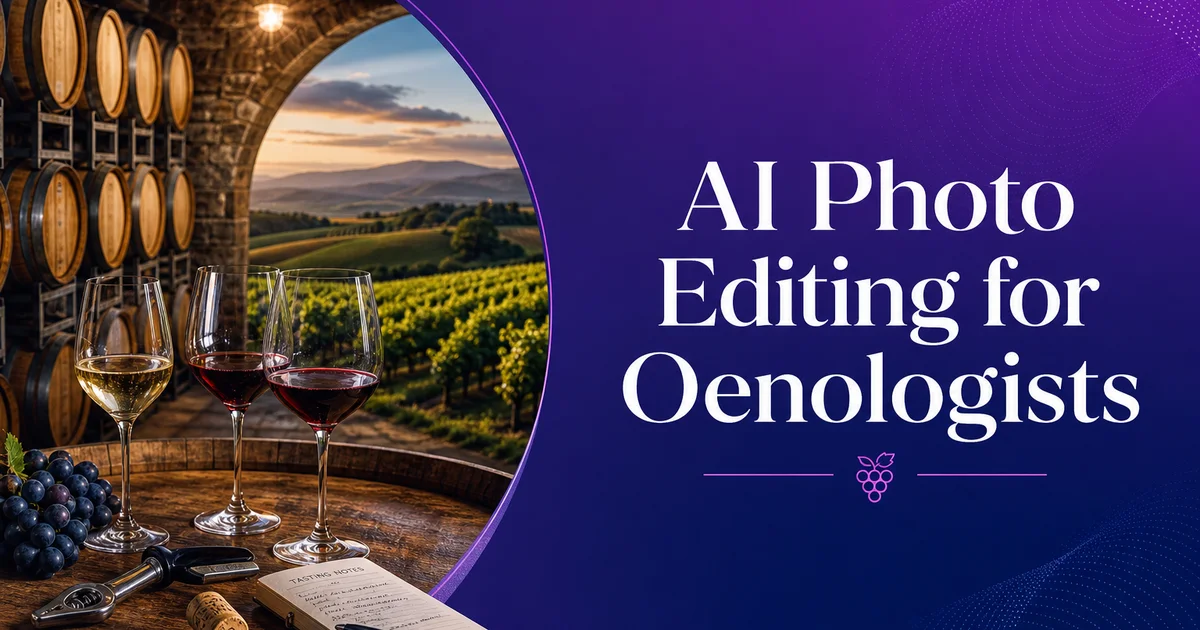
A enologia — a ciência e o estudo do vinho e da vinificação — é uma disciplina em que a documentação visual desempenha um papel notavelmente central tanto na análise científica quanto na comunicação entre especialistas. A cor do vinho é um dos primeiros e mais informativos indicadores de qualidade avaliados durante uma degustação formal, fornecendo informação imediata sobre casta, idade, estado de oxidação. Defeitos potenciais antes mesmo de o vinho ser cheirado ou provado. A tonalidade precisa na borda em comparação com o centro de uma taça inclinada, a profundidade da saturação de cor, a limpidez ou a turvação do líquido. A presença de sedimentos ou depósitos cristalinos carregam todos um significado diagnóstico que os enólogos devem documentar com precisão para registros de safras, acompanhamento do desenvolvimento de cortes, controle de qualidade da produção e publicação acadêmica. Além da taça, a fotografia enológica abrange a documentação do vinhedo. O desenvolvimento da cor das bagas durante o amadurecimento, a avaliação da saúde do dossel, os perfis de solo e a identificação de doenças — que informam as decisões vitícolas com consequências diretas na vinificação.
Fotografar o vinho com precisão é muito mais exigente do ponto de vista técnico do que a maioria das pessoas imagina. A cor do vinho é percebida através da luz transmitida. O olho avalia uma fina coluna de líquido mantida diante de um fundo branco — mas as câmeras captam simultaneamente a luz refletida na superfície da taça, a luz refratada através das paredes curvas da taça e a luz transmitida através do vinho, produzindo imagens que raramente correspondem ao que o olho humano percebe durante a avaliação direta. As condições de iluminação do laboratório, a limpeza da taça, a cor da superfície de fundo. O balanço de branco da câmera introduzem todos variáveis que tornam a comparação de cores entre fotografias pouco confiável a menos que seja cuidadosamente controlada. A fotografia de vinhedo apresenta desafios diferentes: iluminação externa inconsistente, folhagem agitada pelo vento. A complexidade visual dos dosséis da videira que torna difícil isolar e documentar condições vegetais específicas.
As ferramentas de edição de fotos com tecnologia de IA abordam os desafios documentais específicos do enólogo ao aprimorar a precisão da cor e a clareza visual das quais a ciência do vinho depende, ao mesmo tempo que agilizam o fluxo de produção para o volume de imagens que as operações modernas das vinícolas geram. AI Enhance afia os sutis gradientes de cor dentro das taças de vinho que distinguem casta, idade e estágio de maturação. Magic Eraser remove a desordem de laboratório e as distrações ambientais que comprometem o impacto visual da documentação do vinho. Background Eraser cria matrizes de comparação padronizadas em que vinhos de diferentes sessões são apresentados sobre fundos consistentes para uma avaliação visual confiável. Este guia cobre a aplicação prática de cada ferramenta aos fluxos de trabalho enológicos, da documentação de adega até o marketing de vinho voltado ao consumidor.
- AI Enhance esclarece os sutis gradientes de cor da borda ao centro que distinguem castas de vinho, safras e estágios de maturação — informação diagnóstica frequentemente perdida na fotografia padrão.
- Magic Eraser remove equipamentos de laboratório, reflexos na taça e desordem ambiental para criar fotografia de vinho pronta para publicação em contextos técnicos e voltados ao consumidor.
- Background Eraser cria matrizes de comparação padronizadas em que vinhos de diferentes sessões aparecem sobre fundos uniformes, permitindo uma avaliação visual confiável entre sessões.
- A otimização da precisão da cor compensa a luz mista refletida, refratada e transmitida que torna a fotografia de vinho notoriamente difícil de reproduzir fielmente.
- O processamento em lote lida com o volume de imagens de documentação que as operações modernas das vinícolas geram através de safras, lotes de barricas e estágios de produção ao longo do ciclo anual.
Aprimorando a documentação de cor do vinho para registros de degustação precisos e rastreamento de safras
A cor do vinho carrega uma densidade extraordinária de informação para um enólogo treinado. A tonalidade na borda de uma taça inclinada. Onde a camada de vinho é mais fina e a cor mais fácil de avaliar — revela a idade e a casta do vinho de forma mais confiável do que quase qualquer outra observação isolada. Os vinhos tintos jovens exibem tons azul-violáceos na borda que se deslocam gradualmente através do vermelho rubi para o granada, depois para o laranja atijolado e, por fim, o marrom âmbar à medida que os taninos polimerizam e precipitam ao longo de anos de envelhecimento. Os vinhos brancos progridem de um ouro com reflexos esverdeados pálidos através de um ouro intenso até o âmbar. Essas mudanças seguem vias químicas previsíveis, e a tonalidade exata em qualquer ponto da vida de um vinho fornece um carimbo temporal do seu desenvolvimento que os enólogos usam para avaliar se um vinho está evoluindo normalmente, prematuramente ou com uma resiliência incomum.
AI Enhance aborda o desafio específico de capturar esses gradientes de cor diagnósticos em fotografias. A fotografia padrão tende a achatar as sutis transições de tonalidade dentro de uma taça de vinho, comprimindo o gradiente da borda ao centro em um campo de cor mais uniforme que perde a informação analítica que o enólogo percebeu durante a avaliação direta. O algoritmo de realce detecta líquido em recipientes de vidro e aumenta seletivamente a diferenciação de cor dentro da coluna de vinho, separando a tonalidade da borda da transição da zona intermediária da profundidade do centro de uma maneira que preserva o gradiente visível ao olho humano. O resultado é uma fotografia que transmite o perfil de cor do vinho com tanta precisão quanto a nota de degustação que o enólogo escreveu enquanto olhava para a taça real.
O acompanhamento de safras ao longo de anos de envelhecimento em adega beneficia-se enormemente de uma documentação de cor aprimorada, porque a evolução da cor ao longo do tempo é um dos principais indicadores da trajetória de desenvolvimento de um vinho. Uma vinícola que acompanha um tinto premium ao longo de cinco anos de envelhecimento em barrica e dez anos de envelhecimento em garrafa gera dezenas de fotografias de documentação de cor para cada safra. A capacidade de comparar essas imagens de forma confiável depende de uma precisão de cor consistente entre sessões que podem abranger uma década. AI boost normaliza a representação da cor entre fotografias tiradas sob diferentes condições de iluminação e com câmeras diferentes, criando uma linha do tempo visual coerente em que a evolução da cor é atribuível à química do vinho em vez de a variáveis fotográficas.
- A progressão da tonalidade da borda — do violeta ao rubi ao granada ao atijolado ao âmbar — segue vias químicas previsíveis que fornecem carimbos temporais de desenvolvimento precisos aos enólogos treinados.
- O realce por IA aumenta seletivamente a diferenciação de cor dentro da coluna de vinho, separando as tonalidades da borda, da zona intermediária e do centro que a fotografia padrão comprime em um campo uniforme achatado.
- As fotografias aprimoradas transmitem perfis de cor do vinho que correspondem à informação analítica percebida durante a avaliação direta da taça, melhorando a precisão dos registros de degustação fotográficos.
- A normalização da cor entre fotografias tiradas ao longo de anos de envelhecimento cria linhas do tempo visuais coerentes em que a evolução é atribuível à química do vinho em vez de à inconsistência fotográfica.
Removendo desordem de laboratório e ambiental para fotografia profissional de vinho
A avaliação do vinho ocorre frequentemente em ambientes de trabalho. Bancadas de laboratório abarrotadas de equipamentos analíticos, salas de degustação com várias garrafas abertas e adegas com barricas, mangueiras e equipamentos de limpeza em cada quadro. Embora esses ambientes sejam o contexto autêntico do trabalho enológico, sua desordem visual prejudica a eficácia da fotografia de vinho para todo propósito além da documentação interna informal. As publicações técnicas exigem imagens limpas em que a amostra de vinho seja o ponto focal claro. Os materiais de marketing precisam de fotografia polida que transmita qualidade sem a realidade industrial das operações da vinícola. Até mesmo as notas de degustação internas beneficiam-se de imagens limpas, porque a desordem visual nas fotografias cria interferência cognitiva durante a revisão posterior, dificultando concentrar a atenção nas características de cor e limpidez do vinho.
Magic Eraser lida com os tipos específicos de desordem que a fotografia de vinho acumula. Remova o medidor de pH e a bureta de titulação visíveis atrás da taça de degustação em uma fotografia de avaliação de laboratório. Remova a fileira de garrafas reserva, as folhas de degustação amassadas. A cuspideira que povoa o fundo de uma sessão de painel de degustação. Remova a mangueira, a conexão da bomba e a chave de batoque da barrica visíveis em uma fotografia de amostragem de adega. Para imagens de vinhedo, remova as ferragens do fio de espaldeira, os tubos de irrigação por gotejamento, o equipamento da estação meteorológica. Os postes da fileira vizinha que entulham os primeiros planos dos cachos de uva. Cada remoção é preenchida com um fundo contextualmente apropriado. Superfície de bancada limpa, parede neutra da sala de degustação, pedra da adega — que mantém o ambiente autêntico sem os detalhes indesejados.
Os artefatos na superfície do vidro apresentam um desafio particular na fotografia de vinho que a remoção por IA aborda bem. As taças de vinho acumulam impressões digitais durante o manuseio, manchas de água do enxágue. Reflexos do fotógrafo, do equipamento de iluminação e do ambiente circundante em suas superfícies curvas. Esses artefatos são visualmente proeminentes porque as superfícies de vidro são altamente reflexivas. Eles competem com o próprio vinho pela atenção do espectador. A remoção por IA de impressões digitais, manchas de água e reflexos indesejados das superfícies de vidro produz a aparência impecável da cristaleria que a fotografia especializada de vinho exige. Superfícies que parecem recém-polidas e mostram apenas o vinho e a iluminação intencional que o ilumina, sem os vestígios de manuseio que acompanham a avaliação do vinho no mundo real.
- Os ambientes de trabalho do vinho — laboratórios, salas de degustação, adegas — enchem os fundos fotográficos de equipamentos analíticos, múltiplas garrafas e ferramentas operacionais que distraem das amostras de vinho.
- A remoção direcionada elimina itens específicos de desordem enquanto preserva os ambientes autênticos, mantendo o contexto ambiental sem o ruído visual que compromete o foco analítico.
- A remoção de artefatos na superfície do vidro aborda impressões digitais, manchas de água e reflexos que competem com o próprio vinho pela atenção do espectador nas superfícies altamente reflexivas da cristaleria de degustação.
- A fotografia limpa transmite rigor profissional em publicações técnicas e percepção de qualidade em materiais para o consumidor, servindo a um duplo propósito de documentação analítica e de marketing.
Criando arrays de comparação padronizados para análise varietal e de safra
A análise visual comparativa é fundamental na prática enológica. Comparar vinhos lado a lado para avaliar opções de corte, acompanhar o desenvolvimento da safra, avaliar características varietais e identificar defeitos. Pessoalmente, essa comparação acontece com taças dispostas sobre uma superfície branca sob iluminação controlada. Na documentação, a comparação exige que cada imagem de vinho tenha sido capturada em condições idênticas. A mesma iluminação, o mesmo fundo, o mesmo tipo de taça, as mesmas configurações de câmera — o que é difícil de alcançar quando as imagens são capturadas através de diferentes sessões, locais e períodos de tempo. Um enólogo que compara amostras de barrica de janeiro com amostras das mesmas barricas em abril precisa que ambos os conjuntos de imagens sejam visualmente consistentes para que a comparação tenha valor analítico.
Background Eraser resolve o desafio da consistência ao extrair as taças de vinho de seus contextos fotográficos originais e colocá-las sobre um fundo uniforme. Essa normalização remove todas as variáveis ambientais. Diferentes superfícies de bancada, diferentes cores de iluminação, diferentes objetos de fundo — deixando apenas o vinho na taça como elemento variável na comparação. Uma vertical de cinco safras do mesmo vinho fotografadas ao longo de cinco anos diferentes em cinco condições de iluminação diferentes pode ser montada em uma única matriz de comparação em que as únicas diferenças visíveis são as verdadeiras diferenças de cor e limpidez entre os vinhos. Essa capacidade transforma o arquivo de imagens do enólogo de uma coleção de fotografias capturadas de forma inconsistente em um banco de dados visual padronizado em que qualquer vinho pode ser comparado de forma confiável com qualquer outro.
O isolamento de cachos de uva serve a um propósito analítico paralelo na documentação vitícola. Durante o pintor — o início do amadurecimento quando a casca da uva muda de cor — os enólogos acompanham a progressão do desenvolvimento da cor através das parcelas do vinhedo para determinar o momento da colheita e prever o estilo do vinho. Fotografar os cachos no vinhedo os captura cercados de folhas, gavinhas, fio de espaldeira. Cachos adjacentes que tornam difícil avaliar a distribuição de cor do cacho específico. Background Eraser isola cachos individuais sobre um fundo limpo, revelando a porcentagem exata de bagas que completaram o pintor, a uniformidade do desenvolvimento da cor. A presença de qualquer doença ou dano que afete a avaliação da qualidade. Essas imagens de cachos isolados apoiam as decisões de viticultura de precisão sobre a colheita diferenciada através das parcelas do vinhedo.
- A análise comparativa exige consistência visual entre imagens capturadas em diferentes sessões, locais e períodos de tempo — condições raramente alcançáveis sem normalização em pós-processamento.
- A extração de fundo remove variáveis ambientais para criar matrizes de comparação padronizadas em que apenas a cor e a limpidez do vinho diferem, transformando arquivos em bancos de dados visuais confiáveis.
- O isolamento de cachos de uva revela porcentagens exatas de progressão do pintor, uniformidade do desenvolvimento da cor e presença de doença sem a interferência visual dos elementos circundantes do vinhedo.
- As matrizes padronizadas apoiam tanto decisões técnicas — avaliação de corte, momento da colheita, identificação de defeitos — quanto as apresentações educativas que conectam a ciência à compreensão do consumidor.
Documentação de vinhedo: saúde do dossel, desenvolvimento de bagas e identificação de doenças
O vinhedo é onde a qualidade do vinho começa. Os enólogos usam cada vez mais a documentação fotográfica para acompanhar as condições vitícolas que determinam o caráter de cada safra. O manejo do dossel — a configuração dos ramos da videira, das folhas. O fruto para otimizar a exposição ao sol, a circulação de ar e a maturação da uva — é avaliado visualmente ao longo da estação de crescimento, e a documentação fotográfica permite uma comparação entre safras que revela o impacto de diferentes estratégias de manejo. A proporção de fruto exposto em relação ao sombreado, a densidade e distribuição das camadas de folhas. A arquitetura geral do dossel influenciam todas a composição da uva e são mais bem acompanhadas por meio de uma documentação fotográfica sistemática aprimorada para a clareza analítica.
AI Enhance afia os detalhes diagnósticos nas fotografias de vinhedo que informam as decisões de manejo. As mudanças de cor da casca das bagas durante o pintor só são visíveis por meio de um exame minucioso de bagas individuais dentro de um cacho. Boost traz essas sutis transições de cor a uma visibilidade clara na resolução necessária para a avaliação. Os sintomas foliares de deficiências nutricionais — clorose internerval por deficiência de magnésio, necrose marginal por deficiência de potássio, descoloração vermelha por deficiência de fósforo — apresentam-se como sutis mudanças de cor nas folhas facilmente confundidas na fotografia de campo não aprimorada. A identificação de doenças depende de características visuais frequentemente diminutas. As manchas oleosas do míldio, o revestimento pulverulento do oídio, a penugem cinza da botrite em diferentes estágios de infecção — e boost torna essas características diagnósticas claramente visíveis nas fotografias usadas para consulta remota com fitopatologistas.
A documentação de perfis de solo apoia a análise de terroir que conecta as condições geológicas ao caráter do vinho. Os enólogos e cientistas do solo fotografam perfis de trincheira que mostram a estrutura estratificada dos solos do vinhedo. Profundidade do solo superficial, composição do subsolo, teor de fragmentos rochosos, profundidade de penetração das raízes e características de drenagem. Essas fotografias de perfil exigem detalhe nítido para distinguir entre tipos de solo, identificar limites de estratificação e documentar padrões de crescimento das raízes. AI Enhance afia as distinções de textura entre as camadas de solo, esclarece as diferenças de cor que indicam composição mineral e condições de drenagem. Revela as estruturas finas de raízes que indicam a saúde da videira e a exploração do solo. Os perfis de solo aprimorados apoiam a caracterização do terroir que conecta as condições geológicas às qualidades sensoriais do vinho tanto em publicações científicas quanto em narrativas de marketing de vinhos premium.
- A avaliação do manejo do dossel por meio de fotografia sistemática permite uma comparação safra a safra da densidade das camadas de folhas, da exposição do fruto e da arquitetura que influencia a composição da uva.
- O realce por IA afia as transições de cor da casca das bagas durante o pintor, os sintomas foliares de deficiência nutricional e as diminutas características diagnósticas de doença para a consulta remota com o patologista.
- A documentação de perfis de solo exige detalhe nítido para distinguir os limites das camadas, as cores da composição mineral e os padrões de penetração das raízes que apoiam a caracterização do terroir.
- A fotografia de vinhedo aprimorada serve a um duplo propósito científico e de marketing, conectando a precisão vitícola às narrativas de terroir que as marcas de vinho premium usam para a comunicação com o consumidor.
Construindo um portfólio visual profissional do vinhedo ao copo para marketing de vinhos
O marketing de vinho moderno depende cada vez mais da narrativa visual que leva os consumidores a uma jornada do vinhedo à taça, conectando a realidade agrícola e científica da vinificação à experiência sensorial de beber vinho. Os enólogos que produzem documentação fotográfica de alta qualidade de todo o processo de produção criam uma biblioteca de ativos visuais da qual as equipes de marketing podem se valer para sites, redes sociais, design de rótulos, exibições em salas de degustação e apresentações comerciais. A qualidade visual coerente alcançada por meio de um AI boost consistente em todos os tipos de imagem. Paisagens de vinhedo, primeiros planos de uvas, operações de adega, amostras de barrica e vinho finalizado na taça — cria uma identidade visual especializada que distingue os produtores de vinho sérios das operações que dependem de fotografia de banco de imagens genérica.
O engajamento nas redes sociais para marcas de vinho depende de uma fotografia que transmita tanto realismo científico quanto apelo visual. Um equilíbrio que a documentação enológica aprimorada para exibição alcança naturalmente. Uma fotografia de amostra de barrica que mostra a cor autêntica do vinho em uma imagem limpa e apresentada de forma especializada satisfaz simultaneamente o desejo do entusiasta de vinho por realismo dos bastidores e os padrões de qualidade visual que impulsionam o engajamento em plataformas centradas em imagens. A fotografia de vinhedo aprimorada que revela o detalhe do desenvolvimento das bagas ou a textura do solo do terroir conta uma história que ressoa com um público cada vez mais interessado na transparência agrícola e no realismo da produção. Essas imagens superam a fotografia de vinho de estilo de vida genérica porque oferecem conteúdo autêntico em vez de artificialidade encenada.
A documentação comercial e de imprensa beneficia-se do mesmo fluxo de trabalho de boost aplicado à fotografia técnica que os enólogos produzem ao longo do ciclo da safra. Os jornalistas do comércio do vinho, os sommeliers e os importadores avaliam as vinícolas em parte por meio da qualidade de sua documentação visual. A fotografia especializada transmite uma vinificação especializada, enquanto as imagens amadoras sugerem uma operação amadora independentemente da qualidade real do vinho. As fotografias de documentação aprimoradas por IA, limpas da desordem de laboratório e otimizadas para a precisão da cor, fornecem os ativos visuais polidos que apoiam comunicados de imprensa, exibições em feiras comerciais, submissões de portfólios de importação e propostas de colocação em restaurantes. As mesmas imagens que servem a fins técnicos internos tornam-se ativos de marketing externos por meio de boost e limpeza, maximizando o retorno sobre o esforço de documentação fotográfica que a prática enológica já exige.
- Um realce de IA coerente em todos os tipos de imagem — vinhedo, adega, barrica, taça — cria uma identidade visual coerente que distingue os produtores sérios dos usuários de fotografia de banco de imagens genérica.
- A fotografia para redes sociais que combina autenticidade científica com apresentação profissional supera as imagens de estilo de vida encenadas ao oferecer conteúdo de produção autêntico que o público valoriza.
- A documentação comercial e de imprensa beneficia-se de uma fotografia técnica aprimorada que comunica uma vinificação profissional por meio da qualidade visual percebida por jornalistas, sommeliers e importadores.
- As imagens de duplo propósito servem simultaneamente à documentação técnica interna e à comunicação de marketing externa, maximizando o retorno sobre o esforço fotográfico que a prática enológica já exige.
How to do it
- 1
Photograph wines, vineyards, and lab analyses under controlled and consistent conditions
Document each wine sample against a standardized white background with consistent lighting to enable accurate color comparison across vintages and production stages. Photograph wines in ISO-standard tasting glasses tilted at a forty-five-degree angle over a white surface to capture the color gradient from rim to core that reveals age and variety traits. For vineyard records, capture vine canopy, berry clusters, and soil profiles under consistent daylight conditions. Lab photographs should include reference color cards and measurement scales to maintain accuracy across records sessions.
- 2
Use AI Enhance to sharpen color detail in wine samples and vineyard imagery
Run AI Enhance on wine photography to clarify the subtle color gradients that distinguish wine varieties, vintages, and maturation stages. The orange-amber rim of an aged Nebbiolo, the purple-blue tint at the core of young Malbec, the golden-green highlights of a Riesling. Boost sharpens the clarity and brilliance distinctions that oenologists assess during visual evaluation, making haze, protein instability. Crystalline deposits visible in photographs that would otherwise require direct glass inspection. For vineyard images, boost reveals the fine detail of berry skin color changes during veraison and the foliar symptoms of nutrient deficiencies or disease.
- 3
Remove visual distractions with Magic Eraser for publication-ready wine documentation
Use Magic Eraser to remove laboratory equipment, extraneous glassware, background bottles. Environmental clutter from wine photography intended for technical publications, tasting notes, and marketing materials. Remove fingerprints and water spots from glass surfaces, eliminate reflections of the photographer or lighting equipment in wine glass surfaces. Clean up the background of vineyard photographs to focus attention on the vine canopy or grape cluster being documented. Clean images share expert rigor in technical contexts and visual appeal in consumer-facing materials.
- 4
Use Background Eraser to isolate wine glasses and grape clusters for comparative displays
Extract individual wine glasses from their photographed settings to create standardized comparison arrays. A flight of five vintages against a uniform white background, a progression of color development from barrel samples taken at three-month intervals, or a varietal comparison showing the trait color profiles of different grapes from the same vintage. Similarly, isolate individual grape clusters for berry color analysis without the visual noise of surrounding foliage, trellis hardware, and neighboring vines. These isolated comparison sets support both technical analysis and the visual storytelling that connects oenological science to consumer wine education.
- 5
Compile enhanced images into technical documentation, tasting portfolios, and marketing assets
Assemble the enhanced and cleaned photographs into structured technical records for winery records, academic publication, and regulatory compliance. Create tasting note portfolios where each wine is presented with consistent visual quality alongside descriptive analysis. Develop marketing materials that use the same scientific photography to tell the winery's production story. From vineyard to bottle — with visual coherence that builds brand credibility. Export at resolutions right for each output: high resolution for print catalogs and technical publications, optimized for web displays and social media where wine photography must compete for attention in crowded visual feeds.
Fontes
- Digital Imaging Methods for Wine Color Analysis and Quality Assessment — Food Chemistry — Elsevier
- Visual Assessment in Wine Evaluation: The Role of Color and Clarity — American Journal of Enology and Viticulture
- Precision Viticulture: Remote Sensing and Image Analysis for Vineyard Management — Springer — Precision Agriculture