
Edição de fotos com IA para reguladores de seguros — Magic Eraser
Como reguladores de seguros usam a edição de fotos com IA para aprimorar a documentação de danos, melhorar fotos de sinistros em condições de campo adversas e acelerar o processamento de sinistros.

Product Marketing
Revisado por Magic Eraser Editorial ·
Índice
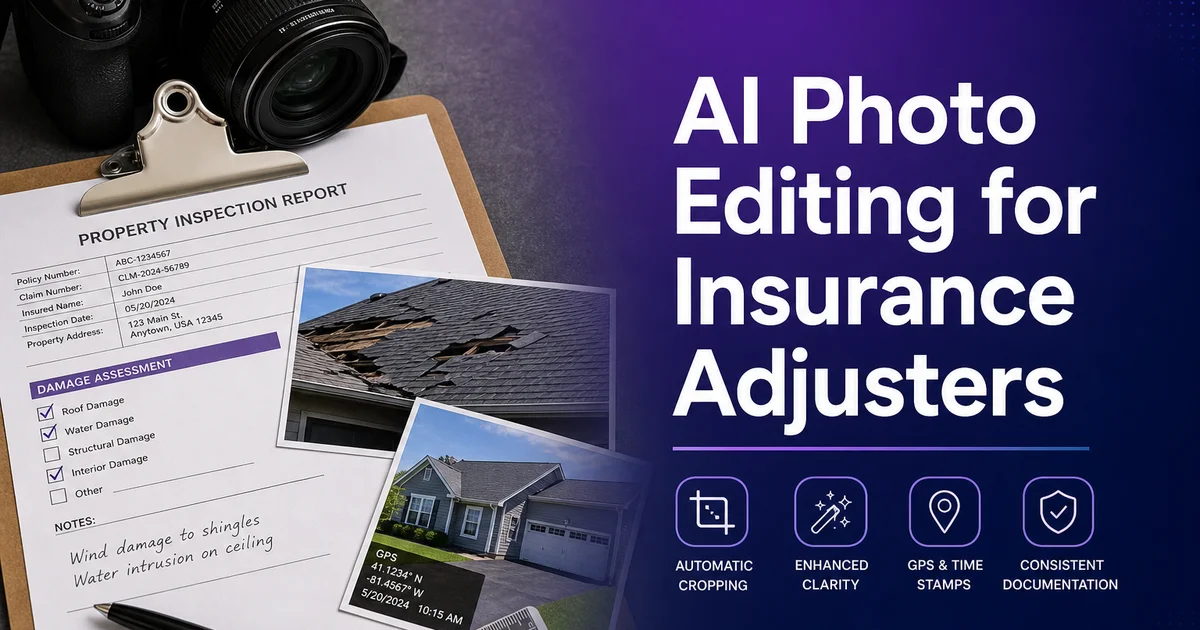
Os peritos de seguros capturam centenas de fotografias por semana em condições ativamente hostis a uma boa fotografia. Porões alagados sem iluminação no teto, estruturas danificadas pelo fogo onde a névoa de fumaça obscurece os detalhes, telhados ao meio-dia com sombras duras escondendo danos de granizo. Interiores de veículos apertados demais para um ângulo de câmera adequado. As fotos resultantes costumam ser escuras, desfocadas, mal enquadradas ou obscurecidas por destroços. Ainda assim, servem como prova principal para decisões de sinistro que valem de milhares a centenas de milhares de dólares.
A edição de fotos tradicional é impraticável para peritos que lidam com grandes volumes de casos. Gastar 15 minutos no Photoshop por imagem quando se tem 200 fotos de uma única vistoria de imóvel consumiria mais tempo do que a própria visita ao local. A maioria dos peritos envia as fotos como foram tiradas, contando com anotações escritas para compensar a baixa qualidade da imagem. Isso cria atrito a jusante quando os revisores, os subscritores e as equipes jurídicas têm dificuldade em ver o dano que era óbvio pessoalmente, mas invisível em uma fotografia escura e mal composta.
As ferramentas de edição de fotos com IA reduzem drasticamente o tempo entre capturar uma foto de campo e produzir provas com qualidade documental. O aprimoramento que levaria minutos por imagem a um editor experiente acontece em segundos. Os resultados são consistentes em todo um processo de sinistro. Este guia aborda como peritos, especialistas em sinistros. Avaliadores independentes usam ferramentas de IA para produzir registros de danos claros e profissionais sem conhecimento fotográfico ou tempo de pós-processamento.
- O AI Enhance recupera detalhes de fotos subexpostas tiradas em porões, vãos de acesso e interiores danificados pelo fogo sem precisar revisitar o imóvel.
- O Magic Eraser remove a desordem visual — móveis, objetos pessoais, destroços — para criar uma documentação sem obstruções dos danos estruturais.
- O processamento em lote padroniza a qualidade das fotos em processos de sinistro inteiros, produzindo documentação consistente a partir de condições de campo enormemente variáveis.
- Um processamento de sinistros mais rápido resulta de fotos mais claras que reduzem as perguntas dos revisores, os pedidos de acompanhamento e as visitas repetidas ao local.
- Os peritos de campo gastam segundos por foto em vez de minutos, tornando viável uma documentação de qualidade profissional em grandes volumes de casos.
Por que condições de campo produzem fotos de documentação ruins
A fotografia de seguros ocorre nas piores condições possíveis porque o próprio dano cria essas condições. Um porão danificado pela água não tem luzes funcionando. Uma estrutura danificada pelo fogo está cheia de resíduos de fumaça que dispersam a luz do flash. Um telhado danificado por uma tempestade é fotografado na hora em que o perito chega, muitas vezes ao meio-dia, quando o sol forte do alto cria sombras profundas sob os beirais e nas calhas onde o dano se esconde. O perito não consegue controlar nenhuma dessas variáveis — ele documenta o que encontra nas condições em que encontra.
As ferramentas disponíveis agravam o problema. A maioria dos peritos fotografa com smartphones, que produzem fotos excelentes com boa luz, mas têm dificuldade exatamente nas condições que a fotografia de sinistros exige. Os pequenos sensores dos telefones amplificam o ruído em pouca luz, os flashes dos telefones estouram os objetos próximos enquanto deixam os fundos pretos. As lentes grande-angulares dos telefones distorcem as relações espaciais que importam para documentar a extensão do dano. Uma rachadura claramente visível pessoalmente torna-se uma sombra ambígua em uma foto de telefone tirada à distância de um braço em um cômodo escuro.
A pressão do tempo elimina a opção de uma composição cuidadosa. Um perito que inspeciona um imóvel tem uma janela de agendamento limitada, vários cômodos ou áreas a documentar. Um segurado ansioso que observa. Não há tempo para montar tripés, ajustar configurações de exposição ou tirar várias fotos de cada área de dano de ângulos diferentes. O perito captura o que pode o mais rápido possível e segue em frente, sabendo que as fotos precisarão contar a história mais tarde, mesmo que sejam imperfeitas.
- O próprio dano cria más condições fotográficas — a água mata a iluminação, o fogo deixa névoa, as tempestades forçam fotos de telhado ao meio-dia com sombras duras.
- As câmeras dos smartphones amplificam o ruído em pouca luz e estouram os objetos próximos com o flash, produzindo uma documentação que obscurece o dano que deveria revelar.
- As lentes grande-angulares dos telefones distorcem as relações espaciais, tornando mais difícil para os revisores julgar a largura real das rachaduras, o tamanho dos buracos e a extensão do dano.
- As visitas ao local com tempo limitado eliminam a opção de uma composição cuidadosa ou de várias tentativas de exposição por área de dano.
Melhorando a visibilidade de danos em fotos desafiadoras
O AI Enhance aborda o problema mais comum da fotografia de campo: luz insuficiente. Danos de água no porão, crescimento de mofo no sótão, danos de incêndio em interiores. Os danos de colisão sob o veículo são todos documentados em quase total escuridão, e as fotos resultantes costumam ser tão escuras que os revisores não conseguem distinguir o dano da sombra. O AI Enhance recupera os detalhes nas sombras clareando inteligentemente as áreas escuras enquanto impede que as áreas já claras estourem, produzindo uma exposição equilibrada que revela o dano tal como apareceu aos olhos do perito pessoalmente.
A precisão da cor importa para a avaliação de danos. As manchas de água têm padrões de cor marrom-amarelo-cinza específicos que indicam idade e origem. O mofo varia de preto a verde a branco, dependendo da espécie e do nível de risco à saúde. As cores dos danos de incêndio indicam temperatura e intensidade. Quando as câmeras dos telefones sob luz fluorescente ou mista produzem cores imprecisas, os revisores podem identificar incorretamente os tipos de dano. O AI Enhance corrige as dominantes de cor da iluminação artificial para produzir uma cor natural e exata que apoia uma classificação correta dos danos.
A nitidez de detalhes recupera informações de fotos ligeiramente desfocadas — comuns ao fotografar com uma só mão em espaços apertados. A IA aplica uma nitidez inteligente que realça os detalhes de borda reais como rachaduras, linhas de água. Os contornos do dano sem amplificar o ruído ou os artefatos de compressão. Isso pode fazer a diferença entre uma foto que mostra claramente uma rachadura capilar e uma em que a rachadura é invisível em meio ao ruído de compressão JPEG.
- A recuperação de sombras revela o dano em fotos de campo escuras sem superexpor as áreas já claras, correspondendo ao que o perito viu pessoalmente.
- A correção de cor a partir de iluminação artificial mista garante uma identificação exata do tipo de dano — cores das manchas de água, espécies de mofo e indicadores da intensidade do fogo.
- A nitidez inteligente recupera detalhes de fotos de campo ligeiramente desfocadas sem amplificar o ruído JPEG ou os artefatos de compressão.
- O aprimoramento em lote processa todas as fotos de uma visita ao local a uma qualidade consistente em minutos, em vez de horas de edição manual.
Removendo obstruções visuais da documentação de danos
As fotos de dano mais úteis mostram o dano claramente sem nada no caminho, mas as condições de campo raramente cooperam. Móveis ficam encostados em paredes danificadas pela água. Objetos pessoais cobrem o piso danificado. Destroços caídos de um teto desabado obscurecem o dano estrutural por trás. Mover essas obstruções às vezes é impossível — móveis pesados, destroços perigosos ou a relutância de um segurado em ter seus pertences perturbados. O perito fotografa o que é visível e anota o resto.
O Magic Eraser permite que os peritos criem um registro complementar que remove a desordem visual das fotos de dano sem alterar o dano em si. Remova um sofá em frente a uma parede manchada de água e a IA reconstrói a superfície da parede atrás, possivelmente revelando uma extensão de dano que estava apenas parcialmente visível na foto original. Esta foto limpa complementar acompanha o original não editado. Ambas servem ao processo de sinistro, com o original fornecendo realismo e a versão limpa fornecendo clareza.
Essa abordagem é especialmente valiosa para danos em telhados e exteriores onde árvores, veículos ou estruturas vizinhas bloqueiam parcialmente a vista. Um perito que fotografa danos de granizo em um telhado pode ter galhos obscurecendo trechos da linha do telhado. Remover os galhos de uma cópia da foto cria uma vista clara de todo o padrão de dano que ajuda os revisores a entender o sinistro sem precisar de uma segunda visita ao local de um ângulo diferente.
- As fotos limpas complementares acompanham os originais não editados — o original fornece autenticidade, a versão limpa fornece clareza.
- Remover móveis e pertences das fotos de dano revela a extensão do dano em paredes, pisos e estrutura que estava parcialmente oculta nas condições de campo.
- A remoção de obstruções exteriores — galhos, veículos, estruturas vizinhas — cria vistas claras de padrões de dano completos a partir de pontos de observação limitados.
- A documentação limpa reduz os pedidos de visitas de acompanhamento ao local ao responder a perguntas dos revisores que as fotos originais bagunçadas não conseguiam abordar.
Criando pacotes de sinistros profissionais de forma eficiente
Um conjunto de fotos de sinistro bem organizado e de qualidade consistente constrói credibilidade junto aos revisores e acelera o processamento. Quando todas as fotos de um processo de sinistro têm brilho, contraste semelhantes. O balanço de branco, o revisor pode se concentrar na avaliação do dano em vez de compensar mentalmente a qualidade variável das fotos. O processamento em lote com IA alcança essa padronização automaticamente. Envie todas as fotos de uma visita ao local e a ferramenta as normaliza para uma qualidade profissional consistente.
A economia de tempo cresce enormemente com o volume de sinistros. Um perito independente que lida com 40 sinistros por mês com uma média de 80 fotos por sinistro está processando 3.200 fotos mensalmente. Gastar apenas 30 segundos por foto em aprimoramento manual consumiria 26 horas por mês. No fundo, perder três dias úteis inteiros editando fotos. O processamento em lote com IA reduz isso a minutos por sinistro, liberando esse tempo para inspeções adicionais, registros mais completos e uma resolução mais rápida dos sinistros.
Registros de qualidade profissional também reduzem disputas. Quando o dano é claramente visível e sempre documentado, há menos espaço para discordância sobre a existência, a extensão ou a causa do dano. Os peritos relatam que conjuntos de fotos aprimorados geram menos pedidos de informações complementares, menos exigências de reinspeção e aprovações mais rápidas. Benefícios que servem tanto à seguradora quanto ao segurado ao resolver os sinistros mais rapidamente.
- Uma qualidade de foto consistente em todo um processo de sinistro permite que os revisores se concentrem na avaliação do dano em vez de compensar condições de campo variáveis.
- O processamento em lote de mais de 80 fotos por sinistro economiza horas de tempo de edição manual que se acumulam em vários dias úteis por mês para peritos de alto volume.
- Uma documentação mais clara reduz os pedidos de informações complementares, as exigências de reinspeção e os atrasos na aprovação.
- Conjuntos de sinistro de qualidade profissional constroem credibilidade junto aos revisores e subscritores, apoiando avaliações de danos justas.
How to do it
- 1
Enhance underexposed damage photos from dark interiors
Upload photos taken in basements, attics, or crawl spaces where flash was insufficient. AI Enhance recovers shadow detail and corrects color casts from mixed lighting, making water stains, mold growth. Structural damage clearly visible without re-visiting the property.
- 2
Remove visual clutter that obscures damage documentation
Use Magic Eraser to remove personal belongings, furniture, and debris that block the view of structural damage in claim photos. This creates clear records of the actual damage area without asking policyholders to move their possessions during an already stressful situation.
- 3
Use AI Fill to reconstruct measurement context in photos
When a damage photo was shot at an angle that distorts scale, use AI Fill to add clean background context that helps reviewers understand the true extent of damage. This supplements the adjuster notes with visual clarity that flat photos from field conditions often lack.
- 4
Standardize photo quality across field conditions
Apply AI Enhance to batch-process all photos from a claim site visit to consistent brightness, contrast, and white balance. Field photos vary wildly — bright exterior shots alongside dark interior captures — and standardized quality makes the claim file more expert and easier for reviewers to evaluate.
- 5
Annotate and prepare final claim photo packages
After enhancing and cleaning up field photos, organize them into a consistent claim records set. Clear, well-lit damage photos reduce back-and-forth with reviewers and underwriters, accelerating claim processing and reducing the need for follow-up site visits.
Fontes
- Best Practices for Digital Claims Documentation — National Association of Insurance Commissioners
- Property Damage Assessment Photography Standards — Insurance Information Institute