
Edição de fotos com IA para relojoeiros: Apresente a arte relojoeira — Magic Eraser
Edição especializada de fotografia de relógios para relojoeiros. Ferramentas de IA para detalhes de acabamento do movimento, registros de mostradores, fotografia de escape, listras de Genebra, anglage e imagens de relógios de qualidade de colecionador.

Product Marketing
Revisado por Magic Eraser Editorial ·
Índice
- Fotografando movimentos de relógios: técnica macro, iluminação para acabamento e gestão de superfícies refletivas
- Remoção de fundo e padrões de apresentação para imagens horologicas
- Aprimorando detalhes de acabamento do movimento: listras de Genebra, perlage, anglage e aço azulado
- Fotografia de mostradores: detalhes de impressão, aplicação de lume e documentação de acabamento de superfície
- Fotografia de escape e complicações para documentação especializada e engajamento de colecionadores
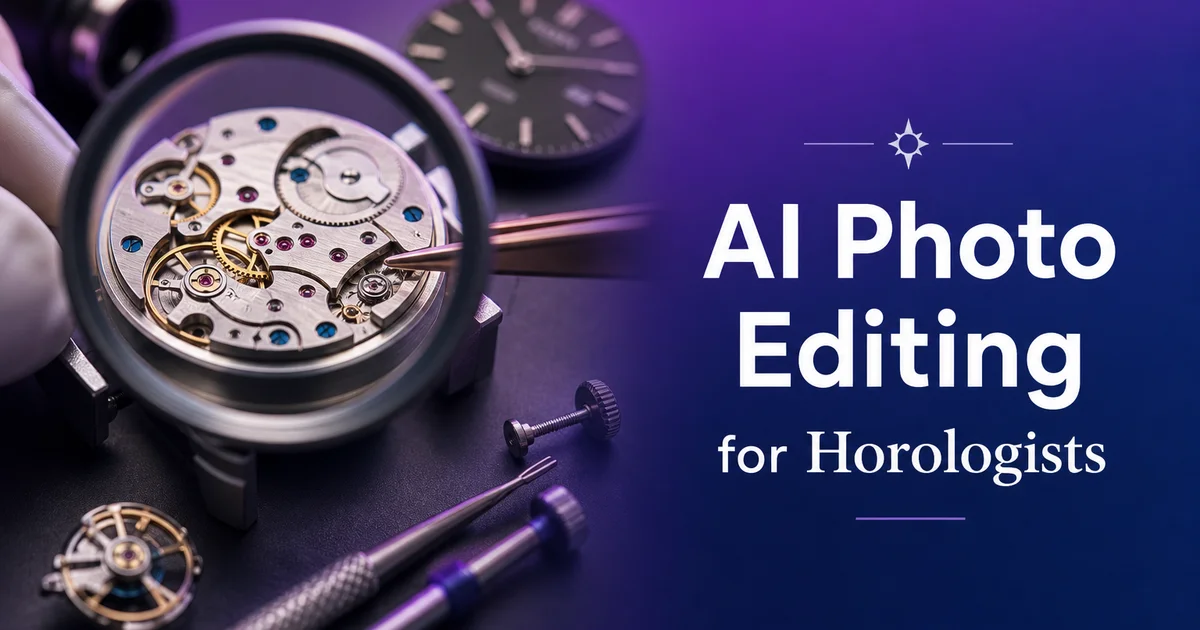
A horologia — a ciência e a arte de medir o tempo — engloba uma comunidade de relojoeiros, restauradores, colecionadores, comerciantes. Entusiastas que partilham uma sensibilidade extraordinária aos detalhes visuais dos instrumentos de medição do tempo de precisão. Para os relojoeiros independentes que reparam e restauram relógios, a fotografia é uma ferramenta de negócio essencial que documenta o trabalho para os clientes, apresenta as restaurações concluídas para venda, constrói reputação especializada através de imagens de portfólio. Envolve a apaixonada comunidade de colecionadores que impulsiona a procura por artesanato relojoeiro. O desafio é que a fotografia de relógios está entre as formas de fotografia de produto tecnicamente mais exigentes: os sujeitos são pequenos o suficiente para exigir capacidade macro, as suas superfícies combinam metais polidos altamente refletores com acabamentos foscos e cristais transparentes, e os detalhes que mais importam. O acabamento do movimento, a impressão do mostrador, o acabamento à mão — existem a uma escala em que as câmaras de telemóvel padrão produzem resultados inadequados.
A linguagem visual da qualidade relojoeira diz respeito inteiramente ao acabamento de superfície e ao detalhe de precisão. Um colecionador ou comprador conhecedor avalia um movimento de relógio examinando as listras de Genebra nas pontes quanto à uniformidade e ao brilho, o perlage na platina principal quanto à consistência do tamanho dos pontos e à sobreposição, o anglage nas bordas das pontes quanto à nitidez e ao polimento, o azulamento dos parafusos de aço quanto à profundidade e uniformidade da cor. A montagem geral quanto ao alinhamento e à limpeza. Estes detalhes de acabamento são visíveis ao olho treinado sob uma lupa mas são muito difíceis de capturar em fotografias que serão vistas em ecrãs. A combinação de pequena escala, superfícies refletoras e a necessidade de iluminação precisa torna a fotografia de relógios uma luta constante entre revelar o detalhe e controlar os reflexos que apagam o detalhe. Cada relojoeiro independente enfrenta este desafio diariamente. A maioria depende de câmaras de telemóvel porque o equipamento especializado de fotografia macro é caro e ocupa muito espaço.
As ferramentas de edição fotográfica com IA transformam a qualidade da fotografia relojoeira ao abordar cada um destes desafios específicos. O Background Eraser isola os movimentos e componentes do ambiente desarrumado da bancada, criando a apresentação limpa de fundo escuro que os colecionadores de relógios esperam. O AI Enhance recupera os detalhes de acabamento de superfície que as câmaras de telemóvel achatam. Realçando as linhas individuais das listras de Genebra, os pontos do perlage, as bordas nítidas do anglage e a cor profunda do aço corretamente azulado. O Magic Eraser remove as partículas de poeira, impressões digitais e marcas de ferramentas que a fotografia macro amplifica para além da sua visibilidade no mundo real. Este guia abrange o fluxo de trabalho completo de fotografia e edição para relojoeiros, desde as técnicas iniciais de captura, passando pelo realce de detalhe, até à exportação específica para cada plataforma em todo o contexto em que as imagens de relógios precisam de funcionar.
- O Background Eraser isola os movimentos, mostradores e componentes da desarrumação da bancada, criando a apresentação de fundo escuro que os colecionadores e compradores de relógios esperam para imagens relojoeiras especializadas.
- O AI Enhance recupera as listras de Genebra, os pontos do perlage, as bordas do anglage. A profundidade de cor do aço azulado que as câmaras de telemóvel achatam em superfícies metálicas uniformes, revelando a qualidade do artesanato que determina o valor.
- O Magic Eraser remove os artefactos amplificados pela macro — partículas de poeira, oleosidade de impressões digitais, marcas de ferramentas e riscos de manuseamento — que aparecem muito mais proeminentes na fotografia de grande plano do que a olho nu.
- Uma apresentação consistente ao longo de vários ângulos e planos de detalhe constrói a confiança do comprador para a fotografia de venda e cria imagens profissionais de portfólio para oficinas relojoeiras independentes.
- A documentação de serviço antes-e-depois com tratamento de edição combinado mostra a condição de entrada ao lado da qualidade da restauração concluída para relatórios de clientes e registos de oficina.
Fotografando movimentos de relógios: técnica macro, iluminação para acabamento e gestão de superfícies refletivas
A fotografia de movimentos de relógio exige na sua essência uma abordagem diferente da fotografia de produto padrão porque os sujeitos são tão pequenos que cada decisão técnica opera no extremo limite das capacidades da câmara. Um movimento de relógio mede frequentemente de 25 a 35 milímetros de diâmetro, com componentes individuais. Parafusos, rubis, pinos de mola — medidos em frações de milímetro. Capturar o detalhe de acabamento de superfície que define a qualidade do movimento exige capacidade macro de foco próximo que produza imagens onde estes minúsculos componentes preencham o enquadramento com detalhe legível. As câmaras de telemóvel oferecem cada vez mais modos macro que se aproximam da ampliação necessária. O pequeno tamanho do sensor e o processamento computacional das imagens macro de telemóvel produzem resultados que, embora úteis para registos informais, carecem da resolução de detalhe fino e da precisão tonal necessárias para uma apresentação especializada. A fotografia de partida importa enormemente porque o realce com IA pode aguçar e recuperar o detalhe que existe na captura. Não pode inventar detalhe que a câmara não registou.
A iluminação para a fotografia de movimentos é uma disciplina por si só porque as várias superfícies dentro de um único movimento. Aço polido, latão fosco, rubis, pontes com listras de Genebra, platinas com perlage — cada uma reage de forma diferente à luz e exige abordagens diferentes para ser bem fotografada. A técnica isolada mais importante é a iluminação direcional difusa que aflora as marcas de acabamento num ângulo que revela o seu padrão sem criar realces especulares que estouram as superfícies polidas. As listras de Genebra são mais visíveis quando iluminadas pelo lado perpendicular à direção das listras, criando bandas alternadas de luz e sombra que mostram o padrão das listras. O perlage é mais visível sob uma luz zenital ligeiramente fora de eixo que capta de cima as marcas de brunimento circulares. O anglage mostra-se melhor sob luz lateral rasante que capta o bisel polido e cria uma linha brilhante contra a superfície plana mais escura. Fotografar bem um movimento completo exige frequentemente várias exposições com diferentes posições de luz para capturar cada tipo de acabamento no seu melhor.
A gestão de superfícies refletoras é o desafio constante da fotografia de relógios. Os componentes de aço polido — que incluem parafusos, molas de lingueta. As superfícies das pontes de gama alta — agem como espelhos que refletem a fonte de luz, a câmara, as mãos do fotógrafo e todos os outros objetos do ambiente diretamente de volta para a câmara. Estes reflexos obscurecem o próprio detalhe de superfície que se está a tentar documentar. A principal contramedida é a difusão — interpor uma grande superfície de difusão entre a fonte de luz e o relógio cria uma iluminação ampla e uniforme que minimiza os reflexos de fonte pontual. Uma simples tenda de papel branco ou uma folha de plástico translúcido posicionada por cima e à volta do movimento, com uma abertura para a objetiva da câmara, transforma os duros reflexos de fonte pontual numa iluminação suave e uniforme que revela o acabamento de superfície sem criar realces estourados. Para os reflexos restantes que a difusão não consegue eliminar completamente, a edição com IA fornece a ferramenta de limpeza. O Magic Eraser pode remover as imagens refletidas de ferramentas, mãos ou equipamento de câmara visíveis nas superfícies polidas.
- Os movimentos de relógio de 25 a 35 mm de diâmetro exigem capacidade macro de foco próximo para capturar o detalhe de acabamento onde parafusos e rubis individuais medem frações de milímetro.
- A iluminação direcional difusa aflora as marcas de acabamento em ângulos específicos — perpendicular às listras de Genebra, ligeiramente fora de eixo acima do perlage, rasante junto ao anglage — para revelar cada tipo de padrão.
- Podem ser necessárias várias exposições com diferentes posições de luz para capturar as listras de Genebra, o perlage, o anglage e o aço azulado no seu melhor dentro de um único movimento.
- As tendas de papel branco ou as folhas de difusão translúcidas eliminam os reflexos de fonte pontual no aço polido enquanto a edição com IA remove os reflexos ambientais restantes nas superfícies de espelho.
Remoção de fundo e padrões de apresentação para imagens horologicas
A bancada relojoeira é um dos ambientes de trabalho visualmente mais distintivos de qualquer ofício. Uma paisagem de ferramentas de precisão, minúsculos recipientes de peças, produtos químicos especializados e o caos controlado de múltiplos projetos em vários estádios de serviço. Embora fascinante como sujeito em si mesmo, este ambiente cria fundos desarrumados que prejudicam a apresentação dos movimentos e componentes de relógio que são o verdadeiro sujeito da fotografia relojoeira. Os suportes de movimento agarram o relógio em mandíbulas almofadadas, os conjuntos de chaves de fendas abrem-se em leque sobre os tapetes de bancada, as lupas pousam nos seus suportes e os tabuleiros de peças contêm as dezenas de minúsculos componentes removidos durante um serviço. Todos estes elementos competem com o movimento pela atenção visual numa fotografia não editada. O Background Eraser resolve isto ao isolar o movimento ou componente contra um campo limpo que direciona toda a atenção do observador para o sujeito.
A apresentação padrão para a fotografia especializada de relógios utiliza um fundo escuro. Frequentemente quase preto — que serve propósitos tanto práticos como estéticos. Na prática, um fundo escuro elimina a informação visual concorrente e maximiza o brilho e o contraste percebidos das superfícies metálicas que constituem a maioria dos componentes de relógio. Esteticamente, o fundo escuro evoca os estojos de exposição forrados a veludo e as caixas de relógio escuras que são o contexto de apresentação tradicional para os relógios finos, criando uma associação com o luxo e o manuseamento cuidadoso. O fundo escuro também fornece uma tela limpa para que o acabamento refletor das pontes e componentes polidos mostre todo o seu carácter. As listras de Genebra cintilam contra o preto de uma forma que não conseguem contra um fundo claro ou desarrumado porque o campo escuro elimina o ruído visual concorrente que dilui os subtis efeitos refletores do acabamento direcional.
Para certos propósitos de documentação, um fundo claro ou neutro pode ser mais apropriado do que escuro. A documentação de serviço antes-e-depois beneficia de um fundo cinzento neutro consistente que torna tanto as imagens sujas pré-serviço como as imagens limpas pós-serviço igualmente legíveis sem que o fundo escuro faça as imagens imundas de entrada parecerem artificialmente dramáticas. A fotografia de componentes para a identificação de peças — onde a imagem serve um propósito de referência funcional em vez de estético — funciona bem contra um fundo branco limpo que fornece a máxima visibilidade dos contornos dos componentes e das características de superfície. O princípio importante é a consistência dentro de cada contexto: todas as fotografias de venda deveriam partilhar o mesmo fundo de apresentação escuro, toda a documentação de serviço deveria usar o mesmo fundo de referência neutro. Todas as imagens de referência de componentes deveriam usar o mesmo fundo branco clínico, criando padrões visuais especializados ao longo de cada categoria de fotografia relojoeira.
- Os ambientes de bancada criam fundos desarrumados com suportes de movimento, conjuntos de chaves de fendas, lupas e tabuleiros de peças que competem com os componentes de relógio pela atenção do observador.
- Os fundos escuros quase pretos maximizam o contraste da superfície metálica e evocam os estojos de apresentação forrados a veludo associados ao luxo dos relógios finos e ao manuseamento cuidadoso.
- As listras de Genebra e o acabamento direcional cintilam contra campos escuros onde o ruído visual concorrente é eliminado, revelando todo o carácter refletor das superfícies polidas das pontes.
- A consistência contextual importa: fundos escuros para venda, cinzento neutro para documentação de serviço, branco clínico para referência de componentes — padrões profissionais ao longo de cada categoria de fotografia.
Aprimorando detalhes de acabamento do movimento: listras de Genebra, perlage, anglage e aço azulado
A listra de Genebra — também chamada Cotes de Geneve — é a técnica de acabamento de movimento mais amplamente reconhecida. A sua qualidade é um dos principais indicadores visuais que distinguem os movimentos premium dos básicos. A técnica cria um padrão de listras arqueadas paralelas nas superfícies das pontes ao arrastar uma cavilha de madeira rotativa carregada com pasta abrasiva pelo metal em passagens sobrepostas. Num movimento bem executado, as listras são perfeitamente paralelas, uniformemente espaçadas, de largura consistente. Uniformemente lustrosas por toda a superfície da ponte. Num movimento inferior, as listras podem ser irregulares, desiguais ou obviamente aplicadas à máquina com uma uniformidade repetida que carece da subtil variação do acabamento à mão. O AI Enhance realça o carácter de cada listra individual ao aumentar o microcontraste entre os picos e os vales da superfície listrada, tornando o padrão das listras claramente visível em fotografias onde as câmaras de telemóvel o tinham comprimido num acabamento acetinado uniforme.
O perlage — também chamado granulado circular ou caracoleado — cria um padrão de marcas de brunimento circulares sobrepostas nas platinas principais e superfícies não visíveis quando o movimento está encaixado. Cada ponto é aplicado um a um usando uma cavilha rotativa pressionada contra a superfície, criando um pequeno círculo de metal polido. Os pontos sobrepõem-se num padrão regular como escamas de peixe, criando uma textura covinhada distintiva que capta a luz como um campo de minúsculos reflexos circulares. O Boost recupera a definição de cada ponto individual e o padrão de sobreposição preciso que indica uma aplicação cuidadosa à mão por oposição ao perlage à máquina mecanicamente regular encontrado em movimentos de gama inferior. De forma semelhante, o anglage — o polimento das bordas biseladas em pontes e outros componentes — mostra a perícia do acabador na nitidez da transição entre o bisel polido e a superfície plana. Na qualidade de espelho do próprio bisel. O Boost aguça estas bordas críticas para que a qualidade do anglage. Que os colecionadores experientes avaliam como um dos indicadores mais reveladores do acabamento à mão por oposição ao de máquina, seja claramente visível na fotografia.
Os parafusos e componentes de aço azulado alcançam a sua distintiva cor azul-real profunda através de um processo controlado de tratamento térmico em que o aço polido é aquecido a cerca de 300 graus Celsius, fazendo com que se forme uma fina camada de óxido na superfície que cria o azul por interferência ótica. A profundidade e a uniformidade da cor azul indicam a perícia do azulamento. Os parafusos perfeitamente azulados mostram um azul-real profundo e uniforme por toda a sua superfície, enquanto o aquecimento desigual produz resultados mosqueados ou com tonalidade arroxeada. As câmaras de telemóvel notoriamente têm dificuldade com o azul do aço azulado, reproduzindo-o frequentemente como cinzento, roxo ou azul-pálido desbotado em vez do tom rico e profundo visível ao olho. O AI Boost recupera a precisão de cor do aço azulado ao mesmo tempo que realça o polimento de espelho por baixo da camada de óxido que cria a profundidade característica e a luminosidade dos componentes bem azulados. Uma qualidade que a reprodução fotográfica plana frequentemente não consegue transmitir.
- O realce das listras de Genebra aumenta o microcontraste entre os picos e os vales das listras, revelando a uniformidade paralela e o carácter do acabamento à mão comprimidos em acetinado uniforme pelas câmaras de telemóvel.
- A recuperação da definição dos pontos do perlage e do padrão de sobreposição distingue a aplicação cuidadosa à mão do perlage à máquina mecanicamente regular na platina principal e nas superfícies ocultas.
- A nitidez da borda do anglage na transição de bisel para plano é um indicador-chave do acabamento à mão que o realce aguça para uma avaliação clara por colecionadores experientes que avaliam a qualidade do movimento.
- A recuperação da cor do aço azulado corrige a tendência das câmaras de telemóvel para reproduzir o azul-real profundo como cinzento ou roxo, ao mesmo tempo que revela a profundidade do polimento de espelho por baixo da camada de interferência do óxido.
Fotografia de mostradores: detalhes de impressão, aplicação de lume e documentação de acabamento de superfície
Os mostradores de relógio apresentam os seus próprios desafios fotográficos distintos da fotografia de movimentos, exigindo atenção aos tratamentos de superfície específicos e aos elementos aplicados que definem a qualidade do mostrador. A própria superfície do mostrador pode ser acabada de muitas formas. Escovado soleil que se irradia a partir do centro criando um jogo dinâmico de luz à medida que o ângulo de visão muda, escovado vertical ou horizontal que cria reflexos direcionais, superfícies lacadas que mostram profundidade através de múltiplas camadas de cor translúcidas, guilhochê gravado à máquina que cria padrões geométricos através de linhas entrecruzadas gravadas mecanicamente, ou esmalte grand feu que produz uma superfície semelhante ao vidro com profundidade e saturação de cor extraordinárias. Cada tipo de superfície reage de forma diferente à iluminação e exige diferentes abordagens de realce para mostrar o seu carácter específico numa fotografia.
Os elementos aplicados num mostrador de relógio. Índices das horas, impressão de texto, logótipos de marca e elementos decorativos — estão entre os detalhes mais escrutinados na avaliação de relógios porque revelam o cuidado investido na montagem final do relógio. Os índices das horas aplicados feitos de metal cortado deveriam mostrar facetas precisas, bordas limpas. Um polimento uniforme em cada posição no mostrador. O texto impresso deveria ser nítido, perfeitamente alinhado e livre de borrões ou densidade de tinta inconsistente. O material luminoso aplicado aos índices e ponteiros deveria estar distribuído uniformemente dentro dos seus limites definidos sem transbordamento, lacunas ou espessura inconsistente. O AI Enhance torna estes minúsculos detalhes aplicados visíveis e avaliáveis nas fotografias. A diferença entre um índice aplicado perfeitamente acabado e um com uma borda ligeiramente embotada torna-se evidente após o realce, tal como a consistência da impressão do texto e da qualidade de aplicação do material luminoso por toda a superfície do mostrador.
A documentação de mostradores para os registos de serviço tem necessidades específicas para além da apresentação estética. Quando um mostrador é removido de uma caixa durante um serviço, a sua condição precisa de ser fotografada para registar qualquer dano, descoloração ou deterioração que exista antes de o relojoeiro lhe tocar. Protegendo o especialista de reivindicações de danos causados durante o serviço. As condições comuns de mostrador que precisam de documentação incluem o desbotamento tropical em que a cor original mudou devido à exposição aos UV, fissuras em teia de aranha em superfícies lacadas, manchas de corrosão por intrusão de humidade, deterioração do material luminoso em que o material luminoso se desfez ou descoloriu. Defeitos de impressão em que o texto ou os índices se desgastaram parcialmente. Estas condições precisam de ser fotografadas com clareza e realce suficientes para serem inequívocas no registo. Uma subtil marca de humidade que é mal visível numa fotografia padrão mas claramente documentada após o realce com IA fornece o tipo de prova que protege tanto o relojoeiro como o cliente em qualquer disputa subsequente sobre a condição do mostrador.
- As superfícies dos mostradores — escovado soleil, guilhochê gravado à máquina, profundidade da laca, esmalte grand feu — reagem cada uma de forma diferente à iluminação e exigem abordagens de realce específicas para o seu carácter único.
- A avaliação dos elementos aplicados revela a qualidade da montagem: as facetas dos índices das horas, a nitidez da impressão do texto, o alinhamento do logótipo e a consistência dos limites do material luminoso tornam-se visíveis e avaliáveis após o realce com IA.
- A documentação de mostradores pré-serviço protege os relojoeiros ao registar o desbotamento tropical, as fissuras em teia de aranha, as manchas de corrosão e a deterioração do material luminoso com uma clareza realçada inequívoca antes de qualquer trabalho começar.
- O realce torna condições subtis como as marcas precoces de humidade e o desgaste da impressão claramente visíveis nas fotografias de documentação, fornecendo registos de qualidade probatória para a comunicação com o cliente.
Fotografia de escape e complicações para documentação especializada e engajamento de colecionadores
O escape — o mecanismo que regula a libertação de energia da mola real através do trem de engrenagens — é o coração de um relógio mecânico e o componente que mais fascina os colecionadores sérios e os entusiastas da horologia. Fotografar escapes apresenta desafios extremos porque os componentes são minúsculos (um balanço mede frequentemente de 8 a 10 milímetros de diâmetro), acabados com precisão. Em movimento constante quando o movimento está em funcionamento. A espiral do balanço — uma fina espiral de liga que mede apenas centésimos de milímetro de espessura — é um dos componentes mais difíceis de capturar em qualquer campo da fotografia, contudo a sua forma, regularidade. Concentricidade são indicadores de qualidade críticos que os colecionadores avaliam. O realce com IA de fotografias macro bem iluminadas pode realçar a forma em espiral da espiral do balanço, as superfícies polidas da âncora e dos dentes da roda de escape. Os engastes de rubi nos pontos de pivô com uma clareza que transforma um desafio técnico numa imagem visualmente forte.
As complicações — funções adicionais para além da medição básica do tempo — representam o auge do artesanato relojoeiro e são as características que comandam os prémios mais altos no mercado de colecionadores. Os mecanismos de cronógrafo com as suas rodas de colunas, alavancas de acoplamento e molas de travão criam intrincadas paisagens mecânicas. Os mecanismos de calendário perpétuo com os seus complexos sistemas de rodas e alavancas que seguem a data, o dia, o mês. O ano bissexto criam densas camadas de componentes de precisão. Os mecanismos de repetição com os seus minúsculos martelos e gongos que soam as horas de forma audível estão entre os dispositivos mecânicos mais complexos alguma vez miniaturizados. Fotografar estas complicações exige a capacidade de capturar múltiplas camadas de componentes numa única imagem. Os mecanismos em primeiro plano, os trens de engrenagens da camada intermédia e a platina de base ao fundo — com profundidade de campo e detalhe suficientes para mostrar como os componentes interagem. O realce com IA apoia isto ao manter a clareza do detalhe ao longo de todas as camadas de profundidade na imagem, evitando o problema comum em que o detalhe nítido do primeiro plano se desvanece em desfocagem nos componentes mais profundos.
O envolvimento da comunidade de colecionadores em plataformas como o Instagram, fóruns dedicados a relógios. As publicações especializadas prosperam graças ao tipo de fotografia detalhada de movimentos e complicações que a edição com IA torna acessível aos relojoeiros independentes sem equipamento especializado de estúdio. Um grande plano de uma gaiola de turbilhão a rodar ao longo do seu ciclo de sessenta segundos, um plano de detalhe do mecanismo de martelo de um repetidor de minutos, ou uma vista macro de uma roda de colunas de cronógrafo com as suas tampas polidas e dentes maquinados com precisão. Estas imagens geram um envolvimento intenso por parte de audiências conhecedoras que apreciam tanto o artesanato mecânico fotografado como a perícia fotográfica necessária para o capturar. Uma qualidade consistente ao longo de um corpo de trabalho, possibilitada pela edição com IA que compensa as condições variáveis da fotografia de oficina, constrói a reputação especializada que atrai clientes, gera negócio por recomendação. Estabelece o relojoeiro independente como um artesão cuja qualidade de trabalho se estende a cada aspeto da sua prática incluindo a documentação visual.
- A fotografia da espiral do balanço capta a forma em espiral, a regularidade e a concentricidade a centésimos de milímetro de espessura. O realce com IA transforma este desafio técnico extremo numa documentação visual forte.
- A fotografia de complicações — rodas de colunas de cronógrafo, mecanismos de calendário perpétuo, martelos de repetidor — exige uma clareza de detalhe multicamada que o realce mantém desde o primeiro plano até à profundidade do fundo.
- O envolvimento da comunidade de colecionadores no Instagram e em fóruns de relógios prospera graças aos grandes planos detalhados de movimentos que evidenciam tanto o artesanato mecânico como a perícia fotográfica do relojoeiro independente.
- Uma qualidade editada com IA consistente ao longo da fotografia de oficina constrói reputação especializada, atrai clientes. Estabelece o relojoeiro como um artesão cuja qualidade se estende à documentação visual.
How to do it
- 1
Photograph watch movements and dials with macro lighting that reveals finishing detail
Set up your horological photography with close-focus macro capability and controlled directional lighting that reveals the surface finishing on movement components. The Geneva stripes on bridges, the circular graining on mainplates, the mirror-polished bevels on steel parts, the sunburst brushing on dials, and the fine engraving on balance cocks and winding rotors. Watch photography is uniquely demanding because the subjects are small, highly reflective. Packed with detail at a scale where phone cameras struggle to achieve adequate focus and resolution. Position a diffused light source at an angle that catches the directional finishing marks without creating the blown-out specular highlights that obliterate detail on polished steel and gold surfaces.
- 2
Remove workbench clutter and holding tools for clean movement and component documentation
Use Background Eraser to isolate watch movements, dials, and individual components from the visual chaos of the horological workbench. Movement holders, screwdriver sets, loupe stands, parts trays, cleaning solutions, and the accumulated tools of precision mechanical work that surround every piece during service and restoration. For client records, sales photography, and portfolio display, a clean isolated image of the movement or component allows the viewer's attention to focus fully on the mechanical artistry and finishing quality rather than the work setting. Replace backgrounds with dark neutral tones that complement the metallic surfaces and allow the reflective finishing of bridges and screws to show their full character.
- 3
Enhance movement finishing, jewel settings, and dial printing with AI Enhance
Apply AI Enhance to recover the fine surface details that define horological craftsmanship and distinguish hand-finished movements from machine-produced ones. Boost brings out the individual stripes in Geneva striping where each pass of the finishing tool leaves its mark, the concentric circles of perlage on mainplates where each spot is one by one burnished, the crisp edges of anglage where beveled surfaces meet flat ones at precisely defined boundaries. The depth of blued steel screws where the tempering process creates the deep royal blue that indicates exact heat treatment. Phone cameras flatten these micro-finishing details into uniform metallic surfaces. Boost recovers the artistry that separates a five-hundred-dollar movement from a fifty-thousand-dollar one.
- 4
Clean up service marks, dust particles, and handling evidence with Magic Eraser
Use Magic Eraser to remove the artifacts that watch service and photography leave on precision surfaces. Dust particles that settle on movements during photography despite best efforts, fingerprint oils on polished surfaces visible under macro lighting, tool marks from adjustment procedures, adhesive residue from dial protectors, and the microscopic scratches that accumulate on case and crystal surfaces through normal handling. In horological photography, these imperfections are magnified by macro photography to appear far more prominent than they look to the naked eye. Removing them in editing produces images that represent how the watch looks in person rather than how the camera exaggerates surface imperfections at high magnification.
- 5
Export horological images for client reports, sales platforms, and collector community engagement
Save edited watch photographs at maximum resolution for archival records and client reports, then create versions optimized for each distribution platform. Sales photography for watches and movements needs consistent display. Dark background, standard angles, expert finishing detail visible — across every listing to build buyer confidence in quality and attention to care. Collector forum posts and social media content benefit from dramatic close-up detail shots that showcase the movement finishing and dial artistry that enthusiasts appreciate. Service records requires before-and-after image sets that show the condition at intake and the quality of the completed work. Batch export handles the multiple angles and detail shots required for full records of a single timepiece.
Fontes
- The British Horological Institute: Standards for Watch and Clock Documentation — British Horological Institute
- Photographing Watches and Precision Instruments: Techniques for Reflective Surfaces — Adobe Creative Cloud Photography Guide
- Horology and the Art of Watch Movement Photography — Hodinkee