
Edição de fotos com IA para codicologistas — Magic Eraser
Como codicologistas e estudiosos de manuscritos utilizam a edição de fotos com IA para realçar texto desbotado, aprimorar detalhes de encadernação, remover sobreposições de conservação e criar imagens de manuscritos prontas para publicação.
SEO & Growth
Revisado por Magic Eraser Editorial ·
Índice
- Recuperação de texto desbotado e revelação de características invisíveis do manuscrito com aprimoramento por IA
- Remoção de acréscimos modernos para revelar o estado físico original do manuscrito
- Isolamento de elementos do manuscrito para análise paleográfica e histórico-artística comparativa
- Documentação de estruturas de encadernação e evidências materiais para análise de produção
- Construção de edições digitais de manuscritos com imagens aprimoradas para acesso acadêmico global
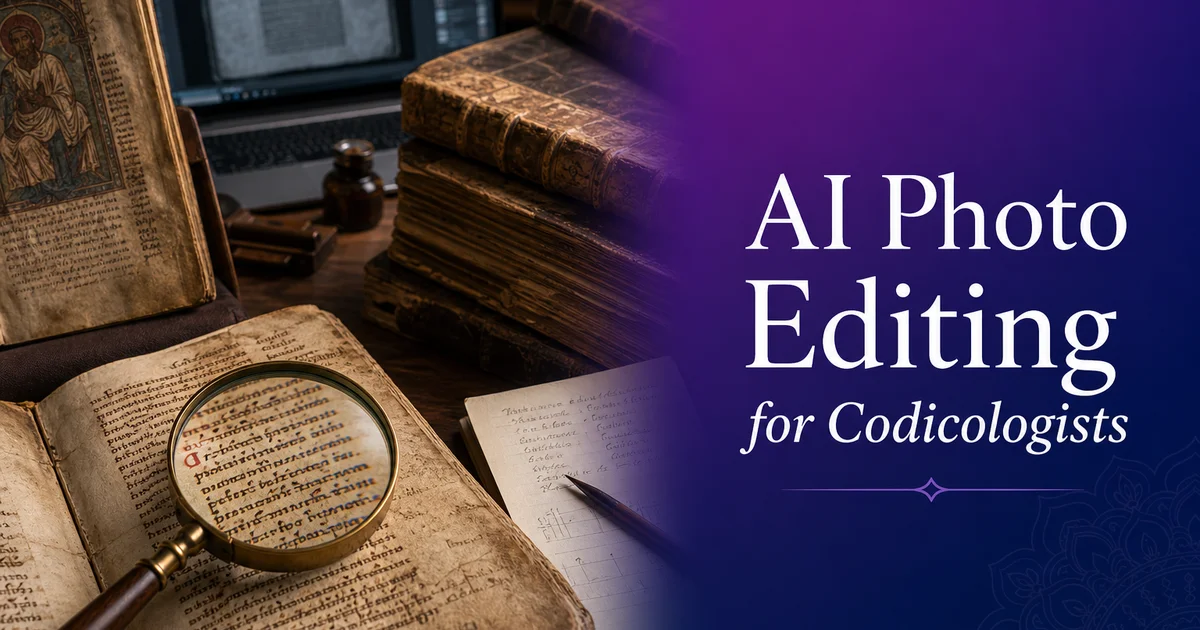
A codicologia — o estudo da estrutura física e da produção de livros manuscritos — é uma disciplina construída sobre o exame detalhado de evidências materiais. Cada codicologista trabalha constantemente com fotografias: documentando estruturas de encadernação, registrando amostras de escrita para análise paleográfica, capturando as texturas superficiais sutis do pergaminho e do papel que revelam técnicas de preparação. Fotografando anotações marginais e marcas de propriedade que estabelecem cadeias de proveniência que abrangem séculos. A qualidade dessas fotografias determina diretamente a qualidade da pesquisa, porque a análise codicológica depende de ver detalhes que frequentemente são medidos em frações de milímetro. A profundidade das impressões das linhas de regramento, o diâmetro dos furos de perfuração, o caminho do fio através das estações de costura e o padrão de grão da pele animal que identifica a espécie usada para o pergaminho.
A documentação fotográfica tradicional de manuscritos apresenta desafios únicos para este campo. Os manuscritos são objetos frágeis que não podem ser manuseados repetidamente, o que significa que as sessões de fotografia devem capturar tudo o que é necessário em janelas de tempo limitadas. Muitos manuscritos sofreram séculos de danos. Desbotamento da tinta, escurecimento do pergaminho, danos por fogo, manchas de água, erosão por insetos e os efeitos acumulados do manuseio — que reduzem a legibilidade do texto e a visibilidade dos detalhes estruturais. Os tratamentos de conservação, embora preservem o objeto físico, frequentemente introduzem materiais modernos que obscurecem características originais. As práticas de catalogação das bibliotecas deixam marcas a lápis, carimbos e etiquetas adesivas nas superfícies que os estudiosos precisam estudar. O resultado é que as fotografias brutas de manuscritos frequentemente requerem pós-processamento significativo antes de poderem apoiar análises codicológicas rigorosas ou aparecer em publicações acadêmicas.
As ferramentas de edição de fotos baseadas em inteligência artificial abordam os desafios específicos de documentação do codicologista com capacidades que teriam parecido milagrosas para estudiosos de gerações anteriores. AI Enhance recupera a legibilidade de textos desbotados e degradados, aprimorando de forma inteligente as formas das letras que se tornaram quase invisíveis após séculos de oxidação da tinta ferrogálica. Magic Eraser remove acréscimos modernos — tecidos de conservação, etiquetas de catálogo, marcas de prateleira a lápis — que obscurecem as características originais do manuscrito. Background Eraser isola amostras individuais de escrita, elementos decorativos e detalhes de encadernação para análise comparativa entre coleções de manuscritos. Este guia abrange a aplicação prática de cada ferramenta nos fluxos de trabalho codicológicos, desde a fotografia inicial do manuscrito até a preparação de imagens prontas para publicação.
- AI Enhance recupera a legibilidade da tinta ferrogálica que desbotou ao longo dos séculos, aprimorando formas de letras que são quase invisíveis na fotografia padrão para apoiar a análise paleográfica.
- Magic Eraser remove materiais de conservação modernos, marcas de catalogação e artefatos de manuseio que obscurecem o estado físico original do manuscrito sem alterar a imagem do documento subjacente.
- Background Eraser isola amostras individuais de escrita, iniciais decoradas e fragmentos de encadernação para análise comparativa precisa entre múltiplos manuscritos e coleções.
- A fotografia aprimorada de manuscritos suporta edições digitais em conformidade com o padrão IIIF que fornecem acesso acadêmico mundial a materiais que anteriormente exigiam viagem física às instituições de guarda.
- A transparência do processamento é mantida através da documentação de antes e depois de cada aprimoramento, atendendo aos padrões acadêmicos exigidos para publicação codicológica com revisão por pares.
Recuperação de texto desbotado e revelação de características invisíveis do manuscrito com aprimoramento por IA
A tinta ferrogálica — o meio de escrita dominante dos manuscritos europeus do século V ao XIX — passa por um processo de degradação bem documentado que destrói progressivamente tanto a tinta quanto a superfície de escrita subjacente. O sulfato de ferro na tinta catalisa a hidrólise ácida do substrato de celulose ou colágeno, simultaneamente desbotando a tinta do preto denso para o marrom claro enquanto enfraquece e eventualmente perfura o pergaminho ou o papel sobre o qual foi escrita. Em casos avançados, o texto desbotou até a quase invisibilidade enquanto o dano ácido criou halos de substrato escurecido ao redor de cada forma de letra, produzindo uma imagem fantasmagórica invertida onde o texto é mais claro do que a superfície danificada ao redor. A fotografia tradicional captura essas passagens desbotadas como vestígios mal visíveis que requerem equipamento de imageamento multiespectral — caro, especializado e disponível em apenas um punhado de instituições no mundo — para recuperação.
AI Enhance aborda a recuperação de texto desbotado aplicando um aumento inteligente de contraste calibrado para as características específicas de tintas de manuscrito degradadas. Em vez de aumentar uniformemente o contraste em toda a imagem — o que amplificaria manchas, foxing e irregularidades superficiais tão agressivamente quanto aprimora o texto — o algoritmo identifica e aprimora seletivamente a assinatura espectral da tinta ferrogálica degradada em relação ao fundo do substrato. O resultado é uma melhoria dramática na legibilidade do texto que se aproxima dos resultados do imageamento multiespectral para passagens moderadamente desbotadas, tornando legível o que antes era ilegível nos registros fotográficos padrão. Para texto severamente degradado, AI Boost serve como ferramenta de triagem inicial que identifica quais passagens justificam o tempo e o custo de uma análise multiespectral completa.
Além da recuperação de texto, AI Enhance revela características físicas da produção do manuscrito que são invisíveis em condições fotográficas padrão. Linhas de regramento — as linhas-guia gravadas ou desenhadas que os escribas seguiam ao escrever — são impressas no pergaminho com um estilete de ponta dura e são frequentemente invisíveis sob iluminação plana superior. A aplicação de AI Boost a fotografias tiradas sob luz rasante controlada torna essas impressões claramente visíveis, permitindo que codicologistas analisem o padrão de regramento que revela como a página foi preparada antes do início da escrita. Da mesma forma, os furos de perfuração ao longo das margens da página — as pequenas perfurações usadas para estabelecer os pontos terminais das linhas de regramento — e anotações a ponta seca escritas sem tinta tornam-se visíveis através do aprimoramento dos detalhes de textura superficial que a fotografia padrão reproduz como pergaminho sem características.
- A degradação da tinta ferrogálica desbota o texto de preto para marrom claro quase invisível enquanto a hidrólise ácida danifica a superfície de escrita. AI Boost recupera seletivamente o contraste do texto sem amplificar artefatos de manchas.
- O aprimoramento seletivo calibrado para assinaturas espectrais de tinta degradada aproxima-se dos resultados do imageamento multiespectral para passagens moderadamente desbotadas, expandindo dramaticamente o acesso a essa capacidade de recuperação.
- Impressões de linhas de regramento gravadas no pergaminho com estiletes de ponta dura tornam-se visíveis através da aplicação de AI Boost a fotografias com luz rasante, revelando sistemas de layout de página invisíveis nos registros padrão.
- Anotações a ponta seca e furos de perfuração — evidências críticas de produção — emergem de detalhes aprimorados de textura superficial que a fotografia padrão reproduz como pergaminho sem características.
Remoção de acréscimos modernos para revelar o estado físico original do manuscrito
Todo manuscrito que foi mantido em uma coleção institucional carrega as marcas acumuladas de catalogação, conservação e manuseio administrativo. Marcas de prateleira escritas a lápis ou a tinta em folhas de guarda e primeiras páginas, etiquetas adesivas com números de chamada, carimbos de borracha indicando propriedade, tiras de segurança embutidas nas encadernações. As notas dos conservadores documentando tratamentos anteriores sobrepõem ao artefato original camadas de informação moderna. Embora esses acréscimos sejam eles próprios historicamente importantes — documentando a história institucional do manuscrito — eles frequentemente obscurecem características que os codicologistas precisam estudar. Uma marca de prateleira a lápis pode cruzar uma inscrição original de propriedade. Uma etiqueta de conservação pode cobrir um colofão com informações sobre a data de produção. Um carimbo de borracha pode obliterar uma anotação marginal de um leitor antigo.
Magic Eraser permite que codicologistas criem imagens de estudo onde os acréscimos modernos são removidos para revelar o estado original do manuscrito sem tocar fisicamente no artefato. Isso é particularmente valioso para manuscritos cuja política de conservação proíbe limpeza adicional ou onde a remoção física de materiais modernos corre o risco de danificar a superfície original subjacente. A IA preenche as áreas removidas com uma continuação contextualmente apropriada da superfície subjacente de pergaminho ou papel, mantendo a continuidade visual da página. É crucial destacar que esta é uma operação fotográfica realizada em imagens digitais. O manuscrito físico nunca é alterado — e tanto a imagem arquivística não editada quanto a imagem de estudo limpa são preservadas no registro documental.
As sobreposições de tecido de conservação apresentam um desafio específico que a remoção por IA maneja bem. Muitos manuscritos têm passagens onde o pergaminho frágil ou danificado foi estabilizado com tecido fino translúcido aderido à superfície. Necessário para a preservação física, mas visualmente obstrutivo para o estudo acadêmico. O tecido difunde e distorce o texto subjacente, reduzindo o contraste e introduzindo uma qualidade borrada que torna a análise paleográfica difícil. A remoção por IA da camada de tecido em imagens fotográficas restaura a clareza do texto sem exigir que o conservador remova o tecido físico, equilibrando as demandas concorrentes de preservação material e acesso acadêmico que definem a prática de curadoria de manuscritos.
- Marcas de prateleira, etiquetas adesivas, carimbos, tiras de segurança e notas de conservadores sobrepõem características originais que os codicologistas precisam estudar para datação, atribuição e análise de proveniência.
- A remoção por IA opera apenas em imagens digitais — o manuscrito físico nunca é alterado — com tanto a versão arquivística não editada quanto a versão de estudo limpa preservadas no registro documental.
- Sobreposições de tecido de conservação que difundem e distorcem o texto subjacente podem ser removidas de imagens fotográficas para restaurar a legibilidade sem comprometer a estabilização física do pergaminho frágil.
- O padrão acadêmico de não-intervenção em artefatos físicos é plenamente mantido enquanto fornece acesso de estudo a características obscurecidas por séculos de manuseio institucional e tratamento de conservação.
Isolamento de elementos do manuscrito para análise paleográfica e histórico-artística comparativa
A análise comparativa é central no método codicológico. Identificar a mesma mão escribal em diferentes manuscritos, rastrear motivos ornamentais entre oficinas e estabelecer as relações entre cópias em uma tradição textual exigem comparação visual sistemática de elementos individuais extraídos de seus contextos de página. Um paleógrafo comparando a caligrafia de um escriba suspeito em cinco manuscritos precisa examinar as mesmas formas de letras, ligaduras e marcas de abreviação lado a lado sem a interferência visual de diferentes tamanhos de página, densidades de texto, estilos decorativos e padrões de danos que tornam a comparação de página inteira cognitivamente avassaladora. Um historiador da arte rastreando o desenho de uma inicial decorada específica através da produção de uma oficina monástica precisa ver cada instância desse motivo na mesma escala contra um fundo neutro.
Background Eraser cria esses conjuntos de comparação isolados extraindo elementos individuais do contexto de página do manuscrito com precisão que segue os contornos irregulares da escrita e decoração medieval. Ao contrário do corte retangular — que sempre inclui texto circundante e danos à página — a extração por IA traça o contorno real de cada elemento selecionado, seja uma única forma de letra, uma linha de texto, uma inicial decorada com bordas florais estendidas, ou uma miniatura complexa de forma irregular. Os elementos extraídos são colocados contra um fundo neutro limpo que elimina o ruído visual da variação da superfície do pergaminho, manchas e conteúdo da página adjacente, criando matrizes de comparação onde as diferenças na execução escribal ou no estilo decorativo se tornam imediatamente aparentes.
Conjuntos de comparação multi-manuscrito construídos a partir de elementos isolados suportam análise paleográfica quantitativa que é cada vez mais central na disciplina. Quando a mesma forma de letra é extraída de trinta manuscritos e disposta em uma grade sistemática, a análise estatística do ângulo do traço, proporções das letras e preferências de ligadura pode confirmar ou rejeitar atribuições escribais com maior confiança do que a impressão visual subjetiva sozinha. Esses conjuntos de comparação também suportam abordagens de aprendizado de máquina para identificação de mão escribal que estão avançando a análise computacional de manuscritos medievais. Imagens de treinamento isoladas de alta qualidade são fundamentais para a precisão desses algoritmos de classificação. A extração assistida por IA produz dados de treinamento mais limpos e consistentes do que o corte manual, melhorando o desempenho dos sistemas automatizados de identificação de mão escribal.
- A comparação paleográfica requer examinar formas de letras, ligaduras e abreviações lado a lado sem a interferência visual de diferentes tamanhos de página, padrões de danos e estilos decorativos.
- A extração por IA traça os contornos irregulares reais dos elementos do manuscrito em vez de cortes retangulares, eliminando o ruído visual circundante para comparação precisa elemento a elemento.
- Grades de comparação sistemática da mesma forma de letra extraída de múltiplos manuscritos suportam análise quantitativa do ângulo do traço, proporções das letras e preferências de ligadura para atribuição escribal.
- Extrações isoladas limpas servem como dados de treinamento de alta qualidade para abordagens de aprendizado de máquina na identificação automatizada de mão escribal, um método codicológico computacional cada vez mais importante.
Documentação de estruturas de encadernação e evidências materiais para análise de produção
A construção física de um códice manuscrito — sua estrutura de encadernação, técnica de costura, fixação de tábuas, materiais de cobertura e preparação das folhas — fornece evidências sobre onde, quando e como o livro foi feito, independentes do conteúdo textual e complementares a ele. Os codicologistas analisam estruturas de encadernação para datar manuscritos, localizar sua produção em regiões ou oficinas específicas e compreender o contexto tecnológico da produção de livros medievais. Esta análise depende inteiramente da fotografia detalhada de características estruturais que são frequentemente pequenas, profundamente recuadas e mal iluminadas. Estações de costura visíveis apenas através de lacunas na lombada, caminhos do fio parcialmente obscurecidos por resíduos de adesivo, mecanismos de fixação de tábuas ocultos sob guardas coladas e a micro-textura das superfícies de pergaminho que revela a identificação de espécies e técnicas de preparação.
AI Enhance traz detalhes estruturais críticos à visibilidade ao aprimorar as características finas nas fotografias de encadernação que são frequentemente comprometidas pelas recessões profundas e ângulos difíceis da construção do livro. As lacunas estreitas entre as dobras dos cadernos na lombada revelam caminhos do fio de costura e padrões de estações quando aprimorados — detalhes quase invisíveis na fotografia padrão porque a câmera não pode ser posicionada perpendicularmente à superfície e a iluminação não pode penetrar completamente na lacuna estreita. Os padrões de dobra nas bordas das tábuas, detalhes de construção de tranchefila, cores dos fios da tranchefila e as impressões de ferramentas nas capas de couro se beneficiam do aprimoramento que aguça micro-detalhes enquanto mantém a reprodução de cor precisa, essencial para a identificação de materiais.
A análise da superfície do pergaminho através da fotografia aprimorada suporta a identificação de espécies e a datação de técnicas de preparação. Diferentes espécies animais — frequentemente bezerro, ovelha e cabra na produção de manuscritos europeus — produzem pergaminho com padrões de grão distintivos visíveis de perto. O padrão folicular da pele de bezerro difere da pele de ovelha, que difere da pele de cabra. Esses padrões são preservados mesmo em pergaminho com séculos de idade. AI Enhance aguça essas texturas superficiais o suficiente para análise comparativa com coleções de referência, apoiando a localização de produção porque diferentes regiões historicamente favoreciam diferentes espécies. Além disso, técnicas de preparação — o grau de acabamento do lado da carne, a presença ou ausência de polimento com pedra-pomes e a aplicação de giz ou outros materiais de encolagem — produzem texturas superficiais que variam por período e região e são recuperáveis através da fotografia de close aprimorada.
- A análise da estrutura de encadernação — padrões de costura, fixação de tábuas, materiais de cobertura — fornece evidências de datação e localização independentes do conteúdo textual, dependendo inteiramente da fotografia estrutural detalhada.
- O aprimoramento por IA aguça os caminhos do fio de costura visíveis através das lacunas estreitas da lombada e as impressões de ferramentas nas capas de couro que a fotografia padrão não consegue resolver adequadamente.
- Os padrões de grão do pergaminho distinguem pele de bezerro, de ovelha e de cabra no nível da espécie, apoiando a localização da produção porque diferentes regiões favoreciam historicamente diferentes animais.
- Técnicas de preparação da superfície — acabamento do lado da carne, polimento com pedra-pomes, encolagem com giz — produzem texturas específicas por período e região recuperáveis através da fotografia de close aprimorada com IA.
Construção de edições digitais de manuscritos com imagens aprimoradas para acesso acadêmico global
O propósito final da fotografia codicológica é tornar as evidências manuscritas disponíveis para estudo acadêmico. As imagens aprimoradas por IA expandem enormemente tanto a qualidade quanto a acessibilidade dos recursos digitais de manuscritos. Projetos de digitalização tradicionais produzem fotografias funcionais que permitem aos estudiosos ler o texto e visualizar ilustrações, mas frequentemente carecem da resolução e do aprimoramento necessários para análise codicológica detalhada de características físicas. As imagens aprimoradas preenchem essa lacuna fornecendo documentação com qualidade de estudo que suporta análise material à distância. Um estudioso em Tóquio pode examinar a estrutura de encadernação de um manuscrito em Dublin com detalhes suficientes para contribuir para a análise de produção sem viajar para manusear o objeto físico.
Edições digitais em conformidade com o padrão IIIF construídas com imagens aprimoradas interoperam com as principais plataformas de pesquisa de manuscritos. O visualizador Mirador usado pela maioria das grandes bibliotecas, o ecossistema digital de manuscritos mantido por instituições como a Bodleiana, a BnF e a Biblioteca Vaticana, e ambientes colaborativos de pesquisa como FromThePage e Transkribus. Quando imagens aprimoradas são publicadas através dessas plataformas com manifestos IIIF apropriados, tornam-se descobríveis e comparáveis ao lado de milhões de outras imagens de manuscritos, possibilitando o tipo de trabalho comparativo em larga escala entre coleções que era logisticamente impossível quando o estudo de manuscritos exigia viagem física a cada instituição de guarda. Um pesquisador estudando a minúscula carolíngia pode agora comparar amostras de escrita aprimoradas de manuscritos em Paris, Londres, Saint Gallen e Munique em uma única sessão de navegação.
A transparência do processamento é um requisito inegociável para edições digitais acadêmicas. Cada aprimoramento aplicado a uma imagem de manuscrito deve ser documentado para que os estudiosos possam avaliar se qualquer característica observada na imagem aprimorada é um traço genuíno do manuscrito ou um artefato de processamento. A melhor prática requer a publicação tanto da fotografia arquivística não aprimorada quanto da imagem de estudo aprimorada, com metadados documentando exatamente qual processamento foi aplicado e por quê. Este protocolo de transparência garante que as imagens codicológicas aprimoradas por IA atendam aos padrões probatórios da publicação de estudos medievais com revisão por pares, ao mesmo tempo que fornecem as melhorias de qualidade visual que tornam possível a análise física detalhada apenas a partir de substitutos digitais.
- Imagens aprimoradas permitem análise codicológica remota de estruturas de encadernação, superfícies de pergaminho e detalhes de escrita que anteriormente exigiam viagem física às instituições de guarda.
- A publicação em conformidade com o padrão IIIF integra imagens aprimoradas de manuscritos nas principais plataformas de pesquisa, possibilitando paleografia comparativa e análise codicológica em larga escala entre coleções.
- A transparência do processamento requer a publicação tanto de imagens arquivísticas não aprimoradas quanto de imagens de estudo aprimoradas com metodologia documentada, atendendo aos padrões probatórios de publicações com revisão por pares.
- A combinação de aprimoramento por IA e distribuição IIIF transforma os estudos de manuscritos de uma disciplina dependente de viagem em um campo colaborativo global com recursos visuais compartilhados de alta qualidade.
How to do it
- 1
Photograph manuscript pages under controlled lighting with color reference targets
Document each manuscript folio under consistent lighting conditions using a copy stand or book cradle with evenly distributed diffuse illumination. Include a color reference card and ruler in each frame to ensure accurate color reproduction and dimensional measurement in post-processing. Photograph both recto and verso of each leaf, capturing the full page including margins where annotations, pricking marks, and ruling lines may be present. Use raking light at a low angle to reveal surface texture, tooling impressions, and erasure evidence that overhead lighting flattens.
- 2
Use AI Enhance to sharpen faded text, marginal annotations, and binding structure details
Run AI Enhance on manuscript photographs to recover legibility in faded passages where iron gall ink has oxidized and degraded over centuries, revealing letterforms that have become nearly invisible to the unaided eye. The boost sharpens fine details critical to codicological analysis. Ruling line impressions in parchment, pricking hole patterns along margins, thread paths in binding structures, and the micro-texture of writing surfaces that indicates parchment preparation techniques. Enhanced images make it possible to read colophons, catchwords. Quire signatures that are key for establishing production sequences and provenance.
- 3
Remove modern conservation materials and handling artifacts with Magic Eraser
Use Magic Eraser to remove modern elements that obscure the manuscript's original state. Conservation tissue overlays, cataloging labels, penciled shelf marks, security strips, and the shadows cast by protective interleaving sheets. Remove finger shadows, camera reflection, and lighting equipment visible in the frame edges. For publications and digital exhibitions, clean images that show the manuscript without modern accretions allow scholars to study the original artifact's visual display while archival versions with all modern elements documented are preserved separately in the institutional repository.
- 4
Use Background Eraser to isolate individual page elements for comparative analysis
Extract individual decorated initials, marginalia, colophons, binding fragments, and script samples from their page context to create isolated comparison sets. When comparing the hand of a scribe across multiple manuscripts, isolating individual letterforms and ligatures against a clean background enables precise paleographic comparison without the visual distraction of surrounding text, decoration, or page damage. Similarly, extracting decorated elements allows art historians to compare ornamental vocabulary across manuscripts to establish workshop attributions and stylistic lineages.
- 5
Compile enhanced images into structured digital editions with scholarly apparatus
Assemble the enhanced, cleaned, and annotated manuscript photographs into structured digital editions that follow IIIF display standards for interoperability with manuscript research platforms. Include before-and-after boost pairs that document the processing applied to each image, maintaining the scholarly transparency required for peer-reviewed codicological publications. Export high-resolution images for institutional digital repositories and web-optimized versions for online scholarly editions that provide worldwide access to manuscripts before accessible only through physical visits to holding libraries.
Fontes
- Digital Codicology: Methods, Tools, and Challenges in Manuscript Studies — De Gruyter — Digital Scholarship in the Humanities
- Multispectral Imaging for Manuscript Analysis: Current Practice and Future Directions — Studies in Conservation — International Institute for Conservation
- Best Practices for Digitization of Cultural Heritage Materials — Federal Agencies Digital Guidelines Initiative (FADGI)