
Edição de Fotos com IA para Serviços de Limpeza — Magic Eraser
Como empresas de limpeza usam a edição de fotos com IA para marketing de antes e depois, proteção da privacidade do cliente, estimativas visuais precisas e construção de portfólio profissional que conquista mais contratos.

Product Marketing
Revisado por Magic Eraser Editorial ·
Índice
- Por que fotos de antes e depois superam todas as outras táticas de marketing de limpeza
- Resolvendo a incompatibilidade de iluminação que prejudica as comparações de limpeza
- Proteção da privacidade do cliente: o passo inegociável antes de qualquer compartilhamento público
- Estimativas visuais: usando fotos para orçar com precisão e reduzir disputas
- Construindo um portfólio categorizado que vende cada serviço que você oferece
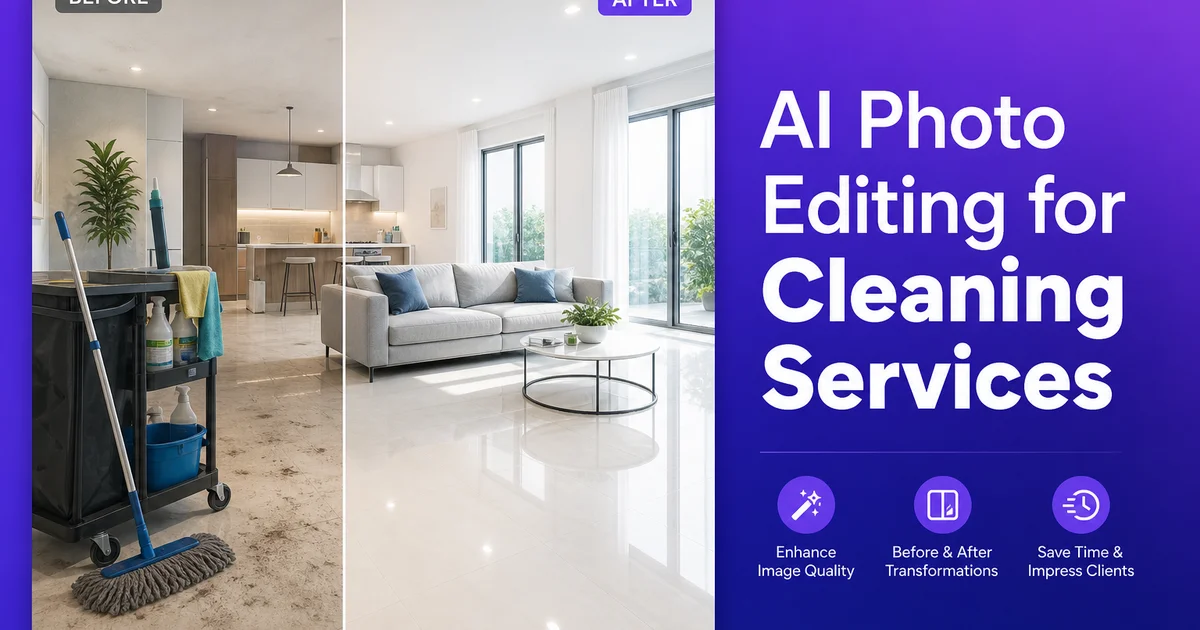
Limpeza é o setor de serviços mais comprovável visualmente. Um consultor financeiro não pode fotografar uma declaração de impostos que prove sua competência. Um consultor de gestão não pode mostrar um antes e depois do organograma de uma empresa. Mas uma empresa de limpeza pode fotografar um forno coberto de gordura e depois fotografar o mesmo forno trinta minutos depois parecendo saído de um showroom. A evidência visual é imediata, concreta e universalmente compreensível. Toda pessoa que já limpou uma cozinha reconhece o trabalho envolvido nessa mudança. Isso torna a fotografia de antes e depois a ferramenta de marketing mais poderosa disponível para qualquer empresa de limpeza. Todo profissional de limpeza já carrega uma câmera no bolso.
O problema não é capturar o conteúdo — é apresentá-lo de forma profissional. Uma foto do antes tirada em uma cozinha escura com as persianas fechadas parece diferente da foto do depois tirada com todas as luzes acesas e o sol entrando pelas janelas. Itens pessoais no quadro criam preocupações com privacidade que impedem o compartilhamento público. Equipamentos de limpeza visíveis nos cantos fazem a foto parecer um instantâneo de trabalho em vez de um ativo de marketing. As fotos brutas têm o conteúdo certo, mas a apresentação errada. Essa lacuna de apresentação é a diferença entre uma foto que é ignorada na rolagem e uma foto que gera uma consulta de reserva.
A edição de fotos com IA fecha essa lacuna sem exigir habilidades fotográficas ou equipamentos caros. AI Enhance normaliza a iluminação para que as fotos de antes e depois pareçam ter sido tiradas sob condições idênticas. Magic Eraser remove itens pessoais, detalhes identificáveis e distrações visuais. O resultado é um par limpo e profissional de antes e depois que pode ir direto para o Google Business Profile, redes sociais e seu site. Toda plataforma onde potenciais clientes avaliam seu trabalho. Construir esse portfólio sistematicamente a partir de cada trabalho cria um ativo de marketing cumulativo que se torna mais persuasivo a cada limpeza concluída.
- A fotografia de antes e depois com ângulo correspondente é o investimento de marketing com maior ROI que uma empresa de limpeza pode fazer.
- AI Enhance normaliza a iluminação entre as fotos de antes e depois para eliminar o ceticismo sobre truques de iluminação.
- Magic Eraser remove itens pessoais dos clientes, medicamentos, correspondência e detalhes identificáveis para compartilhamento público responsável.
- Equipamentos de limpeza e itens não relacionados que foram movidos devem ser apagados para que toda diferença visível seja atribuível ao trabalho de limpeza.
- Um portfólio organizado por tipo de serviço constrói prova direcionada de competência para cada categoria de limpeza que você oferece.
Por que fotos de antes e depois superam todas as outras táticas de marketing de limpeza
Um proprietário comparando três empresas de limpeza no Google vê preços semelhantes, avaliações semelhantes e descrições de serviços semelhantes. A primeira empresa tem um anúncio somente com texto e fotos genéricas de estoque de frascos de spray e esfregões. A segunda tem um punhado de fotos de celular não editadas — escuras, desordenadas e difíceis de interpretar. A terceira tem vinte pares de fotos de antes e depois editadas profissionalmente mostrando fogões cobertos de gordura ficando impecáveis, rejunte de chuveiro enegrecido por mofo ficando branco. Manchas de carpete desaparecendo dos pisos da sala de estar. A terceira empresa consegue a reserva. Esse padrão se repete em todas as plataformas. Yelp, Thumbtack, Angi, Nextdoor e redes sociais — porque a prova visual dos resultados é a forma mais persuasiva de marketing para um serviço físico.
O mecanismo psicológico é direto. O espectador vê uma superfície suja e reconhece sua própria casa. O anel de espuma de sabão ao redor da banheira, os respingos de gordura atrás do fogão, a mancha misteriosa no carpete do corredor. Esse reconhecimento cria uma conexão emocional com o problema. Então eles veem a mesma superfície transformada, e a resposta emocional muda do desconforto para o desejo. Eles querem aquele resultado em sua casa. O salto de querer o resultado para reservar o serviço que o produziu é curto. Nenhuma quantidade de depoimentos escritos ou avaliações por estrelas cria a mesma resposta visceral. O texto diz que a empresa é boa; as fotos provam isso.
O efeito cumulativo é o que torna a fotografia de antes e depois o investimento de marketing com maior retorno que uma empresa de limpeza pode fazer. Cada trabalho produz novos pares de fotos. Em seis meses, uma empresa de limpeza que fotografa cada trabalho e edita os melhores pares constrói um portfólio de cem ou mais mudanças documentadas cobrindo cada tipo de cômodo, cada superfície e cada desafio comum de limpeza. Este portfólio não é uma despesa de marketing única. É um ativo permanente que continua gerando reservas indefinidamente, não custa nada para manter e se torna mais persuasivo à medida que cresce porque a amplitude da cobertura sinaliza experiência e confiabilidade.
- A prova visual dos resultados de limpeza supera avaliações em texto, classificações por estrelas e fotos de estoque na conversão de visitantes em reservas.
- Os espectadores reconhecem os problemas de sua própria casa nas fotos do antes, criando engajamento emocional que o marketing textual não consegue replicar.
- Cada trabalho concluído produz novos ativos para o portfólio, criando uma biblioteca de marketing cumulativa que se torna mais persuasiva ao longo do tempo.
- Cem transformações documentadas cobrindo diversos tipos de cômodos e superfícies sinalizam experiência e confiabilidade para potenciais clientes.
Resolvendo a incompatibilidade de iluminação que prejudica as comparações de limpeza
A falha mais comum na fotografia de antes e depois de limpeza é a inconsistência de iluminação, e é quase inevitável sem pós-processamento. Quando um profissional de limpeza chega a uma casa, o espaço geralmente está em seu estado natural de repouso. Persianas parcialmente fechadas, luzes do teto apagadas, talvez uma única luminária fornecendo luz ambiente quente. A foto do antes captura esse cenário escuro e de tons quentes. Após a limpeza, o profissional abre todas as persianas, acende todas as luzes, e o espaço se inunda de iluminação brilhante e de tons frios. A foto do depois parece muito mais brilhante e convidativa. Um espectador crítico olha para o par e pensa que a mudança é cinquenta por cento iluminação e cinquenta por cento limpeza. Isso prejudica a credibilidade da comparação.
AI Enhance resolve isso ajustando ambas as imagens para uma aparência neutra e bem iluminada. Aplicado à foto do antes, ele levanta as áreas de sombra para revelar a condição real das superfícies que estavam escondidas na escuridão. A sujeira no fogão, a espuma de sabão na porta do box, a camada de poeira nos rodapés. Aplicado à foto do depois, ele atenua os destaques estourados da iluminação forte do teto e normaliza o balanço de branco para que as superfícies apareçam em sua cor verdadeira em vez da tonalidade levemente azulada das lâmpadas fluorescentes. O resultado são duas imagens com brilho, temperatura de cor e detalhe de sombra comparáveis, onde a única diferença visível é a limpeza das superfícies.
Isso importa principalmente para propostas de limpeza comercial. Gerentes de propriedades avaliando propostas para edifícios de escritórios, instalações médicas e espaços comerciais esperam registros profissionais. Uma proposta que inclui fotos de antes e depois sempre bem iluminadas e profissionalmente aprimoradas comunica que a empresa de limpeza opera com a atenção aos detalhes e profissionalismo esperados em ambientes comerciais. As fotos servem dupla função — mostram a qualidade da limpeza e mostram a qualidade do negócio. Gerentes de propriedades que veem registros visuais polidos inferem que o mesmo cuidado se estende ao trabalho de limpeza em si. É exatamente a inferência que você quer que eles façam.
- As fotos do antes são tipicamente mais escuras e mais quentes que as fotos do depois porque as persianas estão fechadas e as luzes estão apagadas na chegada.
- AI Enhance levanta as sombras nas fotos do antes e atenua os destaques nas fotos do depois para produzir condições de iluminação comparáveis.
- A iluminação normalizada força os espectadores a avaliar a qualidade da limpeza em vez de descartarem a melhoria como um truque de iluminação.
- Gerentes de propriedades comerciais julgam o profissionalismo do contratado em parte pela qualidade da documentação nas propostas de limpeza.
Proteção da privacidade do cliente: o passo inegociável antes de qualquer compartilhamento público
Toda fotografia tirada dentro da casa de um cliente é ao mesmo tempo uma foto de seus pertences pessoais, seu estilo de vida. Em alguns casos, suas informações médicas. Um par de antes e depois do banheiro que mostra frascos de medicamentos com rótulos legíveis na prateleira da pia é uma violação de privacidade próxima ao HIPAA. Uma foto da cozinha com correspondência mostrando o nome e endereço do proprietário é um risco de exposição de dados pessoais se postada em uma conta pública de rede social. Uma foto do quarto de uma criança com trabalhos escolares contendo o nome da criança e o nome da escola é informação que nenhuma empresa responsável deveria publicar. Estes não são casos extremos — eles aparecem em quase todo conjunto de fotos de limpeza residencial.
Magic Eraser torna a proteção de privacidade rápida e invisível. Passe o pincel sobre frascos de medicamentos e a IA reconstrói a superfície da prateleira. Remova etiquetas de endereço visíveis em pilhas de correspondência. Apague nomes dos trabalhos escolares das crianças. Retire fotografias de família de paredes e lareiras. Diferente da desfocagem ou censura com barras pretas, que faz as fotos parecerem clínicas e chama atenção para as áreas censuradas, a remoção por IA produz uma imagem de aparência natural onde os itens pessoais simplesmente não estão presentes. A superfície limpa por baixo permanece visível, então a comparação de antes e depois é preservada. Uma prateleira de pia com frascos de medicamentos removidos ainda mostra que a prateleira estava empoeirada antes e limpa depois — a mensagem de marketing está intacta.
Algumas empresas de limpeza adotam a política de remover todos os itens não fixos de ambas as fotos de antes e depois, reduzindo as imagens a puras comparações de superfícies. Essa abordagem elimina toda preocupação com privacidade e tem o benefício adicional de focar a atenção do espectador exclusivamente nos resultados da limpeza. A mudança de cor do rejunte, o brilho da bancada, o polimento das torneiras, a remoção de poeira dos rodapés. A contrapartida é uma imagem ligeiramente menos identificável, já que uma bancada de cozinha completamente livre não parece uma casa habitada. Mas para uso em portfólio público, a segurança da privacidade e a clareza visual frequentemente superam a perda de realismo residencial.
- Fotos de limpeza residencial rotineiramente capturam frascos de medicamentos, correspondência pessoal, nomes de crianças e documentos financeiros.
- A remoção por IA preserva a superfície limpa por baixo enquanto elimina itens pessoais, diferente da desfocagem que chama atenção para as áreas censuradas.
- Remover todos os itens não fixos produz puras comparações de superfícies que maximizam a visibilidade da limpeza e eliminam todo risco de privacidade.
- A proteção de privacidade não é opcional para empresas de limpeza profissionais — é o mínimo para fotografia responsável de clientes.
Estimativas visuais: usando fotos para orçar com precisão e reduzir disputas
Além do marketing, as fotos de limpeza servem um propósito operacional direto no processo de orçamento e faturamento. Quando um potencial cliente solicita uma estimativa de limpeza profunda, a maioria das empresas de limpeza pede fotos do espaço. Essas fotos ajudam o avaliador a determinar a extensão da sujeira, o tipo de superfícies envolvidas, a metragem quadrada e quaisquer desafios especiais. Depósitos de água dura que requerem tratamento químico, manchas em carpetes que precisam de extração, rejunte que precisa de clareamento ou condições de acumulação que requerem mão de obra extra. A precisão da estimativa afeta diretamente a satisfação do cliente e a lucratividade do negócio. Subestimar significa perder dinheiro no trabalho, superestimar significa perder a reserva para um concorrente.
As fotos enviadas pelos clientes são quase sempre de baixa qualidade. São tiradas com a iluminação escura existente, de ângulos incômodos que escondem as piores áreas. Com câmeras de celular que suavizam os detalhes finos que o avaliador precisa ver. AI Enhance transforma essas fotos em ferramentas úteis de avaliação levantando detalhes nas sombras, aguçando texturas de superfícies e normalizando a exposição. Uma foto escura de uma cozinha se torna clara o suficiente para distinguir entre sujeira leve de superfície que uma limpeza padrão resolve e acúmulo pesado de gordura que requer sobretaxa de limpeza profunda. Uma foto de banheiro revela se o mofo do chuveiro é superficial ou penetrou nas linhas de rejunte. Esses detalhes mudam a estimativa em cinquenta a cem reais. Acertá-los na primeira cotação evita a conversa desconfortável no dia do trabalho quando o profissional de limpeza descobre condições piores do que o esperado.
O registro pós-conclusão é o outro uso operacional. Empresas de gestão de propriedades, anfitriões do Airbnb e clientes comerciais cada vez mais exigem registros fotográficos de que a limpeza foi concluída dentro do padrão antes de liberar o pagamento. Fotos aprimoradas de antes e depois com iluminação consistente e apresentação profissional atendem essa necessidade em um formato que pode ser enviado por e-mail, carregado em um portal de gestão de propriedades ou armazenado como registro permanente. Para empresas de limpeza que buscam contas comerciais, demonstrar um processo sistemático de registro fotográfico é frequentemente um fator decisivo para conquistar o contrato.
- As fotos de estimativa enviadas pelos clientes são tipicamente escuras e obscurecem os detalhes de superfície que o avaliador precisa para uma cotação precisa.
- AI Enhance revela níveis de sujeira, tipos de superfície e condições especiais que alteram a estimativa em valores significativos.
- Uma cotação precisa na primeira vez previne surpresas no dia do trabalho e as conversas desconfortáveis sobre mudança de escopo que prejudicam o relacionamento com o cliente.
- Fotos aprimoradas de conclusão servem como documentação de comprovação de trabalho para gerentes de propriedades e contas comerciais.
Construindo um portfólio categorizado que vende cada serviço que você oferece
Um amontoado desorganizado de fotos de antes e depois em um Google Business Profile ou galeria de site tem algum valor de marketing. Um portfólio estruturado organizado por tipo de serviço tem muito mais. Quando um proprietário liga sobre uma limpeza de mudança, ele quer ver resultados de limpeza de mudança especificamente. Não fotos de limpeza de carpete ou fotos de limpeza pós-obra. Quando um gerente de propriedade está avaliando você para um contrato de escritório comercial, ele quer ver outros edifícios de escritórios que você limpou, não cozinhas residenciais. Um portfólio categorizado permite que você responda a cada consulta com evidência visual precisamente relevante.
As categorias devem espelhar seu menu de serviços: limpeza residencial padrão, limpeza residencial profunda, limpeza de entrada e saída de imóvel, limpeza pós-obra, escritório comercial, varejo comercial, carpete e estofamento, serviços especiais (limpeza de acumulação, risco biológico, restauração pós-inundação). Dentro de cada categoria, busque diversidade de cenários — diferentes layouts de cozinha, diferentes estilos de banheiro, diferentes níveis de sujeira inicial. Essa diversidade sinaliza que sua equipe já lidou com toda a gama de condições, não apenas casos fáceis. Uma categoria de limpeza residencial profunda com fotos mostrando de tudo, desde cozinhas levemente negligenciadas até situações com anos de gordura acumulada, comunica competência completa.
O portfólio cresce automaticamente se você fotografar cada trabalho e dedicar alguns minutos editando os melhores pares de cada semana. Dez minutos de edição em uma sexta-feira à tarde adicionam dois a quatro novos pares à sua biblioteca. Ao longo de um ano, isso se acumula em cem ou mais mudanças documentadas. Um ativo visual que nenhum concorrente pode igualar sem fazer o mesmo trabalho consistente. Publique os melhores pares nas redes sociais semanalmente, atualize os anúncios nas plataformas mensalmente e mantenha a biblioteca completa em seu site. O resultado é uma presença de marketing sempre atualizada com provas autênticas de trabalho recente. Sinaliza para potenciais clientes que você é ativo, experiente e produz resultados consistentemente excelentes.
- Portfólios categorizados permitem que você responda a cada consulta com evidência visual precisamente relevante da qualidade do seu trabalho.
- A diversidade dentro de cada categoria — diferentes layouts, estilos e níveis de sujeira — sinaliza competência abrangente em todas as condições.
- Dez minutos de edição semanal adicionam dois a quatro pares à biblioteca, acumulando mais de cem transformações documentadas por ano.
- Publicações semanais nas redes sociais e atualizações mensais de plataformas mantêm sua presença de marketing atualizada com provas autênticas recentes.
How to do it
- 1
Photograph every job with matched before-and-after angles
Consistency is the foundation of strong cleaning portfolio photography. Before touching anything in the space, take a photo from a fixed position. Mark it with painter's tape on the floor if needed. After the cleaning is complete, return to the same position and take the after shot. Use the same focal length and hold the phone at the same height. This matched-angle approach eliminates the visual noise of perspective shifts and forces the viewer's eye to focus on the only thing that changed: the cleanliness of the surfaces. For deep cleans, also take detail shots of specific problem areas. Grout lines, stovetop burners, oven interiors, window tracks — where the change is most dramatic at close range.
- 2
Normalize lighting between before and after shots with AI Enhance
The single biggest credibility problem in cleaning before-and-after photos is mismatched lighting. The before shot is usually darker because you arrive to closed blinds and switched-off lights. The after shot benefits from every window opened and every light turned on. Skeptical viewers dismiss the change as a lighting trick. AI Enhance corrects this by lifting shadow detail in the before photo and taming blown highlights in the after photo, producing two images with comparable brightness and white balance. The cleaning results then speak for themselves without the viewer wondering whether better lighting is doing the work.
- 3
Remove personal items and client-identifying details with Magic Eraser
Every photo taken inside a client's home contains their personal life. Prescription bottles on bathroom shelves, mail with visible addresses on kitchen counters, family photos on walls, children's school artwork with names. Financial documents on desks all pose privacy risks if posted publicly. Paint over each identifying item with Magic Eraser. The AI reconstructs the clean surface underneath, keeping your cleaning results while eliminating privacy concerns. This is not optional for expert cleaning businesses — it is the baseline for responsible client photography.
- 4
Erase distractions unrelated to your cleaning results
Before photos sometimes include elements that the client moved between your arrival and your after photo. Boxes, pet beds, children's toys, or your own cleaning supply caddy visible in a corner. These items confuse the before-and-after comparison because they are not part of the cleaning change. Remove them with Magic Eraser so every difference between the two photos is attributable to your cleaning work. The viewer should be able to scan from before to after and right away see clean counters, polished fixtures, streak-free glass, and fresh carpet — nothing else.
- 5
Organize edited pairs into a service-type portfolio
A collection of random before-and-after shots is useful but unstructured. Organize your edited pairs into service categories: residential deep cleans, move-out cleans, post-construction cleanups, commercial office cleanings, carpet and upholstery. Specialty services like hoarder cleanouts or biohazard cleanup. When a prospect asks about a specific service, you can show them a focused gallery rather than scrolling through unrelated work. Each category accumulates over time into a visual case study library that builds undeniable proof of competence for every service you offer.