
Edição de Fotos com IA para Cetólogos — Magic Eraser
Como os cetólogos utilizam a edição de fotos com IA para foto-identificação de baleias e golfinhos, monitoramento populacional e publicações de pesquisa sobre mamíferos marinhos. Remoção de borrifos e reflexos, aprimoramento de marcas diagnósticas e padronização de catálogos de identificação multidecenais.
SEO & Growth
Revisado por Magic Eraser Editorial ·
Índice
- Fluxos de trabalho de foto-identificação e processamento de imagens assistido por IA
- Aprimoramento de características diagnósticas para sistemas de identificação específicos por espécie
- Gestão de catálogos multidecenais e desafios de padronização
- Aplicações de conservação, ecoturismo e engajamento público
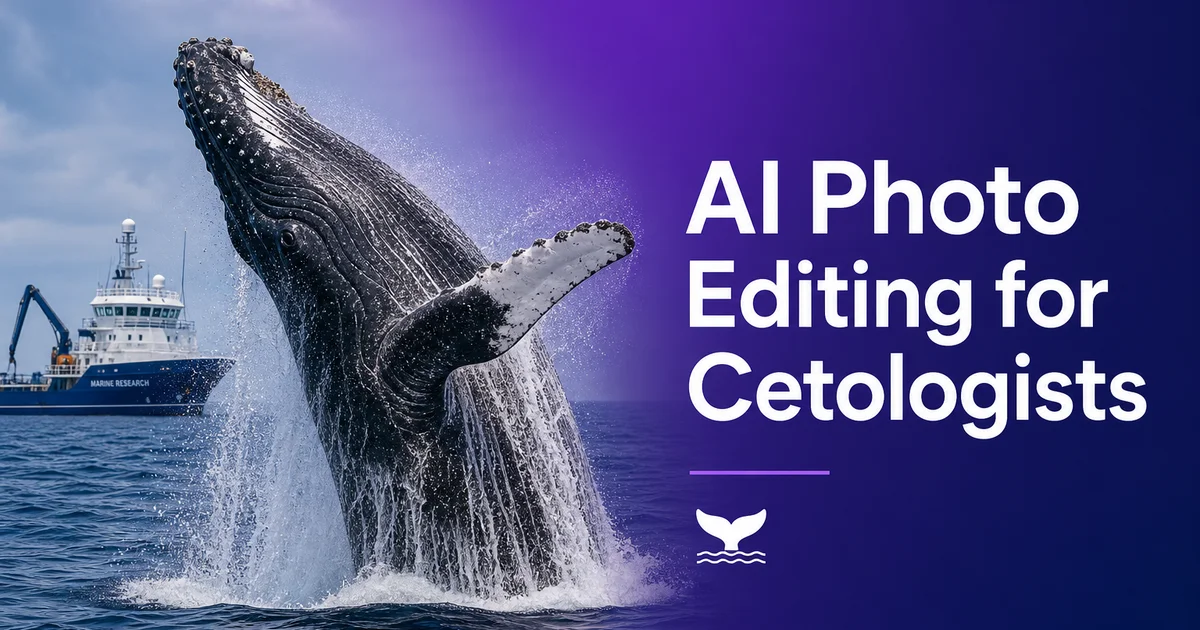
A cetologia — o estudo científico de baleias, golfinhos e botos — foi fundamentalmente moldada pela fotografia desde que o desenvolvimento das técnicas de foto-identificação na década de 1970 demonstrou que cetáceos individuais podiam ser reconhecidos pelas marcas naturais capturadas em fotografias. Hoje, os dados fotográficos sustentam virtualmente todos os aspectos da ciência populacional de cetáceos: estimativa de abundância, cálculo de taxas de sobrevivência, rastreamento de migração, análise de redes sociais, monitoramento reprodutivo. A avaliação de saúde depende da capacidade de capturar, processar e comparar imagens de animais individuais ao longo de encontros que abrangem anos a décadas. Com cerca de 90 espécies de cetáceos reconhecidas e crescente pressão conservacionista sobre muitas populações, a demanda por processamento fotográfico eficiente nunca foi tão alta.
Os desafios fotográficos na cetologia são únicos entre as ciências da vida selvagem. Os sujeitos emergem brevemente e de forma imprevisível, estão parcialmente submersos quando visíveis e são fotografados a partir de plataformas em movimento em ambientes marinhos onde borrifos, reflexos, ondulações e névoa degradam a qualidade da imagem. As características diagnósticas que distinguem os indivíduos — entalhes e incisões na nadadeira dorsal, padrões de pigmentação das nadadeiras caudais, formas das manchas em sela e cicatrizes cutâneas — devem ser resolvidas claramente apesar da distância, movimento e interferência ambiental que caracterizam cada encontro de campo. Um único dia de pesquisa pode produzir milhares de imagens, das quais apenas uma pequena fração terá a qualidade e o conteúdo necessários para fins de identificação. A proporção de imagens úteis em relação ao total de capturas pode ser tão baixa quanto uma em cinquenta em condições marítimas desafiadoras.
As ferramentas de edição de fotos com IA abordam diretamente esses desafios ao automatizar as etapas de processamento de imagem que transformam capturas brutas de campo em fotografias de identificação com qualidade de catálogo. A remoção de borrifos e reflexos limpa os artefatos ambientais que obscurecem características diagnósticas em imagens que de outra forma seriam utilizáveis. O aprimoramento de detalhes recupera informações de marcas de imagens capturadas a longa distância ou em condições de pouca luz. A normalização de cor e exposição padroniza imagens de catálogos plurianuais onde o mesmo indivíduo foi fotografado sob condições vastamente diferentes. Para cetólogos que gerenciam simultaneamente temporadas de trabalho de campo, curadoria de catálogos, modelagem populacional e prazos de publicação, o processamento eficiente de imagens assistido por IA não é um luxo, mas uma necessidade operacional para programas de pesquisa produtivos.
- A remoção de borrifos, reflexos e interferências da superfície oceânica transforma capturas brutas de campo em imagens de identificação limpas, adequadas para catálogos de foto-ID e sistemas de correspondência automatizada.
- O aprimoramento por IA aguça características diagnósticas — padrões de entalhes na nadadeira dorsal, pigmentação das nadadeiras caudais, manchas em sela e cicatrizes cutâneas — de imagens capturadas a longa distância ou em condições marinhas adversas.
- A normalização de cor e exposição padroniza catálogos multidecenais onde o mesmo indivíduo é fotografado centenas de vezes sob condições de iluminação oceânica enormemente variáveis.
- O processamento em lote lida com o volume do trabalho de campo marinho — milhares de imagens por dia de pesquisa — tornando prático filtrar e aprimorar conjuntos de dados de levantamento inteiros dentro dos prazos operacionais.
- Imagens padronizadas para catálogo e pranchas de figuras para publicação são exportadas a 300 DPI para submissão a periódicos e em dimensões compatíveis com bancos de dados para plataformas como Happywhale e Flukebook.
Fluxos de trabalho de foto-identificação e processamento de imagens assistido por IA
A foto-identificação é a espinha dorsal não invasiva da ciência populacional de cetáceos, permitindo que pesquisadores rastreiem baleias e golfinhos individuais ao longo de suas vidas sem captura, marcação ou amostragem genética. A técnica explora o fato de que muitas espécies de cetáceos carregam marcas adquiridas naturalmente que permanecem estáveis ao longo do tempo. As superfícies ventrais das nadadeiras caudais das baleias-jubarte apresentam padrões únicos de pigmentação em preto e branco tão distintivos quanto impressões digitais humanas; as manchas em sela das orcas atrás da nadadeira dorsal mostram formas e cicatrizes únicas para cada indivíduo; e as nadadeiras dorsais dos golfinhos-nariz-de-garrafa acumulam entalhes, incisões e cicatrizes de mordidas distintivas ao longo da vida. A comparação de novas fotografias com um catálogo de indivíduos conhecidos permite que os pesquisadores construam históricos de encontros que formam a base para estimativas populacionais de captura-recaptura, análise de sobrevivência e rastreamento de movimentos.
O pipeline de processamento de imagens entre a captura bruta de campo e a imagem de identificação pronta para catálogo envolve múltiplas etapas onde as ferramentas de IA proporcionam ganhos substanciais de eficiência. A etapa inicial de triagem — revisar milhares de imagens de um dia de campo para identificar aquelas com qualidade e conteúdo diagnóstico suficientes — beneficia-se da avaliação de qualidade assistida por IA que sinaliza imagens com características diagnósticas claras e descarta aquelas degradadas por desfoque, borrifos ou conteúdo insuficiente. A etapa de limpeza remove artefatos ambientais — borrifos, reflexos, detritos flutuantes, reflexos da superfície da água — que obscurecem parcialmente as características diagnósticas em imagens de qualidade suficiente. A etapa de aprimoramento aguça os detalhes finos dos padrões de marcas, melhorando a resolução de pequenos entalhes, cicatrizes leves e limites sutis de pigmentação.
Para sistemas de correspondência automatizada — algoritmos computacionais que comparam novas imagens com o catálogo para encontrar correspondências candidatas — a qualidade e consistência das imagens de entrada determinam diretamente a precisão da correspondência. Interferência de fundo, iluminação variável e processamento inconsistente de imagens introduzem ruído que degrada o desempenho algorítmico. A padronização por IA das imagens antes de entrarem no pipeline de correspondência — remoção consistente de fundo, normalização de cor e alinhamento da característica diagnóstica em posição e orientação padrão — melhora a precisão da correspondência e reduz a taxa de falsos positivos que exige verificação humana demorada. À medida que os catálogos de foto-identificação de cetáceos crescem para centenas de milhares de imagens, a eficiência computacional da correspondência automatizada depende cada vez mais da qualidade padronizada das imagens de entrada.
- A foto-identificação rastreia cetáceos individuais de forma não invasiva através de marcas adquiridas naturalmente — padrões das nadadeiras caudais, manchas em sela, entalhes na nadadeira dorsal — que persistem por décadas.
- A triagem por IA de milhares de imagens de campo por dia sinaliza aquelas com conteúdo diagnóstico e qualidade suficiente, reduzindo drasticamente a carga de revisão manual.
- A remoção de artefatos ambientais — borrifos, reflexos, detritos e reflexos da superfície da água — recupera características diagnósticas de imagens de qualidade utilizável.
- O processamento padronizado por IA antes da correspondência automatizada com o catálogo melhora a precisão do algoritmo e reduz a taxa de falsos positivos que demanda verificação humana demorada.
Aprimoramento de características diagnósticas para sistemas de identificação específicos por espécie
Diferentes espécies de cetáceos utilizam diferentes sistemas de marcas para identificação individual, e as necessidades de aprimoramento fotográfico variam de acordo. A foto-identificação de baleias-jubarte baseia-se principalmente na superfície ventral (inferior) das nadadeiras caudais, que apresenta padrões de pigmentação em preto e branco únicos para cada indivíduo e estáveis ao longo da vida. Esses padrões variam de totalmente branco a totalmente preto, com a maioria dos indivíduos exibindo um padrão intermediário complexo de manchas, placas e linhas de contorno. O aprimoramento deve aguçar os limites entre áreas claras e escuras enquanto preserva as gradações sutis que ajudam a distinguir indivíduos de aparência semelhante. A fotografia da nadadeira caudal é frequentemente capturada no momento em que a baleia levanta a cauda antes de um mergulho profundo — uma breve janela que produz imagens em ângulos, distâncias e condições de iluminação variáveis.
A identificação de orcas utiliza duas características primárias: a forma e as cicatrizes da nadadeira dorsal e a mancha em sela cinza imediatamente atrás dela. As nadadeiras dorsais em machos adultos podem atingir 1,8 metros de altura e acumulam um perfil distintivo de entalhes, incisões e mudanças de curvatura ao longo do tempo. A mancha em sela é uma área cinza-claro cuja forma, tamanho e padrão interno diferem entre indivíduos. O aprimoramento de imagens de identificação de orcas deve aguçar tanto o perfil da borda da nadadeira — onde pequenos entalhes podem ser o caractere diferenciador entre indivíduos semelhantes — quanto o limite da mancha em sela — onde a transição da cor escura do corpo para a cor cinza da mancha pode ser gradual e dependente da iluminação. Para populações com manchas oculares distintivas — como as orcas residentes piscívoras do Pacífico Nordeste — a forma da mancha ocular fornece uma característica de identificação adicional que o aprimoramento pode ajudar a resolver.
Pequenos cetáceos — golfinhos, botos e baleias-de-bico — apresentam os maiores desafios fotográficos porque são menores, emergem mais brevemente e carregam marcas mais sutis do que as grandes baleias. A identificação de golfinhos-nariz-de-garrafa baseia-se nos entalhes da borda posterior da nadadeira dorsal que podem ter apenas alguns centímetros em animais fotografados a distâncias de dezenas a centenas de metros. Golfinhos-rotadores são identificados por marcas nos lábios e na região genital visíveis apenas em imagens laterais de alta qualidade. Baleias-de-bico — entre os cetáceos mais raramente observados — carregam cicatrizes lineares de mordidas de combates intraespecíficos que são a principal característica de identificação, mas são sutis contra a cor escura do corpo. Para todos os pequenos cetáceos, o aprimoramento por IA de detalhes finos de bordas e marcas cutâneas sutis é fundamental para extrair informações de identificação das condições fotográficas desafiadoras que os encontros de campo frequentemente apresentam.
- Os padrões das nadadeiras caudais das baleias-jubarte requerem limites claro-escuro aguçados enquanto preservam gradações sutis que distinguem indivíduos com padrões gerais semelhantes.
- Os perfis da borda da nadadeira dorsal das orcas e as definições dos limites da mancha em sela requerem aprimoramento — pequenos entalhes e transições graduais de cinza são caracteres identificadores-chave.
- Os entalhes da borda posterior da nadadeira dorsal dos golfinhos-nariz-de-garrafa podem ter apenas centímetros em animais fotografados a dezenas ou centenas de metros — o máximo aguçamento de bordas é essencial.
- As cicatrizes lineares de mordidas das baleias-de-bico são sutis contra a cor escura do corpo — o aprimoramento do contraste entre o tecido cicatricial e a pele circundante melhora a utilidade do catálogo de identificação.
Gestão de catálogos multidecenais e desafios de padronização
Os catálogos de foto-identificação de cetáceos estão entre os conjuntos de dados de monitoramento de vida selvagem mais longos em existência. O catálogo de baleias-jubarte do Atlântico Norte mantido pela Allied Whale no College of the Atlantic contém imagens que abrangem mais de quatro décadas, com algumas baleias individuais fotografadas mais de cem vezes ao longo de suas vidas. O catálogo de orcas do Center for Whale Research para a população Southern Resident rastreia cada indivíduo desde 1976. Essas longas séries temporais são cientificamente inestimáveis para compreender taxas de sobrevivência, sucesso reprodutivo, mudanças na estrutura social e impactos das mudanças ambientais. Mas também apresentam enormes desafios de padronização, já que a tecnologia fotográfica evoluiu do filme para o digital e a qualidade das imagens variou enormemente ao longo de décadas, equipes de pesquisa e condições de campo.
A normalização por IA desses arquivos de qualidade variável aborda um dos problemas práticos mais persistentes na gestão de catálogos. Imagens da década de 1980, capturadas em filme com lentes mais curtas em barcos em movimento, devem ser significativamente comparáveis com imagens da década de 2020, capturadas com lentes autofoco de 600mm e sensores digitais que oferecem dez vezes a resolução. A reprodução de cores, as características de contraste, os perfis de grão versus ruído e a resolução de detalhes finos das marcas diferem enormemente entre as eras. O processamento por IA pode normalizar essas diferenças técnicas sem alterar o conteúdo diagnóstico, trazendo digitalizações antigas de filme a níveis comparáveis de contraste e detalhe com capturas digitais modernas, para que as marcas do mesmo indivíduo possam ser comparadas entre encontros separados por décadas sem que a qualidade técnica da imagem confunda a comparação biológica.
O desafio do volume é igualmente significativo. Os principais programas de pesquisa em cetáceos agora acumulam dezenas de milhares de imagens por temporada de campo, e as plataformas globais que agregam dados de múltiplos grupos de pesquisa — Happywhale para baleias-jubarte e outras grandes baleias, Flukebook para múltiplas espécies — contêm milhões de imagens contribuídas tanto por pesquisadores especialistas quanto por cientistas cidadãos. O processamento em lote nessa escala requer não apenas velocidade, mas consistência. Cada imagem em um pipeline de milhares deve receber o mesmo tratamento padronizado para que os algoritmos de correspondência automatizada a jusante operem em um conjunto de dados uniforme. O processamento em lote por IA garante essa consistência de uma forma que operadores humanos, sujeitos a fadiga, variação de julgamento e pressão de tempo, não conseguem manter de forma confiável em grandes conjuntos de dados.
- Os principais catálogos abrangem mais de quatro décadas, com indivíduos fotografados centenas de vezes — do filme da década de 1980 a capturas digitais modernas com lentes de 600mm que requerem normalização.
- O processamento por IA normaliza diferenças técnicas entre eras sem alterar o conteúdo diagnóstico — tornando imagens da era do filme e da era digital significativamente comparáveis.
- Plataformas de agregação global contêm milhões de imagens de pesquisadores profissionais e cientistas cidadãos — o processamento em lote nessa escala exige consistência automatizada.
- O tratamento padronizado uniforme em pipelines de imagens inteiros garante que algoritmos de correspondência automatizada operem em conjuntos de dados consistentes livres de variação de processamento.
Aplicações de conservação, ecoturismo e engajamento público
A conservação de cetáceos depende cada vez mais de dados fotográficos tanto para monitoramento científico quanto para advocacy pública. As avaliações de tendências populacionais submetidas à Comissão Internacional da Baleia, à Lista Vermelha da IUCN e às agências nacionais de gestão de mamíferos marinhos dependem de dados de foto-identificação para estimar o tamanho da população, taxas de sobrevivência e sucesso reprodutivo. A qualidade das evidências fotográficas influencia diretamente a força dos argumentos conservacionistas. Imagens claras e bem processadas que mostram reconhecimento individual, estrutura populacional e indicadores de saúde têm mais peso nas discussões políticas do que fotos de campo ambíguas. O processamento de imagens por IA que eleva a fotografia de campo à qualidade de publicação e exibição fortalece a base probatória para decisões de conservação que afetam algumas das megafaunas mais carismáticas do planeta.
O ecoturismo de observação de baleias — uma indústria global que gera mais de dois bilhões de dólares anualmente — depende das mesmas técnicas de identificação fotográfica que impulsionam a pesquisa científica. Operadores turísticos contribuem cada vez mais para a pesquisa ao submeter fotografias de passageiros e guias a plataformas de ciência cidadã. A qualidade dessas contribuições determina seu valor científico. O aprimoramento por IA de fotografias de ecoturismo pode transformar instantâneos casuais de turistas em imagens com qualidade suficiente para correspondência com o catálogo, expandindo o esforço efetivo de levantamento para populações de cetáceos muito além do que equipes de pesquisa dedicadas podem alcançar sozinhas. Algumas populações — como as baleias-jubarte do Havaí e as orcas do Pacífico Noroeste — recebem mais cobertura fotográfica do ecoturismo do que da pesquisa, tornando a qualidade de imagem de fotógrafos não especialistas um fator genuíno na capacidade de monitoramento populacional.
O engajamento público com a ciência dos cetáceos é poderosamente impulsionado pelo reconhecimento individual. As pessoas se conectam mais profundamente com indivíduos nomeados e rastreados do que com estatísticas abstratas de populações. A capacidade de apresentar imagens claras e impactantes de indivíduos conhecidos — mostrando seus históricos de marcas, relações familiares e eventos de vida ao longo de anos de encontros — transforma a conservação de cetáceos de um exercício de dados em uma narrativa que constrói apoio público para medidas de proteção marinha. Imagens aprimoradas por IA de indivíduos identificados servem exposições em museus, filmes documentários, programas educacionais e conteúdo de mídias sociais que alcançam audiências muito além da comunidade científica, criando a base de apoio público da qual a conservação marinha depende em última instância para suporte político e financeiro.
- Submissões de políticas de conservação à IWC, IUCN e agências nacionais têm mais peso com evidências fotográficas claras e bem processadas da estrutura e saúde populacional.
- Contribuições de ciência cidadã do ecoturismo expandem a cobertura de levantamento além das equipes de pesquisa dedicadas — o aprimoramento por IA transforma fotos casuais de turistas em qualidade correspondível com o catálogo.
- Algumas populações de cetáceos recebem mais cobertura fotográfica de passageiros de observação de baleias do que de pesquisadores — a qualidade das imagens turísticas afeta diretamente a capacidade de monitoramento.
- Narrativas de reconhecimento individual — baleias nomeadas rastreadas ao longo dos anos — constroem a base de apoio público da qual a conservação marinha depende para suporte político e financeiro.
How to do it
- 1
Capture cetacean images using standardized field photography protocols
Photograph whales and dolphins using long telephoto lenses (300mm to 600mm) from research vessels, using burst mode to capture the brief moments when diagnostic features are visible. Dorsal fin profiles for photo-spotting, fluke undersides for humpback whale catalogs, and body surface markings for individual recognition. For drone-based work, capture orthographic (directly overhead) images at standardized altitudes for photogrammetric body condition measurements. Include geographic coordinates, date, time, and environmental conditions in metadata for every field session, as this information is key for linking images to specific individuals in long-term population monitoring databases.
- 2
Remove water spray, glare, and ocean surface clutter from identification images
Use Magic Eraser to remove the environmental artifacts that routinely compromise cetacean field photography. Water spray from blowholes that obscures dorsal fin profiles, sun glare on wet skin that hides scarring and pigmentation patterns, floating debris and wave foam that clutters the image around the animal, and other marine life (seabirds, fish) that intrudes into the frame during surface events. Clean spotting images with the animal clearly separated from environmental clutter are key for matching against photo-spotting catalogs where individual recognition depends on precise comparison of fin shape, notch patterns, and skin markings.
- 3
Enhance diagnostic markings for individual identification and health assessment
Use AI Enhance to sharpen the specific features used for individual cetacean spotting. Dorsal fin trailing-edge notch patterns, fluke pigmentation patterns in humpback whales, saddle patch shapes in orcas, tooth rake scars, and skin lesion traits. Boost is mainly critical for images taken at long range or in poor lighting conditions where diagnostic marks are present but not clearly resolved. For health assessment work, enhance skin texture details to improve visibility of skin conditions, lesions, cookie-cutter shark bites, entanglement scars. The general skin quality indicators that researchers use to evaluate individual body condition.
- 4
Standardize color and exposure across multi-year photo-identification catalogs
Use AI color correction to normalize images across the extreme range of lighting conditions encountered in marine fieldwork. Overcast gray skies versus tropical sunlight, backlighting versus frontlighting, dawn surveys versus midday encounters. Photo-spotting catalogs for long-lived species like humpback and sperm whales span decades. The same individual may be photographed hundreds of times under wildly different conditions. Consistent color and exposure normalization ensures that skin pigmentation patterns, scar coloration. Body markings can be reliably compared across encounters separated by years or decades, which is key for both automated matching algorithms and human catalog curators.
- 5
Prepare figure plates and catalog images for publications and databases
Arrange standardized spotting views — dorsal fin lateral profile, fluke ventral surface, body lateral overview — into publication-ready figure plates with consistent layout and labeling for journal submission. For photo-spotting catalogs and databases like Happywhale and Flukebook, prepare cropped and enhanced images at standardized dimensions that meet submission needs. Export at 300 DPI for print publications in journals like Marine Mammal Science and Aquatic Mammals. For public engagement and whale-watching ecotourism education, prepare annotated versions highlighting the specific markings that make individual spotting possible, connecting scientific method with public interest.
Fontes
- Photo-Identification Techniques for Cetacean Population Studies — International Whaling Commission
- Standardized Photographic Methods for Cetacean Research and Monitoring — Society for Marine Mammalogy — Techniques for Aquatic Monitoring
- Drone-Based Photogrammetry for Cetacean Body Condition Assessment — Marine Ecology Progress Series — Inter-Research