
Edição de fotos com IA para encadernadores — Magic Eraser
Como encadernadores utilizam a edição de fotos com IA para imagens de portfólio, anúncios online e documentação artesanal. Realce a textura do couro, limpe fundos de oficina e destaque os detalhes da encadernação fina.

Content Lead
Revisado por Magic Eraser Editorial ·
Índice
- Por que a fotografia é a ferramenta de marketing mais importante do encadernador
- Captar e realçar as qualidades materiais que definem a encadernação fina
- Remoção de fundo e apresentação para diferentes plataformas e finalidades
- Construir uma marca visual e escalar a fotografia de produção para oficinas em crescimento
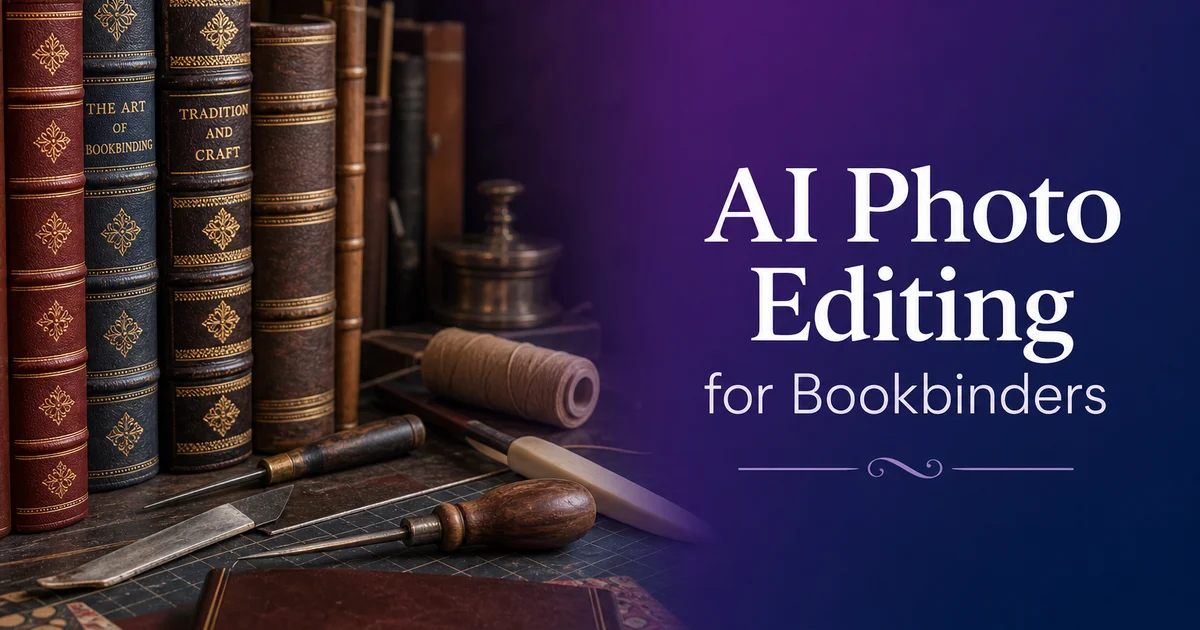
A encadernação é um ofício em que as qualidades visuais e táteis do objeto acabado são inseparáveis do seu valor. Uma encadernação fina comunica qualidade através da textura do couro, da precisão da douração, do alinhamento das letras na lombada, do padrão das guardas marmoreadas e da uniformidade dos cadernos cosidos. Estas qualidades materiais são o que distingue um volume encadernado à mão de um livro produzido industrialmente, e são exatamente as qualidades mais difíceis de captar numa fotografia. A distância entre segurar nas mãos um livro lindamente encadernado e ver uma fotografia dele num ecrã é enorme. E é o desafio fotográfico do encadernador reduzir essa distância o máximo possível.
A maioria dos encadernadores trabalha em pequenas oficinas otimizadas para o artesanato e não para a fotografia. As superfícies de trabalho estão cobertas de ferramentas, prensas, adesivos, dobradeiras de osso e restos de materiais. A iluminação é concebida para trabalho manual de precisão e não para iluminação fotográfica uniforme. O espaço é dedicado a prensas de encadernação e estantes de secagem em vez de cenários fotográficos. Quando um encadernador termina uma encomenda e precisa de a fotografar antes da entrega, o processo habitual consiste em desimpedir um pequeno canto da bancada, improvisar um fundo com uma folha de papel e disparar com o telemóvel na mão sob qualquer luz disponível. Os resultados raramente fazem justiça a um trabalho que pode ter consumido semanas de labor cuidadoso.
As ferramentas de edição de fotos com IA abordam os desafios específicos da fotografia de encadernação sem exigir um estúdio dedicado ou competências fotográficas profissionais. A remoção de fundo cria apresentações limpas a partir de ambientes de oficina. O realce de detalhes recupera a textura do couro, a douração e as texturas do papel que as câmaras dos telemóveis achatam. A remoção de imperfeições elimina os artefactos de oficina que se tornam visíveis em fotografias de aproximação. Estas ferramentas transformam simples registos em imagens de qualidade profissional que representam fielmente o artesanato do trabalho, quer o encadernador venda através de marketplaces online, candidate-se a exposições ou construa um portfólio profissional.
- A remoção de fundo isola encadernações acabadas de bancadas desordenadas, ferramentas e materiais armazenados, para apresentações de portfólio impecáveis.
- O realce com IA recupera as qualidades táteis dos materiais — textura do couro, douração, padrões de papel marmoreado e trama do tecido — que as câmaras dos telemóveis comprimem em superfícies planas.
- O Magic Eraser remove manchas de cola, marcas de lápis, impressões de prensa e partículas de pó que a fotografia em oficina inevitavelmente capta em fotografias de aproximação.
- Uma qualidade de imagem consistente em portfólio, marketplace e redes sociais apresenta o encadernador como um artesão sério e profissional.
- O processamento em lote gere múltiplas encadernações de uma única sessão fotográfica de forma eficiente, reduzindo o tempo dedicado à pós-produção.
Por que a fotografia é a ferramenta de marketing mais importante do encadernador
A encadernação é um ofício inerentemente local. A maioria dos encadernadores serve clientes na sua região geográfica para trabalhos por encomenda, e o número de pessoas que entra pela porta de uma oficina física é limitado. A internet transforma um ofício local num negócio global, mas apenas se o trabalho puder ser apresentado de forma convincente através de fotografias. Um encadernador no interior de Vermont pode atrair clientes de encomendas de Londres, vender diários através do Etsy para clientes em Tóquio e receber convites para exposições de curadores em Berlim. Mas apenas se o seu portfólio online comunicar a qualidade e a distinção do seu trabalho através das imagens. Nenhuma quantidade de texto descritivo sobre folha de ouro aplicada à mão ou guardas marmoreadas artesanais substitui uma fotografia que mostre essas qualidades com clareza.
O mercado da encadernação segmenta-se em vários tipos distintos de clientes, cada um com expectativas visuais diferentes. Os clientes de encomendas de encadernação fina e restauro precisam de ver artesanato preciso, qualidade dos materiais e sofisticação de design: as suas fotografias devem transmitir que o encadernador é capaz de lidar com textos valiosos e produzir resultados de qualidade museológica. Os clientes de marketplaces artesanais que compram diários, cadernos e encadernações decorativas precisam de ver produtos atraentes que se destaquem das opções produzidas em massa: as suas fotografias devem transmitir caráter artesanal e valor. Os júris de exposições que avaliam trabalhos para mostras e concursos precisam de ver excelência técnica e ambição artística: as suas fotografias devem corresponder aos padrões de apresentação da fotografia artesanal profissional. Um único encadernador pode servir os três mercados simultaneamente.
As redes sociais tornaram-se o principal canal de descoberta para encadernadores artesanais. O Instagram, em particular, recompensa as qualidades visuais da encadernação fina: a textura do couro, o brilho do ouro, os padrões intrincados dos papéis decorados. Um encadernador com fotografia consistentemente de alta qualidade constrói seguidores que se convertem em pedidos de encomendas, vendas em marketplaces e oportunidades de exposição. Mas o algoritmo e o público do Instagram são implacáveis com a fotografia de baixa qualidade. Uma encadernação deslumbrante fotografada numa bancada desordenada com iluminação irregular receberá uma fração do engagement que a mesma encadernação receberia com um fundo limpo e uma representação cromática precisa.
- A fotografia online transforma a encadernação de um ofício local num negócio global, atraindo clientes de encomendas, compradores de marketplaces e curadores de exposições de todo o mundo.
- Diferentes segmentos de mercado — encomendas de encadernação fina, vendas em marketplaces artesanais e candidaturas a exposições — requerem, cada um, fotografia que comunique qualidades específicas.
- O Instagram recompensa as qualidades visuais e de textura da encadernação fina, mas penaliza a fotografia de baixa qualidade com engagement e visibilidade drasticamente inferiores.
- Nenhuma quantidade de texto descritivo substitui fotografias que comuniquem claramente a qualidade do couro, a precisão da douração e o caráter artesanal.
Captar e realçar as qualidades materiais que definem a encadernação fina
As qualidades materiais de uma encadernação fina operam em escalas que vão desde a forma geral do livro até texturas superficiais microscópicas. Cada escala requer abordagens fotográficas e de realce diferentes. Ao nível macro, a forma da encadernação — as suas proporções, a esquadria das pastas, a regularidade das dobras, o alinhamento da lombada — comunica qualidade estrutural. As câmaras dos telemóveis captam a forma adequadamente, mas frequentemente introduzem uma distorção subtil que faz com que bordas retas pareçam ligeiramente curvas. O realce com IA corrige esta distorção geométrica mantendo o aspeto natural da encadernação, garantindo que um objeto fabricado com precisão pareça igualmente preciso na fotografia.
Ao nível do detalhe, a textura do couro é a textura individual mais importante de captar e realçar. O couro de grão inteiro desenvolve padrões superficiais únicos durante o processo de curtimento que revelam a qualidade e o caráter da pele. A cabra apresenta uma textura granulada distintiva. O bezerro tem um padrão mais liso e apertado. A pele de porco curtida com alúmen revela marcas foliculares num agrupamento característico de três pontos. Estes padrões de textura são o que compradores experientes e colecionadores examinam primeiro, e são exatamente o que as câmaras dos telemóveis sob iluminação plana tornam invisível. Fotografias com luz lateral realçadas com nitidez por IA restauram a visibilidade da textura, permitindo que o caráter do couro transpareça através do ecrã de uma forma que se aproxima — embora nunca iguale completamente — da experiência de passar um dedo pela superfície real.
A douração e as letras estampadas apresentam um desafio fotográfico particular porque a folha de ouro é altamente reflexiva e muda de aspeto consideravelmente conforme o ângulo de observação. Presencialmente, inclina-se o livro para ver o ouro captar a luz e ler as letras. Numa fotografia, o ouro ou explode num brilho indiferenciado ou aparece como uma cor plana e baça, dependendo do ângulo de iluminação. O realce com IA equilibra estes extremos ajustando seletivamente a gama tonal dos elementos metálicos — devolvendo detalhe aos reflexos brilhantes e acrescentando luminosidade às áreas planas — para que o ouro apareça como ouro na fotografia sem perder a definição nítida das impressões individuais das ferramentas e dos caracteres.
- O realce com IA corrige a distorção geométrica subtil das câmaras dos telemóveis, garantindo que encadernações fabricadas com precisão pareçam igualmente precisas nas fotografias.
- Os padrões de textura do couro — a granulação da cabra, a lisura do bezerro, as marcas foliculares do porco — tornam-se visíveis após o realce, comunicando a qualidade dos materiais a compradores experientes.
- O realce da douração equilibra reflexos brilhantes e áreas tonais planas, preservando tanto a qualidade metálica como a definição nítida das impressões individuais das ferramentas.
- O realce multiescala abrange tudo, desde a forma geral da encadernação até a textura superficial microscópica, correspondendo à forma como colecionadores e compradores efetivamente avaliam a qualidade da encadernação fina.
Remoção de fundo e apresentação para diferentes plataformas e finalidades
Os fundos de oficina são o fator que mais compromete a qualidade na fotografia de encadernação. Uma prensa de encadernação, um pote de cola, dobradeiras de osso espalhadas, recortes de couro e tecido são o cenário visual de todas as oficinas de encadernação em funcionamento, e acabam inevitavelmente por aparecer no fundo das fotografias de oficina. Estes elementos têm o seu charme em registos dos bastidores do processo, mas são catastróficos para a fotografia de produto e de portfólio, onde a encadernação em si precisa de comandar toda a atenção. O Background Eraser isola a encadernação do seu contexto de oficina, lidando com os perfis de borda complexos que os livros apresentam: as curvas subtis das lombadas arredondadas, o espaço fino entre o miolo e as pastas de cobertura, e as bordas irregulares dos papéis decorativos feitos à mão.
Diferentes contextos de apresentação requerem diferentes abordagens de fundo. Os sites de portfólio beneficiam de fundos neutros consistentes que criam uma experiência de visualização semelhante a uma galeria — tons de cinzento claro ou creme quente que complementam as cores naturais do couro, tecido e papel sem competir pela atenção. Os anúncios em marketplaces como o Etsy e plataformas semelhantes necessitam de fundos brancos ou quase brancos para cumprir os padrões da plataforma e parecer profissionais ao lado de outros anúncios. As fotografias para candidaturas a exposições frequentemente requerem cores de fundo específicas determinadas pelo júri. As publicações nas redes sociais podem beneficiar de fundos contextuais — uma encadernação fotografada sobre uma bela superfície de madeira, ou colocada ao lado da sua caixa correspondente e do texto que contém — mas estes elementos contextuais devem ser cuidadosamente escolhidos em vez de desordem acidental da oficina.
Para encadernações com elementos tridimensionais complexos — nervuras salientes na lombada, fechos projetados, couro que se estende para além das pastas — a remoção de fundo deve preservar a informação de sombras que comunica estas qualidades dimensionais. Uma encadernação plana recortada contra branco puro parece natural. Uma encadernação com relevo físico significativo parece artificial sem as sombras subtis que a ancoram a uma superfície. O AI Fill pode gerar superfícies de suporte apropriadas — um tecido de linho, uma secretária de madeira, uma base de couro — que proporcionam contexto de sombra mantendo a apresentação limpa e profissional que a encadernação merece.
- O Background Eraser lida com os perfis de borda complexos dos livros — lombadas arredondadas, espaços entre pastas e bordas irregulares de papel feito à mão — que exigem isolamento preciso.
- Os sites de portfólio beneficiam de fundos neutros consistentes, os marketplaces requerem fundos brancos, e as candidaturas a exposições podem especificar cores de fundo particulares.
- Elementos tridimensionais da encadernação como nervuras salientes na lombada e fechos projetados necessitam de informação de sombras preservada para evitar parecer artificialmente planos quando isolados.
- O AI Fill gera superfícies de suporte apropriadas que proporcionam contexto de sombra e ancoragem dimensional, mantendo uma apresentação limpa e profissional.
Construir uma marca visual e escalar a fotografia de produção para oficinas em crescimento
Uma apresentação visual consistente em todas as plataformas transforma fotografias individuais numa identidade de marca coesa. Quando um potencial cliente visita o seu site, consulta a sua loja no Etsy e depois encontra o seu perfil no Instagram, a qualidade e o estilo consistentes da sua fotografia dizem-lhe que é um profissional atento aos detalhes — a mesma qualidade que esperará na própria encadernação. Esta consistência visual é particularmente importante para encadernadores porque o próprio ofício trata de precisão, cuidado e atenção ao detalhe. Uma fotografia inconsistente mina precisamente as qualidades que o trabalho deveria demonstrar. As ferramentas de edição com IA garantem consistência aplicando os mesmos parâmetros de realce, tratamento de fundo e perfil de cor a cada imagem de um lote.
À medida que uma oficina de encadernação cresce de uma prática individual para uma pequena empresa — talvez adicionando aprendizes, expandindo para workshops e ensino, ou aumentando o volume de produção — as necessidades fotográficas crescem proporcionalmente. Mais encadernações significam mais anúncios. Os workshops de ensino requerem registos das etapas do processo. As candidaturas a exposições necessitam de seleções curadas apresentadas segundo padrões profissionais. As redes sociais exigem conteúdo fresco regularmente. Um proprietário individual pode gerir isto com sessões fotográficas ocasionais, mas uma operação em crescimento necessita de um fluxo de trabalho sistemático. O processamento em lote com IA — fotografar as encadernações concluídas de uma semana numa sessão, processá-las todas através de remoção de fundo e realce noutra, e depois exportar versões dimensionadas para todas as plataformas — é a diferença de eficiência entre a fotografia ser uma tarefa administrativa menor e tornar-se uma obrigação pesada que compete com o tempo na bancada.
A documentação do processo juntamente com o trabalho acabado acrescenta profundidade à presença online do encadernador. Clientes e seguidores ficam fascinados com as etapas da encadernação — aparar couro, dourar, coser sobre nervuras, laçar pastas — mas as fotografias de processo captadas em condições de oficina são inerentemente mais desordenadas do que as fotografias de produto. As ferramentas de edição com IA ajudam a colmatar esta lacuna: limpar as fotografias de processo o suficiente para parecerem intencionais e profissionais, mantendo o realismo de oficina que as torna envolventes. Um feed bem curado que alterna entre imagens polidas de trabalhos acabados e registos de processo editados conta uma história forte sobre o artesanato que a fotografia de produto pura não consegue alcançar sozinha.
- Uma fotografia consistente em site, marketplace e redes sociais constrói uma identidade de marca profissional que reforça a precisão e o cuidado esperados na encadernação fina.
- O processamento em lote com IA escala os fluxos de trabalho fotográficos à medida que a oficina cresce, mantendo a documentação gerível a par do aumento da produção e das atividades de ensino.
- A documentação do processo acrescenta profundidade e envolvimento à presença online — a edição com IA limpa as fotografias de oficina preservando a autenticidade que os seguidores consideram cativante.
- Fluxos de trabalho fotográficos sistemáticos impedem que a documentação se torne uma obrigação pesada que compete com o tempo efetivo passado na bancada de encadernação.
How to do it
- 1
Photograph bindings with controlled lighting to capture surface detail
Set up diffused side lighting at a low angle to reveal the texture and dimensionality of your bindings. Leather grain, embossed patterns, gilded tooling, cloth weave, and decorative paper all require directional light to show their tactile qualities. Avoid direct flash, which flattens surface texture and creates hot spots on metallic or glossy finishes. Capture the full binding, a close-up of the spine, and detail shots of any decorative elements.
- 2
Remove workshop backgrounds for clean portfolio and listing images
Use Background Eraser to isolate finished bindings from workshop benches, tool racks, and material storage that dominate most bindery settings. Replace cluttered backgrounds with a clean surface that lets the binding speak for itself. A neutral backdrop in a warm tone complements leather and cloth. White works well for modern art bindings where the form is the focus.
- 3
Enhance leather texture, gilding detail, and paper quality
Apply AI Enhance to bring out the specific material qualities that define fine binding. Leather grain and patina, gold tooling impressions, marbled endpaper patterns, hand-sewn headband details, and the subtle color variations in natural dyes. Phone cameras compress these textures into flat surfaces. Boost recovers the dimensionality that makes the difference between a binding that looks mass-produced and one that clearly shows handcraft.
- 4
Remove workspace marks, adhesive residue, and press impressions
Use Magic Eraser to clean up the minor imperfections that workshop photography reveals. Stray adhesive spots, pencil marks from layout, press board impressions on fresh leather, dust particles trapped in photographs, and fingerprints on glossy surfaces. These artifacts are invisible in person but become distractingly prominent in close-up photographs, undermining the precision that fine binding represents.
- 5
Export images for portfolio, marketplace, and social media at correct dimensions
Save edited photos at full resolution for your portfolio website, then create sized versions for each platform where you sell or promote your work. Etsy listings require specific aspect ratios. Instagram favors square and 4:5 crops that showcase binding details well. Print-on-demand portfolios need high-resolution files that reproduce the material qualities you have worked to capture. Batch export saves time when processing multiple bindings from a single workshop session.
Fontes
- Photography Standards for Rare Book and Fine Binding Documentation — Association of College and Research Libraries
- Best Practices for Photographing Handmade Books and Bindings — The Bonefolder — Journal for the Bookbinding Community
- E-Commerce Product Photography for Craft and Artisan Goods — Etsy Seller Handbook