
Edição de fotos com IA para concessionários de barcos
Como revendedores e concessionárias náuticas usam edição de fotos com IA para fotos de anúncios, limpeza de reflexos na água, remoção de fundos de marina e aprimoramento de interiores. Crie fotografias profissionais de embarcações que geram consultas de compradores.

Product Marketing
Revisado por Magic Eraser Editorial ·
Índice
- Por que a fotografia náutica requer mais pós-processamento do que qualquer outra categoria de veículos
- Técnicas de limpeza de fundo e correção de superfície da água
- Aprimoramento da fotografia de interior de cabine e painel de comando
- Construindo um pipeline profissional de anúncios náuticos com imagens consistentes
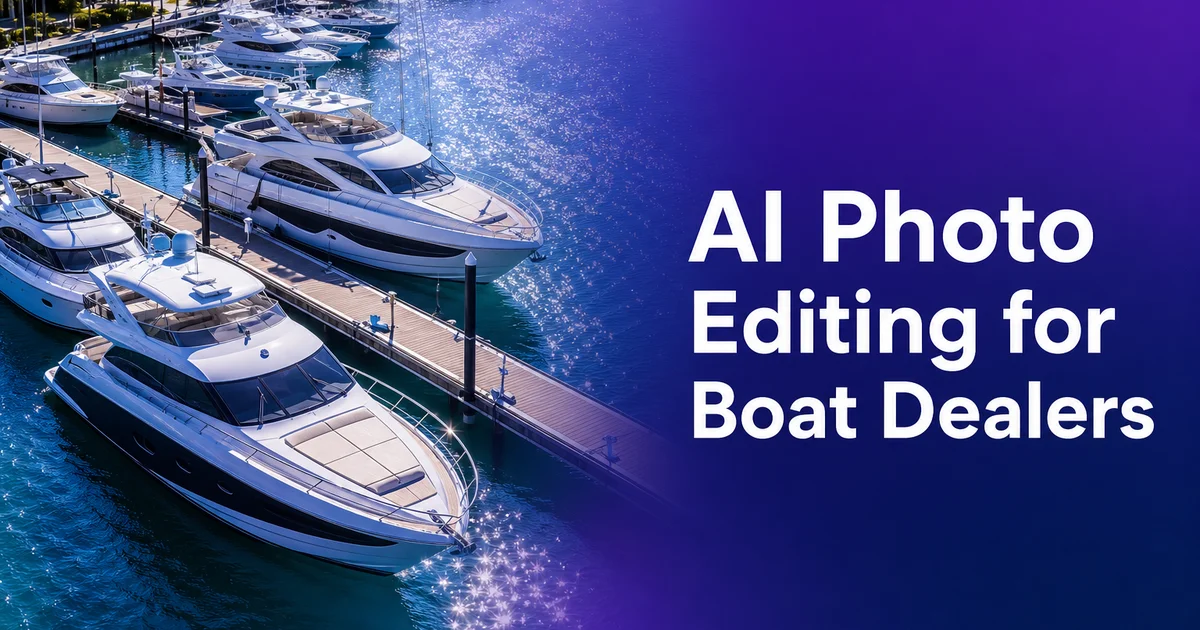
Revendedores de barcos e corretores náuticos enfrentam desafios fotográficos únicos que nenhuma outra categoria de veículos apresenta. Diferentemente de carros que podem ser fotografados em ambientes internos controlados, barcos precisam ser fotografados em seu elemento natural. Na água, em cais de marinas, em guindastes náuticos ou em cavaletes de pátio — onde o fotógrafo não tem praticamente nenhum controle sobre o fundo, a iluminação, as condições da água ou o ambiente ao redor. Um lindo barco de pesca esportiva em sua vaga pode ter um cais de combustível enferrujado atrás, o cordame de um veleiro vizinho cortando o enquadramento, cabos de amarração sobre a proa. Água turva e esverdeada com detritos flutuantes na linha d'água. O barco em si pode estar impecável, mas o ambiente ao redor conta uma história diferente.
Os riscos financeiros da fotografia de anúncios náuticos são substancialmente mais altos do que a maioria das categorias de veículos. A transação média de um barco novo ultrapassa sessenta mil dólares, e as vendas de iates por corretagem rotineiramente alcançam seis e sete dígitos. Nesses patamares de preço, os compradores esperam uma fotografia de anúncio que corresponda à qualidade do investimento que estão considerando. Um iate esportivo de US$ 200.000 fotografado com a câmera de um celular em uma marina lotada com água suja e fundos bagunçados sinaliza uma operação casual que pode não inspirar a confiança que os compradores precisam para realizar uma compra importante. A fotografia náutica profissional transmite o cuidado, a atenção e o profissionalismo que compradores de alto valor exigem.
As ferramentas de edição de fotos com IA abordam os desafios específicos da fotografia náutica ao lidar com a limpeza ambiental que consome a maior parte do tempo de pós-processamento. Remover barcos vizinhos, limpar superfícies da água, corrigir a iluminação da marina. Aprimorar interiores confinados de cabines são tarefas que exigiriam horas de trabalho especializado no Photoshop por embarcação. Com ferramentas de IA, um revendedor pode processar todo o conjunto de fotos de uma embarcação em minutos, produzindo imagens de anúncio que competem com a fotografia náutica profissional por uma fração do custo e do tempo de entrega. Este guia cobre os fluxos de trabalho específicos que revendedores náuticos usam para transformar fotos tiradas no cais em fotos profissionais para anúncios.
- A limpeza de fundo da marina remove embarcações vizinhas, bagunça no cais, postos de combustível e distrações visuais que competem com a embarcação anunciada pela atenção do comprador.
- A correção da superfície da água trata detritos flutuantes, linhas de algas, manchas de óleo e água descolorida que fazem embarcações limpas parecerem negligenciadas em seu ambiente de marina.
- O aprimoramento do interior da cabine recupera detalhes em espaços náuticos com pouca luz onde a iluminação mista através de escotilhas e luzes de cabine cria exposição irregular e dominantes de cor.
- A limpeza da linha d'água remove marcas de sujeira, linhas de incrustação e sombras de defensas que prejudicam a apresentação do casco nas fotos de anúncios.
- Imagens profissionais consistentes em todas as plataformas de anúncios constroem a credibilidade do revendedor que compras náuticas de seis dígitos exigem.
Por que a fotografia náutica requer mais pós-processamento do que qualquer outra categoria de veículos
Concessionárias de carros podem estacionar um veículo em um pátio limpo ou showroom interno, controlar a iluminação e produzir fotos consistentes em todo o inventário. Concessionárias náuticas não têm um ambiente controlado equivalente. Cada barco é fotografado em um cenário único com elementos de fundo únicos, condições da água únicas, ângulos de iluminação únicos baseados na orientação da vaga e hora do dia. Obstruções únicas de embarcações vizinhas e infraestrutura da marina. Um revendedor com cinquenta barcos em estoque pode ter cinquenta cenários fotográficos completamente diferentes. Cada vaga, cais e posição de pátio apresenta seus próprios desafios. Essa variabilidade ambiental significa que as fotos brutas de barcos quase sempre precisam de pós-processamento significativo para alcançar a consistência visual que anúncios profissionais exigem.
A própria água é um elemento fotográfico em constante mudança que cria desafios únicos para imagens náuticas. A cor da água varia de azul profundo a verde a marrom, dependendo da localização, profundidade, maré, clima e estação. As condições da superfície da água vão de reflexos de calmaria perfeita a padrões agitados pelo vento. A linha d'água onde o casco encontra a água é uma área visual crítica em qualquer foto de barco. Ela frequentemente apresenta crescimento de algas, linhas de sujeira, detritos flutuantes e a faixa opaca da linha d'água que se acumula entre as tiradas para manutenção. Essas questões da linha d'água são cosméticas, não estruturais. Porém dominam o terço inferior das fotos de perfil do casco e criam uma impressão negativa sobre a manutenção da embarcação que pode custar a venda.
A infraestrutura da marina adiciona complexidade visual que raramente aprimora as fotos de anúncios. Colunas de amarração, pedestais de energia, pontos de água, carrinhos de cais, pranchas de defensa. Embarcações de passagem vizinhas criam desordem visual que faz até barcos bonitos parecerem apertados e sem inspiração. As conexões elétricas e de água ligadas ao barco — necessárias para vida a bordo e demonstrações no cais — criam linhas cruzadas e emaranhados de mangueiras nas fotos. E como as instalações de marina variam enormemente em sua manutenção e qualidade estética, o ambiente ao redor pode fazer uma embarcação bem mantida parecer que pertence a um estaleiro abandonado em vez de uma concessionária premium.
- Cada barco é fotografado em um ambiente único — não existe equivalente de showroom controlado, tornando impossível criar imagens consistentes para anúncios sem pós-processamento.
- A cor da água, as condições da superfície e a limpeza da linha d'água variam constantemente com base na localização, clima, maré e tempo entre tiradas para manutenção.
- A infraestrutura da marina, incluindo colunas de amarração, pedestais de energia, embarcações vizinhas e conexões de utilidades, adiciona desordem que raramente aprimora as fotos de anúncios.
- A variabilidade ambiental em cinquenta barcos no inventário significa cinquenta desafios fotográficos diferentes que exigem atenção de edição individual.
Técnicas de limpeza de fundo e correção de superfície da água
A edição mais impactante para fotos de anúncios náuticos é remover ou substituir elementos de fundo indesejados. Magic Eraser se destaca na remoção de barcos vizinhos que lotam o enquadramento, estruturas de cais que cortam a composição, edifícios da marina que competem por atenção. O ruído visual de uma orla movimentada. Para barcos em vagas particularmente lotadas, o Background Eraser pode isolar a embarcação completamente e colocá-la contra um fundo limpo de água com céu aberto. Transformando uma foto apertada de marina em uma imagem que parece que o barco foi fotografado sozinho em águas abertas. Essa técnica de embarcação isolada é particularmente eficaz para barcos menores onde a marina ao redor pode dominar visualmente o objeto do anúncio.
A limpeza da superfície da água aborda os problemas que tanto proprietários quanto revendedores sabem que existem, mas têm dificuldade em evitar durante as fotos. A linha de algas verdes que se forma na linha d'água entre limpezas, a mancha de óleo iridescente de uma embarcação vizinha, os detritos flutuantes do cais que se acumulam na vaga e a cor turva da água que certas marinas inevitavelmente têm. Todos esses problemas são corrigíveis com edição de IA direcionada. Magic Eraser remove detritos individuais da superfície e manchas de óleo. A correção de cor normaliza a cor da água para um azul-esverdeado atraente que valoriza a embarcação sem parecer artificialmente tropical. A limpeza da linha d'água remove digitalmente as incrustações e sujeira que se acumulam entre as tiradas para manutenção, apresentando o casco como ele aparece após uma limpeza de fundo recém-realizada.
O gerenciamento de reflexos é um desafio único na fotografia de barcos. Em água calma, os reflexos podem tanto aprimorar quanto prejudicar a foto do anúncio. Um reflexo limpo de um casco bem mantido dobra o impacto visual da embarcação e cria uma composição simétrica esteticamente agradável. Um reflexo distorcido que inclui colunas de amarração, barcos vizinhos e estruturas da marina cria confusão visual que turva a imagem. Ferramentas de IA podem limpar seletivamente as áreas de reflexo — removendo a desordem refletida enquanto mantém o reflexo do próprio casco da embarcação — para criar o efeito de reflexo limpo e atraente que as melhores fotografias náuticas apresentam.
- O Background Eraser isola embarcações de ambientes de marina lotados e as coloca contra fundos limpos de água e céu para uma apresentação premium de anúncio.
- A limpeza da superfície da água remove linhas de algas, manchas de óleo, detritos flutuantes e manchas descoloridas que criam impressões negativas sobre a manutenção da embarcação.
- A limpeza da linha d'água remove digitalmente incrustações e marcas de sujeira, apresentando cascos como aparecem após limpeza de fundo recém-realizada sem exigir uma tirada real para manutenção.
- A limpeza seletiva de reflexos preserva o reflexo atraente do casco da embarcação enquanto remove a desordem refletida do cais e distrações de embarcações vizinhas.
Aprimoramento da fotografia de interior de cabine e painel de comando
A fotografia de interiores de barcos apresenta os mesmos desafios de iluminação em espaços confinados que a fotografia de interiores imobiliários, mas em espaços menores com iluminação mista mais complexa. O interior típico de um cabin cruiser recebe luz natural através de pequenas escotilhas e vigias que criam pontos brilhantes cercados por áreas de sombra profunda. As luzes do teto da cabine adicionam uma dominante de cor quente ou fria que se mistura com a luz do dia. O resultado são fotos com altas luzes estouradas perto das janelas, cantos subexpostos, temperaturas de cor misturadas. Detalhes insuficientes no estofamento, marcenaria e acabamentos que os compradores precisam avaliar. Câmeras de celular lidam mal com essas condições porque a faixa dinâmica da cena excede a capacidade do sensor.
AI Enhance aborda os desafios do interior da cabine recuperando detalhes nas áreas de sombra sem estourar as áreas já brilhantes perto das janelas, normalizando a temperatura de cor mista para um neutro quente consistente que representa com precisão os materiais da cabine. Aguçando detalhes de textura no estofamento, forro do teto, madeira e piso que câmeras de celular suavizam em pouca luz. A fotografia do painel de comando se beneficia especialmente do aprimoramento porque os compradores querem ler as etiquetas dos instrumentos, os mostradores. Os displays eletrônicos que são críticos para avaliar o nível de equipamento da embarcação. Uma foto de celular de um console de comando frequentemente os renderiza como painéis escuros ilegíveis. O aprimoramento recupera o detalhe que permite aos compradores avaliar a eletrônica de navegação, os instrumentos do motor e o layout dos controles.
A fotografia do compartimento do motor é outra área onde o aprimoramento com IA transforma fotos inutilizáveis em fotos informativas. Compartimentos de motor são espaços apertados e mal iluminados onde a fotografia com flash cria sombras duras e pontos brilhantes enquanto a luz ambiente é insuficiente para uma exposição adequada. O aprimoramento recupera detalhes do motor, identifica etiquetas de equipamentos. Apresenta o espaço mecânico de uma forma que permite a compradores com conhecimento mecânico avaliar as condições, equipamentos e acessibilidade para manutenção. Para embarcações de alto padrão onde a exibição do compartimento do motor é um importante diferencial de venda, fotos de motor com qualidade profissional podem diferenciar um anúncio dos concorrentes que mostram apenas fotos escuras e ilegíveis do compartimento do motor.
- AI Enhance recupera detalhes nas sombras da cabine sem estourar as áreas brilhantes de escotilhas e vigias que excedem a faixa dinâmica das câmeras de celular.
- A temperatura de cor mista das escotilhas com luz do dia e luzes da cabine é normalizada para tons neutros quentes consistentes que representam com precisão os materiais interiores.
- O aprimoramento do painel de comando torna etiquetas de instrumentos, mostradores e displays eletrônicos legíveis para que os compradores possam avaliar o nível de equipamento a partir das fotos do anúncio.
- O aprimoramento do compartimento do motor recupera detalhes em espaços mecânicos apertados e mal iluminados que tanto o flash quanto a luz ambiente renderizam mal nas câmeras de celular.
Construindo um pipeline profissional de anúncios náuticos com imagens consistentes
Concessionárias náuticas que anunciam de dezenas a centenas de embarcações precisam de um pipeline de fotografia e edição que produza resultados profissionais consistentes sem exigir um fotógrafo dedicado para cada mudança de inventário. O fluxo de trabalho prático começa com o treinamento da equipe de vendas e do cais para fotografar embarcações usando uma lista de fotos padronizada. Perfil completo de bombordo, perfil completo de estibordo, vista de popa, vista de proa, painel de comando, cada área de cabine, compartimento do motor e características notáveis. Essas fotos da equipe tiradas com smartphones fornecem a matéria-prima que a edição com IA transforma em imagens com qualidade de anúncio, eliminando os atrasos de agendamento e custos da fotografia náutica profissional para rotações rotineiras de inventário.
A consistência em todo o inventário é o que distingue revendedores náuticos profissionais de vendedores casuais na percepção do comprador. Quando um comprador navega pelos anúncios de um revendedor e vê que cada embarcação apresenta fundos limpos de água, interiores corretamente expostos e fotos externas de qualidade profissional com tratamento de cor consistente, ele percebe uma operação bem administrada que mantém seu inventário no mesmo padrão. Essa percepção influencia diretamente a disposição do comprador para fazer consultas, agendar passeios de teste e negociar no preço pedido em vez de assumir que a embarcação foi negligenciada como suas fotos de anúncio sugerem. A correlação entre a qualidade das fotos do anúncio e a taxa de consultas é bem documentada nas plataformas de marketplace náutico.
A fotografia de inventário sazonal apresenta desafios extras que um pipeline de edição com IA consistente resolve. Barcos fotografados em armazenamento de inverno em cavaletes no estaleiro precisam de tratamento diferente do que barcos fotografados na água durante a temporada de vendas de verão. Barcos hibernados com capas de encolhimento térmico, equipamentos de pátio ao redor e céus cinzentos de inverno podem ser transformados com substituição de fundo e melhoria de cor para apresentar a embarcação como ela aparecerá durante a próxima temporada. Isso permite que revendedores anunciem o inventário de primavera com imagens atraentes meses antes dos barcos serem comissionados e lançados, ganhando vantagem na temporada de vendas que traz a maior parte da receita do varejo náutico.
- Listas de fotos padronizadas para a equipe do cais eliminam atrasos de agendamento de fotógrafos profissionais enquanto a edição com IA transforma fotos de smartphones em imagens com qualidade de anúncio.
- Imagens profissionais consistentes em todos os anúncios do inventário criam a percepção de uma concessionária bem administrada que se correlaciona diretamente com as taxas de consulta.
- O inventário sazonal em armazenamento de inverno pode ser transformado com substituição de fundo para apresentar embarcações em condições atraentes de verão meses antes do lançamento.
- O pipeline de fotografia escala com o tamanho do inventário — o tempo de processamento por embarcação permanece constante, seja a concessionária anunciando vinte ou duzentos barcos.
How to do it
- 1
Photograph the boat in optimal natural lighting conditions
Schedule boat photography during the golden hour in the early morning or late afternoon when warm low-angle light creates flattering illumination on hull surfaces and reduces harsh glare from fiberglass and gel coat. Photograph from the dock at waterline level to capture the hull profile and from elevated positions to show the deck layout. Capture the full exterior from both sides and the stern, the helm station, cabin interior, engine compartment. Any notable features like fishing towers or swim platforms.
- 2
Remove marina clutter and neighboring vessels from background
Use Magic Eraser to remove unwanted elements that compete with the boat for visual attention. Neighboring vessels crowding the slip, dock lines crossing the frame, marina buildings, fuel docks, trash cans, and other boats visible in the background. Clean backgrounds direct buyer attention to the vessel itself rather than the marina setting. For boats photographed at crowded marina facilities, Background Eraser can isolate the vessel fully and place it against a clean water or sky backdrop.
- 3
Clean up water reflections and surface distractions
Use Magic Eraser to address common water surface issues that detract from listing photos. Remove floating debris, algae lines at the waterline, oil sheens, dock bumpers visible against the hull. Discolored water patches that make the marina setting look neglected. Clean the waterline area where scum or growth marks are visible and correct the water color to a consistent attractive tone that enhances rather than detracts from the vessel display.
- 4
Enhance interior cabin and helm detail in low-light conditions
Use AI Enhance to recover detail in boat interior photographs where mixed lighting. Daylight through hatches combined with overhead cabin lights — creates uneven exposure, color casts, and dark corners. Enhance upholstery texture, wood grain on cabinetry, instrument panel legibility. Cabin finish quality that phone cameras frequently underexpose in confined marine interiors.
- 5
Export optimized images for marine listing platforms and social media
Export edited photos in dimensions optimized for major marine marketplaces including Boat Trader, YachtWorld, Boats.com, and Facebook Marketplace marine groups. Create both wide landscape formats that show the full vessel profile and square crops for social media feeds. Include high-resolution versions for your dealership website where buyers expect zoom capability to inspect hull condition, upholstery quality, and equipment details.
Fontes
- Marine Industry Photography Standards for Online Listings — Boats.com
- Best Practices for Boat Listing Photography — YachtWorld
- Digital Marketing for Marine Dealers and Brokers — National Marine Manufacturers Association