
Edição de Fotos com IA para Apicultores — Magic Eraser
Guia prático para apicultores que utilizam edição de fotos com IA para criar fotografia profissional de produtos, documentação de apiários e materiais visuais de marketing para mel e produtos de cera de abelha.
SEO & Growth
Revisado por Magic Eraser Editorial ·
Índice
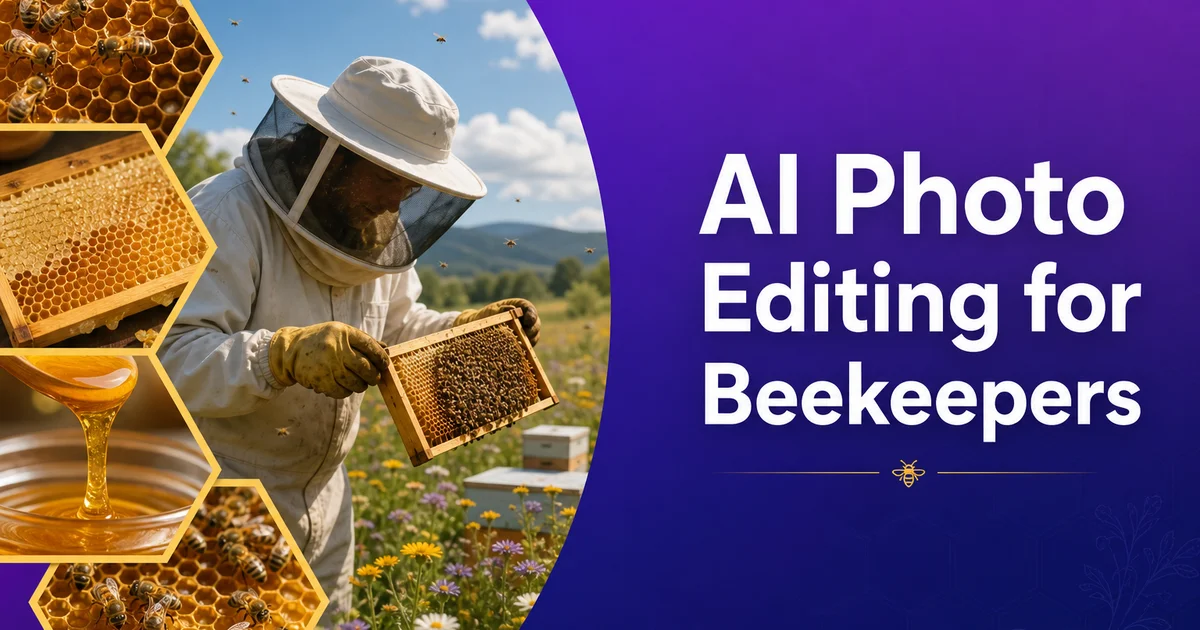
A apicultura é um empreendimento visualmente rico que abrange fotografia de produtos, registros agrícolas, criação de conteúdo educacional e branding de estilo de vida. No entanto, a maioria dos apicultores trabalha com a câmera do celular, uma sala de extração que também serve como estúdio fotográfico e zero de orçamento para edição profissional de imagens. As demandas visuais de um apicultor moderno que vende diretamente aos consumidores são significativas: clientes de feiras livres esperam rótulos refinados com fotografias apetitosas de mel, anúncios em marketplaces online competem pela qualidade da imagem em miniatura, seguidores nas redes sociais querem registros envolventes do manejo das colmeias. Compradores atacadistas precisam de fichas de produto profissionais que transmitam qualidade. Um apicultor que produz mel excepcional mas o apresenta com fotografias mal iluminadas e bagunçadas está deixando dinheiro na mesa e prejudicando o posicionamento premium que o mel produzido localmente merece.
Os desafios fotográficos específicos da apicultura são diferentes dos da maioria das outras categorias de pequenos negócios. O mel é um líquido translúcido que muda significativamente de cor sob diferentes condições de iluminação. O mesmo pote de mel silvestre pode parecer âmbar escuro sob luz solar quente, amarelo pálido sob luzes fluorescentes ou quase incolor quando iluminado por trás. A cera de abelha tem tons quentes e sutis que se achatam com iluminação inadequada. Fotografias de trabalho tiradas no apiário envolvem equipamentos de proteção que cobrem o rosto do apicultor, milhares de insetos em movimento que criam complexidade visual. Condições externas que mudam minuto a minuto. A fotografia de favos requer trabalho em close-up extremo, onde a perfeição geométrica das células de cera deve ser capturada sem que a sombra da câmera caia sobre o objeto. Cada um desses desafios tem derrotado apicultores que tentam criar imagens de qualidade comercial com ferramentas básicas de edição do celular.
As ferramentas de edição de fotos com IA resolvem esses desafios específicos da apicultura aplicando processamento inteligente que entende o conteúdo de cada imagem em vez de aplicar correções genéricas. A remoção de fundo isola os produtos de mel de espaços de trabalho bagunçados, colocando-os contra fundos limpos que destacam a cor e a transparência do produto. O aprimoramento com IA corrige as distorções de cor que diferentes condições de iluminação introduzem, restaurando os tons dourados e quentes que tornam o mel visualmente atraente. A remoção de objetos elimina elementos indesejados das fotografias do apiário sem perturbar as abelhas e colmeias. O cenário natural que conta a história da operação. Este guia apresenta um fluxo de trabalho completo de edição com IA projetado especificamente para apicultores, cobrindo fotografia de produtos para canais de venda, registros do apiário para marketing e educação. O branding visual consistente que transforma uma operação amadora de mel em uma marca artesanal profissional.
- A remoção de fundo isola potes de mel, produtos de cera de abelha e favos de salas de extração e oficinas bagunçadas, possibilitando imagens limpas de produtos para anúncios em marketplaces e design de rótulos.
- A correção de cor com IA restaura os tons precisos do mel em diferentes condições de iluminação, corrigindo a tonalidade esverdeada da luz fluorescente e a aparência desbotada da luz solar direta intensa.
- Magic Eraser remove fios elétricos, equipamentos espalhados, estruturas vizinhas e abelhas acidentais das fotografias do apiário, transformando registros documentais em imagens de marketing refinadas.
- O processamento em lote cria tratamento visual consistente em linhas inteiras de produtos, garantindo que cada variedade de mel apareça com qualidade profissional uniforme que justifica o preço premium.
- A exportação específica por canal entrega imagens com dimensões adequadas para Instagram, banners de site, miniaturas de marketplace, rótulos impressos e sinalização de feiras livres a partir de um único arquivo editado.
Fotografando mel: como capturar o brilho dourado que vende
O principal ponto de venda visual do mel é sua cor. Os tons quentes de âmbar, dourado ou marrom escuro que transmitem naturalidade, doçura e qualidade. Quando os clientes escolhem entre potes de mel em uma feira livre ou navegam por anúncios online, são atraídos pelos potes que brilham com cores quentes e convidativas em vez daqueles que parecem opacos, turvos ou artificialmente brilhantes. Alcançar essa cor atraente em fotografias requer entender como o mel interage com a luz. O mel é um meio translúcido, o que significa que a luz passa através dele, mas é dispersa e absorvida com base na densidade do mel, no teor de umidade e na origem floral. Iluminar o mel por trás — posicionando uma fonte de luz atrás do pote — produz o brilho dourado mais dramático porque a luz viaja por toda a profundidade do líquido, ganhando saturação de cor à medida que passa. A iluminação lateral revela a superfície e a textura interna do mel, mostrando padrões de cristalização e bolhas de ar que comunicam qualidade crua e não processada.
O erro fotográfico mais comum que os apicultores cometem é fotografar mel sob iluminação de teto de cozinha ou oficina. Ilumina a parte superior do pote enquanto deixa as laterais e principalmente a parte inferior em sombra. Isso cria um ponto brilhante na tampa e uma aparência escura e turva através do corpo do pote. Exatamente o oposto do brilho luminoso que você deseja. AI Enhance corrige isso analisando a geometria do pote e as características do mel, e então aplicando uma reiluminação virtual que imita a iluminação ambiente quente da luz natural de uma janela. A correção ilumina o corpo do mel, restaura os tons quentes perdidos para a iluminação artificial fria. Reduz o reflexo especular intenso na superfície do vidro mantendo refletividade suficiente para comunicar que o recipiente é de vidro. O resultado parece que o mel foi fotografado em um estúdio profissional de fotografia de alimentos com iluminação quente difusa. Uma melhoria dramática em relação ao instantâneo original na bancada de trabalho.
Diferentes variedades de mel requerem tratamento fotográfico sutilmente diferente para destacar suas características distintas. Méis claros como acácia e trevo se beneficiam da retroiluminação que maximiza sua delicada transparência dourada. Méis escuros como trigo-sarraceno e castanha são melhor apresentados com iluminação lateral que mostra sua profundidade rica sem fazê-los parecer opacos. Mel cru com cristalização visível deve ser fotografado para mostrar o padrão de textura que o distingue do mel comercial processado. O aprimoramento com IA pode seletivamente aguçar o detalhe da cristalização enquanto suaviza a superfície do pote. Mel cremoso precisa de iluminação suave e uniforme que revele sua textura opaca e lisa. A IA ajusta seus parâmetros de aprimoramento com base nas características específicas do mel detectado, aplicando correções adequadas a cada variedade em vez de um clareamento genérico único para todos.
- A retroiluminação do mel produz o brilho dourado mais dramático, enquanto a iluminação lateral revela textura superficial e padrões de cristalização que comunicam qualidade crua e não processada.
- AI Enhance corrige a aparência escura e turva de potes de mel iluminados por cima, simulando iluminação ambiente quente que ilumina o corpo do mel e restaura tons quentes naturais.
- Diferentes variedades de mel recebem aprimoramento adequado a cada tipo. Méis claros recebem tratamento estilo retroiluminação, méis escuros recebem correção que revela profundidade, e mel cru recebe aguçamento de detalhes de cristalização.
- Reflexos especulares na superfície dos potes de vidro são reduzidos mantendo refletividade suficiente para comunicar o material do recipiente, prevenindo a aparência desbotada da iluminação direta intensa.
Remoção de fundo e posicionamento de produto para canais de venda online
Os anúncios em marketplaces online para produtos de mel e cera de abelha vivem ou morrem pela qualidade da imagem em miniatura. Etsy, Amazon Handmade, sites de cooperativas alimentares locais. Plataformas de pedidos online de feiras livres exibem todos os produtos como pequenas imagens em miniatura que devem transmitir qualidade e conteúdo em uma fração de segundo da atenção do espectador. Um pote de mel fotografado em uma bancada de cozinha bagunçada com outros potes, utensílios e equipamentos visíveis ao fundo perde a competição de clareza visual contra um pote apresentado sobre uma superfície branca limpa ou de madeira quente. Background Eraser isola o produto de mel de qualquer cenário. Sala de extração, cozinha, mesa ao ar livre ou porta-malas do carro onde você acabou de carregar para a feira livre — e o coloca contra um fundo que serve à imagem em vez de distrair dela.
O fundo sobre o qual você coloca seu produto transmite posicionamento de marca tão poderosamente quanto o próprio produto. Um fundo branco limpo diz profissional, clínico e padrão de marketplace. Funciona para Amazon, sites de cooperativas e qualquer contexto onde o produto precisa combinar com a linguagem visual de uma loja curada. Uma superfície de madeira quente diz artesanal, feito à mão e direto do produtor. Certo para anúncios no Etsy, sites pessoais e materiais de marketing que enfatizam a natureza artesanal do produto. Um fundo contextual mostrando favos, flores silvestres ou elementos da colmeia diz autêntico, educativo e orientado por histórias. Perfeito para posts em redes sociais e conteúdo de blog que conta a história por trás do produto. AI Fill pode gerar qualquer um desses estilos de fundo perfeitamente ao redor do seu produto isolado, combinando a direção da iluminação e o posicionamento da sombra com a iluminação existente do produto.
O processamento em lote é fundamental para apicultores que vendem múltiplos produtos porque a consistência visual em uma linha de produtos transmite profissionalismo. Se o seu mel silvestre está sobre fundo branco com iluminação quente enquanto o mel de trevo aparece em uma mesa de madeira com luz fria, a inconsistência sugere padrões de qualidade diferentes para produtos diferentes. Processe cada produto da sua linha contra o mesmo fundo com o mesmo tratamento de iluminação. De repente, seu conjunto de três potes ou quinze produtos parece uma coleção curada em vez de uma série de fotos oportunistas. Essa consistência se estende às dimensões da imagem e ao enquadramento. Centralize cada pote no mesmo tamanho dentro do quadro, mantenha margens consistentes e exporte nas mesmas dimensões em pixels para cada canal de venda.
- Background Eraser isola produtos de espaços de trabalho bagunçados, permitindo posicionamento contra fundos brancos limpos, de madeira quente ou contextuais que atendem diferentes requisitos de canais de venda.
- A escolha do fundo comunica posicionamento de marca — branco para profissionalismo de marketplace, madeira para caráter artesanal, e cenários contextuais com favos ou flores para conteúdo social orientado por histórias.
- AI Fill gera fundos substitutos perfeitos com iluminação e sombra que combinam com a iluminação existente do produto, evitando a aparência de recortar-e-colar da composição manual.
- O processamento em lote com fundos, iluminação, enquadramento e dimensões consistentes transforma uma linha de produtos de fotos oportunistas em uma coleção profissional curada.
Fotografia de apiário: transformando fotos de trabalho em ouro para o marketing
As fotografias do apiário servem a dois propósitos para os apicultores. Elas documentam as operações de manejo das colmeias para manutenção de registros e contam a história da operação para marketing e conteúdo educacional. Uma fotografia de um apicultor inspecionando quadros em um apiário bem mantido transmite o cuidado, a atenção e a expertise envolvidos na produção do mel, construindo confiança com consumidores que querem saber de onde vem sua comida e quem a produziu. Mas as fotografias de trabalho no apiário raramente estão prontas em termos de composição: o apicultor está focado nas abelhas em vez do ângulo da câmera, equipamentos e ferramentas estão espalhados pela área das colmeias. O fundo pode incluir galpões, cercas, veículos ou propriedades vizinhas que desviam da narrativa pastoral da apicultura. A edição com IA transforma essas autênticas fotografias de trabalho em imagens de marketing refinadas sem sacrificar seu realismo documental.
Magic Eraser lida com as distrações mais comuns em fotografias de apiário de forma eficiente. Fios elétricos que cortam um céu bonito acima das colmeias desaparecem com uma única seleção. Um carrinho de mão de equipamentos estacionado ao lado das colmeias que você esqueceu de mover antes de tirar a foto é removido e a grama embaixo é reconstruída perfeitamente. Texto em equipamentos — nomes de marcas em caixas de colmeia, números escritos em quadros para rastreamento, rótulos no fumigador — podem ser removidos para criar composições mais limpas que não anunciam inadvertidamente outras empresas ou expõem detalhes operacionais que você prefere manter privados. Para fotografias onde outras pessoas são visíveis ao fundo — moradores de propriedades vizinhas, visitantes ou outros apicultores que não consentiram em aparecer em materiais de marketing — Magic Eraser remove sua imagem mantendo o cenário natural.
A operação de edição mais delicada na fotografia de apiário envolve o manejo das próprias abelhas. Em uma fotografia close-up de inspeção de quadro, dezenas ou centenas de abelhas criam complexidade visual que pode sobrecarregar o foco composicional no padrão do favo, nas reservas de mel ou no padrão de cria que você está tentando destacar. Remover seletivamente abelhas individuais de áreas específicas do quadro — enquanto deixa muitas abelhas visíveis em outros lugares para manter o contexto autêntico da colmeia em atividade — cria imagens que transmitem tanto a atividade apícola quanto o detalhe específico em que você quer que os espectadores se concentrem. O aprimoramento com IA após a limpeza aguça a estrutura do favo, ilumina as células de mel para mostrar seu conteúdo dourado. Aumenta o contraste de cor entre cria operculada, reservas de pólen e reservas de mel para que o conteúdo do quadro seja imediatamente legível mesmo para espectadores não familiarizados com inspeção de colmeias.
- Magic Eraser remove fios elétricos, equipamentos espalhados, texto indesejado e pessoas no fundo das fotografias do apiário, preservando o contexto autêntico da colmeia em atividade.
- A remoção seletiva de abelhas reduz a complexidade visual em close-ups de inspeção de quadros, permitindo que detalhes específicos do favo como reservas de mel e padrões de cria sejam o foco composicional.
- O aprimoramento com IA após a limpeza aguça a estrutura do favo e aumenta o contraste de cor entre reservas de mel, pólen e cria para documentação de colmeia imediatamente legível.
- O fluxo de trabalho de edição preserva a autenticidade documental enquanto remove distrações — as imagens finais mostram um apiário real em funcionamento, não um cenário montado, mas com clareza visual pronta para marketing.
Construindo uma marca visual para o seu negócio de apicultura em todos os canais
Um negócio de apicultura que vende por múltiplos canais — feiras livres, marketplaces online, um site pessoal, redes sociais, venda atacadista para restaurantes e lojas, e talvez visitas de agroturismo — precisa de uma identidade visual que seja distinta em todos eles. Quando um cliente que segue seu Instagram encontra seus potes em uma feira livre, a conexão visual entre as imagens online e o produto físico cria um momento poderoso de reconhecimento que constrói fidelidade à marca. Alcançar essa consistência com fotografia profissional exigiria uma sessão de fotos dedicada com estúdio, equipamentos de iluminação e um fotógrafo. Um investimento completamente impraticável para uma pequena operação de apicultura que pode produzir apenas algumas centenas de quilos de mel por ano. A edição com IA torna a imagem profissional consistente alcançável com nada mais do que uma câmera de celular e a atenção de aplicar o mesmo fluxo de trabalho de edição a cada fotografia de produto.
A marca visual de um negócio de apicultura geralmente se centra em alguns elementos-chave: a paleta de cores quentes e douradas dos produtos de mel e cera de abelha, os padrões geométricos hexagonais do favo, o cenário natural e pastoral do apiário. A história pessoal do apicultor. A edição com IA garante que esses elementos sejam sempre apresentados da melhor forma, aplicando o mesmo perfil de correção de cor que enfatiza tons quentes e dourados, o mesmo tratamento de fundo que coloca produtos em um cenário naturalístico mas organizado. O mesmo nível de aprimoramento que destaca a qualidade artesanal de cada produto. Até a tipografia em rótulos e materiais de marketing deve se apoiar em imagens de produtos que compartilham uma linguagem visual comum. A remoção de fundo seguida pela geração de fundo idêntico cria a tela uniforme que faz a tipografia do rótulo parecer intencional em vez de colada sobre fotografias aleatórias.
A variação sazonal no conteúdo visual mantém a marca fresca enquanto preserva a consistência. O conteúdo de primavera enfatiza o apiário ganhando vida com a nova atividade das abelhas e flores desabrochando ao redor das colmeias. O conteúdo de verão destaca a colheita do mel com quadros dourados de mel operculado e o processo de extração. O conteúdo de outono apresenta os tons quentes de âmbar da última colheita da temporada e a preparação para o inverno. O conteúdo de inverno foca em produtos de cera de abelha — velas, protetor labial, wraps — em cenários aconchegantes e quentes. Cada estação recebe sua própria paleta de fundo e clima de iluminação, mantendo a apresentação consistente do produto, a precisão de cor e a qualidade de imagem que definem a marca. A edição com IA torna a criação de conteúdo sazonal prática ao lidar com os ajustes técnicos que de outra forma exigiriam reaprender configurações de iluminação de estúdio quatro vezes por ano.
- Identidade visual consistente em feiras livres, plataformas online, redes sociais e canais atacadistas cria o reconhecimento que constrói fidelidade à marca quando clientes encontram os produtos em diferentes contextos.
- Tratamento uniforme de edição com IA garante que cada fotografia de produto compartilhe a mesma correção de cor, estilo de fundo e nível de aprimoramento que comunica qualidade artesanal profissional.
- A variação sazonal de conteúdo mantém a marca fresca — atividade primaveril no apiário, colheita de verão, tons âmbar de outono, produtos de cera de abelha no inverno — mantendo a consistência visual central.
- Todo o fluxo de trabalho funciona com fotografias de câmera de celular processadas através de etapas de edição com IA repetíveis, tornando a imagem profissional alcançável sem equipamentos de estúdio ou orçamentos de fotografia.
How to do it
- 1
Photograph your hive products and apiary in natural conditions
Capture photographs of your honey jars, beeswax products, honeycomb frames. Working apiary in the natural conditions where they look most appealing. Photograph honey jars in warm sunlight that illuminates the amber color and shows the liquid's clarity and viscosity. Capture honeycomb close-ups that reveal the geometric perfection of the wax cells. Document your apiary with hives arranged neatly against a scenic backdrop. Shoot working photographs of yourself in protective equipment tending hives, as these action shots build trust with customers who want to see the beekeeper behind their honey. Do not worry about unwanted background elements, inconsistent lighting, or imperfect framing. AI editing will address all of these in subsequent steps.
- 2
Remove distracting backgrounds and clutter from product photos
Use Background Eraser to isolate honey jars, beeswax candles, and other products from cluttered workbench or kitchen backgrounds. Beekeeping product photography often happens in extraction rooms, workshop spaces, or outdoor settings where equipment, tools. Miscellaneous items create visual noise that distracts from the product. Background removal lets you place your products against clean white backgrounds for marketplace listings, warm textured surfaces for artisanal branding, or custom seasonal backdrops for holiday promotions. For honeycomb frames and raw comb products, careful background removal preserves the intricate wax detail while eliminating the unwanted hive components and tools visible behind the frame.
- 3
Enhance lighting and color accuracy to showcase honey quality
Apply AI Enhance to correct the lighting imbalances common in beekeeping photography. Honey photographed indoors under fluorescent lights appears greenish and flat, losing the warm golden glow that makes it visually appealing. Honey photographed in direct sunlight can show harsh reflections off glass jar surfaces that obscure the liquid inside. AI Enhance corrects white balance to restore accurate honey color, reduces harsh specular reflections while maintaining the attractive translucency of the product. Brightens shadow areas in jar photographs to show the honey's true color from top to bottom. For beeswax products, boost brings out the subtle warm yellow tones and surface texture that share natural quality.
- 4
Use Magic Eraser to clean up unwanted elements in apiary and lifestyle shots
Apply Magic Eraser to remove unwanted elements from apiary photographs and beekeeper lifestyle shots. Common distractions include visible power lines above the apiary, neighboring structures that break up the pastoral setting, stray equipment left near hives during inspection, unwanted text or labels on equipment. Other beekeepers or visitors who walked into the frame. For close-up hive inspection photos, Magic Eraser can remove individual bees from areas where you want to show comb detail without the visual complexity of dozens of moving insects. These cleanup operations transform documentary working photographs into polished marketing images suitable for websites, social media, and print materials.
- 5
Create consistent product line imagery across all sales channels
Build a consistent visual identity across all your sales channels by batch-processing your product photographs with uniform editing treatment. Apply the same background style, lighting correction. Color profile to every honey variety in your product line so that your wildflower honey, clover honey, and buckwheat honey are photographed against the same backdrop with the same warm lighting treatment. This consistency shares professionalism that differentiates small-batch artisanal honey from commodity products and justifies the premium pricing that local honey commands. Export images at the specific dimensions and resolutions required for each sales channel. Square crops for Instagram, landscape for website banners, and high-resolution for print labels and farmers market signage.
Fontes
- Visual Marketing for Agricultural Businesses — USDA Economic Research Service
- The Importance of Photography in Direct-to-Consumer Food Marketing — Food Marketing Institute
- Small Business Visual Content Strategy — U.S. Small Business Administration