
Edição de Fotos com AI para Astacologistas — Magic Eraser
Como os astacologistas utilizam a edição de fotos com AI para registros de espécimes de lagostins, identificação de espécies, monitoramento de espécies invasoras e pesquisa de conservação. Aprimore a morfologia diagnóstica, corrija a coloração de campo e crie pranchas taxonômicas padronizadas.
SEO & Growth
Revisado por Magic Eraser Editorial ·
Índice
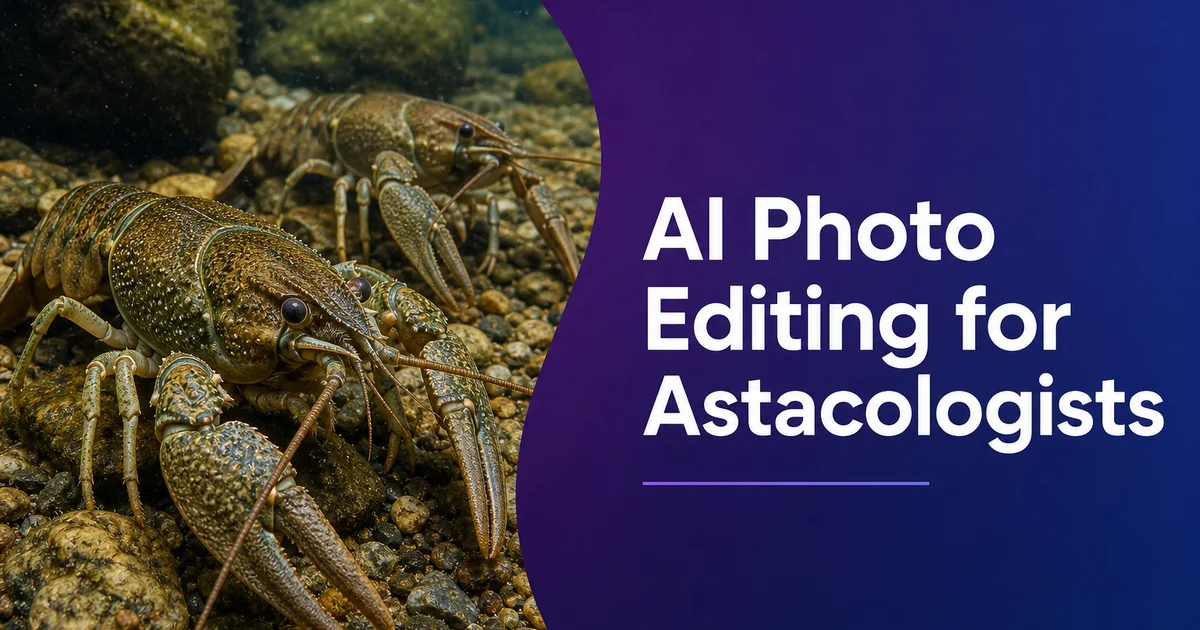
A astacologia — o estudo científico dos lagostins (crustáceos de água doce da infraordem Astacidea) — depende de fotografia de espécimes de alta qualidade para identificação de espécies, descrição taxonômica, monitoramento de populações e detecção de espécies invasoras. Avaliação de conservação em um grupo de distribuição global de cerca de 700 espécies descritas, com novas espécies ainda sendo descobertas regularmente em regiões pouco pesquisadas da Austrália, Sudeste Asiático e sudeste dos Estados Unidos. Os lagostins são os maiores invertebrados móveis na maioria dos ecossistemas de água doce, atuam como espécies-chave influenciando a estrutura da comunidade bentônica e a ciclagem de nutrientes. Incluem tanto endêmicos criticamente ameaçados quanto espécies invasoras agressivas cujo manejo requer identificação rápida e precisa a partir de fotografias tiradas em condições de campo desafiadoras.
Os desafios fotográficos na astacologia surgem das características biológicas e ecológicas dos sujeitos e das condições em que a fotografia de campo frequentemente ocorre. Os lagostins são animais bentônicos associados a substratos complexos. Seixos, detritos lenhosos, margens escavadas e sistemas de tocas — que aderem aos seus corpos e obscurecem as características morfológicas. São fotografados molhados, frequentemente debaixo d'água ou em bandejas rasas onde reflexos superficiais e turbidez da água degradam a qualidade da imagem. Seus exoesqueletos são tridimensionalmente complexos, com superfícies curvas da carapaça, quelas projetadas, múltiplos pares de pernas ambulacrais e os detalhes morfológicos finos. Espinhos do rostro, curvatura do gonópodo, proporções da areola — que a taxonomia exige mas que são difíceis de resolver fotograficamente. E sua coloração, embora taxonomicamente informativa, varia muito com o estágio de muda, dieta, química da água, estresse e método de preservação.
As ferramentas de edição de fotos com AI enfrentam esses desafios automatizando as etapas de pós-processamento que convertem fotografias brutas de campo e laboratório em imagens padronizadas de qualidade para publicação, adequadas para trabalho taxonômico, guias de identificação e registros de conservação. A remoção de fundo isola os espécimes dos substratos complexos que habitam. O aprimoramento de detalhes aguça as características morfológicas finas que impulsionam a identificação. A correção de cor compensa as condições variáveis de iluminação e água da fotografia de campo. Para astacologistas que equilibram trabalho de campo, análise laboratorial, gestão de conservação e a necessidade urgente de documentar tanto espécies nativas em declínio quanto populações invasoras em expansão, o processamento eficiente de imagens não é opcional. Ele determina diretamente a rapidez com que os resultados de levantamentos podem ser processados, identificações confirmadas e decisões de manejo informadas.
- A remoção de fundo isola espécimes de lagostim de seixos de riachos, vegetação aquática, detritos e condições de água turva que obscurecem as características morfológicas diagnósticas.
- O aprimoramento AI aguça os caracteres taxonômicos finos — espinhos do rostro, curvatura do gonópodo, largura da areola e tuberculação das quelas — que impulsionam a identificação em nível de espécie.
- A correção de cor restaura as tonalidades naturais de fotografias de campo tiradas sob iluminação variável à beira do riacho, água turva e a rápida lixiviação de pigmentos da preservação em etanol.
- Magic Eraser remove sedimentos aderidos, crescimento algal na carapaça, gotas de água e artefatos de reflexão superficial sem alterar a morfologia diagnóstica subjacente.
- Pranchas de identificação multivista padronizadas com layout consistente e barras de escala servem publicações taxonômicas, guias de campo e programas de monitoramento de ciência cidadã.
Desafios da fotografia taxonômica exclusivos dos lagostins de água doce
A taxonomia dos lagostins depende de uma combinação de caracteres morfológicos que abrangem escalas desde proporções corporais gerais até textura superficial microscópica, todos os quais devem ser claramente resolvidos em fotografias para ter valor científico. O caractere de identificação primário para as cerca de 430 espécies de lagostins cambarídeos norte-americanos. A maior e mais taxonomicamente complexa família de lagostins — é o gonópodo masculino de primeira forma, um pleópodo modificado cuja morfologia da ponta varia entre espécies de maneiras frequentemente sutis, envolvendo diferenças na direção da curvatura, ângulo do ombro, comprimento do processo mesial e a presença ou ausência de espinhos ou flanges diminutos. Fotografar gonópodos requer macrofotografia em ampliações onde a profundidade de campo é muito rasa, as estruturas frequentemente têm menos de três milímetros de comprimento. A curvatura tridimensional que é diagnosticamente crítica deve ser inferida a partir de imagens bidimensionais.
Além da morfologia do gonópodo, a identificação de espécies baseia-se na forma do rostro e espinhos marginais, na largura da areola como proporção da largura da carapaça (obliterada de forma estreita versus ampla. O grau em que as duas fileiras de pontos da câmara branquial se aproximam ou se tocam), na forma das quelas incluindo tamanho, forma e padrão de tuberculação nas superfícies do dátilo e própodo, no desenvolvimento da crista pós-orbital, na presença e tamanho do espinho cervical e na configuração da escama antenal. A identificação de fêmeas frequentemente depende da forma do annulus ventralis. Uma estrutura esclerotizada na superfície ventral cuja forma é específica da espécie, mas cuja documentação fotográfica requer posicionamento e iluminação cuidadosos do espécime para renderizar claramente sua forma tridimensional. Cada um desses caracteres exige abordagens fotográficas específicas que o pós-processamento AI deve acomodar.
Cor e padrão, embora secundários aos caracteres morfológicos na taxonomia formal, fornecem as características de identificação mais acessíveis para trabalhadores de campo, cientistas cidadãos. As avaliações rápidas necessárias para o monitoramento de espécies invasoras. A coloração dos lagostins pode ser marcante — o vermelho profundo de Procambarus clarkii, o azul elétrico de Procambarus alleni, o padrão ferrugem-e-oliva de Orconectes rusticus — mas é altamente variável dentro da espécie dependendo da química da água (principalmente conteúdo de cálcio e ferro), dieta, estágio de muda, densidade populacional e genética individual. Fotografar cores com precisão no campo é desafiador porque a iluminação à beira do riacho é variável, a água confere sua própria dominante de cor. O estresse da captura pode alterar rapidamente a coloração em algumas espécies. A correção AI de cor que referencia padrões de calibração é fundamental para produzir imagens onde diferenças de cor entre espécimes refletem variação biológica real em vez de artefato fotográfico.
- A morfologia da ponta do gonópodo masculino — o caractere primário de identificação de cambarídeos — requer macrofotografia de estruturas de três milímetros onde diferenças sutis de curvatura distinguem espécies.
- A largura proporcional da areola, padrões de tuberculação das quelas e forma do annulus ventralis exigem cada um posicionamento e iluminação fotográficos específicos que o processamento AI deve preservar.
- A cor é diagnosticamente informativa, mas varia muito com a química da água, dieta, estágio de muda e estresse. A correção AI com padrões de calibração isola a variação biológica do artefato fotográfico.
- A identificação multicaractere requer fotografia multivista padronizada onde o processamento em lote AI produz resultados consistentes nas dezenas de espécimes típicos da documentação de levantamentos.
Identificação de espécies invasoras e fotografia de monitoramento de resposta rápida
Os lagostins invasores representam uma das ameaças mais sérias à biodiversidade de água doce globalmente. A identificação fotográfica é frequentemente o primeiro passo na detecção e resposta. Espécies como o lagostim-sinal (Pacifastacus leniusculus) na Europa, o lagostim-vermelho-do-pântano (Procambarus clarkii) em cinco continentes e o lagostim-marmorizado (Procambarus virginalis). O único crustáceo decápode conhecido capaz de reprodução partenogenética — estão expandindo seus territórios rapidamente, deslocando espécies nativas através de competição, predação, alteração de habitat e a transmissão do patógeno da praga do lagostim Aphanomyces astaci. A detecção precoce de expansões de território depende de trabalhadores de campo e cientistas cidadãos que enviam fotografias identificáveis de novas localidades. A qualidade dessas fotografias determina se o relatório desencadeia uma resposta de manejo rápida ou requer uma visita de acompanhamento para confirmar a identificação.
O processamento AI melhora muito a usabilidade de fotografias enviadas do campo para identificação de espécies invasoras. Fotografias de ciência cidadã de lagostins são frequentemente tiradas em condições subótimas. Na mão com um smartphone, em um balde na margem do riacho ou segurado pela cauda contra um fundo variável. A remoção de fundo isola o espécime dos contextos indesejados e variáveis da captura em campo. O aprimoramento aguça as características que distinguem espécies invasoras das nativas. A mancha branca ou turquesa na articulação da quela que identifica o lagostim-sinal, a coloração vermelha brilhante e as manchas vermelhas elevadas nas quelas do lagostim-vermelho-do-pântano e o padrão dorsal marmorizado do lagostim-marmorizado partenogenético. A correção de cor compensa as limitações da câmera do smartphone e a iluminação variável que caracterizam a maioria da fotografia de ciência cidadã.
Programas de monitoramento para populações invasoras estabelecidas requerem fotografia padronizada em múltiplos locais, estações. E equipes de campo para rastrear tendências populacionais e limites de distribuição. O processamento em lote AI produz resultados consistentes a partir de fotografias tiradas por diferentes observadores com diferentes equipamentos em diferentes condições, permitindo comparação visual direta entre sessões de monitoramento. A análise de frequência de tamanho a partir de fotografias — estimando a estrutura populacional medindo o comprimento da carapaça a partir de imagens padronizadas — requer calibração geométrica precisa que as ferramentas AI podem automatizar usando as barras de escala incluídas nos protocolos padronizados de campo. Este monitoramento fotográfico populacional complementa os métodos tradicionais de levantamento baseados em armadilhas com dados visuais que podem ser coletados oportunisticamente e processados eficientemente.
- Lagostins invasores como o lagostim-sinal, o lagostim-vermelho-do-pântano e o lagostim-marmorizado partenogenético estão se expandindo globalmente, com a identificação fotográfica crítica para detecção precoce e resposta rápida de manejo.
- O AI processa fotografias subótimas de ciência cidadã — imagens de smartphone em baldes e mãos — em registros identificáveis removendo fundos e aprimorando características diagnósticas.
- Características diagnósticas de espécies como manchas na articulação da quela do lagostim-sinal e manchas nas quelas do lagostim-vermelho-do-pântano tornam-se claramente visíveis após o aprimoramento AI e correção de cor de imagens de campo.
- O processamento em lote padroniza fotografias de monitoramento em múltiplos locais, estações e equipes de campo para rastreamento consistente de tendências populacionais e documentação de limites de distribuição.
Fotografia de conservação para espécies de lagostim ameaçadas e endêmicas
Cerca de um terço das espécies de lagostim do mundo é considerado ameaçado de acordo com avaliações da IUCN, e muitas mais são deficientes em dados. Isso significa que informações insuficientes existem para avaliar seu estado de conservação. Espécies endêmicas restritas a bacias hidrográficas únicas, sistemas de nascentes ou habitats de cavernas são especialmente vulneráveis porque toda a sua população global pode ser afetada por um único evento de poluição, extração de água, alteração de habitat ou introdução de espécie invasora. A documentação fotográfica dessas espécies serve múltiplas funções de conservação: estabelecer referências visuais de tipo para espécies que podem ter sido descritas a partir de espécimes preservados cuja cor foi perdida, documentar condições de habitat e ameaças, fornecer recursos de identificação para gestores de habitat que não são especialistas em lagostins. Criar imagens impactantes para a defesa da conservação.
Lagostins cavernícolas (espécies estigóbias) apresentam desafios fotográficos únicos e representam alguns dos invertebrados de água doce mais criticamente ameaçados. Espécies como o lagostim da Caverna Shelta (Orconectes sheltae) e o lagostim cavernícola do Alabama (Cambarus jonesi) são despigmentados. Branco translúcido ou rosa pálido — com olhos reduzidos ou ausentes, tornando-os muito difíceis de fotografar contra substratos rochosos e sedimentares tipicamente claros. A remoção de fundo AI isola esses espécimes quase transparentes de substratos com os quais se fundem visualmente. O aprimoramento evidencia os detalhes morfológicos sutis. Estruturas oculares reduzidas, apêndices alongados e cerdas sensoriais finas — que caracterizam espécies adaptadas a cavernas. Essas fotografias aprimoradas servem tanto à documentação científica quanto à defesa da conservação, tornando visíveis as notáveis adaptações evolutivas de animais que a maioria das pessoas nunca verá em seus habitats subterrâneos.
A interseção da fotografia de conservação e o engajamento público é especialmente importante para os lagostins porque a conscientização pública sobre a diversidade e o estado de conservação dos lagostins é baixa em comparação com grupos de vertebrados. A maioria das pessoas encontra lagostins como isca, alimento ou animais de estimação de aquário, não como um componente diversificado e ameaçado dos ecossistemas de água doce. Fotografias de alta qualidade processadas com AI que revelam a beleza e diversidade dos lagostins. Os azuis elétricos de Procambarus alleni, os padrões ornamentados das espécies de Cherax, a delicada translucidez das formas adaptadas a cavernas — servem à conservação construindo a apreciação pública por organismos que recebem muito menos atenção e financiamento do que sua importância ecológica justifica. Para organizações de conservação e museus de história natural, essas imagens transformam lagostins de invertebrados negligenciados em sujeitos carismáticos que podem ancorar campanhas de biodiversidade de água doce.
- Um terço das espécies de lagostim está ameaçado e muitas mais são deficientes em dados, tornando a documentação fotográfica essencial para a avaliação da IUCN e o planejamento de conservação.
- Lagostins cavernícolas despigmentados se fundem visualmente com substratos pálidos; a remoção de fundo e o aprimoramento AI tornam sua morfologia sutil e adaptações evolutivas visíveis.
- A fotografia de conservação de espécies endêmicas restritas a bacias únicas estabelece referências visuais para populações cuja distribuição inteira pode ser afetada por um único evento de ameaça.
- Imagens processadas de alta qualidade transformam lagostins de invertebrados negligenciados em sujeitos carismáticos que ancoram campanhas de biodiversidade de água doce para museus e organizações de conservação.
Documentação laboratorial, gestão de coleções e divulgação educacional
Coleções de lagostins de museus e universidades — algumas contendo espécimes coletados ao longo de mais de um século — requerem documentação fotográfica sistemática tanto para referência científica quanto para gestão de coleções. Espécimes preservados perdem cor rapidamente em etanol, com vermelhos e azuis desbotando em meses para tons uniformes de marrom ou bege que não fornecem informações sobre a aparência do animal vivo. Fotografar espécimes frescos no momento da coleta, antes da preservação. Em seguida, aplicar o processamento AI para produzir imagens padronizadas e cromaticamente precisas cria um registro visual permanente que espécimes preservados em etanol não podem fornecer. Para coleções contendo material de importância histórica. Espécimes-tipo, espécimes de populações extintas e material de habitats desde então destruídos — a fotografia sistemática com aprimoramento AI recupera o máximo de informação morfológica de espécimes que podem ser insubstituíveis.
O processamento em lote AI é especialmente valioso para os projetos de digitalização em larga escala que coleções de história natural estão realizando para tornar seus acervos acessíveis online. Uma grande coleção de lagostins pode conter milhares de lotes representando centenas de espécies. Fotografar cada lote com vistas padronizadas, iluminação consistente e pós-processamento de qualidade para publicação seria proibitivamente demorado sem aprimoramento automatizado, remoção de fundo e correção de cor. As bibliotecas de imagens digitais resultantes servem pesquisadores que não podem visitar a coleção física, estudantes aprendendo identificação de lagostins. Biólogos da conservação que precisam de referências visuais para espécies que podem encontrar durante levantamentos de campo em regiões distantes das grandes coleções de museus.
A divulgação educacional usa imagens de lagostins processadas com AI para ensinar ecologia de água doce, biologia de invertebrados. Ciência da conservação em níveis desde o ensino fundamental até a pós-graduação. A acessibilidade dos lagostins — encontrados na maioria dos habitats de água doce, facilmente observados. Exibindo comportamentos complexos incluindo guarda de parceiro, construção de tocas e exibição agressiva de quelas — os torna embaixadores eficazes para a educação em biodiversidade de água doce. Imagens de alta qualidade mostrando detalhes anatômicos, diversidade de espécies. O contexto do habitat fornece recursos de ensino que envolvem os alunos visualmente enquanto transmitem o conteúdo científico. Para cursos de taxonomia de pós-graduação, pranchas comparativas processadas com AI mostrando características diagnósticas em complexos de espécies fornecem o material de referência visual que os alunos precisam para desenvolver habilidades de identificação que anteriormente requeriam anos de trabalho orientado com espécimes físicos.
- A fotografia de espécimes frescos com processamento AI cria registros permanentes de cor que coleções preservadas em etanol não podem fornecer, pois os pigmentos lixiviam em meses após a fixação.
- Projetos de digitalização de coleções em larga escala usam processamento em lote AI para produzir imagens padronizadas de qualidade para publicação em milhares de lotes para acessibilidade global online.
- Espécimes-tipo e material de populações extintas recebem aprimoramento AI para recuperar o máximo de informação morfológica de coleções históricas insubstituíveis.
- Cursos de taxonomia de pós-graduação usam pranchas comparativas processadas com AI para desenvolver habilidades de identificação de espécies que anteriormente requeriam anos de trabalho orientado com espécimes físicos.
How to do it
- 1
Photograph crayfish specimens with standardized positioning for taxonomic consistency
Set up a photography station with diffused overhead lighting and a plain contrasting background. Pale gray or white for dark-colored species, dark blue or black for pale or translucent species. Position each specimen in the standard dorsal view with the rostrum pointing away from the camera, chelae (claws) extended symmetrically forward. All walking legs visible and spread. Include a millimeter scale bar in every frame. For species spotting, capture extra standardized views: lateral full-body, ventral showing gonopods or annulus ventralis, dorsal cephalothorax detail. Close-ups of the rostrum, areola, chelae dactyl and propodus, and the antennal scale. Photograph live specimens in a shallow water tray to maintain natural coloration and prevent desiccation stress.
- 2
Remove substrate debris, water artifacts, and background distractions
Use Background Eraser to isolate crayfish specimens from the stream cobble, aquatic vegetation, detritus. Turbid water they are often photographed in during field surveys. Crayfish are benthic organisms that press against substrates, making clean isolation challenging. Sediment clings to the ventral surface, algae colonizes the carapace, and water surface reflections obscure dorsal features in shallow-tray photography. Magic Eraser removes adhering sediment particles, algal growth on the carapace and chelae, water droplets that create specular highlights obscuring surface texture. The reflection artifacts that occur when photographing specimens through the water surface.
- 3
Enhance diagnostic morphological features critical for species identification
Use AI Enhance to sharpen the morphological features that drive crayfish taxonomy. Rostrum shape and marginal spination, areola width relative to the carapace, chelae morphology including tuberculation patterns on the dactyl and propodus, gonopod form in males (the single most important taxonomic character for North American cambarid crayfish), annulus ventralis shape in females, and the postorbital ridge and cervical spine configuration. Many of these characters are subtle and require clear photographic resolution for confident spotting, mainly in species complexes where closely related species differ primarily in gonopod tip curvature or areola proportional width.
- 4
Correct color for accurate species documentation across variable field conditions
Crayfish coloration is taxonomically informative and highly variable depending on habitat, diet, molt stage, and keeping method. Live specimens photographed in the field under variable stream-side lighting, in turbid water, or in colored plastic containers often display shifted or muted colors that do not represent the species' diagnostic coloration. AI color correction restores natural hues using the calibration card included in the field setup, compensating for the green or amber tint of stream water, the blue shift of shade photography. The color desaturation that occurs in specimens photographed shortly after keeping in ethanol, which leaches pigments rapidly in the first hours after fixation.
- 5
Prepare identification plates, distribution maps, and monitoring documentation
Arrange standardized views — dorsal, lateral, ventral, chelae detail, rostrum. Gonopod or annulus — into species spotting plates with consistent layout, labeling, and scale bars for use in taxonomic publications, field spotting guides, and invasive species monitoring protocols. Export at 300 DPI minimum for print publication. For citizen science and rapid assessment programs, prepare simplified comparison plates highlighting the two or three features that most reliably distinguish target species from commonly confused congeners, enabling non-specialist field teams to make confident identifications during survey work.
Fontes
- Crayfish Biology and Conservation: Photographic Standards for Species Identification and Monitoring — Crustaceana — Brill Academic Publishers
- IUCN Red List Assessment Protocols for Freshwater Crayfish — IUCN Freshwater Crayfish Specialist Group
- Invasive Crayfish Species: Identification Guides and Monitoring Protocols — U.S. Geological Survey — Nonindigenous Aquatic Species Database