
Edição de Fotos com IA para Arboristas — Magic Eraser
Como arboristas e profissionais de cuidados com árvores usam a edição de fotos com IA para aprimorar avaliações de risco arbóreo, criar relatórios profissionais para clientes e documentar defeitos com maior nitidez e apresentação mais limpa.
SEO & Growth
Revisado por Magic Eraser Editorial ·
Índice
- Aprimorando a fotografia de defeitos arbóreos para documentação precisa de avaliação de risco
- Removendo desordem visual de fotografias de campo para apresentação profissional de relatórios
- Criando perfis arbóreos isolados para monitoramento de longo prazo e documentação comparativa
- Documentando sintomas de pragas e doenças com precisão cromática aprimorada
- Construindo uma marca profissional de arborista através de qualidade consistente de documentação visual
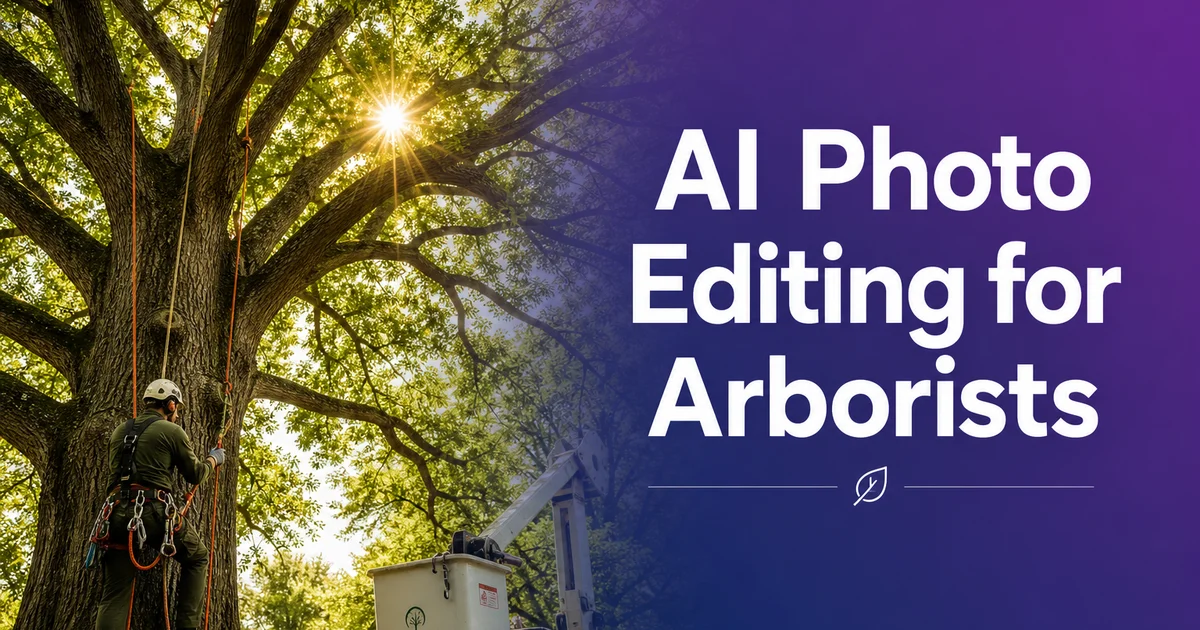
A arboricultura é uma profissão construída sobre a avaliação visual. Ler a linguagem da textura da casca, da arquitetura da copa, da condição do colo radicular e dos padrões de crescimento para avaliar a saúde e a integridade estrutural das árvores. Todo arborista carrega uma câmera como equipamento essencial junto com seu arnês de escalada e lente de mão. Os registros fotográficos são a base dos relatórios de avaliação de risco arbóreo, propostas para clientes, sinistros de seguro e inventários arbóreos municipais. A qualidade dessas fotografias impacta diretamente a credibilidade da avaliação, a clareza da comunicação com o cliente e a defensibilidade das recomendações em potenciais litígios. No entanto, as condições de fotografia de campo na arboricultura estão entre as mais desafiadoras de qualquer setor. Fotografar para cima em copas brilhantes, documentar defeitos em sombra profunda, capturar detalhes em superfícies de casca que se movem com o vento e trabalhar em espaços urbanos restritos onde carros estacionados e edifícios ocupam cada enquadramento.
A edição de fotos tradicional para relatórios de arboristas sempre foi uma tarefa demorada espremida entre o trabalho de campo e a redação de relatórios. A maioria dos arboristas não tem formação formal em fotografia ou edição, e as ferramentas de edição genéricas disponíveis em softwares padrão não foram projetadas para os desafios específicos dos registros arbóreos. Aprimorar detalhes de textura da casca sem amplificar o ruído, remover desordem urbana sem distorcer a forma da árvore e melhorar a cor da folhagem para revelar os padrões sutis de descoloração que indicam doença ou estresse nutricional. O resultado é que a maioria dos relatórios de arboristas contém fotografias de campo não editadas que são funcionais, mas pouco profissionais, ou imagens fortemente editadas que parecem obviamente processadas e comprometem a credibilidade documental da avaliação.
As ferramentas de edição de fotos com IA, projetadas para velocidade e qualidade, resolvem o dilema documental do arborista ao automatizar as tarefas de edição mais demoradas, produzindo resultados que aprimoram em vez de comprometer a credibilidade fotográfica. AI Enhance aprimora os detalhes finos que determinam as classificações de risco sem introduzir artefatos artificiais. Magic Eraser remove elementos de fundo indesejados que diluem o foco visual dos registros de defeitos. Background Eraser cria perfis arbóreos isolados para rastreamento de comparação ano a ano. Juntas, essas ferramentas transformam a fotografia de campo de um fardo documental em uma vantagem profissional que eleva a qualidade dos relatórios, melhora a comunicação com clientes e fortalece o valor probatório dos registros visuais.
- AI Enhance aprimora a textura da casca, os detalhes dos corpos de frutificação fúngica e os padrões de descoloração foliar que indicam defeitos estruturais ou doenças — detalhes frequentemente perdidos nas condições de fotografia de campo.
- Magic Eraser remove a desordem urbana das fotos de avaliação para que os defeitos arbóreos se tornem o ponto focal claro em relatórios para clientes, documentação de seguros e submissões municipais.
- Background Eraser cria perfis isolados da silhueta arbórea que revelam assimetria da copa, progressão da inclinação e mudanças estruturais quando sobrepostos ano a ano para monitoramento de longo prazo.
- O processamento em lote lida com dezenas de fotografias de campo por local de trabalho em minutos, transformando o que antes eram horas de edição manual em um fluxo de trabalho automatizado entre o trabalho de campo e a redação de relatórios.
- As fotografias aprimoradas mantêm a credibilidade documental porque as ferramentas de IA melhoram os dados de imagem existentes em vez de gerar conteúdo sintético, preservando o valor probatório exigido em processos legais e de seguros.
Aprimorando a fotografia de defeitos arbóreos para documentação precisa de avaliação de risco
A avaliação de risco arbóreo sob o sistema ISA Tree Risk Assessment Qualification baseia-se na inspeção visual complementada por ferramentas diagnósticas. A fotografia serve como o registro permanente que sustenta as classificações de risco e recomendações. As fotografias mais críticas documentam defeitos estruturais — fissuras, cavidades, casca inclusa, fustes codominantes, levantamento da placa radicular e corpos de frutificação fúngica — que determinam se uma árvore recebe uma classificação de risco baixo, moderado, alto ou extremo. Esses defeitos são frequentemente sutis, principalmente nos estágios iniciais quando a intervenção é mais eficaz e menos dispendiosa. Uma fissura capilar na união do fuste de uma árvore codominante, um pequeno corpo de frutificação de Ganoderma mal emergindo do colo radicular, ou a leve protuberância na casca que indica uma cavidade interna — todos fotografam mal em condições de campo, mas carregam implicações enormes para a avaliação de risco.
AI Enhance aborda os desafios específicos da fotografia de defeitos arbóreos aplicando uma nitidez inteligente que se concentra nos detalhes de borda e padrões de textura mais relevantes para a avaliação arborícola. Ao processar um close da casca, o algoritmo identifica e aprimora os padrões de fissuras, variações de cor e irregularidades superficiais que os arboristas precisam avaliar, suavizando o ruído de imagem que se acumula em condições de sombra. Ao processar uma fotografia da copa, ele aprimora a definição dos limites foliares e a diferenciação de cores necessárias para identificar zonas de declínio, padrões de clorose e raleamento anômalo. O aprimoramento é calibrado para revelar o que está presente nos dados da imagem em vez de gerar detalhes sintéticos, sendo fundamental para manter a integridade documental que os relatórios de arboristas exigem.
O impacto prático no fluxo de trabalho diário é substancial. Os arboristas frequentemente tiram dezenas de fotografias por visita ao local. As condições de campo significam que muitas dessas imagens são comprometidas por sombra, movimento do vento, ângulos de disparo desconfortáveis ou a dificuldade fundamental de fotografar textura de casca tridimensional em um tronco cilíndrico com a câmera do telefone. Sem o aprimoramento por IA, o arborista deve aceitar imagens subótimas em seu relatório, agendar visitas de retorno para refotografar em melhores condições, ou gastar tempo significativo ajustando manualmente cada imagem. AI Enhance processa conjuntos inteiros de fotos em minutos, recuperando detalhes de qualidade de avaliação utilizáveis de imagens que de outra forma seriam descartadas. Esse ganho de eficiência se traduz diretamente em registros mais completos, menos visitas de retorno e entrega mais rápida de relatórios.
- A avaliação de risco ISA depende de registros fotográficos de defeitos estruturais que determinam classificações de risco — fissuras, cavidades, casca inclusa, uniões codominantes, problemas na placa radicular e indicadores fúngicos.
- O aprimoramento por IA prioriza detalhes de borda e padrões de textura relevantes para a avaliação arborícola, aprimorando fissuras da casca e variação de cor foliar enquanto suaviza o ruído do sensor.
- O aprimoramento revela em vez de gerar detalhes, mantendo a integridade documental exigida para relatórios que podem sustentar ações legais, sinistros de seguro ou decisões de manejo arbóreo municipal.
- O processamento em lote de conjuntos completos de fotos de visitas ao local elimina a edição manual imagem por imagem que anteriormente consumia horas entre o trabalho de campo e os prazos de entrega dos relatórios.
Removendo desordem visual de fotografias de campo para apresentação profissional de relatórios
A fotografia de avaliação arbórea urbana e suburbana inclui inerentemente desordem ambiental. Veículos estacionados, postes de serviços públicos, cercas, estruturas vizinhas, sinalização, pedestres e equipamentos de construção aparecem nos enquadramentos ao fotografar árvores em áreas desenvolvidas. Embora esse contexto seja às vezes relevante para a avaliação (a proximidade aos alvos é um fator-chave na classificação de risco), ele frequentemente distrai do defeito ou condição específicos sendo documentados. Uma fotografia de relatório destinada a mostrar uma cavidade basal é menos eficaz quando um caminhão de lixo domina o fundo. Uma imagem da arquitetura da copa perde seu valor diagnóstico quando uma torre de celular se funde visualmente com a silhueta da coroa. O arborista sabe o que a imagem deve mostrar. O cliente, o ajustador de seguros ou o revisor municipal vê caos visual.
Magic Eraser resolve isso permitindo a remoção direcionada de objetos específicos enquanto mantém a árvore e seus arredores imediatamente relevantes. Remova o carro estacionado atrás do tronco inclinado, mas mantenha a casa que a árvore ameaça. Remova o equipamento de escalada deixado na base, mas mantenha o colo radicular sendo avaliado. Remova o pedestre passando, mas mantenha o levantamento da calçada causado pelas raízes superficiais. A IA preenche as áreas removidas com fundos contextualmente apropriados — grama onde deveria haver grama, pavimento onde deveria haver pavimento, céu onde deveria haver céu — criando imagens documentais limpas que focam a atenção no objeto da avaliação sem parecer artificialmente processadas ou desonestamente alteradas.
A qualidade da apresentação profissional impacta diretamente a percepção do cliente e a disposição para aprovar o trabalho recomendado. Arboristas que investem em fotografia de relatórios limpa e bem apresentada sempre relatam taxas mais altas de aceitação de propostas porque a qualidade visual transmite expertise e atenção aos detalhes. Quando um proprietário recebe uma avaliação de risco arbóreo com fotografias claras e focadas onde cada imagem obviamente documenta uma condição específica, ele confia mais na avaliação do que quando recebe fotos de campo escuras e desordenadas que requerem explicação para interpretar. Para clientes comerciais, empresas de gestão de propriedades e municípios que comparam propostas de múltiplos arboristas, a qualidade da apresentação dos relatórios se torna um diferencial competitivo que influencia a concessão de contratos junto com as qualificações técnicas e preços.
- A fotografia de campo urbana inclui inerentemente veículos, serviços públicos, sinalização e estruturas que distraem do defeito ou condição específicos da árvore sendo documentados na avaliação.
- A remoção direcionada preserva a árvore e os arredores relevantes enquanto elimina distrações específicas, mantendo documentação honesta enquanto melhora a clareza visual.
- A IA preenche as áreas removidas com fundos contextualmente apropriados — grama, pavimento, céu — evitando a aparência obviamente processada que comprometeria a credibilidade documental.
- A qualidade da apresentação profissional melhora a confiança do cliente e as taxas de aceitação de propostas, servindo como diferencial competitivo quando múltiplos arboristas submetem propostas para o mesmo trabalho.
Criando perfis arbóreos isolados para monitoramento de longo prazo e documentação comparativa
Programas de cuidados arbóreos de longo prazo para municípios, campus universitários, parques corporativos e propriedades residenciais requerem registros que rastreiem mudanças em árvores individuais ao longo de anos ou décadas. A ferramenta de comparação mais informativa é o perfil arbóreo isolado — uma fotografia da árvore inteira com o fundo completamente removido, deixando apenas a silhueta da árvore contra um fundo branco ou transparente. Quando perfis de inspeções anuais consecutivas são sobrepostos ou colocados lado a lado, mudanças na densidade da copa, arquitetura dos galhos, ângulo de inclinação, declínio da coroa e vigor geral se tornam imediatamente visíveis e mensuráveis. Um aumento de 5% na inclinação ao longo de três anos, uma recessão gradual da linha de gotejamento no lado sul, ou raleamento progressivo da coroa que pode ser imperceptível em inspeções individuais se torna óbvio na comparação de perfis.
Background Eraser cria esses perfis separando inteligentemente a árvore de seus arredores, lidando com o desafio de detecção de bordas excepcionalmente complexo que as árvores apresentam. Ao contrário da fotografia arquitetônica ou de produtos onde os objetos têm limites geométricos limpos, as árvores têm bordas irregulares compostas por milhares de agrupamentos de folhas, estruturas finas de galhos e margens de copa de densidade variável onde o céu aparece através das aberturas. A IA distingue entre o céu visível através das aberturas da copa (que deve ser removido como fundo) e a estrutura fina dos galhos na borda da copa (que deve ser preservada como parte do perfil). Essa distinção é crítica porque a densidade da borda da copa é em si um indicador diagnóstico — uma árvore saudável tem margens densas da copa enquanto uma árvore em declínio mostra raleamento progressivo das bordas.
A análise quantitativa de perfis isolados adiciona uma dimensão objetiva ao que no passado foi avaliação visual subjetiva. O software de sobreposição de perfis pode calcular a área da copa, extensão da coroa, altura e ângulo de inclinação a partir de imagens de perfil devidamente dimensionadas, fornecendo medições numéricas que rastreiam a progressão ao longo do tempo. Um arborista relatando que uma árvore perdeu 12% da área da copa em três anos fornece uma justificativa mais persuasiva para intervenção do que notar subjetivamente que a coroa parece mais rala. Para programas arbóreos municipais gerenciando milhares de árvores em uma cidade, essa capacidade de monitoramento quantitativo transforma os cuidados arbóreos de resposta reativa a emergências em manejo proativo orientado por dados, onde árvores em declínio são identificadas e tratadas antes de se tornarem perigos.
- Perfis isolados sobrepostos de inspeções consecutivas revelam mudanças progressivas no ângulo de inclinação, densidade da copa, arquitetura da coroa e recessão da linha de gotejamento que inspeções individuais não detectam.
- A IA distingue entre o fundo de céu removível e a estrutura fina de galhos preservável nas bordas da copa, mantendo a densidade de borda que é em si um indicador diagnóstico da saúde da árvore.
- A análise quantitativa de perfis calcula área da copa, extensão da coroa, altura e ângulo de inclinação, fornecendo rastreamento numérico objetivo que fortalece as justificativas de intervenção.
- Programas arbóreos municipais gerenciando milhares de árvores fazem a transição de resposta reativa a emergências para manejo proativo orientado por dados usando comparação quantitativa de perfis em inspeções anuais.
Documentando sintomas de pragas e doenças com precisão cromática aprimorada
Muitas doenças de árvores e infestações de pragas se manifestam através de mudanças sutis na cor da folhagem que são diagnósticas quando capturadas com precisão, mas facilmente perdidas na fotografia de campo. A clorose — o amarelecimento do tecido foliar devido à deficiência nutricional ou interrupção vascular — progride de um amarelecimento internerval tênue quase invisível em fotografias a folhas pronunciadamente amarelas que são óbvias. A antracnose produz lesões marrons irregulares que podem ser confundidas com estresse hídrico ou queimadura solar quando fotografadas de forma inadequada. A queima bacteriana das folhas cria uma margem marrom característica com um halo vermelho-amarelado que é diagnosticamente distinta, mas requer reprodução cromática precisa para ser identificada em imagens. A diferença entre essas condições determina as recomendações de tratamento. Registros fotográficos precisos apoiam a consulta remota com fitopatologistas e especialistas de extensão.
AI Enhance inclui melhoria da precisão cromática que preserva e clarifica as informações cromáticas diagnósticas em fotografias de folhagem. O algoritmo detecta vegetação verde e aplica correção cromática direcionada que compensa a dominante azul comum na fotografia em sombra, o desvio para o amarelo-verde ao fotografar sob a copa com luz transmitida e os erros de balanço de branco que as câmeras de telefone introduzem em condições de iluminação mista. As imagens aprimoradas mostram a folhagem em cores mais próximas do que o arborista observou pessoalmente, tornando possível distinguir entre clorose (amarelo-verde), deficiência de ferro (amarelecimento internerval com nervuras verdes), deficiência de nitrogênio (verde pálido uniforme) e mudança normal de cor outonal — distinções que são críticas para o diagnóstico, mas frequentemente perdidas em fotografias de campo não corrigidas.
A documentação lado a lado de folhagem tratada e não tratada se beneficia de um tratamento cromático consistente que elimina a variação de iluminação como variável de confusão. Ao fotografar uma árvore que recebeu tratamento com quelato de ferro, o arborista precisa mostrar que o lado tratado da copa apresenta coloração verde melhorada em comparação com a área de referência não tratada. Sem correção cromática, diferenças no ângulo do sol, cobertura de nuvens e hora do dia entre as duas fotografias podem introduzir desvios cromáticos que mascaram melhoria genuína ou criam a falsa aparência de mudança. AI Enhance normaliza a iluminação e o balanço cromático em conjuntos de imagens comparativas, garantindo que as diferenças cromáticas observadas reflitam a condição foliar real em vez de variáveis fotográficas.
- A clorose, antracnose, queima bacteriana das folhas e deficiências nutricionais se manifestam através de padrões cromáticos específicos da folhagem que requerem reprodução fotográfica precisa para diagnóstico remoto.
- A otimização da precisão cromática compensa a dominante azul da sombra, a luz transmitida pela copa e os erros de balanço de branco da câmera do telefone para mostrar a folhagem em cores correspondentes à observação de campo.
- As distinções diagnósticas entre deficiência de ferro, deficiência de nitrogênio e clorose induzida por doença dependem de diferenças cromáticas sutis facilmente perdidas na fotografia de campo não corrigida.
- Os conjuntos de imagens comparativas recebem balanço cromático normalizado que elimina a variação de iluminação, garantindo que as diferenças cromáticas observadas na folhagem reflitam a condição real da árvore em vez de artefatos fotográficos.
Construindo uma marca profissional de arborista através de qualidade consistente de documentação visual
O setor de arboricultura tem um desafio persistente de credibilidade. A lacuna entre arboristas qualificados certificados pelo ISA e operadores de serviços arbóreos não qualificados é frequentemente invisível para consumidores que não conseguem avaliar credenciais técnicas. A qualidade da documentação profissional serve como um indicador visível de competência profissional. Os clientes naturalmente associam relatórios limpos, detalhados e bem organizados a trabalho de avaliação competente e cuidadoso. Um arborista cujos relatórios contêm fotografias nítidas, limpas e devidamente anotadas de cada condição relevante transmite um nível fundamentalmente diferente de profissionalismo do que um cujos relatórios incluem fotos escuras, desfocadas e desordenadas que requerem explicação verbal para interpretar. A fotografia aprimorada por IA fecha essa lacuna de qualidade de apresentação sem exigir treinamento formal em fotografia ou equipamento fotográfico caro.
A consistência em toda a documentação voltada ao cliente constrói reconhecimento de marca e confiança. Quando cada relatório da sua prática apresenta a mesma qualidade profissional de imagem, o mesmo estilo de composição limpa e a mesma abordagem clara de anotação, os clientes desenvolvem confiança no seu método de avaliação. Gerentes de contratos municipais revisando propostas de empresas concorrentes notam imediatamente quando a documentação de uma empresa é visivelmente mais profissional que as outras. Ajustadores de seguros processando sinistros relacionados a árvores desenvolvem preferências por arboristas cuja documentação fotográfica comunica clara e eficientemente as condições em questão sem requerer assistência de interpretação. Essa consistência é alcançável através de fluxos de trabalho padronizados de aprimoramento por IA que aplicam o mesmo pipeline de processamento ao conjunto de fotografias de cada visita ao local.
A economia de tempo se acumula em uma prática de arboricultura movimentada. Um arborista autônomo conduzindo four to six visitas ao local por dia, cada uma gerando fifteen to thirty fotografias, gasta tempo substancial em gerenciamento e edição de fotos se feito manualmente. O processamento em lote por IA reduz isso a uma breve etapa automatizada que roda enquanto o arborista dirige entre os locais ou prepara outras seções do relatório. Ao longo de um mês de trabalho ativo, as horas recuperadas da edição manual se traduzem em visitas faturáveis extras, entrega mais rápida de relatórios que melhora a satisfação do cliente e redução do trabalho noturno e de fim de semana que previne o esgotamento comum em uma profissão fisicamente exigente. O retorno sobre o investimento aparece não como um item de linha, mas como melhorias compostas em eficiência, qualidade, receita e sustentabilidade profissional.
- A qualidade da documentação profissional serve como um indicador visível de competência, ajudando arboristas qualificados certificados pelo ISA a se diferenciar de operadores não qualificados de maneiras que os consumidores podem perceber imediatamente.
- A qualidade visual consistente em todos os relatórios constrói reconhecimento de marca e influencia decisões de gerentes de contratos municipais e ajustadores de seguros que comparam múltiplas empresas.
- Os fluxos de trabalho padronizados de aprimoramento por IA garantem que as fotografias de cada visita ao local recebam o mesmo tratamento profissional, mantendo consistência de qualidade sem depender de habilidade individual de edição.
- A economia de tempo do processamento automatizado em lote se traduz em visitas faturáveis extras, entrega mais rápida de relatórios e redução do trabalho após o expediente que previne o esgotamento em uma profissão fisicamente exigente.
How to do it
- 1
Photograph trees from multiple angles capturing trunk, canopy, root zone, and surrounding structures
Document each tree assessment with a systematic photography protocol that covers all critical areas. Capture the full tree from at least two perpendicular angles showing overall form and canopy structure. Take close-up shots of any trunk defects including cavities, cracks, fungal fruiting bodies, cankers, and bark anomalies. Photograph the root flare zone at ground level where root decay often manifests. Include context shots showing the tree's proximity to structures, power lines, sidewalks, and other targets. Use a tape measure or known-size reference object in frame to establish scale for later measurement of defect dimensions.
- 2
Use AI Enhance to sharpen critical defect details in field photographs
Field conditions often produce photographs with motion blur from wind-shaken foliage, underexposure from dense canopy shade, or reduced clarity from distance shots. Run AI Enhance on critical assessment photos to sharpen the fine details that determine risk ratings. The hairline cracks in trunk bark that indicate structural compromise, the subtle color changes in foliage that signal vascular disease, the small fungal brackets growing from root flares that indicate internal decay. Enhanced images reveal details that the human eye might miss on a phone screen in bright outdoor conditions, making it possible to spot early-stage defects that would otherwise require a return visit to confirm.
- 3
Remove visual clutter with Magic Eraser to isolate tree defects for client reports
Client-facing arborist reports need clear annotated photographs where the tree defect is the obvious focal point. Use Magic Eraser to remove unwanted background elements: parked cars behind a leaning trunk, utility equipment near a root zone, and neighboring structures that draw attention away from the assessment subject. Remove temporary objects like ladders, climbing gear, and vehicles that appear in field photos but are irrelevant to the tree's condition. The cleaned images communicate professional documentation quality and help homeowners, property managers, and insurance adjusters quickly identify the defect being discussed in the accompanying written assessment.
- 4
Use Background Eraser to create isolated tree profiles for comparison documentation
Remove the background fully from full-tree photographs to create clean silhouette profiles that reveal canopy asymmetry, lean angle, and structural form without environmental distractions. These isolated profiles are invaluable for year-over-year comparison records. Overlaying this year's profile against last year's reveals changes in lean angle, canopy density loss, dieback progression, and structural shifts that are difficult to detect when background elements change between visits. Arborists managing long-term tree care programs for municipalities, campuses, and estates use these profile comparisons to quantify progressive decline and justify intervention timing to budget-conscious clients.
- 5
Compile enhanced images into professional assessment reports with before-and-after comparisons
Assemble the enhanced, cleaned, and annotated photographs into a structured report format that follows ISA best management practices for tree risk assessment records. Include before-and-after enhancement pairs that show both the raw field photograph and the AI-enhanced version, showing the rigor of the assessment process. Add text annotations pointing to specific defects, measurement overlays showing defect dimensions scaled from reference objects, and risk rating indicators tied to the visual evidence. Export in PDF format for client delivery and retain full-resolution originals for potential legal or insurance proceedings where image realism may be questioned.
Fontes
- Visual Tree Assessment: Quantifying Tree Risk with Digital Imaging — USDA Forest Service
- ISA Best Management Practices: Tree Risk Assessment — International Society of Arboriculture
- Remote Sensing Applications in Urban Forestry and Tree Health Monitoring — MDPI Remote Sensing Journal